

MS Nutrition | Researcher 10+ Years | Scientific Communicator
Arizona, USA
Joined December 2018
- Tweets14.2K
- Following283
- Followers4.8K
- Likes12K





Pinned Tweet
The cure for most cases of type 2 diabetes (T2DM) requires fat loss. This thread will discuss research showing restoration of carbohydrate tolerance in those with T2DM through addressing the underlying pathology (ectopic fat) rather than just focusing on symptom management.
I think we need to stop calling foods, substances, and behaviors "addictive" because it carries some really erroneous conotations.
Like, what does addiction even mean in these situations?
1) It's rewarding and people want to keep using. Okay, that's a meaningless definition that accompanies all pleasurable activities.
2) People want to use despite negative consequences. Okay, this can again apply to virtually anything and is also completely subjective in terms of what constitutes a consequence.
3) It changes the brain in ways that compel people to continue regardless of conscious intent. This is basically the brain disease model of addiction, which has been largely discredited in addiction research.
Food companies try to engineer foods that taste good and provide pleasure to those eating them. That's it, and that pleasure contributes to motivation for many to continue eating them.
There is no circumstance where one's brain becomes "hijacked," and I actually find such wording to be quite defeating for those struggling to change their behaviors. It essentially tells people that they have no control and are victims to their food, drug, or behavior or choice.

@doctortro is right, the food environment we live in today is literally engineered to be as addictive as possible.
Turns out there's big money in hijacking our neurology.
All that said, can anyone explain how Berry's response is relevant... at all?


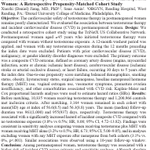
I'm highly skeptical of this finding. Need to see the full-text when published, but a few issues pop out to me based on the conference abstract (screenshots included for convenience).
First, how is reverse causality accounted for? One of the primary indications for TRT in women is sexual dysfunction, and a 2024 meta-analysis of nearly 150,000 participants found that cardiovascular diseases are themselves associated with sexual dysfunction in women (PMID: 38297501).
Second, what was the testosterone exposure? There's no info about formulations, doses, duration of treatment, serum levels, etc.
Third, composite cardiovascular events increases statistical power to detect differences between groups, but they aren't interchangeable. This isn't necessarily a bad thing, but I'd want to see the individual outcome rates and whether any association was driven by less severe diagnoses.
Fourth, how is surveillance bias accounted for? Women on hormone therapy are more likely to be part of the medical system than those not receiving it, so the likelihood of documenting something is higher by this alone.
Fifth, what is going on with their data table? There were supposedly 3164 women in each group (testosterone vs control), but in the second row, 305 events at 3.2% would be over 9,000 participants in the group. Maybe they meant to put 105. Could just be a simple error.
Anyway, these are just some things off the top of my head. Might be more. Sucks that such findings can make the rounds and strike unnecessary fear before any meaningful review of their study is even possible.


I think back to that time Bryan Johnson canceled his workout because he had regular coffee before bed and "wrecked" his sleep. Hilarious.
I stayed up until 2:30 am last night to finish some edits on a book chapter for a project I've been working on, rolled out of bed after just 3.5 hours of sleep, and just had an incredible leg workout in the gym. All my lifts felt amazing.
Part of resilience is doing the hard things when you don't want to do them. Don't build a body or mindset that is so fragile that you skip a workout just because you didn't max out your sleep score.

I couldn't imagine using an entire playbook to try and manipulate women into sleeping with me. Such degenerate behavior.

Here’s how I ran my dating app operations when I was single from 2013 to 2021. I ended up sleeping with roughly half my matches, 75% of women I went on a first date with, and 99% of women I went on a second date with.
First: get fit, get paid, and get smart. You need to actually be valuable enough for women to swipe right on you in the first place.
When you match, DON’T JESTER-MAX. As I said, attractive women know they’ll match with virtually any guy they swipe right on. If she swiped right on you, she’s already interested. Wasting time only increases the likelihood that she’ll get bored, get distracted, or move on to another guy.
Opening line: “Thought you looked cute, had to swipe right.”
You’re being direct and establishing romantic intent. She’ll respond with some variation of “thank you” and will usually compliment you back. This further establishes mutual romantic interest in her mind.
Second line: ASK HER OUT.
“Let’s get drinks at X.”
Your invitation should include a firm location, date, and time. The date/time should be no more than 48 hours from your message and no further than five minutes from your place.
Remember, YOU are asking HER out. Women are stupid and indecisive, so you should already have the plan locked and loaded. Every second you waste on chit chat increases the odds that she gets distracted, loses interest, or finds something better to do. Generate mystery for her now. You can do “talking stages” on the date.
In the overwhelming majority of cases, she’ll either agree or propose an alternative date or time that better fits her schedule. Either way, you’re in.
On the date: Arrive 10-15 minutes early, get a seat facing the door, and make sure you know what she looks like. When she walks in, greet her with a one-armed hug and a kiss on the cheek. Again, we’re being direct about our intentions and reinforcing the romantic nature of the encounter.
Study the menu beforehand and have two or three recommendations ready.
She’ll almost always pick one. Order for both of you. Engage her in conversation, be attentive and passionate, and always agree with whatever nonsense she brings up, unless you can turn it into an unserious, teasing flirt. Repeat for two drinks.
When the waiter asks whether you want a third, casually mention that you live nearby (which is why LOCATION MATTERS) and ask whether she’d like to open a bottle of wine back at your place.
If you haven’t been a complete sperg during the conversation and the attraction is mutual, she will say yes.
YOU PAY FOR EVERYTHING. Then leave together.
Once she’s at your place (WHICH YOU HAVE THOROUGHLY CLEANED BEFOREHAND), give her a short tour. When you get to your bedroom, kiss her passionately and let things progress naturally from there.
There is never a third drink back at your place.
Good luck! And remember, after a few years of this, you’ll become a shallow husk of a man, utterly jaded and nihilistic about the world.
But do not despair! When this happened to me, it forced me to fundamentally change who I was. I found Christ, became sanctified, and discovered that all those years of experience had turned me into an apex predator compared to the sheltered church boys competing with me for trad, virgin church girls in their early 20s.
I’m now happily married with multiple kids.
Important to remember that the Minnesota Starvation Experiment involved men with an average starting BMI of 21.7, who lost 25% body weight and ended with an average BMI of 16.4. These results can't be extrapolate to people with excess fat mass dieting for weight loss.

Alex Leaf retweeted
Vegas for my 41st → 6ish months later.
What happened in Vegas didn’t stay in Vegas this year😭😂

Alex Leaf retweeted
Me and my little sidekick over the last 4 Halloweens. Year 2, he was not having any of letting me take a picture with him lol. That was right after he learned to walk, and he basically started running everywhere from that moment on.
But I realized something going through these pictures. I’ve been pregnant every single October since 2023, with each of those previous pregnancies ending in first trimester losses. And this October, I’ll be hitting viability with our second little boy🥹 So grateful🙏🏼


No, you absolutely cannot "almost always tell" who underwent IVF by looking at these things post-birth.
Best case scenario is pure confirmation bias because, as a midwife, you will know how conception happened beforehand.
We have data suggesting that IVF itself is associated with greater relative risks of some placental and cord issues, but those issues affect a small minority of all pregnancies. There is definitely not some "IVF phenotype" that you can just look at post-birth.

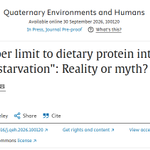
I'm disappointed to see Speth publish a piece on rabbit starvation with so little empirical evidence investigating the issue (DOI: 10.1016/j.qeh.2026.100120).
I've written about the upper limit to protein metabolism, which I'll ink to in a follow-up comment, and the available evidence indicates that no such upper limit has yet been found.
In fact, no limit is observed even at doses of amino acid infusions that cause participants to vomit.
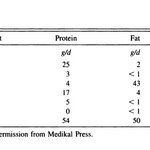
Speth, to my surprise, relies on the old Bilsborough and Mann 2006 review which itself relies exclusively on an old 1973 publication by Rudman, who himself later acknowledged his study was properly designed to test the concept.
As such, Speth makes bogus claims like the upper limit being about 300 grams per day, and then further puts the limit "typically between about 5.0–6.0 g/kg/d or even slightly higher," without any references.
He basically just took the 300 grams and divided it by the average hunter-gatherer / forager body weight of 50 to 60 kg.
Everything after that is historical accounts of "rabbit starvation", but none of these indicate that protein intake per se was the issue.
Rather, as I state in my article, rabbit starvation is just a term used to describe the predictable consequences of sustaining on exceptionally lean and nutritionally limited foods, particularly when super active with a high energy expenditure.
- High thermic cost of metabolizing protein, meaning that people needed more total food to obtain the same net energy.
- Difficulty consuming enough lean meat to meet high energy demands.
- Inefficient use of protein when nonprotein energy was scarce
- Nutrient deficiencies (essential fatty acids, fat soluble vitamins, and minerals)

My article for anyone interested in the research directly investigating our intrinsic capacity to metabolize protein.
alexleaf.com/does-an-upper-l…

My opinion on collagen for skin health outcomes leaned heavily on a prior 2025 meta-analysis my Myung (PMID: 40324552), so that is going to be my comparison point when looking at this recent publication by Grimes.
I want to also note upfront that none of this is dealing with biological plausibility or mechanisms. The question here is whether such things manifest into benefits in humans.
First and foremost, Grimes isn't a new meta-analysis, but instead a reanalysis of two prior publications from 2021 and 2023. The latter searched through December 2022, so it is missing more recent studies (e.g., Myung includes four published after that).
There are also inclusion criteria differences. Grimes effectively excluded studies that used combination treatments (due to relying heavily on the 2023 analysis that excluded them) while Myung included them and then sub-group analyzed the collagen alone vs placebo.
Second, Grimes was genuinely valuable in that they found data handling errors in prior studies, which can materially affect the outcomes. The heterogeneity problem is also very real and remains something showing up in Myung.
Third, I don't actually think Grimes analysis itself is very strong. They reported everything as meta-regression coefficients per unit of collagen dose. In other words, their table 2 is asking if the effect of collagen changes with the dose of collagen.
This is a huge issue because Grimes erroneously concludes that the lack of significant dose-response means the treatment benefit probably doesn't exist.
It could very well be the case that collagen works but the effects plateau with higher doses because of saturation (e.g., imagine this was done with creatine because changes to strength didn't increase as dose increased from 3 to 5 to 20 grams over several months). Other reasons could be non-linear dose-response or non-equivalency in grams of collagen between formulations.
On that note, the hydration analysis is actually compatible with a dose-response effect, with a confidence interval that barely crosses zero (-0.01 to 0.14). So even with their own data, it is more accurate to say that higher doses of collagen likely increases the effect on hydration parameters than saying it doesn't.
When you look Myung, benefit compatibility argument gets further support.
Non-industry funded:
- Hydration: 0.33 (-0.06 to 0.73)
- Elasticity: 0.29 (-0.04 to 0.62)
High-quality (RoB 2 and Jadad):
- Hydration: 0.86 (-0.28 to 2.01)
- Elasticity: 0.52 (-0.09 to 1.14)
Also note that significance is achieved when looking at high-quality studies with RoB 2 alone (hydration and elasticity) and Jaded alone (elasticity and wrinkling). It's only when combined that estimates don't cross p=0.05.
None of this, from Grimes or Myung, establishes that "collagen has no effect or doesn't work".
The appropriate conclusion is, "aggregate high-quality and independent research doesn't establish a statistically significant benefit, but their confidence intervals remain compatible with small to moderate beneficial effects."
Certainly, the evidence base is messy. But my position remains that collagen likely improves some aspects of skin health, particularly hydration and elasticity.

A new meta-analysis finds no good evidence for benefit of supplementing with collagen for skin aging. It audits previous widely cited meta-analyses claiming benefit which contained numerous errors. Once the errors were corrected, the findings no longer suggested a statistically significant difference.
Such errors included:
- Misrepresentation of methodology
- Incorrect usage of percentage difference
- Failure to convert standard error to standard deviation (standard errors treated as standard deviations, which can give a result too much weight)
- Missing/Omitted studies, or even omitted data from found studies
- Inclusion of studies with no placebo control
- Inappropriate inclusion of studies (one papers hydration data was based on a survey question without any objective analysis which should not have been included)
- Inconsistencies in effect size reporting/used
- Listing incorrect numbers of subjects
Furthermore the general quality of the trials themselves were poor. The underlying trials were often small and short, typically 8-12 weeks. Many did not adequately track other skincare, procedures or usual protein intake. Some gave little detail about the placebo, making it hard to judge how well participants were blinded. Few trials defined how large a change would matter to patients, which is important given a short-term change in a skin measurement mechanistic proxy does not establish a visible, let alone a lasting effect on aging skin.
I continue to take the view that the recommendation of collagen supplements for general skin health / prevention of skin aging is not epistemically justified on the quality of the available evidence.
It might be justified in a burn unit or wound healing context for very large wounds (where a massive amount of collagen synthesis is required), but that's a completely different discussion.

I'm so tired of these losers trying to shit on pair bonding because they never matured past viewing women and relationships as nothing more than a means to get sex.
Yes, novelty is sexually exciting and doesn't last forever. But this absolutely does not mean that long-term monogamy is biologically untenable.
As is common with the manosphere, a kernel of truth is buried underneath an enormous pile of bullshit.
Humans are literally a pair-bonding species. We have numerous biological systems in place that are devoted to forming selective attachment and deriving comfort, reward, cooperation, and security from them.
Obviously, because humans take a fucking long time to develop and mature. That stability is necessary for our species to survive, and is precisely why humans evolved for extensive pair bonding and paternal investment.
This is one of many examples for why manosphere content can be pretty much ignored. It reliably stems from an incredibly underdeveloped conception of masculinity and adulthood.
Seriously, in what world is a long-term relationship, especially one that goes for decades, measured by how novel your wife appears?
Stupid. Commitment to someone who shares your values will provide countless more benefits than bouncing from woman to woman. You get trust, shared history, family, knowing someone at depth, and having someone build an entire life with you.
Yes, sex matters for many reasons, but reducing a relationship to "how often can I use my wife as a flesh light" is just disgusting hedonism. These are the thoughts of boys who have not yet stepped into their masculinity.
Also, let's not forget the funniest part being the claim that monogamy is "a social construct, nothing more."
Hi there, neurobiology would like a word with you.
Evolution wanted us to be in committed relationships and never once programmed us to stop loving, desiring, valuing, or fucking someone because they became familiar.

The reason long-term couples go from being all over one another to eventually sexless is pretty simple.
It's not because they let themselves go or they stop trying.
It's because it's biologically unnatural for both men and women to still be excited about procreating with one another after doing it over and over again.
This is what almost nobody wants to acknowledge.
That long-term monogamy is biologically untenable.
It's a social construct, nothing more.
(Also a woman created this graphic.)

I read this article out of curiosity given the provocative title invoking the "surprising science" of an all-meat diet, and I wanted to share my own thoughts given this article's apparent popularity. Long post, sorry.
I'm basically just going to share as I work my way through the article, top to bottom.
First, I was largely disappointed by the one-sided conversation happening around the gut. Nick shared his personal story and a case series of 10 people that he published, but the inclusion criteria required that the person’s IBD had already responded to a ketogenic diet.
I do think that there is utility of elimination diets for IBD, IBS, and other gut conditions, but the conversation never invoked the broader literature looking at how fiber intake and supplementation impacts these conditions.
For example, a meta-analysis of 14 RCTs found that soluble fibers reduced the risk of persistent symptoms by 17%, with an NNT of about 7 (PMID: 25070054). There was also a tendency for bran to help, but it didn't reach statistical significance and its effect was less than that of soluble fiber.
The evidence is much worse for IBD. A systematic review of 23 RCTs found largely null effects of fiber supplementation on clinical disease outcomes (PMID: 24445775). Some studies reported benefits, but only one study reported that fiber worsened outcomes.
Of course, fibers are a heterogenous category, and it is very likely that some fibers provide benefits while others do not (or even worsen outcomes). It's simply inappropriate to treat fiber as one single category.
Second, within the fiber discussion, NIck approached the microbiome and I was discouraged that there was no meaningful discussion around it other than an definitive "no" regarding negative effects.
The sole support for this conclusion was a cross-sectional analysis of 10 carnivores that really had no capacity to determine if the carnivore diet did anything. There was also no mention of how this study found that carnivore dieters differed in over 300 metabolic pathways and 13 functional modules, including elevations of those associated with cytotoxicity, inflammation, and constipation.
We have short- and long-term studies documenting the effects of reducing and reintroducing fiber to the diet, but these weren't discussed.
For example, Sonnenburg's work shows how chronic fiber deprivation leads to extinction of beneficial microbes (PMID: 26762459), while Desai's work found that microbes consume more mucins as a fiber-alternative nutrient source, leading to erosion of the protective mucus barrier (PMID: 27863247).
As an aside, I actually speculate that one trait of people who can tolerate a carnivore diet is an intrinsic capacity to create more mucin to buffer the effects of fiber deprivation.
Third, the vitamin C discussion was sorely lacking on evidence and uncertainty. Relying on the worst possible deficiency outcome, scurvy, already makes no sense (as opposed to broader health outcomes) and you need just 6-10 mg of vitamin C to prevent it.
But also, invoking the Eskimos makes no sense because their diet is rich in vitamin C. One analysis estimated an average intake of 60 mg per day (DOI: 10.1006/jfca.2002.1053), and another estimated average intakes of 80 mg for men and 60 mg for women (PMID: 34232845).
And of course, the famous carnivore argument about how vitamin C requirements are lower because glucose competes for entry into cells is just completely unsubstantiated.
Yes, glucose and vitamin C (more specifically, the oxidized form of dehydroascorbate or DHA) share transporters like GLUT1 to enter cells. But research suggests that the capacity for uptake and transport is so large that there is no inhibition of DHA uptake within physiological glucose concentrations (PMID: 24598365).
I think it is also worth mentioning that glucose actually improves DHA recycling back into ascorbate and better preserves the glutathione-NADH-vitamin C recycling pathway (PMID: 11687303; 34938201).
Anyway, there's literally no evidence that carbohydrate restriction has any meaningful impact on vitamin C requirements. If anything, evidence suggests it wouldn't have an effect because normal glucose levels don't interfere with (and actually enhance) vitamin C recycling.
Fourth, the heart section was fine. I have no quibbles here and agree with Nick that looking at CVD through the lens of foods and dietary patterns has significant limitations. It's better to look at the person and figure out how those things are affecting their personal CVD risk factors.
Fifth, I actually applaud Nick for his conclusion. Specifically, I do think people with treatment-resistant gut conditions and possibly autoimmune conditions could trial run a carnivore diet and see if it helps.
But more importantly, I strongly agree that the diet makes no sense for already healthy people and those unwilling to monitor their health markers and diets for possible problems like nutrient deficiencies.
I really feel like a lot of the carnivore crowd is so ideologically driven by their diet being "superior" and "healthy" that they simply can't fathom that there are likely to be trade-offs. I also don't understand why they would be against something like supplementing vitamin C. Makes no sense to me.

The article “The Surprising Science of an All-Meat Diet,” which I published last week, is now on the most-read list for health articles and uptrending.
This morning, I also finished an interview with a major newspaper in the United Kingdom that was interested in covering my perspective on saturated fat and cholesterol for National Cholesterol Month in the UK.
A brief summary of my two major positions, because I don’t think they’re at all radical. I’ll be as concise as possible and link to more information below.
1) First, the carnivore diet is a tool, not a religion.
It’s a mistake to present it as the best diet for humans or to make strong claims that go beyond the literature, such as that it will improve longevity.
What we can say, accurately and humbly, is that it’s helping many people who have struggled with debilitating disorders and failed to find support through conventional approaches.
We can also say that there is strong biological plausibility for many of the conditions for which it’s being used, including mental health disorders and autoimmune and inflammatory conditions.
That’s not definitive proof. But it’s a possibility that deserves curiosity and compassion, not disdain.
If you want the full scientific breakdown in video form: “The Strange Science of Eating Only Meat”
youtu.be/WJnPDQ0XRXA
2) The second major point I’ll make is that CONTEXT matters.
Meat is vilified largely because of its saturated fat and cholesterol content. However, when it comes to improving the cardiometabolic health of the general population, focusing on reducing saturated fat intake is like worrying about a mosquito when you’re being chased by a tiger.
We now have randomized controlled trial data showing that low-carbohydrate ketogenic diets (despite typically being much higher in saturated fat and cholesterol) can provide greater improvements in many cardiometabolic risk markers than low-fat plant-based or Mediterranean-style diets higher in carbohydrates, particularly in people with obesity and insulin resistance.
More here: staycuriousmetabolism.substa…
At the end of the day, I don’t fancy myself a carnivore fanboy. Just carnivore-curious and open-minded. That’s enough.
P.S. There’s a tendency to make meat and diet unnecessarily political. Resist that tendency. What’s on my plate does not inform what I do at the ballot box. Stereotypes impair our ability to have thoughtful academic discourse.
Ht/ @MikhailaFuller for her contribution (including the click-boost from her adorable baby) @EpochTimes

Alex Leaf retweeted

@Alexleaf explains why he can't understand the "supplements are a scam" belief, and the marketing trick that lets brands make big claims without ever disclosing the actual dose.
Hosted by @theNOBSdentist, @CalvinandNOBS, and @TJ_Bongiorno.
Brought to you by:
NOBS: nobsroutines.com/
The Outgoing Co.: theoutgoing.co/
Full episode here or YouTube: DTHshow
Alex Leaf retweeted
@Alexleaf ran a systematic review on keto and athletic performance. What he found once researchers actually tested elite athletes wasn't what keto's biggest defenders expected.
Hosted by @theNOBSdentist, @CalvinandNOBS, and @TJ_Bongiorno.
Brought to you by:
NOBS: nobsroutines.com/
The Outgoing Co.: theoutgoing.co/
Full episode here or YouTube: DTHshow
Alex Leaf retweeted
Part of what makes GLPs so powerful is that they can alter behavior before a person ever reaches conscious contemplation. Many people never meaningfully consider a different way of eating or living because they have never experienced the physiological and psychological conditions that make that alternative feel preferable. GLPs can change the reward landscape first, and cognition often catches up afterward.
For some people, cognition never catches up to the behavioral shift, which is why many revert after discontinuation. But that outcome is not inevitable. The period on a GLP can become evidence—>if someone consciously updates the perceived benefits of food, movement, satiety, and their old habits, the new behavior can become genuinely preferable rather than merely pharmacologically easier.

Obesity is driven by a number of interacting factors that all converge to affect its proximal cause: chronic energy surplus.
Beliefs, priorities, and preferences are the biggest factors. Most people simply have no desire to be healthy or to put in the effort required to be healthy in the modern environment.
And appreciating this truth and the agency that people possess is not mutually exclusive with everything else that follows.
Hyperpalatable food supply is next, defined by food options rich in combinations of added sugars, refined grains, added fats, salt, and flavorings. None of these things is obesogenic on its own.
Inactivity comes third. People don't want to be active, and the modern environment is great at allowing people to live their lives with very little physical activity being needed.
Then you have things like genetics, sleep and circadian disruption, chronic stress, medications, socioeconomic factors, alcohol, toxicants, and the microbiome.
Key thing is figuring out what the biggest levers are for a particular person. But energy balance remains king, and encouraging personal agency over behavior is essential (e.g., no food will ever compel you to eat it).