

Partner @sequoia. Working w/ founders from idea to IPO & beyond: @airbnb @doordash @citsecurities @kalshi @clay @foundforbiz @Nominal_io @zipline
San Francisco, CA, USA
Joined March 2008
- Tweets3.4K
- Following361
- Followers151K
- Likes1.1K







Alfred Lin retweeted

For the second time in Google Chrome’s history, Google awarded a $250,000 bounty for a full-chain exploit… to @XBOW. Here’s the full story:
At an all-hands at the start of 2026 in Malta, I set the team a crazy challenge. A full-chain exploit of Chrome by the annual Black Hat cybersecurity conference in August.
I believed there were few better tests of whether @XBOW could move beyond web applications to desktop software, servers and devices.
Chrome is one of the most hardened pieces of software on the planet, used by more than half the world’s population.
A full-chain exploit lets an attacker take total control of a machine, where they can read every email, password and bank login the user types. You don’t need to download anything or click a phishing link. Visiting the wrong site is enough.
So @moyix, Andres Luksenberg, Baul Lee, and Willem Pinckaers took on the challenge along with a fifth teammate: OpenAI's GPT-5.6 Sol.
They built a chain they thought would win, but Google told us they already knew one of the bugs.
We were already in Las Vegas for Black Hat and DEF CON, and the team didn’t want to go home without the win.
So Brendan and the agents built a new exploit in just 6 days.
We submitted it to Google and waited.
The news came through that we'd done what should’ve been impossible. A full-chain bounty of $250,000, the first awarded under Google’s 2026 rules.
It took just 6 days and $40,000 of compute to construct an exploit that affects a billion users of Chrome on Windows. An intelligence-agency veteran told me his team used to spend 6 months on this kind of vulnerability.
My takeaway: the cost of finding truly critical vulnerabilities is collapsing, for attackers and defenders alike. Restricting powerful models is not the answer; GPT-5.6 Sol is already public.
But defenders have one advantage attackers never will: they can test their own code first.
Assume your software is exploitable. Whoever is hunting your bugs has the same building blocks we did.
This is cause for urgency but not panic.
XBOW is now developing an autonomous product for testing compiled software (desktop applications, servers, embedded devices), and partnering with the world’s top organizations to design that product.
If you’d like to be one of them, get in touch.
P.S. Restart Chrome whenever the Update button appears!

Alfred Lin retweeted

Be part of the 5000 today. It’s amazing
The lucky thing is the price will come down and more people will see this, and get a chance to bring it to the world
Greatest alpha fountain in the history of man

Dusting off this tweet from April because this gap in shared understanding of LLM capability is *widening*. It's now less "two groups of people speaking past each other" and more a sharp funnel.
- Napkin math somewhere around 6B people (~75% of the population) have barely come in contact with LLMs at all.
- Around 1-2B (~20%) are casual and infrequent users of free-tier ChatGPT-like products. This group sees derpy chatbots and treats them a bit like a better Google search, a writing aid, or etc. Maybe an agent tries to book you a flight. I have non-tech friends who (reasonably, imo) say they have not much use for it at all. Even many professionals outside of math&code are in this tier. For example, execs and many other functions spend a lot of their time talking to other people, so while they understand what is happening intellectually, it is still second-hand and a bit abstract.
- Now we get to professional use of frontier-grade LLMs in math&code. Somewhere around 20M people (0.2%) see first-hand that large, complex projects that used to take them weeks/months can now be completed by agents with a prompt. Building apps, copying apps, translating apps, decompiling apps from binaries... This has all happened very quickly and recently - less than 1 year ago, I was writing code manually by hand, typing memorized computer code commands into a code editor character by character, occasionally pressing Tab to autocomplete a little chunk of code.
- And finally we get to the ~5,000 people (~0.00006%) with access to frontier-grade systems internally. The external world has seen the preview. It looks like swarms of thousands of agents collaborating over weeks on software mega projects: minting zero days, running cyber attacks and defenses at machine speeds, discovering new science, advancing the frontier of mathematics. Things that would have taken top professionals in the industry years of work. Meanwhile, human review and comprehension are starting to fall behind. For example, people are still involved in the "archeology" of the OpenAI-HF incident from many months ago. Mathematicians may be poring over the 722 manuscripts on frontier mathematics for a while.
The funnel is driven by a combination of factors:
1. The impact scales with ambition, problem size, and horizon. A question with a paragraph answer barely stresses the system. You need a reservoir of big, difficult problems that you really care about. This aspect drives the consumer / professional dimension of the funnel.
2. The jaggedness of the system (which I have written about a lot separately). Capability peaks in domains that are digital, verifiable and economically valuable. This is because LLM capability emerges from reinforcement learning on verifiable rewards on a curated environment mixture driven by revenue potential. This aspect primarily drives the area (e.g. math&code) dimension of the funnel.
3. Access. Free-tier, paid-tier, internal.
So this is the weirdness of the moment. The general public has mostly not interacted with these systems. When they have, it looks like a derpy chatbot. The majority of professionals still see only a modest uplift. And a small sliver of professionals are experiencing the vertigo of the curve going vertical. And it is all happening at the same time.
Alfred Lin retweeted

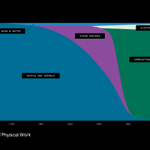
Technical moats are mostly over at this point. If you’re building something that is meant to be durable, the only moats now are:
• Proprietary data
• Network effects
• A physical component
Alfred Lin retweeted

personal agents, the end of friction, economic consequences of finally getting around to it

Alfred Lin retweeted

I'm starting a podcast, "Confession," where I invite tech veterans to share their painful lessons.
We all connect through shared pain. Hear founders & CEOs like Satya Nadella (Microsoft), Dara Khosrowshahi (Uber), Luana Lopes Lara (Kalshi), and others share their stories and lessons learned.
Subscribe to Confession on...
✅ Spotify: open.spotify.com/show/6x2J7r…
✅ Youtube: youtube.com/watch?v=sd5spHYX…
✅ Apple: podcasts.apple.com/us/podcas…
@SatyaNadella @Dkhos @luanalopeslara
Alfred Lin retweeted

everybody talks about the economics of the ai data center build, the biggest capex buildout in human history
not nearly enough people are stepping back to just marvel at the technology itself
i just met amin vahdat, leader of google’s ai data center buildout, whose team delivered this beautiful cluster. it is insane the elite level of technology and engineering excellence that goes into every component of the modern data center, from the accelerators to the model codesign to the racks to the networking to the manufacturing and assembly. the chips are the most insane feat of all, but every component of the whole system is a beast.
goosebumps. we didn’t get to see the great pyramids get built, but this is even better.
amin also predicted for me what this photo might look like for frontier clusters a decade from now…. training data episode drops soon :)

The first Vera Rubin clusters are here!
Yesterday, @IneffableLabs took delivery of their Vera Rubin NVL72 cluster from @googlecloud @nvidia
The AI frontier jumps forward by yet another generation of hardware. Acceleration continues.

Alfred Lin retweeted

The @BostonCollege Investment Committee (an LP and my beloved alma mater) asked for a few thoughts on what's happening in AI. I recorded a test run yesterday morning and then shared it with my partners, who encouraged me to share it more broadly... so here you go!
This is not a sales pitch, it's just a reflection on what we're seeing. And it wasn't intended to be shared, so please pardon the rough edges.
loom.com/share/c016702964a04…

Alfred Lin retweeted

We just submitted a regulatory filing to introduce margin on a subset of long-dated prediction markets. This will not apply to sports, culture, and a few other categories.
We are very excited to be taking what we believe is our most important step toward institutional adoption so far.
Capital efficiency has been the biggest bottleneck for institutions, and margin is the single most requested feature. Fully collateralizing long-dated contracts ties up substantial capital for months or years, making participation impractical for many institutions. It is very difficult for a large institutional market to develop without margin.
Margin addresses that problem by reducing capital requirements, subject to strict risk standards.
Some important characteristics of our proposal:
• Margin applies only to a narrow set of categories, excluding sports and culture.
• It is geared toward institutions and subject to strict eligibility requirements.
• The risk methodology is modeled on approaches used by established clearinghouses and tested over decades. It incorporates conservative safeguards around volatility, liquidity, concentration, and event risks, as well as measures to limit sharp increases in margin requirements during market stress.
The goal is a better trading experience for users. Greater capital efficiency enables more institutional participation, bringing deeper liquidity and better pricing. That makes our markets more attractive to more traders, whose participation further strengthens liquidity and improves the experience for everyone.

Alfred Lin retweeted

Coding agents struggled to navigate the messiness of DoorDash’s data, so we built our own internal data agent: Vera. Business leaders now can self-sufficiently make critical decisions and answer WBR questions with Vera, which previously would’ve required hours of analyst work. Analysts now oversee our semantic data layer and maintain the eval set.
Anyone across DoorDash can now ask Vera and get reliable answers to their business questions. Great work by the team on this one!

We built Vera, an internal data agent that gives teams across DoorDash reliable answers to business questions from our data.
Frontier models inside general-purpose harnesses like Codex and Claude Code often struggle with the sprawl of enterprise data. Our own harness, with prompting, retrieval, and domain skills tuned to that data, significantly outperformed standard agents with simple data connectors.
We benchmark models and reasoning efforts inside the same harness, with an LLM judge scoring tool usage, table selection, and answer correctness. With extended reasoning effort, frontier models from Anthropic and OpenAI achieve similar scores, while differing in token usage:

Alfred Lin retweeted
The future is already here
We just have to choose it and spread it faster

Swiss Re, one of the world’s leading reinsurers, found that Waymo's autonomous vehicles generated 88% fewer property damage claims and 92% fewer bodily injury claims than human-driven vehicles.
humanprogress.org/waymo-driv…

Alfred Lin retweeted

We did it again. Temporal just raised a $550M Series E round at a $12.55B valuation.
Learn more about how we got here: temporal.io/blog/temporal-ra…

Alfred Lin retweeted

The Boring Company is pleased to announce our Series D funding round of $3 billion, led by the United Arab Emirates. The financing now values The Boring Company at $23 billion.
Other key investors in the round include Human Capital, Vy Capital, Valor Equity Partners, Sequoia Capital, A16Z, Temasek, Shamal Holding, and Baron Capital, in addition to other valued existing and new investors.
Full details here:
boringcompany.com/series-d

Alfred Lin retweeted

We’ve raised $550M at a $15.5B valuation co-led by @lightspeedvp and @DiffusionVC.
We're using this funding to help law firms, in-house legal teams, and professional services build and own their intelligence.
Alfred Lin retweeted
We’re launching the Citizen Debt Forecast (CDF): a real-time projection of our national debt powered by people’s beliefs aggregated by prediction markets.
The national debt just crossed $40 trillion.
And it’s accelerating fast. It took hundreds of years to accumulate the first $20 trillion and 18 years for the next $20 trillion.
For FY 2026, the government made $5.6T and spent $7.4T creating a $1.9T deficit (5.9% of GDP). Here’s the breakdown of spend:
• $4.4T (60%) in mandatory across Social Security, Medicare, Medicaid, SNAP, etc.
• $1.9T (26%) in discretionary across Defense, Education, Transportation, Police, etc.
• $1T (15%) in Net Interest
The debt feeds on itself. A bigger debt stock means a bigger interest bill. If the economy and government revenues don't grow fast enough, more borrowing is needed to finance the existing debt - creating a vicious cycle of growing interest payments and debt. The debt impacts every American: higher interest rates flow straight to borrowing costs from mortgages to credit cards.
So when does the debt get dangerous? There is no precise number and it’s more about the trajectory. Things turn bad when debt keeps growing faster than the economy and investors start demanding substantially higher rates to lend to the government.
The government has a few (bad) options to pay down the debt:
• raise taxes (less money for Americans),
• cut spending (fewer services),
• print money (inflation), or
• default (trust erosion).
We could also grow our way out of it, but it requires GDP growth we haven't seen in decades, sustained for decades.
So how do we know if we're making progress?
Our current projections of the debt come from a handful of institutions: the Congressional Budget Office (CBO), the OMB, the CRFB, and the Penn Wharton Budget Model. The CBO is the default: they forecast debt-to-GDP 30 years out and set the number everyone else anchors to.
These are excellent models, built by serious people. But they share a limitation: they're centralized. Each produces a single projection, shaped by one institution's assumptions, and updated only a few times a year. When the facts change, the forecast waits for the next release.
Prediction markets offer something different. They match buyers and sellers, and aggregate beliefs across millions of people through an open, competitive bidding process. If traders think the market is wrong, they profit from correcting the price, so new information is incorporated in real time. The market produces a continuously updated forecast that can aggregate information no single committee possesses.
One of my favorite Druckenmiller quotes from his op-ed last week summarizes this perfectly:
"Markets aggregate information no committee possesses, and prices are how that information reaches decision makers."
The Citizen Debt Forecast (CDF) is powered by free and open markets. It is a 10-year projection of the debt-to-GDP ratio, built from three forward curves – inflation, real GDP, and Fed funds – generated from Kalshi markets and layered on top of the CBO's fiscal baseline. It aggregates the views of thousands of traders into a single, easy-to-read picture of where the debt ratio is headed.
We display the CDF next to the CBO forecast, allowing you to compare the two paths. We also made it interactive, so you can enter your own assumptions to compare with the citizen’s forecast and the CBO’s. You can even select from some pre-built scenarios: goldilocks, stagflation, sovereign default, and more.
Many in Congress, on both sides of the aisle, are concerned about the debt. People and institutions already use prediction markets to track elections, geopolitics, and rates. Debt forecasts were harder to read, so we built a dashboard that puts them in one place. I hope this becomes a go-to market-based projection to complement committee-based forecasts and serve as an additional data point for the general public and policymakers.
The debt is one of the greatest challenges facing America. My door is always open to anyone working on solving it.
kalshi.com/gdp-scenarios

Alfred Lin retweeted

WE'RE ON AIR!
𝗔𝗜𝗥 𝗶𝘀 𝗼𝗳𝗳𝗶𝗰𝗶𝗮𝗹𝗹𝘆 𝗼𝘂𝘁 𝗼𝗳 𝘀𝘁𝗲𝗮𝗹𝘁𝗵 - 𝘄𝗶𝘁𝗵 $𝟱𝟬𝗠 𝗶𝗻 𝗳𝘂𝗻𝗱𝗶𝗻𝗴 𝗹𝗲𝗱 𝗯𝘆 @sequoia , and @Greenoaks .
We started AIR with a simple belief: as AI agents become more capable, the security model around them has to evolve.
Agents are no longer just generating answers. They’re connecting to tools, skills, MCPs, plugins, websites, and internal data - and taking real actions across the enterprise.
Today, we’re introducing the 𝗰𝗼𝗻𝘁𝗲𝘅𝘁 𝗳𝗶𝗿𝗲𝘄𝗮𝗹𝗹 𝗳𝗼𝗿 𝗔𝗜 𝗮𝗴𝗲𝗻𝘁𝘀: a new security layer built to continuously analyze what enters an agent’s context, control what can run, and stop threats in real time before they turn into action.
We’re incredibly grateful to our investors, partners, customers, and everyone who believed in us early.
This is a huge milestone for our team, and an even bigger beginning ❤️
Read our full story in the first comment 👇
Alfred Lin retweeted
What happens when there are more agents than eyeballs browsing the internet? How will the economics of the internet be reinvented?
@paraga thinks Shapley values may hold the answer.
Parag built Twitter over a decade, eventually becoming CEO and selling the company to Elon. He's spent the last three years building @p0, a search engine built for agents instead of humans.
His core argument:
1) human click data is a bug. Agents aren't just a new technology, they're a distinct customer – and the feedback loop that made Google great is the wrong signal for the thing actually doing the work;
2) the ad-funded web assumed scarce human attention. If agents show up instead of eyeballs, the business model underneath the internet has to be rebuilt, or good content stops being published.
The conversation covers:
— why he shipped a search agent before a search engine, and how that let him grow the index incrementally instead of buying a full web crawl up front
— the billion-to-billion matching problem: pull the right 1,000 tokens out of a trillion web pages, and your agent uses under half the tokens
— going from a 3-second compute budget to 200 milliseconds
— why he doesn't think Parallel is a neo-lab: "our output is a complement to a model"
— the Google Cloud deal — on GCP, your grounding options are now Google Search or Parallel Search
— reinventing the economics of the internet, Shapley values as a payment rail for publishers, and why the company was originally incorporated as Shapley Inc
— why routing 2-10% of inference spend to web data would dwarf every content business outside the walled gardens
— the web going from pull to push: "call me if this happens"
00:00 Introduction
03:25 What Is Web Search
05:17 Why Start a New Index
07:52 Search Agents First
10:17 Not a Neolab
13:14 Agents vs Google Search
19:38 Inside the Search Stack
28:59 Search Multipliers With Agents
30:21 Meeting Prep Agent Workflows
31:46 Quality Cost Latency And Turbo
32:42 Are Agents Overtaking Humans
34:28 Ads Model Meets Agent Web
37:20 New Incentives For Content
40:48 Shapley Values Attribution
47:46 Parallel Web And Future Vision
Hosted with my very unwilling co-host @andrew__reed and @sequoia
Alfred Lin retweeted

Warning: this is a slightly soppy post!
I first met Julien Bek 8 years ago.
It was my first week at Atomico and his first week at Accel.
We instantly became friends. We both have parents with chronic illnesses and I think that bonded us early on. I saw what a truly good human he is. That was very clear.
Over the next 8 years, he has become one of the best investors in Europe. He is a Partner at Sequoia. He has led early rounds in bangers like Rillet and Tacto.
Despite all the success, he is one of the kindest people I know. He is an incredible son, and it makes me so proud and happy to see him become a Dad.
This was one of the most special shows I have done, uncovering the magic behind what makes Sequoia one of the best firms in the world.
Huge thanks to @DeanMeyerrr, @gradypb, @Konstantine, @shaunmmaguire, @dougleone, @nataliemiyake, @Bryce_Keane, @LucianaLix, @_georgerobson for helping to make this such a special one.
My notes below with @JulienBek.
1. What Everyone Thinks They Know About Sequoia but Actually Gets Wrong
Outsiders assume Sequoia sits back and waits for the hottest deals to come to them. In reality, every partner operates as a relentless hunter. Each person is expected to perform individually while working as a team to win the most competitive deals.
2. How Sequoia Came to Be the First Ambassador in Citadel
Sequoia won Citadel Securities’ first outside capital round because partner Constantine built a relationship with Ken Griffin that began when Constantine was a student. Years of persistence, mentorship, and trust ultimately beat transactional dealmaking.
3. The Biggest Takeaway From Every Sequoia Offsite
Decades of legendary returns show that financial engineering and ownership tweaks do not drive top-tier performance. The common thread behind Sequoia’s greatest investments is much simpler: a sponsoring partner with extraordinary conviction.
4. Why Sequoia Is Experimenting With Different Types of Decision-Making
Live IC meetings are great for fast debate, but Sequoia is incorporating asynchronous written memos to encourage slower, more deliberate thinking. Combining documented reflection with live discussion helps expose blind spots and improve investment decisions.
5. Why Sequoia Is Not Less Ownership-Centric Than Ever
Targeting high ownership reflects the scarcity of a partner’s time. An investor can realistically serve on only around 20 boards over a career. Deep, hands-on company building becomes impossible when attention is diluted across hundreds of tiny 2% positions.
6. Lesson From Don Valentine on Founder Selection
Don Valentine’s matrix of “founders you like” versus “founders who make money” shows that likability does not determine returns. Even arrogance can be the byproduct of an exceptional strength. Investors should focus on whether that defining spike creates a genuine competitive advantage.
7. The Biggest Lesson From Doug Leone
To uncover the truth in reference checks, use Doug Leone’s technique: ask for a founder’s best reference, then immediately ask, “Who would be your worst reference, and why?” Watching how their composure shifts can reveal far more about self-awareness and operating style.
(links in comments)
Alfred Lin retweeted
Introducing Harvey II: smarter agents from the start.
- Featuring Harvey Tenet, our first model trained for legal work
- Built around matters and projects
- Agents start with the files, context, permissions, and history they need
- Assign tasks to lawyers or agents, then track and review the work
- Harvey remembers how you work and writes like you
