

🇱🇹 Interbellum aura
Joined March 2023
- Tweets984
- Following188
- Followers405
- Likes4.6K


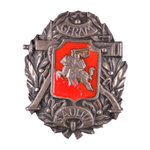


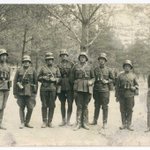
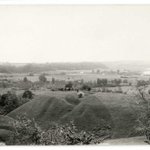


🇱🇹 Vytauto Didžiojo mirties 500-ųjų mirties metinių baigiamasis minėjimas Karo muziejaus sodelyje 1930 m.


Vickers-Carden Loyd 🇱🇹 retweeted

Netrukus, 19:30 per LRT, dokumentinis filmas apie Tėvynės apsaugos rinktinę - TAR "Pasmerktųjų kariuomenė".


Vickers-Carden Loyd 🇱🇹 retweeted

In 1919, around 4,000 German volunteers, most from Saxony, helped save Lithuania from the Bolsheviks.
Germany wanted to keep the Red Army away from East Prussia. Lithuania’s fledgling army needed their experience, machine guns and artillery.
In February, the Saxons helped stop the Soviet advance on Kaunas. At Kėdainiai, the first defenders killed in the fighting were Germans. By May, Lithuanian and Saxon troops were advancing together, retaking Ukmergė and pushing towards Utena.
Most returned home that summer, having bought Lithuania time to strengthen its own army. Four Saxon officers received the Cross of Vytis.

Vickers-Carden Loyd 🇱🇹 retweeted
Bruno Sutkus’s son wanted to become a military pilot. His grandson would eventually command Lithuanian soldiers in Kosovo.
His son, Vytautas, was barred from military pilot training under Soviet rule because Bruno had fought for Germany, according to the family’s account. In January 1991, Vytautas was wounded defending Lithuanian independence in Vilnius.
His son Gerardas grew up to serve in independent Lithuania’s army. In 2006, he commanded a Lithuanian platoon in Kosovo. By 2010, he was commanding an infantry company in Lithuania’s volunteer forces. Many of his colleagues didn’t even know who his grandfather was.
As a child, Gerardas remembered the adults discussing the war in German so the children wouldn’t understand. Later, visiting Bruno in Germany, he could finally talk to his grandfather about it himself.
He kept a copy of Bruno’s wartime diary at home. Asked about the man he remembered, Gerardas spoke of his affection for the family: “We all felt his love.”


Bruno Sutkus also helped supply the Lithuanian partisans fighting Soviet occupation after the war.
In his memoir, he describes secretly setting aside three sacks of grain from the farm he managed near Lekėčiai and passing them to the resistance through his cousin. His future wife, Antanina Povilaitienė, obtained penicillin and dressings from a doctor in Kaunas, which Sutkus helped get to the partisans.
In February 1947, an informer denounced him. Soviet interrogators wanted to know about the grain, where he had obtained the penicillin and what had happened to his weapons.
He describes being beaten, having his fingernails torn out and being subjected to a mock execution. When he refused a blindfold and told them to get it over with, an interrogator placed a matchbox on his head and shot at it.
His mother and Antanina eventually arranged a bribe: crystal glasses, vodka, smoked ham and clothing.
The following morning, he was released for lack of evidence


Vickers-Carden Loyd 🇱🇹 retweeted
My favourite bit of pagan-papal diplomacy is the story of Gediminas calling the pope his “father”, which helped convince the pope that Lithuania’s pagan ruler was ready to become a Christian. The papal envoys got a surprise when they met him in 1324. Gediminas explained that he called the pope his father because he was older than him and deserved respect for his age. As a matter of courtesy, he called men his own age his brothers, and younger men his sons.


Vickers-Carden Loyd 🇱🇹 retweeted

Q: Lithuania has invited the U.S. to establish a permanent U.S. base in Lithuania.
Trump: We will certainly look at it. I know so many people in Lithuania. They are great people.

Vickers-Carden Loyd 🇱🇹 retweeted
One of the oldest surviving Baltic texts is a complaint about someone wanting to drink without paying.
The Old Prussian Basel Epigram, usually dated to 1369, survives in a Latin manuscript. It basicall say: you’re no good company if you want a drink but won’t pay.


Vickers-Carden Loyd 🇱🇹 retweeted
In autumn 1655 around 1,600 Lithuanian cavalrymen entered Swedish service.
They came out of the Union of Kėdainiai, signed on 20 October by 1,134 Lithuanian nobles which broke with Poland and recognised Charles X Gustav as Grand Duke of Lithuania. The horsemen were placed under Colonel Ernst Johan Korff, a Livonian-German officer from the Grand Duchy's own elite.
They were organised into two cavalry regiments, commanded by Ernst Jan Korff and Wilhelm Korff. A third regiment under Harald Igelström was made up mostly of Lithuanian nobles. For a few months, Swedish armies operating in Lithuania had organised Lithuanian cavalry in their ranks.
The ethnicity of all 1,600 can't be established, but the territory Sweden held was mostly Samogitia and northern-central Lithuania, so most were likely ethnic Lithuanians.
The arrangement ended quickly. Swedish troops quartered in Lithuania took money, horses and fodder from the population, and in spring 1656 the country rose against them. The two Korff regiments did not join the rising. In May they retreated with the Swedes into Courland.
For a short time, there were Lithuanian cavalry regiments riding under Charles X Gustav.
