







Alberto retweeted

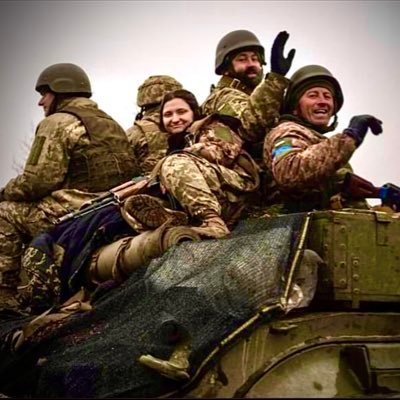
Raise your hand 🖐️ if you stand with President Zelenskyy and Ukraine.
We are proud of our Canadian & European Friends and ashamed of Donald Trump.
I want all of my 101K friends to follow YOU! 💙💛
Who is with me? 🖐️

Alberto retweeted

Domani 3 marzo conto 82 anni…non pensavo di vivere tanto. Mi sento come l’ulivo di questa foto che ha dovuto ripartire e ricominciare una vita dopo essere stato distrutto senza pietá: ma il Signore fa risorgere anche i morti! Non e solo questa la mia fede è la mia esperienza


Alberto retweeted

“America, I have a question for you.
You chose Donald Trump as your president. And today, your president picked up the phone and called the world’s number one terrorist.
1/n

Alberto retweeted

Talk to Putin. Tell him to withdraw and the war will be over. He can just leave. Just like we left Afghanistan and Vietnam. He can just leave Ukraine.


Alberto retweeted

La Jihad islamica palestinese ha diffuso un video di propaganda che mostra l'ostaggio Alexander Turbanov (che sarà rilasciato tra poco) in forma mentre pesca sulle coste di Gaza per dimostrare di essere superiore moralmente a Israele nel trattamento dei prigionieri, sapendo che in Occidente c’è chi ci crederà.
Alberto retweeted

Remains of Thermopolium of Vetutius Placidius (late 2nd - early 1st Century BC), Pompeii :
In Ancient Roman World, Thermopolium was a place where it was possible to drink and eat something hot. It can be considered as today's fast food or diner. Ancient Romans who worked far from home went there for a quick lunch. Thermopolia are forerunners of today's restaurant. Items that were once served in these places are compared to modern fast food. These places were mainly used by those who could not afford a private kitchen, could not cook, travellers and often inhabitants of insulae, sometimes leading them to be scorned by upper class. A typical Thermopolium would consist of a small room attached to, but not accessible from, a house, with a distinctive masonry counter in front. Well-preserved ruins of Thermopolia can be seen today in Pompeii, Herculaneum and Ostia in Italy.
The best preserved thermopolium in Pompeii (89 have been found) is that of Lucius Vetitius Placidus (Regio I, Insula 8.8).
Embedded in the richly decorated counter there were 6 dolia (spherical terracotta containers approximately 1.50-1.60cm high, almost certainly closed with lids), used to contain food, such as chickpeas, beans, dried fruit.
In one of Dolia some coins were found (1385, bronze coins with a total value equal to approximately 585 sesterces) now visible at National Archaeological Museum of Naples). They were probably the proceeds of several days of activity. Perhaps the owners of the place decided to hide them.
Interesting is the aedicule on back wall, particularly well preserved, which constitutes a lararium dedicated to protector gods of the house (Lari), Genius protector of the owner, god of commerce (Mercury) and god of wine (Dionysus).
Owner's private house was attached to room, which was accessed via an independent entrance. There was also an internal garden, where aromatic herbs useful for cooking were grown.
🎥© pompeii_parco_archeologico (IG)
#archaeohistories
Alberto retweeted
The Sufi Dance - Whirling Dervishes, an important cultural and spiritual tradition among the Sufi group. Besides, this dance is a significant attraction to visitors and other outsiders because, to them, watching Turkish dancers spin is breathtaking. However, Rumi’s whirling dervishes is not just a source of entertainment for the devoted members of the Mevlevi Order of Islam. To them, whirling and spinning is a customary meditation practice. It is also a worship ceremony that aims to reach Karma, the source of all perfection.
The dance is unique to dervishes because they let go of their ego and personal desires to get involved fully in the music. It seems easy to do when watching, but you need a lot of practice to be an expert.
There is a long history of the origin of the whirling dervishes. The Mevlevi Order, a Sufi order whose origin is in Konya, was founded by followers of Muhammad Balkhi Rumi (Mevlana Celaddiin-i Rumi). Rumi was a Persian poet in 13th Century AD and an Islam theologian. The Mevlevis remembered their God by whirling.
Whirling is moving in a circular motion in speed and force, resembling the Mevlevis dance. Dervish is another name for the Mevlevis Order. Therefore, since dervish danced by whirling, the dancers were called whirling dervishes. The Mevlevi Order was established 750 years ago, and its traditions are mostly related to the teachings of Rumi. Rumi’s other name is Mevlana, the most celebrated poet in Turkey and Iran. He is also respected in Sufi Islam.
The Sema ceremony was characterized by the whirling and spinning dance, a characteristic of a Whirling Dervish. The dancers’ goal was to achieve a state of Sufism, which gives them inner power and peace to connect with the world.
Whirling Dervishes was introduced 700 years ago by the Mevlevi Order of Islam, which was established by Rumi’s son, Sultan Veled, with help of Husameddin Chelebi. Sultan was an excellent leader of the Mevlevi Order, and his extraordinary leadership saw its growth and spread to other cities. For example, Mevlevi spread to countries like Syria, Egypt, Lebanon and Palestine. Before his death, Rumi met Shams al-Din of Tabriz, a mystic who changed his life. According to him, the mystic was a representative of perfection, and although he had a devoted group of followers, he started following Shams.
Rumi’s students and followers watched him ditch his values and rituals in disbelief to follow Shams al-Din’s. They were angry and attempted to break the mystic’s hold over Rumi. The students succeeded by killing Shams al-Din in 1247, which affected Rumi and went into mourning. At the end of his mourning period, Rumi introduced new ideas about celebrating God’s love. And that was the birth of Sema ceremonies. The Dervishes dance in long white gowns and full skirts and cover their heads with tall hats.
When they cast the tunic off during the ceremony, it is an indication that they are turning their backs on the world to draw closer to God. The sheikh of the dervish lodge wears a waist-length woolen jacket to represent Islamic law. The conical hat, which can be brown, grey, or black, represents the tombstones of their egos.
In the early years of the Mevlevi Order, men and women gathered to pray, share spiritual conversations, and whirl together. Later, the men started isolating the women to dance separately, forming their groups. Things have changed, and today, only men can be whirling dervishes according to traditions. However, some places like Istanbul allow women to dance with men.
🎥© karabasivelidergahi (IG)
#archaeohistories
Alberto retweeted
The Battle of Manzikert occurred on August 26, 1071 between the Byzantine Empire and Seljuk Turkish forces led by Alp Arslan, resulting in the defeat of the Byzantine Empire and the capture of Emperor Romanus IV Diogenes.
During the 1060s the Seljuk sultan Alp Arslan allowed his Turkish allies to migrate towards Armenia and Asia Minor, where they sacked cities and plundered farmland. In 1064 they destroyed the Armenian capital at Ani. In 1068 Romanus IV led an expedition against them, but his slow-moving infantry could not catch the speedy Turkish cavalry, although he was able to capture the city of Hierapolis. In 1070 Romanus led a second expedition towards Manzikert, a city in eastern Turkey's province of Mu?, now known as Malazgirt, a Byzantine fortress that had been captured by the Seljuks, and offered a treaty with Arslan Romanus would give back Hierapolis if Arslan gave up the siege of Edessa. Romanus threatened war if Arslan did not comply, and prepared his troops anyway, expecting the sultan to decline his offer, which he did.
Accompanying Romanus was Andronicus Ducas, an odd choice as Ducas was an old enemy of the emperor. Romanus left his best general, Nicephorus Botaniates, at home, suspecting his loyalties (although he was certainly more loyal than Ducas). The army consisted of about 5000 Byzantine troops from the western provinces, and probably about the same number from the eastern provinces; 500 Franks and Normans mercenaries under Roussel de Bailleul; some Turkish, Bulgarian, and Pecheneg mercenaries; infantry under the duke of Antioch; a contingent of Armenian troops; and some (but not all) of the Varangian Guard. Turkish sources give the number of troops to be closer to 200 000. Other sources estimate them to be around 40 000. Gibbons claims it was the largest army ever fielded by the Roman Empire, East or West.
The march across Asia Minor was long and difficult, and Romanus did not endear himself to his troops by bringing a luxurious baggage train along with him; the Byzantine population also suffered some plundering by Romanus' German mercenaries, whom he was forced to dismiss. The expedition first rested at Sebasteia on the Halys, and reached Theodosopolis in June of 1071. There, some of his generals suggested continuing the march into Seljuk territory and catching Arslan before he was ready. Some of the other generals, including Nicephorus Bryennius, suggested they wait there and fortify their position. Eventually it was decided to continue the march.
Thinking that Alp Arslan was either further away or not coming at all, Romanus marched towards Lake Van expecting to retake Manzikert rather quickly, as well as the nearby fortress of Khliat if possible. However, Arslan was actually in Armenia, with 30 000 cavalry from Aleppo, Mosul, and his other allies. Arslan's spies knew exactly where Romanus was, while Romanus was completely unaware of his opponent's movements.
Romanus ordered his general John Tarchaneiotes to take some of the Byzantine troops and Varangians and accompany the Pechenegs and French to Khliat, while Romanus and the rest of the army marched to Manzikert. This probably split the forces in half, about 20 000 men each. Although it is unknown precisely what happened to Tarchaneiotes and his half of the army after this, they apparently caught sight of the Seljuks and fled, as they later appeared at Melitene and did not take part in the battle.
#archaeohistories

Alberto retweeted
Myra was a Lycian, then ancient Greek, then Greco-Roman, then Byzantine Greek, then Ottoman town in Lycia, which became small Turkish town of Kale, renamed Demre in 2005, in present-day Antalya Province of Türkiye.
The ancient city of Myra is one of the best ancient cities to visit. The ancient city of Myra was built on a mountain slope overlooking the sea, and Myra is one of the places that impressed people with its rock tombs. Myra was one of the most important cities of Lycia. Archaeologists, estimate it was made in 5th Century BC. Excavations in Myra started in 2009 and continue to this day. Over the next two years they excavated a small, stunning 13th Century CE, chapel sealed in an uncanny state of preservation. Carved out of one wall is a cross that, when sunlit, beams its shape onto the altar. In February 2021, Akdeniz University researchers led by Nevzat Çevik announced the discovery of dozens of 2200 year-old terracotta sculptures with inscriptions. Archaeologists also revealed some material remains of the Hellenistic theater made of ceramic, bronze, lead, and silver. The figurines with partly preserved paint contained the appearances of men, women, cavalry, animals, some Greek deities and the names of artists.
Myra is one of the most popular travel destinations in Türkiye. Tourists from all over the world come to visit the ancient city of Myra. The ancient city of Myra became famous thanks to Saint Nicholas, who lived in here. Turks call him Noel Baba, and in other countries they call him Santa Claus. Saint Nicholas was born in Patara at the end of 21st Century.
One of the impressive ruins of Myra, Lycian temples and rock tombs carved into the steep slopes of the acropolis. Most of the tombs carved into the rocks resemble a large house in the distance, and some look like temples. Lycians believed that the dead should be buried closer to heaven. After death, soul acquires wings and flies up into heavens. At the very top were the tombs of people who were significant during their lifetime. The most powerful people had two-story tombs. And the poor were buried on the first floor. Lycian inscriptions have been preserved on the tombs, but at the moment they have not been deciphered. There are two Lycian necropolises in Myra, they are gathered on the rock above the theater and in the area called the river necropolis to the east of it. Most of the rock tombs look like a big house from afar, and some are temple-shaped. The most striking tomb of the river necropolis is the Pictorial Tomb, which the traveler Charles Fellows said when he saw the rock tombs in 1840, he could still choose the colors red, yellow, blue and purple. Today, these colors cannot be seen, only traces of red and blue.
Ancient Theater is one of the other important and surviving structures of Myra. The theater has 35 rows of seats and seats 11500. The three-storey stage building has friezes and reliefs. On the wall of the western gallery, “the place of the traveling tradesman Gainus” is written. The inscription in front of the goddess of victory (Nike) figure reads “Bring luck to the city and always be victorious”. Located at the entrance of the city, theater inevitably attracts you. On the way to the Acropolis area near the theater, the remains of the baths on the left of the road are interesting examples of Roman brick architecture. The city’s water needs were met by channels carved into the rock at the edge of the valley where the Demre Stream flowed.
#archaeohistories

Alberto retweeted
Amethyst Bathtub :
Greeks and Romans used amethyst in several ways from beads in jewelry to amulets. These ancient civilizations placed a high value in this stone. Their belief was that the amethyst crystal meaning was synonymous with luxury (obviously the maker of this bathtub did too). As such, it was highlighted as part of their crowns, scepters and rings. Christian bishops wore amethyst jewelry in the form of a ring. It’s color was meant to symbolize royalty.
Baldi of Florence, Italy, has made the ultimate luxury bathtub out of precious purple amethyst and accented with 24 karat gold plated legs. The amethyst bathtub retails for only $125,000!
The company also made a matching tumbler, lotion dispenser, and soap dish. Because they are very considerate and know that you would want these things in the bathroom to match your magnificent amethyst bathtub.
Amethyst healing properties are as plentiful as the stone itself. It is thought of mostly as a protective stone. As it is linked to the crown chakra, it is helpful in purifying the mind and clearing it of negative thoughts. This includes the negativity of stress and anxiety, which is why many meditate with amethyst so as to rid themselves of that darkness. Amethyst healing properties are especially useful in regards to work-related stress, because the stone is also associated with abundance; therefore relieving stress while emanating prosperity. The amethyst properties which facilitate intuition and communication can also be applied to increased work effectiveness. All good reasons to sit for an hour or so in a amethyst tub full of bubbles to clear out your chakras.
Sadly, Baldi no longer carries the Amethyst Bathtub.
#archaeohistories


Alberto retweeted
"A 800 year old church in Borgund, Norway; made entirely from wood without a single nail" -
Borgund Stave Church; a former Parish Church of Norway in Lærdal Municipality, Vestland County, Norway. It was built between 1180-1250 AD, dedicated to the Apostle Andrew, with later additions and restorations. Its walls are formed by vertical wooden boards or staves, hence name Stave Church. It is a unique example of impressive medieval architecture and is a distinctive landmark on the tourist route to Lærdal.
The church is exceptionally well preserved and is the most distinctive stave church in Norway. Some of its finest features are the lavishly carved portals and the crosses and carvings of dragon’s heads on the roofs. Borgund Stave Church was purchased in 1877 AD, by the National Trust of Norway (Fortidsminneforeningen) thereby saving it from demolition. Today, no longer regularly used for church functions, now a museum run by Society for Preservation of Ancient Norwegian Monuments.
The area surrounding Borgund Stave Church is rich in historic cultural heritage. Vindhellavegen, part of the Kings Road across Filefjell, is situated right by the church and offers beautiful walking possibilities. This renovated, historic path was awarded “Norway’s most beautiful road“ by the Norwegian Public Roads Administration in 2014. The Kings Road across Filefjell was one of the winners of the Europa Nostra Cultural Heritage Award in 2017. Borgund Stave Church is certified Environmental Lighthouse since 2010.
🎥© archeojobs (IG)
#archaeohistories


Alberto retweeted

This 2,700-year-old tablet is the oldest map of the world.
It reveals just how differently the ancients understood the world — but one detail is particularly strange.
It sheds light on a VERY ancient story… (thread) 🧵


Alberto retweeted
Roman Empire, one of the most significant and enduring powers in history, was shaped by the vision and ambition of its emperors. From Augustus, the empire’s first ruler, to Commodus, whose rule led to its initial decline, the men who wore the imperial purple influenced not only the fate of Rome but the entire Western world. But beyond the grand sculptures and coins depicting idealized versions of these leaders, what did they really look like?
Modern technology allows us to reconstruct their faces with impressive accuracy based on ancient busts, coins, and written descriptions. This article explores the facial reconstructions of 18 Roman emperors, offering a glimpse into the lives and legacies behind these remarkable faces. Let’s dive into each emperor’s story, starting with the dawn of the empire and ending with its first major collapse into instability.
1. Augustus (27 BC – 14 AD)
As the first emperor of Rome, Augustus ushered in a new era after defeating Mark Antony and Cleopatra. His leadership marked the transition from Republic to Empire, bringing about the Pax Romana, a period of relative peace. His facial reconstruction shows a youthful, determined man, embodying the emperor who would become a god in the eyes of his people. Augustus skillfully used propaganda to consolidate his power, ensuring that his image was revered across the empire.
2. Tiberius (14 – 37 AD)
Tiberius, Augustus’s stepson and successor, had a troubled reign, marked by growing paranoia. His facial reconstruction reflects his stoic, reserved personality. Described as a competent but reluctant ruler, Tiberius withdrew from public life in his later years, governing Rome from the island of Capri. His reign laid the groundwork for future autocrats, and his legacy is often overshadowed by his successor’s more infamous reign.
3. Caligula (37 – 41 AD)
Perhaps one of the most infamous Roman emperors, Caligula is remembered for his erratic behavior and cruelty. His facial reconstruction, surprisingly youthful and innocent, stands in contrast to his reputation. Caligula began his reign with promise but soon descended into madness, leading to acts of violence, tyranny, and excess. His brief, chaotic rule ended in assassination, but his legacy endures as one of Rome’s most notorious despots.
4. Claudius (41 – 54 AD)
Claudius was an unexpected emperor. Initially underestimated due to his physical disabilities and perceived weakness, Claudius proved to be a capable and intelligent ruler. His reign saw the conquest of Britain and many administrative reforms. The facial reconstruction portrays him as a more mature and wise figure, reflecting his perseverance and sharp intellect. Claudius managed to survive in a deadly political environment and solidified his legacy as a competent ruler.
5. Nero (54 – 68 AD)
Nero, one of the most notorious figures in Roman history, is infamous for his cruelty, extravagant lifestyle, and rumored responsibility for the Great Fire of Rome. His facial reconstruction portrays a youthful and innocent-looking figure, a stark contrast to the emperor known for his tyrannical reign. Nero’s rule began with promise, but his erratic behavior and persecution of Christians led to his downfall. His reign ended in revolt, and he took his own life to avoid capture.
6. Galba (68 – 69 AD)
Galba was the first emperor of the turbulent Year of the Four Emperors, ruling for just seven months. His reign was marked by his strict and uncompromising leadership, which quickly led to his assassination. The facial reconstruction of Galba reflects his stern and uncompromising nature, showing a man who was feared but not beloved. His short reign paved the way for more instability.
© The Archaeologist
#archaeohistories
