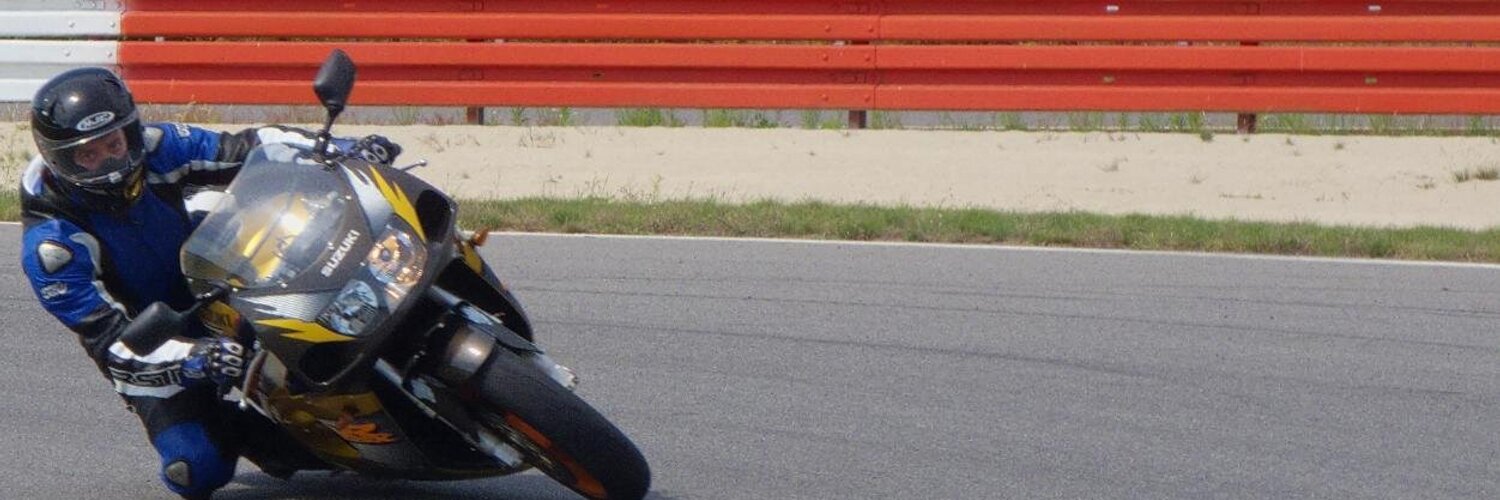

Mae gowannen! I am researcher & developer, Dr.-Ing., astronomy & natural science affine, I do love my motorbikes, music & singing, science fiction & fantasy.
Joined November 2013
- Tweets43.8K
- Following1K
- Followers1.6K
- Likes109K




Pinned Tweet
What's possible with #vision, #passion, #TeamWork, #hardwork & a whole lotta #money!
#SpaceX #Starship @SpaceX @elonmusk


MasterM 🏍🚀🪐 retweeted

INTERSTELLAR (2014) was released nearly 12 years ago. Since its release, just 1 hour and 43 minutes have passed on Miller’s planet. 🌊
MasterM 🏍🚀🪐 retweeted

RIP Walter "Chekov" Koenig. Here he is looking for "nuclear wessels" in Star Trek IV (1986):


MasterM 🏍🚀🪐 retweeted

For the first time, we're watching plants breathe in real time.
Plants "breathe" through minuscule openings on their leaves known as stomata—a term derived from the Greek word for "mouths." These tiny pores perform a critical balancing act: they open to allow carbon dioxide (CO₂) to enter for photosynthesis, while simultaneously permitting water vapor to escape into the atmosphere through transpiration. This ongoing compromise influences a plant's growth rate, water requirements, and overall resilience, especially in challenging environments.
Historically, scientists faced significant limitations in studying this dynamic process directly. They could either observe stomatal movements under a microscope (often in artificial or uncontrolled settings) or measure overall leaf gas exchange (which reflects aggregate behavior but obscures microscopic details). A recent breakthrough from the University of Illinois Urbana-Champaign overcomes this divide with an innovative system called Stomata In-Sight.
This integrated tool combines three key technologies in real time:
- A live confocal microscope (specifically laser scanning) that captures high-resolution, three-dimensional images and videos of living stomatal cells and pores without damaging the tissue.
- Precise gas exchange sensors that quantify CO₂ uptake and water loss (stomatal conductance, photosynthesis, and transpiration) from the same leaf section.
- A controlled environmental chamber that maintains specific levels of light, humidity, temperature, and CO₂ to simulate real-world conditions.
By linking microscopic stomatal aperture changes (tracked via machine-learning image analysis for dozens of pores simultaneously) with whole-leaf physiological responses, researchers can now observe how individual stomata behave and contribute to the plant's overall performance under varying scenarios.
The implications are profound, particularly for agriculture. Water scarcity remains the primary constraint on crop yields worldwide. By identifying the genes and mechanisms that govern stomatal efficiency—such as opening/closing speed, density, or aperture size—scientists can develop breeding strategies for crops that conserve water more effectively while maintaining or boosting photosynthesis. This could lead to varieties better equipped to withstand drought, heat, and other effects of climate change, ultimately supporting higher food production with fewer resources.
Stomata In-Sight represents a major advance in plant science, transforming our ability to study—and ultimately engineer—plants that not only endure environmental stress but actively help humanity adapt to a changing climate.
[Crawford, J. D., Mayfield-Jones, D., Fried, G. A., Hernandez, N., & Leakey, A. D. B. (2025). Stomata in-sight: Integrating live confocal microscopy with leaf gas exchange and environmental control. Plant Physiology, 199(4), kiaf600. DOI: 10.1093/plphys/kiaf600]
RIP Chekov 😞, go get the stars!
#StarTrek

BREAKING — #StarTrek actor Walter Koenig, who portrayed Russian navigator Pavel Chekov, has died at age 90.
blog.trekcore.com/2026/10/st…


MasterM 🏍🚀🪐 retweeted
Since the year 2007, more than twenty detached human feet have been recovered along the coastal boundaries of the Salish Sea, an area spanning British Columbia and Washington State, with the vast majority of these anatomical remains discovered securely enclosed within modern athletic footwear.
The phenomenon initially drew widespread attention when the first two specimens were found just six days apart on separate islands in British Columbia, and because both discoveries consisted entirely of right feet, it became immediately evident that they belonged to different individuals, though the appearance of five more feet during the subsequent year temporarily fueled intense speculation regarding the potential involvement of a serial killer.
Subsequent forensic examinations, however, definitively pointed to a completely natural taphonomic process, as the submersion of a body underwater causes marine scavengers to systematically consume the softer tissues and the delicate ligaments connecting the bones at the ankle, eventually allowing a foot to dissociate naturally from the main skeletal structure without any form of mechanical force. The coroners of British Columbia explicitly verified that none of the examined cases exhibited any physical evidence of cutting or mechanical severing, thereby confirming that the separation was entirely biological.
The physical properties of the sneakers provide the primary explanation for why these specific remains manage to reach the shore, as the footwear effectively shields the enclosed organic tissue from marine life while the lightweight synthetic foam and structural air pockets inside the soles provide positive buoyancy. This allows a detached foot to float away and navigate marine currents until it washes ashore, while the heavier remains of the body stay resting on the ocean floor.
To further analyze this specific degradation timeline, researchers monitored scavenger activity by placing pig carcasses in the Salish Sea, discovering that under deep and highly oxygenated conditions, the remains were reduced to clean skeletons in less than four days, whereas earlier experiments conducted under different environmental variables demonstrated that the tissues could persist intact for weeks or months.
Through the systematic use of comparative DNA testing, investigators have been able to connect these recovered remains to missing persons, and by February 2016, British Columbia's coroners had successfully identified ten feet belonging to seven distinct individuals, reporting absolutely no evidence of foul play in those resolved cases while leaving the determination of who each person was and how they died to separate, ongoing investigations.

MasterM 🏍🚀🪐 retweeted

Bloody hell, Phillip Island. You really know how to break a bloke’s heart. Pretty gutted to be honest. My last home MotoGP race and we didn’t even get to race. After such a strong weekend, it’s a tough one to swallow. 1/4
MasterM 🏍🚀🪐 retweeted
Not sure how I’m supposed to keep it together this weekend. A pretty bloody special surprise from the team with this livery for my final MotoGP race here at the Island. Honestly means the world to me. 1/2


MasterM 🏍🚀🪐 retweeted

One last farewell lap ♥️
#AustralianGP #MotoGP
MasterM 🏍🚀🪐 retweeted
Our hometown hero, always ♥️🇦🇺
Thanks for everything, Jack.
#MotoGP #AustralianGP


MasterM 🏍🚀🪐 retweeted
😎 @jackmilleraus ends his final lap around Phillip Island on a #MotoGP bike with a MASSIVE WHEELIE
#AustralianGP 🇦🇺
MasterM 🏍🚀🪐 retweeted

Simon Pegg and Nick Frost as Threepio and Artoo is a Star Wars special edition I can get behind.
