

Fertility nerd. I share fun facts while my data is running | PhD in Demography and Sociology from Penn State | Also a UC Berkeley alum. All views are my own.
Joined September 2015
- Tweets2.1K
- Following340
- Followers2.9K
- Likes1.5K




Pinned Tweet
The world at 8 billion by yours truly:🌍👩🏽🦱👴🏿🧒🏻
#demography #8billion #population
census.gov/library/stories/2…


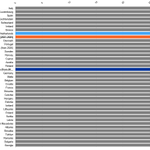
Womens' average age at at first birth in EU is 29.9 years.
Youngest average in Georgia (26.9 years)
Oldest average in Italy (31.9 years)

1
6
422
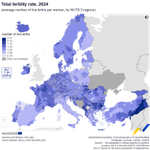
"In 2024, the EU’s total fertility rate was 1.34 live births per woman....
Over the past 20 years, the fertility rate has remained consistently below the natural replacement rate of 2.10, varying between 1.34 and 1.57 live births per woman."

3
10
364


"Family size desires have plateaued in recent years even as contraceptive use has increased, suggesting that the translation of desires into contraceptive use has evolved with time."


3
9
564


"In 2000, 84% of births to unmarried mothers were to women under 30. By 2024, this had decreased to 66 percent."
Single Mothers Are Getting Older ifstudies.org/blog/single-mo…

2024 was the first year where the birth rate to unmarried women ages 40-44 was higher than the birth rate to unmarried teens.
ifstudies.org/blog/single-mo…
6
337
There are several ways to think about population aging:
1) the proportion of the population at older ages
2) how fast that proportion is changing
3) the size of the old-age population (important for things like how much old-age infrastructure a population needs)

1
297
People 65 and older now outnumber children ages 5 and younger worldwide for the first time in recorded history.
axios.com/2026/09/03/older-a…


When asked "“How many sexual partners would you ‘ideally’ like to have over the next 30 years?" the most common response among young adults is "1".
... but people predict that the most common number is much higher.


Memories held:
Afghanistan has a young age structure. Only a third of the population is over 25--alive when the U.S. overthrew Taliban rule in 2001.
Spain, by contrast, has an old age structure. About 40% of the population is over 51--alive when Franco died in 1975.

8
367
Among countries with "lowest-low fertility" (fertility rates below 1.3) labor force participation among the population aged 65+ ranges from almost 40 percent in South Korea to less than 4 percent in Spain.


Good job guys! The world population is growing, which means (neccessarily) there are more births than deaths!
Globally, there are about 132 million births and 63 million deaths per year.
That's about 363k births and 174k deaths per day!

Knowledge check!
The world population is growing, but at a declining rate.
Which is therefore also true?
Globally, in 2026, there are more...
10%deaths than births.
90%births than deaths.
49 votes • Final results 5
546