






Pinned Tweet
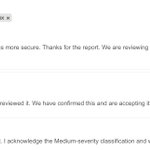
Found a Medium-severity vulnerability in Zebra, @zcash's Rust full-node implementation, and reported it through the Zcash Bounty Program for a $37,500 bounty.
Already patched and shipped in v4.5.0 — disclosure below.
github.com/ZcashFoundation/z…
@ZcashCommGrants
Had some duplicates too.
Feels good 😁

Been grinding hard lately.
Over 80 private audits and bug bounties across different protocols.
Honestly, it’s been exhausting.
Along the way I’ve been using Chinese models a lot more for the work especially GLM 5.3.
I stopped relying on Claude because of the guardrails. Hard to get real hands on the latest models (Opus 5.5 and Mythos) for actual security research. GLM doesn’t have those heavy restrictions. It’s more instruction-specific though. With Claude you can throw something abstract and it usually figures out the intent. With GLM you need precise, specific instructions but when you give it those, it executes cleanly and gets results.
I’ve been running it on a bunch of protocols and pulling solid findings. For security research it’s as good as any other model I’ve used. Don’t know if every benchmark floating around on X is accurate, but in practice it’s a very good tool for this.
The real frustration right now though?
Private bug bounty programs.
No timelines. Protocols can leave you waiting 1-3 months with zero response. No clear rules. Nobody to answer to. By the time you hear back on a valid finding you’re already exhausted and sometimes you’ve half-forgotten the protocol.
It’s slow. It’s draining.
But we keep pushing.
Still hunting for bigger payouts.
Still aiming for something substantial one day maybe even that $1M mark.
Anyone else dealing with the private program lag and the volume at the same time?
How are you handling it?
Still hunting. Still learning.

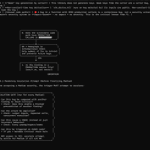
𒀸◦✧◈ 𝐀𝐧𝐚𝐭𝐨𝐦𝐲 𝐨𝐟 𝐚 𝐫𝐞𝐦𝐨𝐭𝐞 𝐃𝐨𝐒 ◈✧◦𒇷
a malformed typed input slips past every pre-check and hits an unguarded stack[0] read in core validation → SIGSEGV. The guard that would've rejected it sits downstream but never reached.
Full write-up after coordinated disclosure :)
Antics Decoded retweeted

university gave me the public but it never gave me the skill.
that's the line i keep coming back to from a podcast i did this week with @AnticsDecoded
we started from $5 bounties in a school hostel. now i'm building sketchmason solo, the dfference wasn't talent. it was showing up for 7 days straight when nothing was working, then doing it again.

Antics Decoded retweeted
turned 21 today
also shipping my first real SaaS
SketchMason turns a rough hand-drawn sketch into a finished interface.
- draw the layout.
- get the design.
- export the HTML.
built it alone, bootstrapped, no team, no funding.
you get 2 free generations, no card needed
sketchmason.com
pretty good way to start 21 :)
I personally haven’t said anything about this because it’s been nothing but uttermost pain seeing how we whitehats are being treated with not even a single recognition or even as simple as “Thank you” sometimes from the protocols.
Since the overwhelming increase in the number of security researchers participating in bug bounties and audit competitions on bug bounty platforms (@immunefi) leading to the rise in duplicates and undefined closures of vulnerabilities reported, I then decided to fully move into Private Audits focusing on only Critical/High severity vulnerabilities on all blockchains on @DefiLlama and over the past few months.
I have audited >60 chains and found multiple C/H findings but sadly I have only been able to communicate directly with less than 5 chains of which they are still even here to give me a first response or acknowledgement that they have even seen my report and are looking into it which is so disappointing.
I honestly don’t know what to say again as i am slowly giving up the discipline of reporting directly to their teams but instead now want to be posting my findings publicly on here as an article hopefully it will draw their attention.
@Meter_IO @VictionEco @iota and so much more out there…. BE WARNED ‼️

And here I am, having reported vulnerabilities throughout my career that could have resulted in a total of several billions (yes, with a B, > $2B) being *stolen*, while my total earnings are around $2M.
So what's the lesson the industry is teaching researchers?
That next time we should steal the funds first, then negotiate a "responsible disclosure," return 80–90%, and walk away with 10–20%?
Obviously, no. But it's insane that the incentives can make that rhetorical question even possible.
The bounty world is broken.
Blackhats exploit a protocol and get treated like kings in negotiations. Meanwhile, whitehats disclose the exact same kind of vulnerability privately, prevent any damage from happening, and then spend months arguing with projects that try to downgrade the finding and pay the bare minimum.
I'm fighting several cases like this right now. Millions of dollars protected, vulnerabilities responsibly disclosed, and yet projects still don't want to pay the amounts they themselves advertised.
We should be making responsible disclosure the overwhelmingly obvious choice.
Instead, the current state of Web3 is doing its absolute best to discourage whitehats while creating increasingly attractive incentives for blackhats and "grayhats".
Those incentives are backwards, and eventually the ecosystem pays the price.
Six teams used FROST, but they did not build the same thing. I compared their custody models, thresholds, demos, network evidence, recovery paths, licenses and current limitations—using only what each submission and repository documents.


All thanks to @yassine3eth
I got my account back on @immunefi…. Learnt a lot in the dark days, back now stronger and 10x better.
Watch out :)

Reported a medium-severity remote DoS vulnerability in @PirateChain capable of crashing synchronized production nodes. Rooted in the shared Komodo codebase, so it affected the whole chain family. Responsibly disclosed, coordinated, and now fixed in v5.9.3
piratechain.com/blog/pirate-…

𝕋𝕙𝕖 𝔹𝕖𝕤𝕥 𝕊𝕥𝕣𝕒𝕥𝕖𝕘𝕪

For those asking why I focus more on blockchain projects/DLT than smart contracts, it’s simply opportunity cost and attack surface.
Blockchain projects are usually much larger and more complex than smart contracts. They have more moving parts, more interactions, and more room for mistakes as (particularly cos devs are constantly introducing new code changes)
The probability of finding a critical bug in a complex blockchain codebase is often higher than in a typical smart contract.
Many blockchain projects also don’t audit their entire stack. Audits may cover specific components, while large parts of the infrastructure remain less scrutinized.
More complexity. More attack surface. More opportunities to find impactful bugs.
It’s simply a strategy.
Very true!!
But now I find the concept of private bug bounties better as most times when protocols in general hosts bug bounty program on a web3 bug bounty platform, they end up not fully maximizing the use of it because of the number of spam submissions/AI slop that eventually end up getting the protocol team frustrated and then pausing their bounty program

Antics Decoded retweeted

Almost every bug I report is on a code base audited by "top firms".
Some were math issues in code written and reviewed by BigTech alumni with PhDs in cryptography from Stanford/Ivy-League.
Everyone misses bugs. I miss too. AI misses bugs.
Let's stop talking about finding bugs missed by lots of experts as something new and unheard of.
It's so common I've been making a living off of it for 5 years straight.
I'm not the only one.

Antics Decoded retweeted

🤯An AI security tool has 1st-place performance on security contests from just 1yr ago. Solidity-auditor v3 is out, FREE & Open Source.
Thousands of Solidity developers are using the tool already. Upgrade your security baseline, use the tool🫡
pashov.com/solidity-auditor-…


Just keep auditing and verifying that AI slop till you get a response from your LLM saying:
"If you don't believe me then forget"
Antics Decoded retweeted

Huge win for my bug hunting buddy
There are not many opportunities in web3 that could currently earn you $37,500
This guy did it by submitting one bug via @Zcash $1M bounty program
Big congratulations 👏

Found a Medium-severity vulnerability in Zebra, @zcash's Rust full-node implementation, and reported it through the Zcash Bounty Program for a $37,500 bounty.
Already patched and shipped in v4.5.0 — disclosure below.
github.com/ZcashFoundation/z…
@ZcashCommGrants
Had some duplicates too.
Feels good 😁
Congratulations brother 😁👏
We keep winning!!!
Discovered a high-severity vulnerability in Zebra, @zcash’s Rust full-node implementation, together with @ipwning through the Zcash Bounty Program, earning a $75,000 bounty.
Fix has already been patched and rolled out in v4.5.0 release
github.com/ZcashFoundation/z…
@ZcashCommGrants
