

🌍 Tracking the world’s most volatile conflicts, emerging threats, and geopolitical shifts. OSINT-driven insights, verified reports, and real-time updates.
Joined July 2017
- Tweets1.9K
- Following90
- Followers17.8K
- Likes6.2K




Pinned Tweet
🚨🇺🇸 MAJOR POWER OUTAGE HITS WASHINGTON, D.C.’S DIPLOMATIC DISTRICT
A widespread power outage has struck Foggy Bottom, disrupting traffic signals and affecting key government and international facilities, including the US State Department, World Bank and IMF.
⚡ More than 1,100 customers reportedly lost power as emergency crews responded to reports of smoke rising from underground utility infrastructure near H Street NW.
The cause remains under investigation.
⚠️ The incident comes amid reports of infrastructure disruptions in several countries, although there is no evidence linking these events.
📍 Map illustrates the affected neighbourhood, not the confirmed outage boundaries.

🚨🇺🇦 DRONE STRIKE IGNITES MAJOR RUSSIAN OIL REFINERY! 🇷🇺🔥
NASA’s MODIS Terra satellite imagery captures massive smoke plumes rising from the Slavneft-YANOS oil refinery following reported Ukrainian drone strikes.
The facility is one of Russia’s five largest oil refineries. 💥


🚨🇺🇦🇷🇺 RUSSIA’S OIL INDUSTRY UNDER FIRE: UKRAINIAN DRONES STRIKE ONE OF THE COUNTRY’S FIVE LARGEST REFINERIES AS ATTACKS ON CRITICAL ENERGY INFRASTRUCTURE INTENSIFY.
Multiple fires have reportedly erupted at Russia’s massive Slavneft-YANOS oil refinery in Yaroslavl following an overnight Ukrainian drone attack on November 3.
Local reports indicate at least THREE separate fires within the industrial complex, raising concerns about further damage to one of Russia’s most important petroleum-processing facilities.
The latest strike comes just weeks after a previous attack forced the refinery to suspend crude processing.
❗️ WHY YAROSLAVL MATTERS TO RUSSIA
Located approximately 250 km northeast of Moscow, Slavneft-YANOS is one of Russia’s five largest oil refineries and a critical component of the country’s domestic fuel supply network.
▪️ Processing capacity: Approximately 300,000 barrels of crude oil per day, equivalent to nearly 15 million metric tons annually.
▪️ Ownership: Operated by Slavneft, jointly controlled by Russian energy giants Rosneft and Gazprom Neft.
▪️ Strategic importance: Produces gasoline, diesel, aviation fuel, lubricants and other petroleum products supporting Russia’s transportation, industrial and logistics sectors.
▪️ Economic significance: An important supplier of refined petroleum products to central Russia, including the wider Moscow region.
Any prolonged disruption could therefore have consequences extending well beyond the refinery itself.
⚠️ A REFINERY ALREADY BATTERED BY REPEATED UKRAINIAN ATTACKS
The November 3 strike is particularly significant because Yaroslavl has already experienced major operational disruptions this year.
On September 17, a Ukrainian drone attack damaged the refinery’s AVT-3 crude distillation unit, which accounted for approximately 40% of its processing capacity.
That represents roughly 120,000 barrels per day of refining capacity potentially affected by damage to a single processing unit.
The situation was further complicated by maintenance and repairs involving the refinery’s AVT-4 unit, leaving two major crude-processing units affected by operational problems.
The September attack forced the refinery to suspend crude processing.
Now, less than two months later, another reported strike raises questions about the facility’s ability to maintain production while recovering from earlier damage.
❗️ WHAT DO WE KNOW ABOUT THE LATEST DAMAGE?
Initial reports indicate at least three separate fires within the refinery complex.
However, the precise locations of the fires and the extent of damage to processing equipment remain unconfirmed.
The operational consequences will depend heavily on what was hit.
Damage to crude distillation units could interrupt the refinery’s ability to process incoming oil, while strikes against storage tanks, pipelines or supporting infrastructure could disrupt fuel handling and distribution.
If major processing equipment has been damaged again, repairs could become increasingly complicated and expensive.
At present, there is no independent confirmation that the November 3 attack has forced another shutdown.
📉 THE ECONOMIC CONSEQUENCES: A GROWING THREAT TO RUSSIA’S FUEL SUPPLY
The potential consequences extend beyond the immediate physical damage.
A prolonged shutdown at Yaroslavl could:
▪️ Remove a substantial volume of refining capacity from Russia’s domestic fuel network.
▪️ Reduce gasoline and diesel output, increasing pressure on regional fuel distribution.
▪️ Force Russian energy companies to redirect crude oil and refined petroleum products between facilities and regions.
▪️ Increase repair and maintenance costs while extending recovery timelines.
▪️ Complicate fuel logistics supporting Russia’s transportation, industrial and military supply networks.


🇳🇵 One passenger was killed and a pilot injured after two helicopters reportedly collided while landing at Pheriche helipad in Nepal’s Everest region, officials said.
The aircraft belonged to Fishtail Air and Air Dynasty. The victim, a foreign tourist aboard the Fishtail helicopter, has not yet been identified.
Air Dynasty pilot Captain Rabindra Prajapati was injured. Captain Prajjwal KC was flying the Fishtail aircraft.
A Simrik Air helicopter has reached the scene to assist with rescue operations. Authorities are gathering further details.
🚨🇺🇦🇷🇺 RUSSIA’S OIL INDUSTRY UNDER FIRE: UKRAINIAN DRONES STRIKE ONE OF THE COUNTRY’S FIVE LARGEST REFINERIES AS ATTACKS ON CRITICAL ENERGY INFRASTRUCTURE INTENSIFY.
Multiple fires have reportedly erupted at Russia’s massive Slavneft-YANOS oil refinery in Yaroslavl following an overnight Ukrainian drone attack on November 3.
Local reports indicate at least THREE separate fires within the industrial complex, raising concerns about further damage to one of Russia’s most important petroleum-processing facilities.
The latest strike comes just weeks after a previous attack forced the refinery to suspend crude processing.
❗️ WHY YAROSLAVL MATTERS TO RUSSIA
Located approximately 250 km northeast of Moscow, Slavneft-YANOS is one of Russia’s five largest oil refineries and a critical component of the country’s domestic fuel supply network.
▪️ Processing capacity: Approximately 300,000 barrels of crude oil per day, equivalent to nearly 15 million metric tons annually.
▪️ Ownership: Operated by Slavneft, jointly controlled by Russian energy giants Rosneft and Gazprom Neft.
▪️ Strategic importance: Produces gasoline, diesel, aviation fuel, lubricants and other petroleum products supporting Russia’s transportation, industrial and logistics sectors.
▪️ Economic significance: An important supplier of refined petroleum products to central Russia, including the wider Moscow region.
Any prolonged disruption could therefore have consequences extending well beyond the refinery itself.
⚠️ A REFINERY ALREADY BATTERED BY REPEATED UKRAINIAN ATTACKS
The November 3 strike is particularly significant because Yaroslavl has already experienced major operational disruptions this year.
On September 17, a Ukrainian drone attack damaged the refinery’s AVT-3 crude distillation unit, which accounted for approximately 40% of its processing capacity.
That represents roughly 120,000 barrels per day of refining capacity potentially affected by damage to a single processing unit.
The situation was further complicated by maintenance and repairs involving the refinery’s AVT-4 unit, leaving two major crude-processing units affected by operational problems.
The September attack forced the refinery to suspend crude processing.
Now, less than two months later, another reported strike raises questions about the facility’s ability to maintain production while recovering from earlier damage.
❗️ WHAT DO WE KNOW ABOUT THE LATEST DAMAGE?
Initial reports indicate at least three separate fires within the refinery complex.
However, the precise locations of the fires and the extent of damage to processing equipment remain unconfirmed.
The operational consequences will depend heavily on what was hit.
Damage to crude distillation units could interrupt the refinery’s ability to process incoming oil, while strikes against storage tanks, pipelines or supporting infrastructure could disrupt fuel handling and distribution.
If major processing equipment has been damaged again, repairs could become increasingly complicated and expensive.
At present, there is no independent confirmation that the November 3 attack has forced another shutdown.
📉 THE ECONOMIC CONSEQUENCES: A GROWING THREAT TO RUSSIA’S FUEL SUPPLY
The potential consequences extend beyond the immediate physical damage.
A prolonged shutdown at Yaroslavl could:
▪️ Remove a substantial volume of refining capacity from Russia’s domestic fuel network.
▪️ Reduce gasoline and diesel output, increasing pressure on regional fuel distribution.
▪️ Force Russian energy companies to redirect crude oil and refined petroleum products between facilities and regions.
▪️ Increase repair and maintenance costs while extending recovery timelines.
▪️ Complicate fuel logistics supporting Russia’s transportation, industrial and military supply networks.
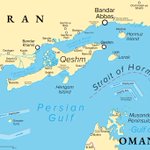
🇺🇸🇮🇷 U.S. forces struck Iran’s Qeshm Island on Monday, U.S. officials told WSJ, as part of a series of limited attacks conducted quietly in recent weeks.
Officials described the operations as defensive, aimed at reducing Iran’s ability to threaten commercial shipping in the Strait of Hormuz.

🇩🇪 APPLE WARNS GERMAN OFFICIALS OF TARGETED SPYWARE ATTACKS
Apple has warned some German lawmakers and government officials that their iPhones may have been targeted by sophisticated mercenary spyware.
ALERTS BEGAN ON OCTOBER 29
German officials say the alerts began arriving on October 29. Apple detected attempted attacks, but the number of devices successfully compromised remains unclear.
GERMAN CYBERSECURITY AGENCY URGES PRECAUTIONS
Germany’s Federal Office for Information Security urged recipients to treat their devices as potentially compromised and take protective measures.
GLOBAL WARNINGS REACH USERS IN 99 COUNTRIES
Such spyware can give attackers access to messages, calls and other sensitive data. The warnings are part of Apple’s latest round of threat notifications to users in 99 countries.

🚨🇮🇷🇺🇸 BREAKING: IRAN CLAIMS TO HAVE CAPTURED TWO US MQM-170 OUTLAW DRONES NEAR THE STRAIT OF HORMUZ!
Iran’s Islamic Revolutionary Guard Corps (IRGC) claims to have captured two American MQM-170 Outlaw drones, primarily designed to simulate aerial threats and test air defence systems, south of Qeshm Island using advanced electronic warfare systems, according to Fars News Agency.
⚠️ WHAT ARE THE MQM-170 OUTLAW DRONES?
Developed by US-based Griffon Aerospace, the MQM-170 is a relatively low-cost unmanned aircraft primarily designed to simulate aerial threats during military training and air defence exercises.
Unlike conventional combat drones, the Outlaw is not primarily designed to launch missiles or conduct airstrikes.
✈️ MQM-170C OUTLAW G2 — KEY CAPABILITIES
▪️ Maximum speed: Approximately 233 km/h (126 knots).
▪️ Flight endurance: Over 8 hours.
▪️ Operational ceiling: Above 16,000 feet.
▪️ Wingspan: Up to 4.9 metres.
▪️ Payload capacity: Approximately 18–27 kg.
▪️ Equipment options: EO/IR cameras, scoring systems and specialised test sensors.
These specifications refer to the MQM-170C Outlaw G2 variant and may differ from those of the aircraft reportedly captured.
🎯 WHY DOES THEIR PRESENCE NEAR QESHM MATTER?
Qeshm Island occupies a strategically sensitive position near the Strait of Hormuz, one of the world’s most important maritime chokepoints.
The MQM-170 can be used to simulate aerial threats and evaluate how air defence systems detect, track and engage airborne targets.
Its reported presence near Qeshm raises questions about the aircraft’s mission and whether they were involved in training, testing or other military activities.
However, there is currently no independent evidence establishing their precise mission.
⚡ ELECTRONIC WARFARE OR ACTUAL HIJACKING?
This is perhaps the most technically significant aspect of Iran’s claim.
Disrupting a drone’s GPS navigation or communications links is fundamentally different from gaining control of its flight systems.
If Iran successfully captured the aircraft through electronic warfare, investigators would need to determine whether the drones experienced signal jamming, navigation interference or an actual takeover of their control links.
Iran has not publicly demonstrated which mechanism was allegedly used.
🇮🇷 WHAT COULD IRAN LEARN FROM THE DRONES?
If recovered largely intact, the aircraft could potentially provide Iranian engineers with an opportunity to examine their communications equipment, navigation systems and any specialised payloads installed.
However, the recovery of an MQM-170 would not necessarily represent the capture of advanced US intelligence technology.


🚨🇺🇸🇷🇺🇺🇦 BREAKING: US, RUSSIA AND UKRAINE TO HOLD TRILATERAL TALKS IN ABU DHABI!
The United States is set to hold high-level talks with Russian and Ukrainian representatives in Abu Dhabi on November 10–11, Reuters reports, citing a US official.
🇦🇪 The UAE will host the talks amid ongoing diplomatic efforts to end the war in Ukraine.
🇸🇦🇨🇳 Saudi Royal Flight Airbus A340-213 (HZ-124) is returning from Beijing, carrying Saudi National Security Adviser Musaed Al-Aiban, who delivered a message from Crown Prince MBS to President Xi Jinping during talks with Chinese Foreign Minister Wang Yi.

🚨🇷🇺🇺🇦 BREAKING: KYIV BRACES FOR A MAJOR RUSSIAN DRONE ASSAULT!
Around 50 Russian attack drones are reportedly swarming Ukrainian airspace, with the majority heading STRAIGHT TOWARDS KYIV and its surrounding region.
Others are pushing deeper into western Ukraine as the aerial threat intensifies.

🇶🇦🇮🇷 A Qatar Amiri Flight Airbus A320-232 VIP aircraft (A7-AAG) is returning from Tehran with a Qatari delegation that held talks with Iranian officials on a potential agreement to end the war.

🚨🇮🇷 BREAKING: DRAMATIC FOOTAGE emerging from Iran’s Qeshm Island reportedly captures powerful explosions rocking the strategically vital island in the Strait of Hormuz, amid reports of strikes targeting air defence positions.
🚨🇶🇦🇮🇷 BREAKING: Qatari delegation reportedly making a HASTY EXIT from Tehran following the latest strikes and explosions in Iran, amid rapidly escalating tensions.

🚨🇺🇸🇮🇷 JUST HOURS BEFORE THE US MIDTERM ELECTIONS, FIVE EXPLOSIONS REPORTEDLY ROCK IRAN’S STRATEGIC QESHM ISLAND.
Iran’s state news agency IRNA reports five successive explosions on Qeshm Island, overlooking the Strait of Hormuz, with residents also reporting two aircraft overhead.
The timing is particularly significant. President Donald Trump previously pledged that the US would not attack Iran before the 3 November elections.
⚠️ The cause of the latest explosions remains unconfirmed, and there is no verified evidence establishing US involvement.


🚨🇺🇦 UKRAINE | A 14-YEAR-OLD CHILD, SERIOUSLY ILL DETAINEES AND AN ALLEGED MILITARY DETENTION SITE. WHAT IS GOING ON?
Shocking allegations are emerging from a facility reportedly linked to Ukrainian military units, including the Azov Brigade.
A witness described people being held inside, some allegedly suffering severe injuries and deteriorating health. Reports also raise disturbing questions about the presence of a 14-year-old child.
🚨 WHY WAS A CHILD THERE? WHO AUTHORISED IT? AND WHAT EXACTLY WAS HAPPENING BEHIND THOSE GATES?

JUST IN: 🚨 🇮🇷 Air defence positions on Qeshm Island in Iran’s Hormozgan Province were reportedly targeted.
🚨🇺🇸 24 HOURS BEFORE THE MIDTERMS, TRUMP IS TALKING ABOUT THE COLOUR OF A REFLECTING POOL.
With control of Congress hanging in the balance, President Donald Trump spent a significant portion of his election-eve speech discussing renovations to the Lincoln Memorial Reflecting Pool in Washington, D.C.
Standing beside the historic landmark, Trump held up photographs of corroded pipes, debris and damaged infrastructure, detailing the work carried out to restore the pool.
He even discussed the new shade of blue chosen to improve the water’s reflective appearance.
🛰️ LOCATION: Lincoln Memorial Reflecting Pool, Washington, D.C.

🚨🇺🇸 SEVEN STATES COULD DECIDE THE FATE OF THE US SENATE — AND RESHAPE DONALD TRUMP’S PRESIDENCY.
Americans head to the polls tomorrow, 3 November, in crucial midterm elections that could dramatically shift the balance of power in Washington.
🔥 THE BATTLE FOR THE SENATE
Republicans currently hold 53 seats, compared with 47 held by Democrats and their allied independents.
With 35 Senate seats on the ballot, Democrats need a net gain of FOUR seats to take control.
🗳️ SEVEN CRITICAL BATTLEGROUNDS
🔴 Republican-held seats:
🇺🇸 Alaska, Iowa, Kansas, Maine, Ohio and Texas.
🔵 Democratic-held seat:
🇺🇸 Michigan.
All seven races are rated TOSS-UPS, meaning neither party has a clear advantage.
⚠️ THREE MORE STATES TO WATCH
North Carolina, Georgia and New Hampshire could also influence the final balance of power.
🏛️ WHY DOES THIS MATTER?
If Republicans retain their Senate majority, Trump will preserve a crucial advantage in confirming senior officials and federal judges.
But if Democrats take control, they could block presidential nominees, launch investigations and significantly constrain his legislative agenda.
And the stakes go beyond the Senate: all 435 House seats are also being contested, with control of both chambers determining how much political power Trump retains in Washington.
Seven battlegrounds. Two parties. One election that could redefine the next two years of American politics.
📅 Election Day | 3 November 2026
📊 Source: Cook Political Report | 2 November 2026
