

Center for Brain Recovery at Boston University. Posts by Swathi Kiran. #Rehabilitation #aphasia, #neuroplasticity #brain
Boston, MA
Joined March 2013
- Tweets3.4K
- Following274
- Followers3.4K
- Likes5.1K



Pinned Tweet
ICYMI- My thoughts on #precisionmedicine #precision #rehabilitation for #aphasia Advances in predicting language recovery after stroke: Precision rehab -... youtu.be/Fy0nGRv6J2g via @YouTube
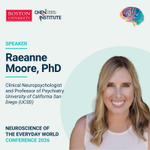
The Neurotech Panel at the 2026 N.E.W. Conference will feature industry leaders developing innovative technologies across cognitive assessment, neurodiagnostics, therapeutic interventions, brain monitoring, and AI-enabled neuroscience solutions.
cheninstitute.org/events-new…

Panelists:
Amir Meghdadi, Advanced Brain Monitoring
Michael Kahana, Nia Therapeutics
Vijaya Kolachalama, Cognimark
Matt Adams, BrainScope
Martin Schrimpf, Dandelion Science
Secure your spot now! There are limited in-person tickets remaining: lnkd.in/g2WS3CMz
#NEWconf2026
The third symposium at the 2026 Neuroscience of the Everyday World (N.E.W.) Conference will explore advanced methods for brain health, with a focus on scaling, validating, and personalizing emerging technologies and analytical approaches.


This session will feature research leveraging digital health technologies, wearable devices, and data-driven approaches to better understand brain health and behavior in real-world settings, with the goal of advancing more precise and personalized assessment and care.
Secure your spot now! There are limited in-person tickets remaining: cheninstitute.org/events-new…
#NEWconf2026
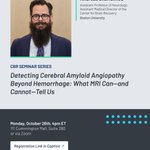
Join us Monday, October 26 from 4-5pm ET for a talk by Andreas Charidimou, an Assistant Professor of Neurology at Boston University @a_charidimou
Title: Detecting Cerebral Amyloid Angiopathy Beyond Hemorrhage: What MRI Can—and Cannot—Tell Us
Register: bostonu.zoom.us/meeting/regi…

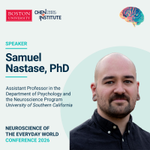
The 2nd symposium at the 2026 N.E.W. Conference will highlight emerging approaches for studying cognition in real-world settings, leveraging advances in both neuroscience and artificial intelligence.
Speakers:
Samuel Nastase, USC
Chris Baldassano, Columbia
Martin Schrimpf, EPFL


This session will investigate how computational models can help uncover the mechanisms underlying natural communication, memory, and everyday cognition.
Secure your spot now! There are limited in-person tickets remaining: cheninstitute.org/events-new…
#NEWconf2026
The 1st symposium at the 2026 N.E.W. Conference will examine how digital phenotyping is transforming our understanding of health and aging across the lifespan. #NEWconf2026
Featured Speakers:
Nicole Spartano, BU
Katherine A. Gifford, BU
Honghuang Lin, UMass Chan Medical School


This session will discuss wearable devices, voice-based biomarkers, & passive digital sensing technologies within the Framingham Heart Study to better understand cardiovascular health, physical activity, cognitive aging, & dementia.
Register now! cheninstitute.org/events-new…
We're 1 month away from the Neuroscience of the Everyday World Conference! #NEWconf2026
Join us for 2 days of presentations, panels, networking, & posters highlighting the latest AI-driven approaches in neuroscience & brain health research.
Register now! cheninstitute.org/events-new…
New research💡from CBR published in Brain Communications
"Network flexibility facilitates treatment-induced recovery in post-stroke aphasia"
Researchers: Isaac Falconer, Maria Varkanitsa, Anne Billot, and Swathi Kiran
Read the full article: doi.org/10.1093/braincomms/f…

– In sum, we link baseline dFC temporal dynamics to a mechanistic account of recovery capacity framed as flexibility + stability.