

Taariikhda Dhulka Somaliland iyo Dadkeeda | Somaliland Historical Archive | تاريخ صوماليلاند و شعبها
Hargeisa, Somaliland
Joined April 2025
- Tweets135
- Following0
- Followers900
- Likes357
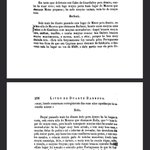


Cursory accounts of Zeyla (Zeila), Barbara (Berbera), and Met (Maydh) recorded by the Portuguese official Duarte Barbosa [c. 1516–1518]. The Portuguese text is from an early 16th-century manuscript transcribed and published for the first time by the Academia Real das Sciências in Lisbon [1812], paired alongside the English translation published by the Hakluyt Society [1866]. Because the 1866 Hakluyt edition was translated from a 1524 Spanish copy rather than the Portuguese manuscript, it omits several details preserved in the 1812 Portuguese text, notably the export of opium from Berbera and the Portuguese sackings of both ports.
Zeyla (Zeila)
Barbosa records Zeila as a place of great trade ("lugar de muyto trato") where foreign vessels discharged cloth and general merchandise. The town featured well-ordered streets and terraced stone and lime houses. The local economy possessed many horses, extensive livestock herds providing milk, butter, and meat, and regional harvests of wheat, millet, barley, and fruit exported across the gulf to Aden. The 1812 Portuguese text documents that Zeila was stormed and destroyed in 1517 by a Portuguese armada commanded by Governor Lopo Soares de Albergaria upon his return from Juda (Jeddah).
Barbara (Berbera)
Described as a notable coastal settlement and harbour visited regularly by merchant ships from Aden and Cambay (Khambat). Merchants from Cambay exported gold, ivory, opium (amfiam), and assorted trade goods, whilst those from Aden loaded abundant stores of provisions, meat, honey, and beeswax. The 1812 Portuguese text notes that Berbera was attacked, sacked, and burned in 1518 by a Portuguese fleet under António de Saldanha before his squadron sailed for Ormuz (Hormuz).
Met (Maydh)
Recorded as a small settlement of little trade situated further east along the coast towards Cape Guardafui. Barbosa notes that whilst its commercial activity was negligible compared to Zeila or Berbera, the locality maintained plentiful meat supplies.


An account of the slave trade at Berbera, published in the Transactions of the Bombay Geographical Society, Vol. IX [1850].
The author notes that the slave trade through the port had significantly diminished by the mid-century, falling from an earlier high of 2,000–3,000 annually to between 600 and 700. Those sold were predominantly Gurage, Shanqella (Shangalla), and Oromo (Galla), purchased by vessels from the Persian Gulf for the Muscat and Basra markets.


An account of the final operations against Taleh (Taleex) in February 1920, recorded by Major Henry Rayne in Sun, Sand and Somals [1921].
The first image shows Haji Sudi (left) in Aden [1892].
The extracts detail the engagement outside the fortress walls, where the Dervishes' chief lieutenant Haji Sudi and the commander of Dervish forces in Sanaag, Ibrahim Boghol (both belonging to the Adan Madobe, Habr Je'lo), were killed in action facing the British assault. During the fighting, Muhammad Abdullah Hassan escaped from Taleh, pursued by the Camel Corps towards Halin (Xalin) and Bihan (Bixin). At Bihan, his thirty-man escort was overrun and his wives, children, and close relatives were captured.
Reaching a nearly dry well towards the Haud with three or four followers, Hassan had water drawn for himself and his horse. Whilst his surviving bodyguards set out into the desert to locate more water for him, Hassan slipped away again.
Upon returning with water to find him gone, the abandoned bodyguards walked into British lines and surrendered.


The economic Reliance of the Somali regime of Siad Barre on Berbera and Isaaq Merchant Networks [1970s–1980s]
Over 75% of Somalia’s officially recorded foreign currency income in the 1970s and 1980s was generated by livestock exports routed through the port of Berbera, highlighting the country's profound structural reliance on northern Isaaq mercantile systems. According to researchers and analysts Alex de Waal and Vali Jamal, this private trade effectively created a highly developed capitalist enclave operating entirely inside a state-socialist regime. This domestic system operated alongside a massive global remittance network; in the 1980, Somali migrant workers in the Gulf, the majority of whom belonged to the Isaaq tribes, transmitted an estimated $338 million USD back to the region. This informal financial influx was fifteen times larger than the entire annual wage bill for the country's formal public and private sectors combined. In response, The military regime utilized state power to break the hold of their major competitor, the Berbera merchant class, but ultimately failed. This strategy of seizure was an act of “economic madness” that directly attacked the most productive sectors of the economy, ensuring that the state's total dependence on foreign aid and military coercion became entirely unsustainable and triggered its final collapse.
#somali #somaliland #siadbarre #somalia


Somaliland Archives retweeted

Mariscada prehistórica. Todo esos puntos que veis en la foto son conchas de moluscos consumidos hace unos 3500 años en la costa de Berbera, Somalilandia. A lo largo de 4,5 km hemos encontrado nada menos que 13 yacimientos como este.

Somaliland Archives retweeted

Aloe rigens
Somali: Dacar-maroodi.
Native range: Somaliland and Djibouti.
#Aloes #NaturePhotography #Somaliland

A plan of the Mullah's fortifications at Taleh (Taleex), first published in The Geographical Journal [1931].
To the east of the Silsilat (chain) fortification are the tombs of Abdullah Hassan (father of Muhammad Abdullah Hassan), Sultan Nur Ahmed Aman of the Habar Yunis, a tomb of a Habar Je'lo man, and tombs of Hawiye notables; further to the east is the isolated tomb of Hassan's mother.


The Hellenic-Egyptian Ptolemaic Dynasty procured elephants from the interior of present-day Somaliland over 2,000 years ago. The beasts were carried in specialised ships called 'Elephantegoi' (elephant-carriers), and were sent to Berenike in Upper Egypt.
The first image shows a gold stater coin issued under Ptolemy I Soter, the first king and founder of the Ptolemaic Dynasty of Egypt. The reverse shows a quadriga drawn by four elephants, driven by Alexander the Great.
The second image depicts a sketch of elephants congregating around a pool and was first published in Seventeen Trips Through Somaliland. The author, Swayne, notes that in 1884 elephants were 'plentiful' in the Golis and Wagar mountains, and that in the colder months they descended from the high mountains and followed the seasonal streams downward towards the edge of the maritime mountains where they fed on creepers and aloe plants.
While sadly elephants are now extinct in Somaliland, there are still place names that preserve the presence of elephants in Somaliland such as Tog Marodi Jeh (Tog Maroodi Jeex), a seasonal river that flows through the capital Hargeisa, and Dhagah Marodi (Dhagax Maroodi), an ancient rock art site located near Gabiley.


Somaliland Archives retweeted

Doesn’t get enough credit for how historically relevant it was by unlocking long-distance travel


Somali soldiers during the Axumite invasion of Yemen [518-525]
In the 6th century Greek text “Martyrdom of Arethas”, Set during the During the Axumite invasion of Himyar, A large army of 15,000 Barbars (Somalis) from Somaliland was sent to invade the Himyarite rebels in Hadhramaut. The fate of this army is left ambiguous in the text.


However, According to the 6th century Arab Christian poet, ‘Adi ibn Zayd (c.550AD-600AD), Barbarian (Somali) troops were still in Sana’a during the Persian siege of the city in 570 AD, After which Axumite rule in South Arabia came to an abrupt end. In his poem, As recorded by Ibn Hisham in his Al Sirah Al Nabawiyyah, ‘Adi and the general population of Yemen rejoice the end of the Ethiopian-Somali occupation, Depicting the expulsion of the occupying army by Sayf Dhi Yazan as a restoration, and showing a scene where his followers shout curses and insults at the retreating Axumite-Barbarian soldiers. The 12th century Andalusian Scholar, Abd Al Rahman Al-Suhayli explains in his book al-Rawd al-Unuf that the Axumites (Ethiopians) and Barbars (Somalis) are both Hamites who descend from Ham.


Somaliland Archives retweeted

The Abbasid court poet Nuṣayb al-Aṣghar al-Ḥabashī (d. 791) was a mawlā of Caliph al-Mahdī. Born in Al-Yamāma, the region had a significant slave trade with Al-Ḥabasha & Zanj for plantation labour.
Al-Aṣghar was appointed as a Governor in Syria by Caliph Hārūn al-Rashīd.


Ottoman cartography and regional exonyms in the Horn of Africa [1872]
Dated 1289 AH, this late 19th-century Ottoman map records the northern region of the Somali peninsula under the designation "ايذور"(Iydoor/ldoor). The name “Idoor” was a term derived from the Somali word for trade and commerce, And historically functioned as a prominent regional and colonial exonym for the Isaaq, highlighting their dominant historical position as the primary merchants and traders managing the coastal and interior commerce of the territory.


Somaliland in the 1950s
Scenes from the 1959 Somaliland Parliamentary Elections, Held in Hargeisa and other major cities across Somaliland. Citizens are voting in both urban and rural areas, In voting houses aswell as under the shade of Acacia Trees as was common among the people of Somaliland when electing sultans and other traditional leaders.
The election led to a landslide victory for the moderate National United Front led by Michael Mariano of the Habr Je’lo tribe, defeating the main opposition party of the Somali National League, Under Mohamed Haji Ibrahim Egal. [1959]
A sketch of warrior poet Husein Hasan (Eidagale Garhajis) and his trusted steed Mangalool being pursued by a lioness [1896].
After one of his successful raids, Husein’s horse Mangalool collapsed from fatigue in the midst of a dry year. To save him, Husein rushed his looted camels to a well, then slaughtered them periodically along the 20 mile return journey to provide Mangalool with regular water.
Husein stated that he would rather sacrifice 100 camels, viewing it as a small price to pay, as a recovered Mangalool would eventually help him raid many more.

In the 19th century, the majority of Somali traders who frequented Aden belonged to the wider Isaaq clan.
The Habr Awal composed the bulk of these merchants, completing four voyages to Aden during the trading season, where they tended to hire a house in Aden and were accompanied by their own servants. They procured most of their goods from Harar and its environs, which included coffee, saffron, ivory, and feathers.
Garhajis traders also frequented Aden regularly; however, they procured most of their goods from the Ogaden interior, which included feathers, myrrh, gum, livestock, and ghee.


The Soviet embassy in Mogadishu in the Somali republic was rented from Jirde Hussein, one of the wealthiest merchants in the Somali peninsula. When the Soviets were exiled after the Ogaden war, Jirde converted the building to an orphanage for Mogadishu Children
رحمه الله تعالى


Somaliland Archives retweeted
Muslim historians separately used 'Raven' to classify Arab warrior-poets born to 'Habash' mothers in the Jāhiliyyah era as Aġribat al-ʿArab (Arab Ravens).
ʿAntarah & Al-Sulayk are some of the best known Aġribat. The term later broadened for a poet/outlaw in Arab literature.


