






Pinned Tweet
Right now, 75% of Americans are anxious and afraid about AI. People are even bringing their concerns into their therapy sessions, sorting through everything from how AI impacts their jobs to more existential fears about humanity’s future. These concerns are real. But they’re only part of the story. To go deeper, I sat down with @DanielaAmodei. As president of @AnthropicAI, she is a unique figure in AI.
The Jensen Huang saga continues to unfold (and don’t you feel like we’re in act one of a five-act play?). But one question has already been definitively answered: what the biggest limiting factor of the AI revolution will be. As this story makes clear, it’s not going to be compute or energy or @nvidia's GPUs. It’s going to be what it’s always been: human nature.
We don’t know what act two will bring, but this is a great opportunity to step back and look at the larger picture. At the moment, we're investing fantastical sums of money and resources in improving the machines, but we're not investing nearly as much on making humans better. It’s not just credulous AI executives. We’re all being seduced — by the idea that machines are dynamic and endlessly improving, but humans are static and stagnant. We talk about building recursive self-improvement in the machines, but can we finally start talking about the need to focus on recursive self-improvement for humans?
AI anxiety is real, with 75% of Americans feeling anxious and afraid about the technology. But what about the people creating it? During my interview with @DanielaAmodei, president of @AnthropicAI, I asked her what keeps her up at night (besides her children). In her answer, she explores why it’s so important that the AI future is something we all build together, instead of something happening to us.
4
6
2,848
The Odyssey. Emma. Hamlet. The Wealth of Nations. Ulysses. The Iliad.
This isn’t just a list of books I’ve read and love (though I have). They’re on the reading list for Harvard’s Humanities 10. In the @WSJ, Pamela Paul writes about the surge in demand for the class: applications are up 40% this fall, with 180 first-years competing for 90 spots.
Students read a book a week, frequently write essays, have their attendance tracked, and put their devices away during class. As classics professor David Elmer says, “I did have the sense that a lot of students feel that the culture at large is not hospitable to deep reading, deep thinking or deep engagement with writing.”
I've been writing about the question AI is forcing on universities: is higher education about information or formation? If it’s only the former, universities are competing with the machines. The students lining up for a phone-free room, the great books, and people to argue with seem to be asking for the latter.
As one student put it: “A lot of what we get out of this class is the human experience, and you can’t get that out of AI.”
So let AI keep intelligence and humans keep wisdom. This class is one way to build it.
What should colleges prioritize most in the age of AI?
Read the piece here: wsj.com/lifestyle/harvard-cl…

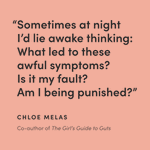
Gut health is one of our culture’s last taboos. While millions of people live with IBD and its symptoms, it's something we’d rather not talk about.
That’s what makes “The Girl's Guide to Guts” so powerful. @NBCNews correspondent @ChloeMelas and co-writer @JudyBatalion share their decades of experience with ulcerative colitis in a guide that combines scientific rigor with candid (and often funny) personal stories about everything from dating and parenting to gut-healthy food choices and maintaining your most important relationships.
“The Girl’s Guide to Guts” shines a much-needed spotlight on a health journey that is too often cloaked in secrecy and shame. When the science makes it clear that our gut health impacts our brain health, stress levels, immune system, and mood, it’s a book that can have a real impact on women’s health — and help anyone who is silently struggling feel more supported. The subtitle captures how it’s all done with a light, personal touch: “Everything Your Doc Didn't Tell You (But Your Bestie Would).”
In her reporting and beyond, Chloe has used her voice to advocate for issues that impact women. Now, she’s telling her own story so others don’t have to live theirs alone. penguinrandomhouse.com/books…
Congratulations, @ChloeMelas and @JudyBatalion.


AI has a well-known sycophancy problem. So I asked @DanielaAmodei, president of @AnthropicAI, how to keep it from telling us what we want to hear. I loved her answer about why flattery is the enemy of qualities like self-reflection, curiosity, learning, and growth that she hopes AI will help nurture.


At @Founders_Forum, Bloomberg's @EenaRuffini moderated our panel on “The Brave New World of Preventive Health and Peak Performance” with Dorothy Kilroy, Chief Commercial Officer of @ouraring, @HjalmarNilsonne, CEO of @Neko, and @DaphneKoller, CEO of @insitro.
We explored questions at the heart of preventive health: With so much of the conversation focused on making AI more capable, are we investing enough in making humans more capable? Where does AI health hype end and reality begin? And with more health data available to us than ever, how do we know our numbers without being overwhelmed by them?
There was one important through line: as we address big questions, the key is starting small. With preventive health and peak performance, the incremental is monumental. What matters is what we do consistently, not what we do occasionally.


Arianna Huffington retweeted

Obesity is the root disease for over 200 chronic diseases, it impacts more than 1 in 7 people on the planet and more options are needed. Science doing a good job here making the case for much more innovation in Obesity care. It’s still very early, yet we can see the impact that is possible. Lilly doing our part to lead on new mechanisms, more convenient, more durable and more accessible weight loss solutions for the world.
Obesity management medications: The way forward | Science science.org/doi/10.1126/scie…

For @nytimes, Callie Holtermann asked members of Gen Z what it's like to look for a job right now, and one feeling came up again and again: it's like staring into a void. Applications disappearing without a reply. Interviews conducted by chatbots. Rejections arriving two minutes after applicants hit submit. As one person summed up what so many are feeling: “Could someone please just give me a chance?”
I know what rejection feels like. My second book was rejected by 37 publishers. By rejection 25, I had run out of money, and I remember walking, depressed, down St James Street in London and seeing a Barclays Bank. I walked in and, armed with nothing but a lot of Greek chutzpah, asked to speak to the manager and asked for a loan. Even though I had no assets, the banker, whose name was Ian Bell, gave me one. It changed my life, because it meant I could keep things together for another 13 rejections. And then finally I got an acceptance.
So many of today’s applicants are describing a search where the human never appears. How can we find our humanity, our shared connection, around these tough moments?
To everyone who has experienced rejection — and at some point, we all do — what’s your advice for Gen Z job-seekers? I’ll be reading and responding in the comments.
Read the piece here: nytimes.com/interactive/2026…

Is it rude when someone takes out their phone in a meeting and starts scrolling? Maybe. But it’s also feedback. It could be a sign that the meeting is boring.
I love this take from @bingfish, co-founder of @EA and co-author, with his daughter Chloe Gordon, of Everybody Wins: What Games Teach Us About Making Products People Love.
As someone who believes in asking “do we really need this meeting?” (and if the answer is yes, “can we make it 15 minutes instead of 30?”), I love Bing’s way of thinking. We’ve all been in meetings that lack a “wow” factor. Bing’s suggestion is to get creative. Try things out. Stand up, walk out of the room, and walk back in 30 seconds later and start over. And give yourself permission to ask: “If this wasn’t a business meeting, how would you uplevel this?”
As he told @thrive's Erica Eliot, most people don’t even think they have the “right” to make meetings better.
What’s one way you can uplevel your meetings?


During my interview with @DanielaAmodei, president of @AnthropicAI, I asked how AI can nurture human connections, especially when social media has in so many ways left us more disconnected from ourselves and each other. I loved her examples of how AI could empower doctors and teachers, two professions where human qualities and relationships matter so much, and how “in the future we might optimize for doctors who have a great bedside manner.”
As we marvel at AI’s recursive self-improvement, we can’t lose sight of the recursive self-improvement built into our humanity: our fundamental drive to grow, learn, improve and evolve. In my latest On My Mind newsletter, I share my interview with @AnthropicAI president @DanielaAmodei about why it’s essential to keep investing in humans and not placing all our bets on the machines.
Plus, AI’s wake-up call for universities, two new books I love, a look at the new podcast trend you might not have noticed: prayer, and more.
Read more here: linkedin.com/pulse/recursive…

2
8
4,207