

Causal AI for Human Health ╰┈➤ Read Daphne Koller's "Drug Discovery Has No Magic Wands" on insitro's official Substack: https://xitter.cf/t.co/N3MfAN8dac
South San Francisco, CA
Joined May 2018
- Tweets409
- Following84
- Followers6.7K
- Likes120





insitro retweeted

AstraZeneca Strikes Up to $1.5 Billion AI Drug Discovery Deal With Insitro on.wsj.com/4B96TET

insitro retweeted

AstraZeneca is collaborating with machine learning biotech Insitro. in a deal worth as much as $1.86 billion bloomberg.com/news/articles/…

insitro retweeted

Today, @insitro announces our new collaboration with @AstraZeneca worth up to $1.5 billion.
The partnership pairs insitro's AI and causal human biology platform with AstraZeneca's drug development expertise to pursue new medicines for cardiometabolic diseases.
This is what applying AI to the life sciences is all about: the opportunity to understand what drives a disease and turn those insights into medicines that make a difference for patients.
Congrats to @DaphneKoller, @im_dlight, @mmrozenman, Sharon Barr, Aradhana Sarin, and the entire insitro and AstraZeneca teams.

insitro retweeted

AstraZeneca bets $40M on AI to crack liver and heart diseases it's struggled to crack alone: AstraZeneca is partnering with AI startup insitro — handing over $40 million upfront and up to $1.5 billion in milestones — to hunt for drug targets in… dlvr.it/TVwbT9 #AstraZeneca #AI

Today, insitro announced a strategic collaboration with @AstraZeneca for the AI-enabled discovery of novel therapeutics for metabolic dysfunction-associated steatohepatitis (MASH) and cardiomyopathies.
insitro will receive $40 million upfront and is eligible for up to approximately $1.46 billion in potential, discovery, development and commercial milestones, plus tiered royalties.
Both diseases are defined by the problem the collaboration is built to address. In each case, a single diagnostic label spans patients whose underlying biology differs. The heterogeneity across these diseases has made them difficult to treat, and the condition under which insitro’s machine learning capabilities on human data is most useful.
Under the agreement, insitro will identify causal disease biology in both indications and advance AstraZeneca-nominated targets from discovery through to development candidate; AstraZeneca will lead clinical development, regulatory work, and commercialization.
“Partnering with AstraZeneca allows us to pair our deep biological precision with their deep pharmaceutical expertise and scale with potential for accelerated advancement of novel programs through development and to patients.” — @DaphneKoller, founder and CEO of insitro
Sharon Barr, Executive Vice President and Head of BioPharmaceuticals R&D, AstraZeneca: "Partnering with insitro, we are using AI to identify the biological drivers of disease to support the rapid discovery of high-quality novel molecules, advancing our ambition to deliver the next generation of medicines to patients faster.”
Read the announcement: insitro.com/news/insitro-ann…
More on our approach to causal biology: deepphenotype.substack.com
#AIDrugDiscovery #MASH #Cardiomyopathies
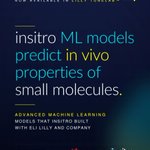
@insitro is proud to announce that biotech companies in the Lilly TuneLab™ network can now deploy advanced machine learning models built by insitro with @EliLillyandCo to predict in vitro and, critically, in vivo properties of small molecules — representing collective progress advancing the field of AI drug discovery on behalf of patients.
We're discussing the news live at SF Tech Week today, where @mmrozenman, insitro CFO and CBO, joins Aliza Apple, PhD, Vice President of Catalyze360 AI/ML and Global Head of Lilly TuneLab, at the @a16zBioHealth & Lilly TuneLab biotech breakfast.
In advance of the discussion, Mary explained, “We built insitro to make biology an AI problem, with scaled data and models at the frontier. Our in-house data scaling helps us predict which biology we should target to impact disease in vivo. Today’s announcement with Lilly takes the next step. Now we’re predicting how a molecule will behave in vivo so we can make better decisions earlier in R&D by trading upfront compute for downstream conviction. We are thrilled to ship these models on TuneLab to enable this way of working across their ecosystem.”
Trained on multi-species preclinical data that Lilly generated over decades of research from hundreds of thousands of unique molecules, the models offer a powerful alternative to today’s industry standard method of extrapolation from in vitro assays, providing an enterprise-grade capability traditionally available only to organizations with the scale to generate such data volumes themselves. The models will be updated as the dataset continues to expand.
"The question of a molecule's in vivo behavior has been an empirical question, answered experimentally, slowly, one compound at a time. These models make it a computational question first," said @DaphneKoller, PhD, founder and CEO of insitro.
The in vivo PK models are a critical component of our TherML™ platform for small molecule discovery, alongside machine learning and physics-based in silico screening, affinity models powered by proprietary DNA-encoded libraries, and an active-learning medicinal chemistry engine.
→ Read our official announcement: insitro.com/news/insitro-des…
→ Learn more about how the models work: insitro.com/news/insitro-lil…
#SFTechWeek #AI #ML #LillyTuneLab #drugdiscovery

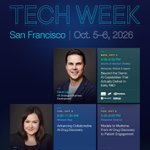
Three panel discussions, one week. At @SFTechWeek 2026, insitro will take part in critical industry conversations focused on moving from predictive models to medicines that work.
1️⃣ Monday, 4:00–6:30 PM — Molecules, Models & Agents
→ Dave Light, insitro's VP, Strategy & Corporate Development, joins the panel "Beyond the Demo: AI Capabilities That Actually Deliver in Early R&D," alongside FutureHouse, Tempus AI, and @10xGenomics, moderated by @LEK_Consulting. The event is hosted by @GitHub with @Microsoft, @NVIDIA, and @Baird.
2️⃣ Tuesday, 8:30 AM — Advancing Collaborative AI Drug Discovery
→ @mmrozenman, insitro's CFO & CBO, presents at a breakfast convened by @a16z and @EliLillyandCo's TuneLab team, alongside BigHat Biosciences and Flex Therapeutics.
3️⃣ Tuesday, 5:00–8:00 PM — Models to Medicine Series: From AI Drug Discovery to Patient Engagement
→ Mary joins the Models to Medicine panel, hosted by the @awscloud for Startups team, alongside Xaira Therapeutics, Abridge, and @a16zBioHealth.
📅 Full SF Tech Week calendar: lnkd.in/ekqySxCX
#techweeksf #AI #drugdiscovery #sf

insitro retweeted

What will the next 3–5 years of AI in health and life sciences actually look like?
At World Summit AI Amsterdam, Daphne Koller, Founder & CEO of insitro, Co-founder of Coursera and former Stanford Professor, will lead an exclusive 60-minute executive masterclass on AI for Health and Humanity.
This isn't a traditional keynote.
It's an interactive conversation with one of the pioneers of modern AI, built around the questions senior leaders are actually wrestling with as AI reshapes human biology, healthcare and drug discovery.
The conversation will explore:
→ What comes beyond foundation models
→ Where AI is creating real value in biology and healthcare, and where the hype breaks down
→ The next wave of AI companies: what to build, what to buy and how to tell the difference
→ What health and life sciences executives most often get wrong about AI
→ How regulation, capital and data will influence what wins
→ A candid look at the next 3–5 years, including which bets could pay off and which fashionable ideas may not age well
One hour. A limited room. Direct access to one of the people who has helped define modern AI.
📅 Thursday 8 October 2026
⏰ 2:30–3:30 pm
📍 Taets Art & Event Park
🎟️ €199 | Registration required
⚠️ Attendees must hold a valid World Summit AI Expo & Content ticket.
Places are limited and booking closes 25 September.
Register now: hubs.li/Q04x6yjH0
#WorldAIWeek #WorldSummitAI #DaphneKoller #AIForHealth #HealthcareAI #DrugDiscovery


insitro retweeted

Biopharma is rapidly embracing AI-native drug discovery, which is opening up some interesting new avenues for collaboration.
We @a16z are co-hosting an #SFTechWeek breakfast with @EliLillyandCo to dig into what this looks like in practice.
We’ll hear from leaders at Lilly TuneLab, @insitro, @BigHatBio, Flex Therapeutics, and a16z about how federated learning, biology foundation models, generative design, and closed-loop experimentation can help our industry make better predictions and accelerate drug discovery.
Come hang out with us! @Techweek_ @VanessaBraunst
partiful.com/e/ccQ8p5st5UNpG…
insitro retweeted

H @DaphneKoller ιδρύτρια της @coursera και σήμερα της @insitro εξηγεί στο WIRED Greece γιατί η εμπλοκή του AI στην ανακάλυψη φαρμάκων αφορά τον σχεδιασμό καλύτερων μορίων αλλά και την αποκάλυψη των βιολογικών μηχανισμών που ακόμη δεν κατανοούμε.
wired.com.gr/article/i-daphn…

insitro is thrilled to announce the appointment of Hideo Makimura, M.D., Ph.D., as Chief Medical Officer, a pivotal step as we advance our therapeutic programs toward the clinic.
"Hideo has spent his career using human genetics and biomarkers to guide and accelerate clinical programs from initial patient studies through late-stage development," said Daphne Koller, founder and CEO of insitro.”
“As insitro heads into the clinic, I could not imagine a better partner to help us translate the insights generated by our platform into meaningful medicines for patients."
Learn more: insitro.com/news/insitro-app…

insitro retweeted

AI biotech Insitro’s Daphne Koller on how to speed up clinical trials
By @brittanytrang
statnews.com/2026/08/26/biot… via @statnews

insitro retweeted

Dear followers, this is a fascinating, thought-provoking article on AI and drug discovery. The facts are very interesting. I suspect the pattern that Daphne Koller documents may apply more broadly than just to drug discovery. deepphenotype.substack.com/p…
insitro retweeted

Excellent piece on the deep challenges of drug discovery and the ways that AI can and cannot help, from Stanford Comp Sci professor Daphne Koller, founder of Coursera and now Insitro, an ML-enabled drug discovery company.
deepphenotype.substack.com/p…


The second issue of Deep Phenotype, insitro’s Substack publication on scaled biology and deep causality, is now live. In “Mapping Causal Human Biology: From Outcome to Mechanism,” insitro CEO and founder @DaphneKoller examines the problem at the center of drug discovery – moving from a desired clinical outcome to a mechanism precise enough to drug.
Roughly nine in ten drugs that enter the clinic fail, most because the underlying biology was wrong. Today’s AI can detect associations at an extraordinary scale. Drug discovery, however, demands something harder: causal knowledge of what will happen when we intervene in a human system.
Human genetics offers rare evidence from experiments nature has already run. Targets with genetic support are two to four times more likely to succeed in the clinic, yet only 3.6% have been pursued for any supported indication. Read Daphne’s new article to learn how insitro approaches this opportunity – and why getting the biology right matters far beyond the probability of success.
“Every trial asks patients to accept real risk on an unproven hypothesis. When the biology was wrong from the start, that risk was taken for a drug that was never going to help them. Better target selection honors what patients put on the line.”
╰┈➤ Read part two of Daphne’s manifesto on Substack, “Mapping Causal Human Biology: From Outcome to Mechanism” on Deep Phenotype: deepphenotype.substack.com
#DrugDiscovery #AI #Biology #CausalBiology

insitro retweeted

A masterpiece from @DaphneKoller — honestly a must-read for anyone who claims to be deeply interested in the role that AI will play in drug discovery and development
@insitro is one of the most AI-pilled biotech companies in the world, using agents and AI tools day in and day out across their organization for myriad tasks and workflows
But they are also one of the few AI x biotech companies who have committed to actually developing novel medicines, against novel targets. The team has seen first-hand how hard (and often incompressible) every step of this process is. Daphne shares thoughtful reasoning about where magic is possible, and where it probably isn’t (at least not yet).
a16z.news/p/drug-discovery-h…

insitro retweeted
“AI will mostly help us generate failures faster.”
A provocative take from Daphne Koller, Founder & CEO of insitro and World Summit AI 2026 speaker, on what AI can — and can’t — solve in drug discovery.
Read Drug Discovery Has No Magic Wands ↓
hubs.li/Q04sV8yx0

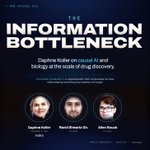
insitro founder and CEO @DaphneKoller recently stopped by The Information Bottleneck podcast to chat with hosts @ziv_ravid and @Hellisotherpe10 about causal biology and why AI in drug discovery is a fundamentally different problem than AI in language or vision. The conversation covers a lot of ground:
→ The bitter lesson worked for language and vision because scale and general methods met an internet's worth of data. Biology has no equivalent corpus — cells grow at the speed cells grow. AI cannot manufacture the missing data.
→ A drug isn't a pattern in data you already have, it's a prediction about an intervention nobody has run yet. This is a significant reason why 90% of drugs that reach the clinic fail, and only 22% of diseases have any approved treatment at all.
→ Plus: what it would take to build that missing corpus, and what real foundation models for biology would require.
🎧 Listen to the podcast at theinformationbottleneck.com…
📖 Daphne's article “Drug Discovery Has No Magic Wands," on insitro’s Substack, Deep Phenotype, covers similar territory in greater depth — read and subscribe: deepphenotype.substack.com/
#AI #DrugDiscovery #Causality #Biology
