

Official Twitter account for the Ark Encounter, located in Williamstown, Kentucky.
Greater Cincinnati
Joined November 2010
- Tweets9.3K
- Following3
- Followers42K
- Likes281
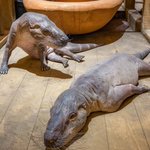
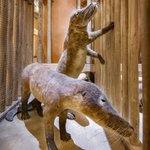


Three-dimensional sculpting technology helped ensure anatomical accuracy and allowed the Ark Encounter artists to develop custom poses. Some were partially or fully 3D-printed, like these non-mammalian synapsids modeled after Cynognathus.
A handful of dinosaur figures can be seen on the Ark, like the stegosaurs. However, not every dinosaur-looking sculpture represents a dinosaur. The figures in the third photo, for instance, depict non-dinosaurian reptiles called silesaurs.


Aside from the bat enclosure on Deck One, the cages on Deck Two feature the largest number of fabricated animals on the Ark. Both familiar and relatively unfamiliar medium-to-large reptiles, mammals, and non-mammalian synapsids are depicted. As with the animals on Deck One, each of the figures were carefully crafted after real animals that lived at or near the time of the Flood.
Ark Encounter researchers accounted for more than just your run-of-the-mill animal varieties. These are rarely-seen reconstructions of creatures like these chalicotheres, odd-toed ungulates like horses, rhinos, and tapirs. Short hindlegs and long forearms gave them a somewhat gorilla-like stance, though they resemble the unrelated giant ground sloths.
Even staples of Noah’s Ark animal scenes look a bit different. Featuring a shorter neck and four ossicones, the Ark Encounter giraffes better represent known ancient varieties within the giraffe kind than do modern forms.


Noah’s family tree had some big names: Adam (yes, from the Garden of Eden), Enoch (the one who didn’t die), and Methuselah (the oldest man ever recorded).
The purpose of the Ark was not to save a few animals to start a farm after the Flood but to save representatives of every kind of land animal and bird to repopulate the earth.
The Bible calls Noah “a preacher of righteousness” (2 Peter 2:5 LSB) who “condemned the world” by building the Ark (Hebrews 11:7 LSB).

