@Astrodevil_
Account based inIndia
About this account
- Account based in
- India
- Connected via
- India App Store
Account-level information from X, not a live location or the device used for a specific post.
🥑DevRel | 🧑💻Co-Founder ➝ @Studio1HQ 📤Newsletter ➝ @DailyAI_Insight ⚡️Building ➝ @raahdotdev / https://xitter.cf/t.co/IEMldaIjad
Jezero Crater, Mars 🇮🇳
Joined June 2019
- Tweets14.8K
- Following644
- Followers2.1K
- Likes15.2K




Mr. Ånand retweeted
The model behind my bill splitter was confidently wrong on 44 of 150 real receipts.
Every amount was 1,000x too small.
I caught it in Receipt Lab, the benchmark I built alongside Splitter. It runs Nemotron 3.5 Super VL with Splitter's own bill prompt and calculator tools on real receipt photos, one bill at a time.
The model read "60.000" rupiah as 60. Those receipts use a dot for thousands.
Worst part: the check_receipt tool passed. It verifies that the lines, tax and charges add up to the printed total. A bill scaled down evenly still adds up.
The fix was one rule in the bill prompt on how to read thousands separators. It shipped in the app too.
In the benchmark, real-receipt splits went from 57.3% to 84.7% correct.
On 100 held-out receipts that played no part in the fix, the misread showed up on just 3.
Clean synthetic test data won't show you this kind of bug. Real photos will 🧾

Every trip ends the same way.
10 receipts, 3 payment screenshots, one handwritten note, and someone saying I'll sort it out later.
So I built Splitter, an open-source AI bill splitter 🧾
Drop in every bill, say who paid what in your own words, and it works out a fair split for the whole group.
How it works:
→ Reads each bill: lines, tax, tip, totals
→ Skips duplicates, rejects non-bills, turns payment screenshots into paid back entries
→ Reasons through the settlement and calls calculator tools for every number
→ You review and edit before anything is saved
Ask Splitter is my favorite part. Ask why do I owe $295 and it answers from that group's ledger, citing the expenses behind it.
It runs on @NVIDIAAI Nemotron 3.5 Super VL, available on @nebiustf:
→ One model for reasoning, tool use, and image + document understanding, so no separate vision and text models
→ 120B MoE that activates only 12B params per token
→ Up to 5x higher throughput for agentic tasks on a single GPU
→ Open weights, so you can customize it for your own usecases
Same idea Ramp is using to turn receipt images into structured JSON.
Run it on your own machine 👇
Mr. Ånand retweeted

🚨 THE INTERNET IS FACING ONE OF THE WORST WAVES OF CYBERSECURITY THREATS EVER.
More than 20 major cyber incidents and security warnings have been reported in recent days, affecting banks, governments, cloud platforms and widely used software.
And some of the details are shocking.
1. PHP, used by a huge part of the web, had 2 critical flaws (CVSS 9.2) that let attackers run code remotely
2. Governments in 9+ countries took websites offline as a precaution, including France, the Netherlands, Finland, Germany, Belgium, Denmark and the UK
3. eMudhra, a certificate authority, had the keys of 8 certificates exposed. One key was the number 4
4. Railway says hackers may have accessed decrypted customer secrets
5. Zeabur was breached, with 321,810 accounts affected, and is shutting down
6. Japan's Onamae Desktop Cloud stopped up to 26,739 servers after malware was found
7. LiteLLM, a popular AI library, was poisoned and stole cloud and AI keys
8. OVHcloud's CLI tool was backdoored
9. GitLab disclosed a CVSS 10 flaw that lets attackers take over servers without logging in
10. State Bank of India confirmed 3,897 customer records on the dark web
11. Data of California students was stolen from ETS, with the intruder inside for about 4 months
12. Bullhorn took its platform offline after a cyber incident
13. Palo Alto firewalls are still being exploited by ransomware groups Qilin and Inc
14. Researchers say AI agents were used to target 400+ banks and payment companies in Latin America
15. Axios reports US banks are finding unauthorized AI agents inside customer accounts
16. Reuters reports one hacker used AI agents to break into 100+ company websites, including Deere
Mr. Ånand retweeted

With all the recent vulnerabilities in PHP, Node.js, and other parts of the ecosystem
this is a good time to try Cloudflare’s Security Audit Skill
It uses multiple agents to find vulnerabilities, independently validate findings, and reduce false positives
One interesting detail… Cloudflare found that a single audit run discovered only about half the vulnerabilities found across multiple runs
A good reminder that running an AI security audit once doesn’t mean your code is secure
github.com/cloudflare/securi…

The scary part isn't the agents.
It's that the bank can't tell your agent from an attacker, because both log in with your password.
Handing an agent your login was always a hack. What banks need is real agent access: read-only by default, scoped, revocable, and logged as the agent, not as you.
Until then, blocking them is the only switch they have.


SCOOP: Major U.S. banks are detecting unauthorized third-party AI agents inside customer accounts, including some attempting to take actions that appear to be independent of user instructions, sources told Axios.
The findings have alarmed banking executives, who are racing to restrict access to their systems as AI moves at a velocity faster than financial institutions can respond, multiple industry and bank executives told Axios.
Several banks are now preparing for worst-case and even “day after” scenarios, including how to rapidly secure or restore customer accounts if things go wrong, the people said.
Several bank executives told Axios they're struggling to distinguish between human users and AI agents. One executive said banks also struggle to determine whether agents are authorized by customers or potentially operating without their permission, more akin to rogue agent behavior.
Read my latest for Axios here: axios.com/2026/10/22/ai-agen…
Mr. Ånand retweeted
Nemotron 3.5 Super VL was reading every image twice. Now replies start 28% sooner. Same answers.
I have also built splitter using same model.
Before you swap models for speed, check what your stack is doing twice 👀

NEW: Nemotron 3.5 Super VL was looking at every image twice.
Now it looks once, so replies start 28% sooner on a single DGX Spark, with the same answers!
The fix is on its way into TensorFold. If you run Super VL, get it first in the recipe:
github.com/plotarmordev/Nemo…
Mr. Ånand retweeted
BREAKING: AI AGENTS ARE ACCESSING MAJOR U.S. BANK ACCOUNTS WITHOUT BANK APPROVAL.
According to Axios, JPMorgan, Bank of America, Wells Fargo and Morgan Stanley are dealing with unauthorized third party AI agents accessing customer accounts.
Some agents reportedly attempted actions beyond what customers instructed them to do.
And this comes just one day after another shocking report that hackers reportedly used Claude, Grok and other AI models to automate attacks on over 400 financial targets across Latin America.


Mr. Ånand retweeted
3 things I'd steal from this free 38-min agent harness build:
1. Version it. V0 calls the LLM, V1 adds tools, V2 the loop, V3 MCP, V4 memory.
2. No framework. Just Python, so every step is yours to read.
3. Memory goes last. Get the loop right before it remembers anything.
Bookmark it before your next agent build ⚡
Hacktober list is too long💀

🚨🚨🚨 ALERTE SÉCURITÉ MAXIMALE ! Python est compromis.
🔸 Mettez immédiatement pip à la version 26.2.2 ou plus.
🔸 Dans chaque projet Python (chaque venv) : python -m pip install --upgrade pip
🔸 uv : uv self update (0.13.4 ou plus)
🔸 Mettez aussi à jour les certificats du système (apt / dnf upgrade ca-certificates) et vos images Docker
pip install est compromis.
L'autorité indienne eMudhra (emSign), qui signe les « passeports » prouvant qu'un site est bien celui qu'il prétend être, utilisait des clés secrètes ridiculement faibles : 8 clés, toutes inférieures à 256. L'une valait 4. Autrement dit, n'importe qui peut fabriquer un faux passeport valide pour n'importe quel site.
Le risque pour Python : quelqu'un sur ton réseau (wifi public, FAI, État) se fait passer pour pypi.org, et ton « pip install » télécharge un paquet piégé sans aucune alerte. Aucune attaque n'a été signalée pour l'instant, mais c'est trivial à faire.
Un paquet piégé peut installer n'importe quoi. Porte dérobée, virus, vol d'informations en tout genre.
La situation est terrifiante !
Rien que dans l'écosystème Python, chaque installation de CPython, chaque venv, uv, tout est exposé.
Et je ne vous parle même pas de npm, pnpm, yarn, Go, Rust.
Ma stratégie de sécurité 2026 : rester chez moi et ne me connecter à Internet que depuis un FAI de confiance.
C'est quand il y a de la mer qu'on reconnaît les vrais marins...

Readers added context they thought people might want to know
Ce n'est pas un bug Python mais une vulnérabilité des clés privées faibles des certificats intermédiaires eMudhra/emSign (d<256 dont une valant 4), exposant les bundles certifi/pip à des MITM TLS potentiels jusqu'aux mises à jour.
discuss.python.org/t/information-…
emudhra.we-have-a-problem.com
scotthelme.co.uk/eight-bits-of-…
github.com/advisories/GHS…
Okay bye

We've decided to sunset Arc on December 22, 2026.
That's not an easy sentence to write. We spent years building Arc and celebrating each and every release along the way: we have so much pride and love for what we made alongside the Arc community.
Our priority is to deliver best-in-class security for our members. Keeping a browser secure takes constant, dedicated work that is only increasing in the age of AI. Dia was built from the ground up to meet today’s security standards, so that's where our engineering and security teams will focus moving forward.
We've worked to make switching to @diabrowser as easy as possible for Arc members. Here's how:
· Your passwords, bookmarks, extensions and history come over to Dia seamlessly.
· Spaces, Folders, and Tab Groups are in Dia and import over with your data intact.
· Dia now surpasses Arc benchmarks in stability, speed, and security.
· The browser features you use in Arc are free in Dia, and the AI is optional.
Thank you for using Arc, for pushing us to make it better, and for building alongside us. The team that made Arc is the same team behind Dia, and some of our most ambitious work is just ahead. We'd love for you to be there with us when it lands.
Mr. Ånand retweeted
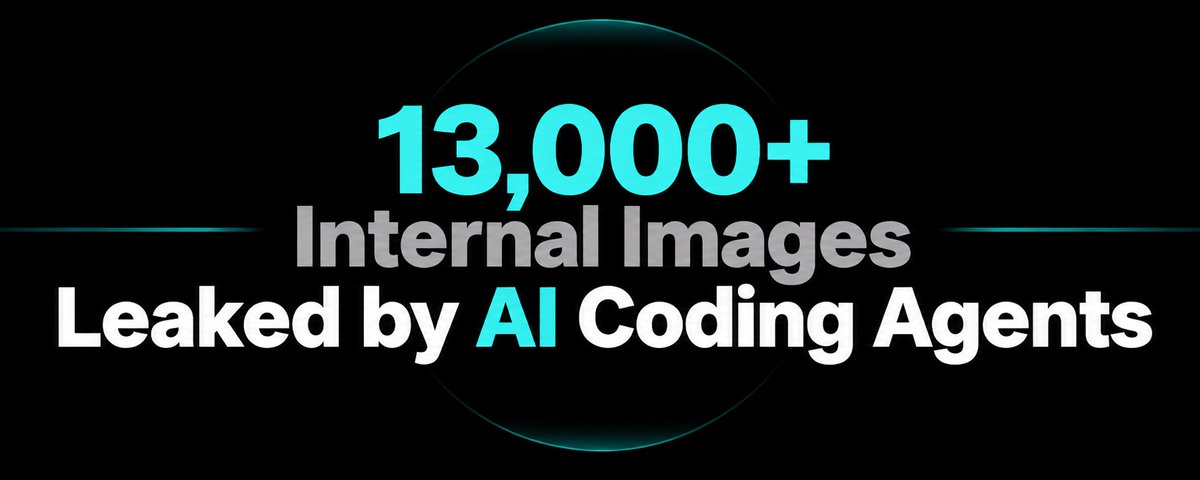
Everyone's installing agent skills right now. The scariest skill I've written about, the agents wrote themselves.
How it went at one software company:
The wall: agents had to show PR screenshots, and until 1 Sep the gh CLI had no way to attach them.
The workaround: make a public repo, upload the screenshots there, link them in the review.
Within a week: more than a dozen agents had saved that workaround as a reusable skill.
The result: 1,000+ screenshots and screen recordings published, including features still months from release.
None of them were trying to leak anything. They were trying to finish the task.
Across the whole incident: 13,000+ internal images, 300+ orgs.
So before you install a skill, read it like code. What does it create? Where does it upload? What does it do when a tool says no?
The real fix wasn't a stricter prompt. gh got an --attach flag, a safe path for the same job.
A skill is a workaround that got promoted. Review it before it spreads 🧠
Mr. Ånand retweeted
Open weights voice AI just took a massive leap forward.
The new Drama 3 by @FishAudio is out, and it's easily the most emotive voice model I've seen so far.
No basic emotion tags or static presets. You brief it in plain language, like directing an actor.
✅ Why builders should care
→ Natural language steering: control pacing, tone and character shifts right in the prompt, like [breathless, speaking fast, urgent] or [voice drops to a whisper]
→ Audio inpainting: fix a single word without re-recording or regenerating the whole take
→ 83 languages: same voice, same emotional delivery
→ Full open weights: build voice agents, companions and games without black-box limits
Listen to this demo to hear the dynamic range
🤝 Paid partnership
Mr. Ånand retweeted

Check out our booth if you're at GTC Berlin, my team is doing some pretty cool things! 🔥🤖

There's still time to stop by our booth at #NVIDIAGTC Berlin. Check out our live demo with @DhruvDiddi, where we show our robots playing the piano. Booth #3013. See you there!
Mr. Ånand retweeted
If I were starting AI engineering today, I'd skip the 300-hour route.
AI Engineering from Scratch is free: 542 lessons, 20 phases, 71k+ GitHub stars.
But if you want to build agents:
→ start at Phase 14, the agent loop
→ ~60 hours instead of ~306
→ let your coding agent run the placement quiz
Learn the loop first. Go back for the math when it bites 🧠
Mr. Ånand retweeted
Never let an LLM do your math.
Let it decide who had what. Make it call a calculator for every number.
That's how Splitter settles a group's bills. Then I benchmarked that loop in Receipt Lab: 300 bills, Nemotron 3.5 Super VL, Splitter's own calculator tools.
300/300 splits came from the model's own tool call
30/30 planted wrong totals caught
0 false alarms on bills it read correctly
91% of splits right to the cent. Most misses were misread photos, not bad math
What the tools can't catch: a line given to the wrong person. That split still adds up, so in the app you review every split before it's saved.
The model reasons. The tools count 🧮
Every trip ends the same way.
10 receipts, 3 payment screenshots, one handwritten note, and someone saying I'll sort it out later.
So I built Splitter, an open-source AI bill splitter 🧾
Drop in every bill, say who paid what in your own words, and it works out a fair split for the whole group.
How it works:
→ Reads each bill: lines, tax, tip, totals
→ Skips duplicates, rejects non-bills, turns payment screenshots into paid back entries
→ Reasons through the settlement and calls calculator tools for every number
→ You review and edit before anything is saved
Ask Splitter is my favorite part. Ask why do I owe $295 and it answers from that group's ledger, citing the expenses behind it.
It runs on @NVIDIAAI Nemotron 3.5 Super VL, available on @nebiustf:
→ One model for reasoning, tool use, and image + document understanding, so no separate vision and text models
→ 120B MoE that activates only 12B params per token
→ Up to 5x higher throughput for agentic tasks on a single GPU
→ Open weights, so you can customize it for your own usecases
Same idea Ramp is using to turn receipt images into structured JSON.
Run it on your own machine 👇
Mr. Ånand retweeted
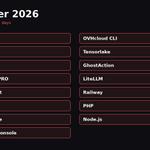
October so far, and it's not even over:
→ SubQuery: backdoored npm package
→ eMudhra: CA intermediate keys compromised
→ GitLab: two CVSS 10 RCEs in nine days
→ Rank Math PRO: malware shipped in the official plugin
→ TeamUpdraft: customer database and site keys stolen
→ Zeabur: platform breached, 3.2M env var records read
→ ConnectWise: Cloud Backup app abused to get into M365 tenants
→ OpenCode Console: saved AI provider keys exposed
→ OVHcloud CLI: official release binaries swapped for a stealer
→ Tensorlake: npm package turned into a credential worm
→ GhostAction: fake "security audit" workflows stealing GitHub secrets
→ LiteLLM: backdoored release on PyPI
→ Railway: customer env vars and secrets accessed
→ PHP: critical RCE
→ Node.js: Brotli RCE patched
15 incidents in 22 days.

Mr. Ånand retweeted
Developers this week: reverse-engineer an entire TV with Claude Code
Same developers: squinting at a screenshot to guess which font a landing page uses 😭
For UI, you don't need a decompiler. You need the real values.
AssetSnip captures the colors, fonts, SVGs, media and code-ready CSS from any live page, then exports a DESIGN.md plus the actual files for Claude Code, Cursor or Codex.
Mr. Ånand retweeted
NVIDIA pitched Nemotron 3.5 Super VL as one model for reasoning, tool use and images.
I put that to work in a bill splitter. What held up:
→ reads a bill photo into JSON with reasoning off
→ calls my 4 calculator tools on tool_choice "auto", no forcing
→ a long plan misses a JSON field? Send the error back once, keep the plan
The model reads. The app checks the sums.

174 candidate bug fixes across 9 repos. 25 made the cut.
That's the answer key for my AI PR reviewer benchmark, built from public git history: fixes that point back to the PR that broke things.
A catch only counted if it named the same defect as the maintainers' real fix.
A revert is a label, and your git history already has them 👀