Exploring belief systems and ancient knowledge from an objective, evidence-based perspective, so everyone can form their own opinion.

Joined June 2026
A forgotten branch of Christianity believed your thoughts could decide your destiny long before your actions ever did. It built an entire system for watching the mind, resisting inner deception and experiencing God directly. It's called Hesychasm. 🧵👇
47
373
27
2,589
114,103
AtlasOfWisdom retweeted
Pythagoras claimed he could remember previous lives. He believed that the soul could move from one body to another after death, including into animals. This was called metempsychosis. A person’s actions mattered because the soul was thought to carry the consequences of how one lived from one existence to the next. That is why Pythagorean life involved strict rules about food, behavior and religious practices. These rules were meant to keep the soul pure and prepare it for its next existence. Ancient writers also tell a story about Pythagoras hearing a dog being beaten. He supposedly recognized the voice of a dead friend in the animal and stopped the beating because he believed his friend’s soul had entered the dog. Image source: “Illustration of Pythagoras” (1941), John H. Manas. Source: Wikimedia Commons / Internet Archive. Version checked: 3 April 2021. License checked: 30 September 2026 - Public Domain.
Pythagoras believed that death does not end your existence. It only ends your current body. He teaches metempsychosis, the transmigration of the soul. A soul does not die with the body. After death, it can pass into another body, human or animal. That means the body is only a temporary form. What appears to be a different creature may contain the same soul that once inhabited another person. This is also why Pythagoras rejects killing animals for food. If a human soul can enter an animal, killing an animal could mean killing a being whose soul once belonged to a human. His famous principle is “omnia mutantur, nihil interit” - everything changes, nothing perishes. The body changes and eventually dies. The soul continues. For Pythagoras, death is therefore not the end of existence but a transition from one form to another. The Metamorphoses places this teaching at the end because it turns all the transformations before it into examples of the same idea. #Philosophy Image source:
“The xv. Booke of P. Oudious Naso, entyltuled Metamorphosis” (1567), Ovid, translated by Arthur Golding.
Source: Wikimedia Commons / Schoenberg Center for Electronic Text & Image Version checked: 23 January 2011. License checked: 11 September 2026 - Public Domain / Public Domain Mark. „The School of Athens” (1509), Raphael. Source: Wikimedia Commons (original source: Web Gallery of Art). Version checked: 9 March 2011. License checked: 11 September 2026 - Public Domain (PD-Art / Public Domain Mark).
11
66
7
246
13,167
AtlasOfWisdom retweeted
The Eye of Horus has a darker story than the modern symbol suggests. Horus lost an eye in his fight with Seth. Thoth restored it, and Horus then gave it to the dead Osiris. Horus was the son of Osiris and Isis. Seth had murdered Osiris and taken the throne. During their struggle, Horus lost or damaged his eye. Egyptian texts preserve different versions of the fight, including some remarkably violent episodes. The restored eye was called the Wedjat. In funerary texts, Horus offering the eye to Osiris became part of rituals concerned with restoring the dead for the afterlife. The conflict also had a political dimension. Horus represented legitimate kingship, while Seth was associated with violence and disorder. Restoring the eye mirrored the restoration of order after Seth’s attack. The Wedjat also appears in Egyptian mathematics. Its six parts were associated with 1/2, 1/4, 1/8, 1/16, 1/32 and 1/64. The claim that these fractions came directly from the six pieces of the mythological eye, however, is not proven. Image source: “ThothBoat.jpg” (1904), unknown author. Source: Wikimedia Commons. Version checked: 8 September 2005. License checked: 30 September 2026 Public Domain (US; restrictions may apply in some countries).
7
45
2
175
5,147
AtlasOfWisdom retweeted
The Etruscans divided the sky into 16 regions and also divided the liver into areas associated with different gods. This was part of their system for interpreting signs. Lightning was read according to where it appeared in the sky, with different regions associated with different divine powers. In haruspicy, priests examined animal livers and interpreted their different sections. The Bronze Liver of Piacenza, found in northern Italy in 1877, shows this system in material form. It is shaped like a sheep’s liver and bears the names of Etruscan gods. Its outer edge is divided into 16 sections, which have been linked to the 16 regions of the sky. The exact relationship between the liver and the division of the sky remains uncertain. The object is generally understood as part of the wider Etruscan practice of interpreting signs through animal organs and celestial phenomena. This was part of a system for interpreting signs from the heavens. Lightning had a specific meaning depending on where it appeared. Its direction and position could indicate which divine power was involved and how the event should be interpreted. A similar system was used in haruspicy, the examination of sacrificed animals. Priests inspected the liver and divided it into specific areas associated with different gods. The connection becomes visible on the Bronze Liver of Piacenza, discovered in northern Italy in 1877. The bronze object is shaped like a sheep’s liver and covered with Etruscan god names. Its edge is divided into 16 sections, corresponding to the 16-part division of the sky. The liver was therefore not simply a “map of the heavens.” It belonged to a religious system in which the positions of gods, celestial events and parts of a sacrificial animal were linked. Image source: “Diagram of the inscriptions of the bronze liver of Piacenza” (1880), Wilhelm Deecke. Source: Wikimedia Commons. Version checked: 26 January 2017. License checked: 30 September 2026 - Public Domain. “Regions of the sky after Martianus Capella” (1880), Wilhelm Deecke. Source: Wikimedia Commons. Version checked: 26 January 2017. License checked: 30 September 2026 - Public Domain.
1
20
3
91
2,666
AtlasOfWisdom retweeted
A stone, a king and an angel could all be placed on the same ladder of existence, with each assigned a fixed position in a universe believed to have been ordered by God. The Great Chain of Being imagined reality as one enormous hierarchy. God stood at the top, followed by angels, humans, animals, plants and inanimate matter. Every kind of being had its place. The idea had roots in ancient Greek philosophy, especially Aristotle, and was later developed by Christian thinkers. In 1579, Diego Valadés illustrated this worldview in Rhetorica Christiana as a picture of the created world. Even heaven had its own hierarchy. Pseudo-Dionysius divided angels into nine orders. Seraphim, Cherubim and Thrones were highest, followed by Dominions, Virtues and Powers. Principalities, Archangels and Angels formed the lowest group. The same logic could be applied to human society. Kings, nobles, clergy and commoners could each be assigned a place in an ordered world. Social hierarchy could therefore be understood within a much larger divine order. That made the Chain more than a way to classify nature. It gave people a framework for understanding why the world, heaven and society were arranged as they were. Evolution later undermined the idea of fixed ranks in nature. Species were understood through descent, variation and shared ancestry rather than permanent positions in a universal order. The old hierarchy asked what place a creature occupied. Evolution asked what had to happen for that creature to exist at all. Image source: “Great Chain of Being” (1579), Didacus Valades (Diego Valades). Source: Wikimedia Commons, via Getty Research. Version checked: 13 January 2020. License checked: 29 September 2026 - Public Domain (PD-Art). “Icon of Nine Orders of Angels” (18th century), unknown artist. Source: Wikimedia Commons. Version checked: 9 September 2009. License checked: 29 September 2026 - Public Domain / Public Domain Mark.
3
21
1
78
2,731
AtlasOfWisdom retweeted
Was Tiwanaku’s Gateway of the Sun meant to symbolize a passage between worlds? The monument was built by the ancient Tiwanaku civilization, centuries before the Inca. Carved from a single block of andesite, it features a central figure known as the “Staff God”, a supernatural being whose exact identity remains uncertain. Tiwanaku ritual specialists used psychoactive plants during ceremonies. Archaeological evidence suggests substances such as vilca were part of this ritual world, and some researchers have connected altered states of consciousness with Tiwanaku’s religious imagery. Some theories propose that the gateway is thousands of years older than Tiwanaku or was built by an unknown civilization. Image source: “Posnansky Fig 11” (1912), Arthur Posnansky. Source: Wikimedia Commons / Harvard Library. Version checked: 1 February 2024. License checked: 29 September 2026 - Public Domain. “Posnansky Fig 10” (1912), Arthur Posnansky. Source: Wikimedia Commons / Harvard Library. Version checked: 30 January 2024. License checked: 29 September 2026 - Public Domain.
4
15
1
64
2,475
AtlasOfWisdom retweeted
The Pythagoreans saw numbers behind things that seemed unrelated, from musical intervals to geometric forms. They began with 1, 2, 3 and 4. Their sum is 10, the Tetractys. More important were their ratios. 1:2 gives the octave, 2:3 the fifth and 3:4 the fourth. Musical harmony could be expressed through simple numerical relationships. That suggested a wider principle. If harmony in sound depends on proportion, perhaps nature does too. The important thing was not the number alone, but the relationship between numbers. The same four numbers were linked to geometry. 1 corresponded to the point, 2 to the line, 3 to the plane and 4 to the solid. A numerical sequence could describe the movement from unity to extended form. Robert Fludd carried this Pythagorean tradition into the 1600s. He connected arithmetic with music, geometry, the human being and the cosmos. The human being was understood as a microcosm, reflecting the larger universe. Language could also be brought into the system. Letters were assigned numerical values, allowing words to be examined through numerical relationships. Fludd was not simply claiming that certain numbers were magical. He was searching for recurring proportions across different parts of reality. For him, the harmony of music, the structure of form and the order of the cosmos could be related through the same numerical principles. Numbers were therefore not just measurements. They belonged to the structure of creation itself. #Numerlogy Image source: “Zahlensystem der Numerologie” (1624), Robert Fludd; printed by Kaspar Rötel. Source: Wikimedia Commons / Deutsche Fotothek⁠ Version checked: 10 April 2009. License checked: 29 September 2026 - Public Domain / Public Domain Mark 1.0. “Pythagorean Number System” (1624), Robert Fludd; printed by Kaspar Rötel. Source: Wikimedia Commons / Deutsche Fotothek. Version checked: 10 April 2009. License checked: 29 September 2026 - Public Domain / Public Domain Mark 1.0.
1
34
5
179
54,570
AtlasOfWisdom retweeted
Rumi did not think love was meant to make you happy. He thought it could dismantle the person who is doing the loving. Rumi (1207–1273) was a Muslim scholar, poet and Sufi mystic. For him, love was not just a feeling. We want to possess, control and be loved in return. Rumi saw this attachment to “me” and “mine” as part of the nafs. That is why longing matters. At the beginning of his Mas̱navī, he uses the sound of a reed flute separated from its source as an image of the human longing to return to its origin. The person or beauty we love is not necessarily the final object of that longing. It can awaken a desire that reaches beyond it, toward God. Rumi calls the fading of the ego’s claim to be separate and self-sufficient fanāʾ. His idea of “dying before you die” points to the same process, the loosening of the ego while we are still alive. So love, for Rumi, is not about finding something to complete the self. It is a way of discovering how deeply the self is attached to possessing, controlling and being recognised - and learning to let that attachment go. #Sufism Image source: “Meeting of Jalal al-Din Rumi and Molla Shams al-Din” (late 16th–early 17th century), unknown artist. Source: Topkapi Palace Museum, Wikimedia Commons. Version checked: 23 January 2011. License checked: 26 September 2026 - Public Domain.
1
43
2
137
3,953
AtlasOfWisdom retweeted
Tengri was not simply a god. It was a way of understanding how the world was ordered, rooted in the old spiritual traditions of Inner Asia and found in different forms among Turkic and Mongolic peoples. Tengri could mean “sky,” but also referred to a divine power above the human world. Heaven was connected with life, death, fate, power and the order of existence. The basic belief was that humans lived inside this larger order. Fate mattered, but it did not make human actions meaningless. How a person behaved, how a ruler governed and how a community lived could affect what happened to them. This is important for understanding kut. A ruler could possess kut, a heavenly power associated with his authority to rule. It was not simply a permanent divine right. If a ruler failed to protect his people or maintain order, his authority and fortune could be lost. Törü described the accepted order of society, including law, custom, tradition and proper conduct. A ruler was expected to live within this order rather than stand completely above it. The sacred world also included Yer-Sub, “Earth-Water.” Land and water were not merely physical surroundings. Mountains, rivers and the places where people lived could have religious significance. So the world was understood as interconnected. Heaven influenced fate and authority, people had responsibilities within that order, and the land itself belonged to the sacred world. There was no single holy book defining one fixed doctrine. The evidence comes from inscriptions, historical accounts and different traditions that changed over time. A later Mongol example appears on Güyük Khan’s 1246 seal, which invokes Möngke Tengri, “Eternal Heaven,” and places his imperial decree under its power. #Tengriism Image source: “Güyük Khan’s Stamp 1246” (1246), unknown creator; scan/colorization based on Paul Pelliot. Source: Wikimedia Commons. Version checked: 25 June 2007. License checked: 26 September 2026 - Public Domain.
3
17
1
71
5,025
AtlasOfWisdom retweeted
Tantric Buddhism sometimes used desire, anger and fear as part of the path rather than treating them only as obstacles. The practitioner did not simply indulge an impulse. Through meditation, visualization and specific instructions, the emotion itself became something to work with. Some tantric rituals deliberately involved things regarded as impure, including charnel grounds and alcohol. The purpose was to challenge attachment to distinctions such as pure and impure, sacred and ordinary. The Mahāsiddhas became famous for this kind of practice. Their stories include kings, craftsmen, beggars, householders and wandering yogis, showing that tantric realization was not tied to monastic life. In deity meditation, a practitioner could visualize Samvara and take the deity’s form in meditation. The deity represented qualities to be cultivated, while the practice disrupted the usual sense of a fixed, separate self. Mahāsiddha stories place practitioners in charnel grounds and around things considered impure. By confronting death, disgust and fear directly, they examined the mind’s attachment instead of simply avoiding what disturbed it. Image source: “Eight Mahasiddhas” (18th century), unknown artist. Source: Wikimedia Commons / Rubin Museum of Art. Version checked: 4 October 2012. License checked: 26 September 2026 - Public Domain. “Indian Adept (Siddha) – Multiple Figures” (18th century), unknown artist. Source: Wikimedia Commons / Museum of Fine Arts, Boston. Version checked: 21 July 2013. License checked: 26 September 2026 - Public Domain.
2
17
4
65
2,729
AtlasOfWisdom retweeted
Hildegard of Bingen believed humanity was destined to fill a place left empty in heaven after the fall of Lucifer. Her Scivias depicts nine choirs of angels as concentric circles around a white center. The outer two represent body and soul. The next five correspond to the five senses. The innermost two represent love of God and love of one’s neighbor. This was more than an angelic hierarchy. Hildegard used it to describe the human being. The body and senses belong to spiritual life rather than standing in opposition to it. A person’s task is to bring body, soul, perception and love into the right order. Hildegard links this order to Lucifer’s fall. Fallen angels leave a place in the heavenly order, and humanity is called to take that place. Human existence therefore has a role in the restoration of the cosmic order. The white center represents God, but God is not depicted as a figure. The center remains empty because God cannot be reduced to an object within creation. Hildegard’s nine circles connect angelology with human nature, the senses, morality and the limits of knowledge. The image is a diagram of how a human being belongs to the structure of the universe. Image source: “Scivias I.6: The Choirs of Angels” (12th century), unknown artist. Source: Wikimedia Commons. Version checked: 20 January 2013. License checked: 26 September 2026 - Public Domain.
To Hildegard of Bingen, the cosmos was not only above you. It was inside you. Hildegard of Bingen, a 12th-century German abbess and mystic, described creation as a network of interacting forces. Fire, ether, air and the cosmic winds were not isolated phenomena. They belonged to a single order governing the heavens, nature and life on Earth. She carried this logic into the human body. The cosmic winds had counterparts in the humors and bodily processes. The same pattern extended into the soul, where thought, speech, will and inner longing were understood as forms of movement and force. This shaped her understanding of health. The body was healthy when its forces remained in the right measure and relationship. Her idea of viriditas described the life-giving vitality that allows creation to grow and flourish, linking the vitality of nature with human health and spiritual flourishing. The same order also had a moral dimension. Human beings could live in harmony with creation or disrupt that harmony. Physical, spiritual and moral disorder could therefore belong to the same larger framework, without reducing every illness to punishment for sin. Only then does her central idea become clear. The human being was the microcosm, the small world, reflecting the macrocosm, the greater universe. The structure of creation was reproduced in the body and soul. Christ completed this picture. God became human, making humanity a meeting point between the material world, the soul and the divine. That makes the spherical Earth almost a side detail. Hildegard was not merely asking where Earth sits in the cosmos. She was asking how the entire cosmos, the human being and God belong to one order. Image source: “The Creation with the Universe and the Cosmic Man” (1230), Hildegard of Bingen. Source: Wikimedia Commons, Biblioteca Statale di Lucca. Version checked: 23 January 2005. License checked: 13 September 2026 - Public Domain (Public Domain Mark 1.0). “Werk Gottes” (1163–1173), Hildegard of Bingen. Source: Wikimedia Commons, Codex Latinus 1942, Biblioteca Statale di Lucca. Version checked: 3 February 2015. License checked: 13 September 2026 - Public Domain / Public Domain Mark 1.0.
4
27
1
78
3,628
An ancient text placed a divine version of humanity at the heart of the universe. A related text later presented much of its teaching as a revelation from the risen Jesus. The Eugnostos the Blessed, preserved in the Nag Hammadi library, describes reality unfolding from an unknowable divine source through successive levels of spiritual beings. At its centre stands the Immortal Human, a heavenly archetype rather than an ordinary person. The visible cosmos reflects this higher, invisible order. Even time follows a divine pattern. Twelve cosmic powers give rise to 72, which generate 360 more, corresponding to an idealized year of 12 months and 360 days. Much of this cosmology reappears in The Sophia of Jesus Christ, where Jesus reveals similar teachings to his disciples. The elaborate numerical scheme is absent from the surviving version. The two works also differ in form. Eugnostos presents its teaching as a letter from a sage > The Sophia of Jesus Christ turns it into a dialogue in which Jesus answers questions from his disciples, including Mary Magdalene. The change places the same broad cosmological ideas within a distinctly Christian scene.
An ancient Christian text tells a very different creation story. The being who rules the material world is not the highest God, but a lesser power unaware of the divine reality above him. The Holy Book of the Great Invisible Spirit describes a universe with a hidden hierarchy. Above everything stands the Great Invisible Spirit, an unknowable divine source. From this realm emerges Barbelo, followed by other spiritual beings who form the divine fullness. Far below them, the material cosmos is ruled by archons, powers that do not possess the highest divine knowledge. Their ruler, Sakla, claims divine authority but fails to recognize the reality above him. Humanity, meanwhile, has a spiritual origin beyond the material world. Seth, Adam’s son, becomes the ancestor of an imperishable lineage. Jesus reveals this forgotten divine reality, and salvation means recognizing one’s spiritual origin and returning to the realm of immortality. The baptism of the Five Seals plays a central role in this process. The text belongs to Sethian Gnosticism and survives in Coptic manuscripts discovered at Nag Hammadi, Egypt, in 1945. Its original Greek version probably dates to the second century.
23
102
2,995
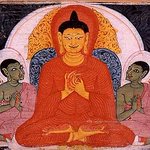
In Buddhism, Anattā challenges the idea that there’s a permanent “you” behind your changing thoughts, feelings and memories. Everything you call “yourself” changes, yet you experience your identity as something continuous. The Buddha questioned whether that feeling points to an unchanging self at all. In the Anattalakkhaṇa Sutta, he examines five aspects of experience: the body, feelings, perceptions, mental formations and consciousness. None, he argues, should be regarded as a permanent, independent self. Think about the last time someone insulted you. The conversation ended, but hours later you were still replaying it. Their words hurt, but part of you was also trying to defend your identity, to prove that their judgment wasn’t who you are. Anattā invites you to examine that identification. The hurt is real, but the conclusion you draw about yourself is another mental process. You can fail at something without becoming a failure. You can feel anger without making it your identity. The teaching goes further than simply saying that thoughts and emotions change. Even consciousness, the very thing we often imagine as the observer behind our experiences, is understood in early Buddhist teachings as dependent on conditions rather than an eternal, independent witness. This doesn’t mean you don’t exist. You still make choices and remain responsible for your actions. The question is whether you need to believe in a fixed, unchanging self to do any of those things. Perhaps the hardest part is noticing how often you suffer not just because something happened, but because it challenged the person you believe yourself to be. Image source: “Painting of the Buddha’s First Discourse (Dharmacakra Discourse)” (c. 700–1100 CE), anonymous artist; digital file by Asia Society. Source: Wikimedia Commons (original artwork: Asia Society Museum). Version checked: 6 October 2010. License checked: 22 October 2026 - Public Domain (PD-Art; Public Domain Mark 1.0).
6
34
3
214
4,410
AtlasOfWisdom retweeted
Agrippa used Noah’s Ark to explain a hidden mathematics of creation. In De Occulta Philosophia (1533), Heinrich Cornelius Agrippa took the biblical dimensions of the Ark, 300 × 50 × 30 cubits, and compared them with the proportions of the human body. To him, these numbers were not arbitrary. They belonged to a wider pattern of numerical relationships found throughout creation. He divided the body into measured proportions and connected those ratios with geometry, musical harmony and architecture. The same kind of numerical relationships could therefore appear in a body, a building or the dimensions of the Ark. Numbers also had symbolic properties. Ten mattered because 1 + 2 + 3 + 4 = 10. The numbers 1, 2, 3 and 4 were tied to fundamental patterns such as unity, duality and the four elements. Their sum, 10, represented completeness. Agrippa also believed that proportions could carry spiritual significance. A correctly ordered form was not merely pleasing to the eye. It reflected the harmony he believed God had placed into nature, which is why proportion became important to his ideas about architecture, music, the human body and natural magic. #NoahsArk Image source: “Proportionen des Menschen und ihre geheimen Zahlen” (1533 or earlier), anonymous. Source: Wikimedia Commons. Version checked: 26 September 2008. License checked: 25 September 2026 - Public Domain. “De Occulta Philosophia Libri Tres” (1533), Heinrich Cornelius Agrippa. Source: Wikimedia Commons. Version checked: 6 February 2017. License checked: 25 September 2026 - Public Domain.
5
37
1
205
4,986
AtlasOfWisdom retweeted
Ibn ʿArabī taught that meanings can take on concrete forms without becoming physical objects. He called this ʿĀlam al-Mithāl, the “Imaginal World.” It is not fantasy and not another planet. It is a level between the world of physical forms and the realm of meanings, where something can have a recognizable shape without being a material thing. The key idea is barzakh. A barzakh separates two things while also joining them. In this case, it links meaning and form. A reflection in a mirror shows the relationship. You can see a person’s image, but the image is neither the person nor nothing. This is why dreams matter in Ibn ʿArabī’s thought. A person can appear, speak and act in a dream without being physically present. The dream has a form, but that form does not have the same kind of existence as a body in the room. He also argues that perception affects the form in which something is disclosed. One reality can therefore appear in different forms to different people. This connects to tajallī, divine self-disclosure. A divine meaning can become manifest through a particular form, while that form remains distinct from God. For Ibn ʿArabī, this means that “physical” and “imaginary” do not exhaust the possible ways something can exist or be perceived. #Sufism Image source: “Shaykh Safi al-Din’s dream about the rise of the Chubanids” (1582), Isma’il bin Bazzaz. Source: Wikimedia Commons / Aga Khan Museum⁠. Version checked: 31 July 2022. License checked: 24 September 2026 - Public Domain (Public Domain Mark 1.0).
10
139
19
762
28,577
AtlasOfWisdom retweeted
Kircher believed that studying light could lead from the visible world to God. In his 1646 Ars magna lucis et umbrae, he starts with a simple principle. A visible effect can reveal an invisible cause. You may see a shadow without seeing the object casting it, yet its shape, direction and length can tell you where that object is and how the light is falling. Kircher treated this as a model for understanding nature. What we see is often the effect of something we cannot see directly. By studying those effects, we can work backward toward their causes. He extended this idea from individual phenomena to the whole of nature. The regular movements of the heavens, the geometry of light and the order found in natural phenomena were, to him, parts of a larger structure. Nature could therefore be read like a book. Its visible order pointed beyond itself, through a chain of causes, toward a first cause. Kircher identified that first cause with God. For Kircher, a physical explanation and a metaphysical explanation could exist together. One described how a phenomenon happened. The other asked what its place in the ordered structure of creation revealed. Image source: “Ars magna lvcis et vmbrae 1646 (22113728)” (1646), Athanasius Kircher. Source: Wikimedia Commons. Version checked: not stated. License checked: September 24, 2026 - Public Domain.
7
50
4
299
7,318
AtlasOfWisdom retweeted
A Sumerian fertility god was portrayed with an image that looks remarkably like the DNA double helix. Ningišzida was a deity associated with fertility, vegetation, healing and the underworld. Mesopotamian art shows him with two serpents winding upward around a central staff-like form. His name is usually translated as “Lord of the Good Tree”. DNA was still thousands of years away from being discovered. The Sumerians understood the symbol through their own religious world, while today the same intertwined form naturally brings the double helix to mind. Image source: “SerpentLordNingishzida.jpg” (2012), unknown/credited to source image. Source: Wikimedia Commons. Version checked: 29 June 2012. License checked: 24 September 2026 - Public Domain.
Long before anyone knew what DNA looked like, an ancient Chinese image showed two serpentine bodies twisting into a form that looks uncannily familiar today, a double helix. The figures are Fuxi and Nüwa, primordial beings associated with the emergence of human life and the ordering of the cosmos. Fuxi is linked to the Bagua and patterns of transformation in nature, while Nüwa is associated with the creation of humanity and the restoration of the cosmos. Their intertwined bodies express a deeper cosmological idea. Life and order emerge through relationship. Two complementary forces remain distinct while forming one continuous pattern. The symbolism centers on generation, complementarity and continuity. The intertwined form makes this principle visible through two strands moving together and creating a single living structure. Seen through modern eyes, the resemblance to the double helix is striking. Both express continuity through an interwoven structure. Image source: “Fuxi and Nüwa” (mid-8th century), anonymous. Source: Wikimedia Commons. Version checked: 4 April 2010. License checked: 22 September 2026 - Public Domain.
10
35
5
153
5,994
AtlasOfWisdom retweeted
Genesis begins with a Hebrew word that has a surprising Babylonian connection. Genesis 1:2 calls the primordial waters tehom, “the deep.” The word is related to the Akkadian tiāmtu, “sea,” and to Tiamat, the Babylonian sea deity from the Enūma Eliš. Both names likely go back to an older Semitic word for the sea or watery deep. In that story, Marduk kills Tiamat, splits her body apart and uses it to form the heavens and the earth. Genesis has no sea goddess and no battle. God speaks, and the waters are separated. But the older imagery appears elsewhere in the Bible. Psalm 74 describes God crushing sea monsters, while Isaiah 27:1 describes Leviathan as a twisting serpent in the sea. So Tehom isn’t Tiamat. But the resemblance is hard to miss. Did biblical writers take an older idea of the primordial sea and reshape it into a creation story where God doesn’t have to fight the waters at all? He simply commands them. Image source: “Chaos. State 1.” (date unknown), Wenceslaus Hollar. Source: Wikimedia Commons / University of Toronto Wenceslaus Hollar Digital Collection. Version checked: 15 March 2009. License checked: 24 September 2026 - Public Domain.
18
38
2
167
5,655
AtlasOfWisdom retweeted
A 2,000 year old Buddhist teaching asks you to learn something most people spend their lives avoiding - being alone. The Sutta Nipāta, one of the oldest Buddhist collections, repeatedly praises the person who “wanders alone”. In the Khaggavisāṇa Sutta, the rhinoceros horn represents someone who does not become entangled in dependence on others. The teaching goes deeper than simply living as a hermit. It asks you to examine why you need other people. Are you seeking companionship, or are you depending on praise, approval, affection or social status to feel secure? The problem is not relationships themselves. It is attachment. When your sense of identity depends on someone staying, leaving can become a source of fear and suffering. The ideal is therefore not isolation. It is being able to care for others, live among them and still remain inwardly independent. Learning to be alone is not the end goal. It is a way of discovering whether your mind can be at peace without constantly needing something from someone else. Image source: “Lachen Gomchen Rinpoche” (c. 1915), Alexandra David-Néel. Source: Wikimedia Commons. Version checked: 28 May 2014. License checked: 24 Sep 2026 — Public Domain.
One of the oldest Buddhist texts contains an idea that sounds almost backwards: every argument you win can make you less wise. It's not a quote pulled out of context. It's a core lesson of the Sutta Nipāta, and it changes how you see conflict. 🧵👇
1
8
4
67
3,935
AtlasOfWisdom retweeted
The Cathars believed your body was a prison and the physical world was not truly God’s creation. In the dualist teachings associated with Catharism, the highest God was purely spiritual. The material world belonged to a lower power, sometimes identified with Satan. Matter, decay, suffering, sexuality and death were therefore linked to a flawed creation rather than the true God. The human soul had a spiritual origin but was trapped in a material body. Salvation meant freeing it from this condition and returning to the spiritual realm. Some sources also describe a cycle of rebirth until the soul achieved liberation, although historians debate how widespread this belief was. Their religion centered on spiritual purification. The consolamentum, a ritual involving the laying on of hands, was central to the religious life of committed believers. The Perfecti, men and women who followed this strict path, practiced celibacy and abstained from meat and other animal foods. Their view of Jesus followed the same logic. If matter was corrupt, God could not simply become an ordinary physical human being. Some Cathar teachings therefore treated Christ’s physical body and suffering as apparent rather than material. Christ revealed the path back to the spiritual God. The deepest human problem was not simply sin. It was that the spiritual part of a person was trapped in a material world, and religious life was the path toward liberation. Image source: “Saint Paul Writing His Epistles” (c. 1618–1620), attributed to Valentin de Boulogne. Source: Wikimedia Commons / Google Arts & Culture. Version checked: 4 January 2013. License checked: 23 September 2026 - Public Domain / Public Domain Mark.
8
28
3
134
4,170
AtlasOfWisdom retweeted
The Greeks believed forgetting could erase your identity after death. In Orphic traditions, a soul entering the Underworld faced two waters. Lethe was linked to forgetfulness. Mnemosyne, the personification of memory, offered the opposite. Ancient gold tablets buried with the dead contain instructions for the journey. They tell the soul to avoid Lethe, find the spring of Mnemosyne and ask its guardians for a drink. One tablet has the soul identify itself as a child of Earth and starry Heaven. Drinking from Lethe meant forgetting the previous existence. Drinking from Mnemosyne meant keeping its memory and knowledge. The point was not simply to remember your life. The soul had to preserve the knowledge of where it came from. #GreekMythology
1
26
3
123
3,216