

A deaf-owned counseling and rehab-focused audiology telepractice: MA, MD, VA, and DC. Opinions my own, not medical advice, unrelated to outside organizations.
- Tweets1.4K
- Following168
- Followers640
- Likes155
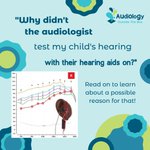






ALT Image description: dark blue text on pale blue background: “‘Why didn’t the audiologist test my child’s hearing with their hearing aids on?’ Read on to learn about a possible reason for that!” Graphic of real ear speechmapping result for a hearing aid. Graph has decibels sound pressure level on the y-axis and frequency on the x-axis. Colorful lines on the graph represent hearing levels and sound levels from hearing aid, described above in post. Graphic of a right outer ear with dark skin tone. Pink insert earphone inside canal. Red loop with small microphone box around ear. Dark blue, bright blue, and yellow green circles and scalloped circles around the edges. Audiology Outside the Box logo in top right corner.

ALT Image description: pale blue background with dark blue text: "Can any audiology tests tell me how I will hear in the real world?" Eight graphics of people with different appearances (clothing colors, skin tones, hair colors and lengths) standing, dancing, and having conversations. Dark blue, bright blue, and yellow green circles and scalloped circles in top right and bottom left corners. Audiology Outside the Box logo in bottom right corner.

ALT Image description: pale blue background with dark blue text: "My school-age child was recently identified as deaf or hard of hearing... So, why did they pass the newborn hearing screening?" Graphics of three children: one who appears to be a boy with dark hair and skin tone and a gray sweater, one who appears to be a girl with dark hair, light skin tone, a green shirt, and pigtails, and one who appears to be a girl with dark hair, light skin tone, and a pink and white striped shirt with purple suspenders. Dark blue, bright blue, and yellow green circles and scalloped circles scattered throughout the image. Audiology Outside the Box logo in top right corner.

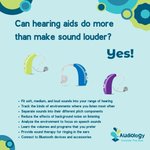
ALT Image description: dark blue text on bright blue background: “Can hearing aids do more than make sound louder? Yes!” followed by a bullet point list: “Fit soft, medium, and loud sounds into your range of hearing, track the kinds of environments where you listen most often, separate sounds into their different pitch components, reduce the effects of background noise on listening, analyze the environment to focus on speech sounds, learn the volumes and programs that you prefer, provide sound therapy for ringing in the ears, connect to Bluetooth devices and accessories.” Graphics of hearing aids in blue, yellow green, and purple. Dark blue, bright blue, and yellow green circles and scalloped circles in top corners and bottom left corner. Audiology Outside the Box logo in bottom right corner.

ALT Image description: dark blue text on pale blue background: “When and why did the audiology profession begin?” Graphic of a teacher with darker skin tone wearing dark blue, bright blue, and yellow green, standing by a blackboard with “History” written on it. Circles and scalloped circles in the same colors on the edges of the image. Audiology Outside the Box logo in top right corner.

ALT Image description: dark blue text on pale blue background: “It’s National Audiology Awareness Month! Ever wondered, ‘Why do audiologists do that?’ Share your questions! They will be answered in this month’s social media posts.” Graphic of person who appears to be a woman in a white lab coat with blue shirt and listening scope. This character is with a child who appears to be a girl abs a child who appears to be a boy. All three characters have different skin tones. Dark blue, bright blue, and yellow green circles and scalloped circles around edges of image. Audiology Outside the Box logo at bottom center.

ALT Image description: dark blue text on pale blue background: “Deaf people deserve to know our options for hearing devices just like everyone else.” Graphics of hearing aids and cochlear implant in dark blue, bright blue, and yellow green. Circles and scalloped circles in same colors in top corners. Audiology Outside the Box logo at top center.

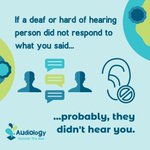
ALT Image description: dark blue text on bright blue background: “If a deaf or hard of hearing person did not respond to what you said… …probably, they didn’t hear you.” Icons of two people talking and of an ear with a cancel symbol beside it. These are in dark blue, bright blue, and yellow green. Circles and scalloped circles in the same colors around the edges. Audiology Outside the Box logo in bottom left corner.

ALT Image description: pale blue background with dark blue text: “Choosing cochlear implants does not have to mean: seeing them as a ‘fix’ or ‘cure’, relying on them for 100% of communication, thinking of yourself or your child as broken, avoiding sign languages, giving up on Deaf culture and identity. There’s more than one way to think about this topic. Curious? Keep reading!” Blue internal cochlear implant in bottom left corner and cochlear implant sound processor in top right corner. Dark blue, bright blue, and yellow green circles and scalloped circles around the edges. Audiology Outside the Box logo in bottom right corner.

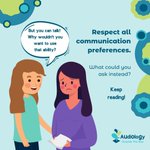
ALT Image description: dark blue text on bright blue background: “Respect all communication preferences. What could you ask instead? Keep reading!” To the left of text: graphic of two female-appearing characters: one with light brown hair and light skin tone wearing a green shirt. The other with dark hair and dark pink skin tone and purple shirt, holding a piece of paper. The first character says to the second, “But you can talk! Why wouldn’t you want to use that ability?” Dark blue, bright blue, and yellow green circles and scalloped circles along the edges. Audiology Outside the Box logo in the bottom right corner.

ALT Image description: dark blue text on bright blue background: “How do balance problems affect children?” Graphics of two children: one who appears to be a girl and has dark hard and skin tone, a white shirt, and yellow pants, and is drawing with colored pencils. And one who appears to be a boy with dark hair and skin tone, s yellow shirt, light purple pants, and is stretching his arms while standing on a mat. Dark blue, bright blue, and yellow green circles and scalloped circles in top right corner. Audiology Outside the Box logo in top left corner.

ALT Image description: dark blue text on pale blue background: “Is dizziness the same as vertigo?”graphic of a female-appearing character holding her head, which is surrounded by spirals as though she’s feeling a spinning sensation. Circles and scalloped circles in the same colors in the top left and bottom right corners. Audiology Outside the Box logo in top right corner.