

Nothing has ever been found of irreducible complexity
United Kingdom
Joined April 2016
- Tweets3.8K
- Following17
- Followers9.9K
- Likes108






In 2011, Saul Perlmutter, Brian P. Schmidt, and Adam G. Riess won the Nobel Prize in Physics for the discovery of the accelerating expansion of the Universe

Mars has two natural moons: Phobos and Deimos. Both are relatively small (22 km and 12 km in average diameter, respectively) and are irregularly shaped objects, quite different from Earth's large, nearly spherical Moon

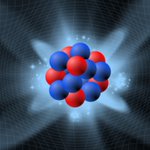
The atomic nucleus was experimentally discovered in 1911 by New Zealand-born British physicist Ernest Rutherford, 14 years after the discovery of the electron

The Many-Worlds Interpretation of quantum mechanics is the idea that every possible outcome of a quantum event happens, but in different branches of reality
🤖 Made with AI

During the full moon, the Earth is between the Sun and the Moon. Then, 14 days and 18 hours later, during the new moon, the Moon is between the Sun and the Earth

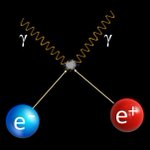
When a particle of matter meets its corresponding antiparticle, they can annihilate each other, converting their combined mass into energy, typically in the form of photons, in accordance with Einstein’s equation E=mc²

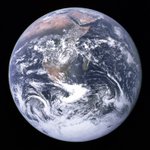
The first satellite to orbit the Earth was launched by the Soviet Union in 1957. Today there are roughly 20,000 satellites orbiting our planet

Gamma-ray bursts, detected on average once a day, are brief flashes of high-energy radiation produced by some of the most violent events in the Universe, such as the collapse of a very massive star or the collision of two neutron stars

The better you know the position of a quantum particle, the less accurately you can determine its momentum. This is not related to the observational success of current technology. It is a fundamental property of nature

The Robin's Egg Nebula is a planetary nebula about 3 light-years across, displaying the final phase in the evolution of an aging binary star system consisting of two white dwarf stars, less massive but much hotter than our Sun

Except for gravity, the fundamental interactions of nature are described by the Standard Model of particle physics as being mediated by particles called bosons. These interactions are those that cannot be explained in terms of more fundamental interactions

Our Sun is the closest astronomical object to a perfect sphere ever observed. There is just a 10 km difference between the Sun’s polar and equatorial diameters of 1.4 million km

We don't know if space and time are fundamental. At the deepest level of reality, there may be no space and no time at all, only a more fundamental structure from which both emerge

The Local Group includes at least 40 galaxies strongly influenced by each other’s gravity, of which Andromeda and our Milky Way are the largest in the group

NASA’s space probe Voyager 1, launched in 1977, is now one light-day away from us, which is about 25.9 billion kilometres

In the nucleus of an atom, always positively charged, protons repel each other electromagnetically, but at the same time attract each other and the neutrons by the strong force, which is many times stronger than the electromagnetic force
🤖 Made with AI

Photons, the most abundant known fundamental particles in the Universe, are massless and therefore can only move at light speed

Distant galaxies are receding from our Milky Way in a linear distance/speed relationship: double the distance, double the speed, quadruple the distance, quadruple the speed, and so on

Because of cosmic expansion, the CMB is at ~46 billion light-years from us, even though the Universe is only 13.8 billion years old

