

!بدل ما تستأجر.. املك 🤷🏾♂️ Hatta al-mawti, kullu al-haza'im nafsiyyah @Cristiano ❤️ @peterobi ❤️@donaldtrump❤️lev 18:22-24
Red Earth 29, Saskatchewan
Joined January 2018
- Tweets49.1K
- Following1.6K
- Followers1.4K
- Likes88.4K


B2SPIRIT retweeted

SmartBallot : Towards credible and Transparent Ballot
I have consistently believed that technology, combined with the creativity and resourcefulness of young Nigerians, can help reinforce our democracy and advance free, fair, and credible elections.
I am pleased to endorse SmartBallot (smartballotapp.com), a platform developed to facilitate grassroots mobilization, civic engagement, and election monitoring.
I urge our supporters and NDC candidates to register on SmartBallot and examine how its tools can assist them in organizing their communities, coordinating voters and polling unit agents, expanding grassroots engagement, and supporting transparent election monitoring.
Through the effective use of technology and collective action, we can reinforce our democratic institutions and help ensure that every vote is counted.
Credible elections require preparation, active participation, and peaceful vigilance. Let us make full use of every available resource to create a more organized, engaged, and empowered electorate.
A New Nigeria is Possible. -PO

B2SPIRIT retweeted
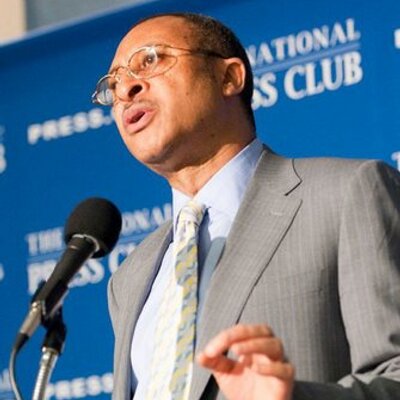
They rigged 2023 because nobody had proof.
In 2027, we will have proof.
Photograph your EC8A at your polling unit. Upload it. Get a receipt.
If they try to change the result, we will show the world the original.
Don't just vote. Protect your vote. #ProtectYourVote 🇳🇬


B2SPIRIT retweeted
As Chairman of the South-East Governors’ Forum for several years, I also encouraged cooperation among governors and security agencies across the region. We understood that criminal networks did not respect state boundaries; therefore, the response could not be confined to individual states.
Bello specifically acknowledged the contribution of this regional cooperation to the effort to dislodge notorious armed-robbery gangs from the South-East.
A SECURITY MODEL BUILT ON PARTNERSHIP
Our experience taught us that security is not achieved by government acting alone. It requires the cooperation of the police, military, intelligence agencies, paramilitary organisations, community vigilantes, traditional institutions and ordinary citizens.
We therefore promoted a system in which the security agencies were adequately equipped, communities were encouraged to provide useful intelligence, and government remained actively involved in supporting operations.
We also understood that the welfare and morale of security personnel mattered. Officers who were sent on dangerous assignments needed vehicles, fuel, communications equipment, operational allowances and the necessary infrastructure to perform their duties.
Our approach was not to interfere with the professional responsibilities of the security agencies but to give them the support required to discharge those responsibilities effectively. Security was not simply about purchasing equipment; it also involved building trust between the police and the people, encouraging intelligence-sharing, strengthening community participation and ensuring that criminal activities had consequences.
A NEW NIGERIA IS POSSIBLE: CONFRONTING NIGERIA’S SECURITY CRISIS
Today, insecurity is arguably Nigeria’s greatest challenge. From terrorism and banditry to kidnapping, armed robbery and communal violence, Nigerians are increasingly unable to live, travel, farm and conduct their businesses in safety. Communities are attacked, farmers driven from their lands, travellers abducted and innocent citizens killed.
This situation demands more than speeches, promises and occasional military operations. It requires deliberate leadership, adequate investment, effective intelligence-gathering and sustained collaboration among all security agencies.
Our experience in Anambra demonstrated that security challenges can be confronted through proper planning, institutional support and responsible leadership. We equipped the security agencies, strengthened their infrastructure, improved their operational capacity, encouraged community participation and promoted cooperation across state boundaries.
Nigeria needs the same seriousness of purpose. Our security agencies must be properly equipped, motivated and held accountable. Intelligence-gathering must improve, criminal networks and their sponsors must be dismantled, and federal, state and local governments must work together. We must also address the underlying social and economic conditions that make criminal recruitment possible.
We did not claim that every security challenge disappeared during our administration. What we demonstrated was that determined leadership and sustained institutional support could substantially improve the security situation. The testimonies of the Commissioners of Police who served in Anambra, the public assessments of the Inspector-General of Police, together with the investments and interventions documented here, provide evidence that can be independently verified.
Protecting lives and property is not a favour government does for its citizens; it is one of its most fundamental obligations. Nigerians deserve to live without fear and to pursue their livelihoods in safety. Our country can achieve this if we make security a genuine national priority and match our commitments with action.
A New Nigeria is POssible.
In Series 7, we shall look at Poverty Alleviation. -PO
B2SPIRIT retweeted

Over the past four days, I have been traversing the northeastern part of our country.
Our journey began in Gombe, from where we proceeded to Potiskum and Damaturu in Yobe State, before finally arriving in Maiduguri, Borno State.
I am happy to report that the Obi-Kwankwaso and NDC message of hope is resonating. We sympathised with the people of Yobe and Borno States, in particular, over the insecurity that continues to plague the lives of many.
I also promised that we shall work assiduously to restore the economy of the region by empowering the microeconomic systems of our country.
It is equally heartening to note that my able brother, our presidential candidate of the NDC, His Excellency Peter Obi, has been doing tremendous work in Anambra State and other parts of the country. - RMK


B2SPIRIT retweeted
NIGERIANS, GO AND VERIFY (5)
CONNECTING COMMUNITIES, UNLOCKING PROSPERITY: OUR ROAD INFRASTRUCTURE RECORD
Peter Obi
Another critical foundation of development is infrastructure, particularly road construction and maintenance.
Infrastructure is not just about constructing roads, bridges, and buildings. It is about connecting people, opening up economic opportunities, reducing poverty, and enhancing the well-being of ordinary citizens. A road that connects a farmer to a market, a patient to a hospital, a child to a school, or a manufacturer to a distribution centre is an investment in economic and human development.
This thinking informed our approach under the Anambra Integrated Development Strategy (ANIDS). We set out to connect all 177 communities in the State with motorable roads, paying particular attention to rural communities that had suffered years of neglect. Our objective was to build an interconnected road network that served the entire State, rather than concentrate projects in major cities or politically important locations.
I. The Road Revolution: Over 900 Kilometres of Road Projects
Between March 2006 and March 2014, during my two-term tenure in office, my administration asphalted over 900 kilometers of roads. These projects were deliberately distributed across the three senatorial zones of Anambra State to connect communities, facilitate commerce, and enhance transportation.
I acknowledge that Dr. Chris Ngige started the road revolution in Anambra State, and I commend the efforts his administration made in initiating several road projects. When we assumed office in 2006, we recognised the importance of continuing worthwhile projects rather than abandoning them simply because they had been initiated by a previous administration.
Among the roads we inherited from Ngige and completed were the Owerri–Ezukala–Umunze–Umuchu–Amesi–Uga–Igboukwu Road, where his administration stopped around Umuchu and we continued through Amesi, Uga, and onward to Igboukwu; the Iseke–Orsumoghu–Ukpor–Utu–Nnewi–Awka-Etiti Road, where his administration stopped at Ukpor and we continued towards Awka-Etiti; and the Ideani-Otuocha where work stopped around Awkuzu before our administration continued the project from Nteje to Otuocha.
There were also roads, such as Mmili John and Nkwelle Ezunaka bypass, which had been awarded before we took over, but on which no payment had been made by the time we assumed office. We took over these projects, assessed their status, and proceeded with the work. This was our approach to continuity in governance: acknowledging what had been started, distinguishing between projects merely awarded and those on which work and payment had actually commenced, and ensuring that important infrastructure projects were carried forward.
Some of the major roads and corridors included Amansea–Ebenebe Road; Aguleri–Umueze Anam–Mmiata Road; Nnewi–Ozubulu–Okija Road; and the Old Onitsha–Awka Road.
Other important projects included:
Awka and its Environs: Zik’s Avenue, Awka; Adazi-Nnukwu–Obeledu–Neni Road; 33 Junction–Nwafor Orizu College of Education Road; roads within the Awka Government Reserved Area (GRA); and the Old Nkpor–Amawbia Road.
Nnewi and Surrounding Communities: Nnobi–Nnewi Road; roads within Nnewi town; Akwaeze–Oraeri–Igboukwu Road; and Ekwulobia–Nkpologwu–Akpo–Achina–Umuchu Road.
Onitsha and its Environs: Bridge Head–Umunya Road; over 30 roads in other parts of Onitsha; more than 25 roads within the Onitsha GRA; over 20 stone-based roads within Harbour Industrial Estate, Onitsha; and the Nkwele Ezunaka Bypass.
Other Communities and Strategic Corridors: Awgbu–Amaokpala Road, with the Odor Bridge; Aguluezechukwu–Ogboji–Ajalli Road; Awkuzu–Igbariam Road, passing through the university; Owerri–Ezukala–Umuchukwu Road; Ugwuoba–Obosi Road; and Lilu Road.
B2SPIRIT retweeted

School children chanting Tinubu must go in Maiduguri, Borno state.
Omo, even children have rejected Tinubu. Tinubu has come to the end of the road.
B2SPIRIT retweeted
We also invested in sophisticated diagnostic equipment to strengthen specialist healthcare. These included CT scan machines, mammography machines, digital X-ray equipment, and ultrasound machines. We further procured ventilators to improve intensive care services, including the provision of four ventilators for the Teaching Hospital’s Intensive Care Unit.
The centre and these investments demonstrated our determination to move beyond basic healthcare and develop facilities capable of handling more complex medical conditions.
Strengthening Mental Healthcare: The Neuropsychiatric Hospital, Nawfia
We also recognised that healthcare must address not only physical illnesses but also mental and psychological conditions. Mental health is an essential component of human well-being and deserves adequate attention in our healthcare system.
We, therefore, invested in the development and modernisation of the Neuropsychiatric Hospital at Nawfia, in Njikoka Local Government Area, supporting improvements in its infrastructure and equipment to strengthen its capacity to provide specialised mental healthcare. The project received national recognition when Dame Patience Jonathan, then First Lady of Nigeria, commissioned the improved infrastructure of the hospital in September 2010.
We also supported the development of the School of Psychiatric Nursing to train professionals in specialised psychiatric care. These interventions reflected our belief that people living with mental health conditions deserve appropriate medical attention, professional care, and human dignity.
Our Partnership with Mission Hospitals
One of the most important aspects of our healthcare policy was our decision to work closely with religious institutions.
We recognised that the Church had historically played a major role in healthcare delivery in Anambra State. Mission hospitals had served communities for generations, often providing services where government facilities were inadequate or unavailable.
Rather than ignore these institutions because they were not government-owned, we decided to support them. We restored government grants, provided vehicles, and funded infrastructure, equipment, wards, theatres, and other facilities required to improve their services and secure accreditation.
Our interventions covered institutions including:
Our Lady of Lourdes Hospital, Ihiala.
Iyi-Enu Hospital, Ogidi.
Holy Rosary Hospital, Waterside, Onitsha.
St Joseph’s Hospital, Adazi-Nnukwu.
St Charles Borromeo Hospital, Onitsha.
Immaculate Heart Hospital, Nkpor.
Diocesan Hospital, Amichi.
In 2013, we released an additional ₦3 billion to selected mission and government-owned health institutions. At that time, Our Lady of Lourdes Hospital, Iyi-Enu Hospital, and St Joseph’s Hospital received ₦200 million each, Holy Rosary Hospital received ₦150 million, while Diocesan Hospital, Amichi, received ₦100 million. Other institutions also benefited from the intervention.
The funds were intended to improve facilities, purchase equipment, upgrade wards and theatres, and help institutions meet accreditation requirements.
This partnership produced remarkable results. Institutions that had previously struggled to meet accreditation requirements began developing recognised schools of nursing, midwifery, and health technology. Iyi-Enu Hospital and Borromeo Hospital have also developed into university teaching hospitals.
Our philosophy was that government should not monopolise healthcare delivery. If a mission or private hospital was providing quality services to our people, it deserved government support. What mattered was the service rendered, not who owned the institution.
Training and Accreditation of Healthcare Professionals
We also understood that buildings and equipment alone could not produce a functional healthcare system. We needed qualified doctors, nurses, pharmacists, midwives, laboratory scientists, and other healthcare professionals.
B2SPIRIT retweeted
CLARIFICATION: MY MEETING WITH US CONGRESSIONAL LEADERS WAS NOT AN ENDORSEMENT-SEEKING MISSION
I wish to address the inaccurate interpretation presented in certain media reports concerning my recent engagements with members of the United States Congress in Washington, DC.
As I expressly noted in my remarks, my visit to the United States was not intended to secure an endorsement, and I did not characterise my meetings as endorsements of my political aspirations by the US Congress or any of its members.
The primary purpose of the visit was to engage with congressional leaders and other influential American stakeholders, exchange perspectives, and discuss matters related to Nigeria’s development, the welfare of our citizens and, most importantly, the consolidation of our democracy.
I am especially concerned with strengthening democratic institutions, advancing accountability, and ensuring that Nigeria’s electoral process produces elections that are free, fair, transparent and credible. These matters should concern every Nigerian who is committed to our country’s future.
I consider engagements of this kind valuable, and I encourage other Nigerian political leaders, especially those seeking public office, to pursue similar discussions with international stakeholders. Our democracy can be strengthened through constructive dialogue, the exchange of experiences and a shared commitment to credible elections.
Nigeria’s democratic future is far too consequential to be distorted by sensational headlines or inaccurate interpretations. My mission centred on Nigeria, its people and the future of our democracy—not on endorsing any individual. -PO
B2SPIRIT retweeted
NIGERIANS, GO AND VERIFY (3)
Building the Future Through Education
Peter Obi
In the first two instalments of this series, I explained how we approached the task of building strong institutions and laying a solid foundation for the development of Anambra State. One of the most important institutions we invested in was education.
For me, education was not a political game or a convenient political promise. Even before I ventured into politics, I had always regarded it as the foundation of meaningful development and the most enduring investment any government can make in its people. I believe that the future of any society depends largely on the quality of its educational institutions, teachers, learning environment, and opportunities available to its young people.
This conviction informed our decision to invest across the entire educational spectrum, from primary schools to universities, technical institutions, and adult education.
Basic and Secondary Education
One of our first major decisions was to return mission and privately owned primary and secondary schools to their original proprietors while retaining government support. We also provided billions of naira to assist in rehabilitating the returned schools, restoring the partnership between government and religious institutions that had historically contributed to educational excellence.
This policy attracted international attention. Professor Paul Collier, the Oxford economist and World Bank consultant, led a World Bank-commissioned study of Anambra’s educational transformation. His team examined our decision to return schools to their original missionary owners while retaining government responsibility for funding teachers’ salaries and supporting infrastructure. The team described the partnership model as a revolution in public service delivery and recommended it as a model that could be replicated by other Nigerian states and developing countries. We believed then, as we do now, that government does not necessarily have to own every institution to discharge its responsibility effectively. What matters is ensuring that every child has access to quality education.
For those who claim that we built no schools, I invite them to verify our records. We constructed five-classroom blocks in virtually all of the 177 communities in Anambra State, one of the most extensive community-based school infrastructure programmes undertaken by any state government. The town union chairmen and community leaders of that period can attest to this.
We also renovated hundreds of dilapidated schools, including some where trees had literally grown through abandoned buildings. Comprehensive Secondary School, Onitsha, and Oraukwu Grammar School are examples.
Beyond infrastructure, we distributed approximately 40,000 computers to schools, including more than 22,500 HP laptops. We equipped secondary schools with Microsoft Academies and connected schools across the state to the internet. We supplied generators, established and stocked libraries, revived school sporting activities, and installed boreholes in over 300 schools, including all girls’ schools. We also provided funding to support sporting activities in all our secondary schools.
These technology investments attracted remarkable international recognition. Mr Fabrice Campoy, Managing Director of the Personal Systems Group at HP Inc., described our procurement and distribution of over 22,500 HP laptops as the biggest project of its kind in the Middle East and Africa. Similarly, Mr Ken Spann, then Country Manager and Head of Microsoft Nigeria, described the establishment of Microsoft Academies in more than 500 Anambra secondary schools as the most extensive deployment of its kind in Africa at the time.
B2SPIRIT retweeted

“I will quit politics the day Peter Obi is elected President.
No governor has ever been subjected to the kind of scrutiny he has faced, yet they found nothing.”
— Edo State political top brass.
B2SPIRIT retweeted
WASHINGTON, DC : PRESENTING NIGERIA’S DEVELOPMENT AND DEMOCRATIC FUTURE ON THE GLOBAL STAGE.
Yesterday, Monday, November 16, I arrived in Washington, DC, for a series of significant meetings and engagements with congressional leaders from both the U.S. House of Representatives and the Senate, as well as other influential American figures. These discussions focused on vital matters affecting Nigeria’s development, the well-being of our people, and the future of our democracy.
I began the day with a substantive interview with renowned American television commentator Glenn Beck. Our conversation addressed Nigeria’s challenges, the pressing need for accountable leadership, the responsible management of our vast human and natural resources, and the opportunities to establish Nigeria among the world’s leading nations.
I also met with prominent American leaders, including Congressman Marlin Stutzman, Congresswoman Beth Van Duyne, Congressman Todd Tiahrt, Suzanne Bock Grisham, retired U.S. Army Colonel Albert V. Short, and other esteemed stakeholders.
One of the day’s principal highlights was my address on Capitol Hill, during which I underscored the urgent importance of international cooperation and support for Nigeria’s advancement, particularly in the areas of national unity, security, economic prosperity, and the welfare of our citizens.
Our conversations also addressed the protection of Nigeria’s emerging democracy and the strengthening of democratic institutions to ensure elections are free, fair, transparent, and credible, accurately reflecting the will of the Nigerian people.
Nigeria has immense potential to emerge as a leading nation within the global community. What is urgently required is accountable leadership, responsible stewardship of our resources, resilient institutions, and an authentic commitment to the security, unity, and well-being of every Nigerian.
Throughout these engagements, my message remained unequivocal: Nigerians must determine Nigeria’s future. Every vote must be counted, the rights of every citizen must be safeguarded, and the people’s will must consistently prevail.
I remain encouraged by these engagements and firmly committed to working with Nigerians at home and in the diaspora, alongside our international partners, to build a peaceful, secure, united, and prosperous Nigeria.
Our journey continues. Our determination remains steadfast.
A New Nigeria is POssible! -PO


B2SPIRIT retweeted

“Peter Obi is a true leader. He succeeded where others have failed. When he was governor, he spoke directly to the people. He is a man who puts public interest first before even considering his personal interests.”
- U.S. Congressmen in Washington, D.C. yesterday sings praises of Peter Obi
B2SPIRIT retweeted
NIGERIANS, GO AND VERIFY (2)
Building the Institutions of the State
Peter Obi
In Series 1, I explained the philosophy that guided our administration in Anambra State: governance as a public trust, anchored on character, competence, capacity, and compassion. I also introduced the Anambra Integrated Development Strategy (ANIDS), our comprehensive framework for achieving balanced and sustainable development across all sectors.
But a development vision, however noble, cannot succeed without strong institutions to drive it. Before the government could effectively deliver on its promises in education, healthcare, infrastructure, security, and other sectors, we had to first restore the machinery of government itself. We could not build a prosperous state on a cracked and unstable foundation.
This was why one of our foremost priorities under ANIDS was to rebuild, strengthen, and reposition the institutions of government. When I assumed office, the physical and administrative architecture of governance was in a deplorable condition. Our task was not simply to construct buildings but to restore the institutions, systems, and structures through which government could function effectively.
We therefore began systematically rebuilding the infrastructure of governance across the executive, legislature, judiciary, civil service, and local government system.
Restoring the Seat of Government
The Government House in Awka, the state capital, had been vandalised and burnt by reactionary forces in 2004. We therefore had to rebuild, re-equip, and furnish it, restoring its dignity and functionality as the seat of executive government.
In the same vein, we rehabilitated the Governor’s Lodge in Amawbia and constructed a new Governor’s Lodge in Onitsha. These investments were intended not merely to provide accommodation but to strengthen executive presence and facilitate effective governance across the state’s major administrative and commercial centres.
Strengthening the Legislature and Judiciary
We rehabilitated the Anambra State House of Assembly Complex in Awka, providing our lawmakers with a more conducive and decorous environment in which to discharge their constitutional responsibilities. We also provided legislators with vehicles to facilitate the effective performance of their legislative duties.
We recognised that a functioning democracy requires strong institutions, including an effective legislature and an independent judiciary, each operating within its constitutional mandate.
In strengthening the judiciary, we provided brand-new vehicles to High Court judges. This was the first time such provision had been made for them in the history of the state. We also provided vehicles to magistrates for the first time since the creation of Anambra State.
These interventions were intended to strengthen the administration of justice, improve mobility, and enable judicial officers to discharge their responsibilities more effectively.
Rebuilding the Civil Service: The Chief Jerome Udoji State Secretariat Complex
Before our administration, many Ministries, Departments, and Agencies (MDAs) operated from scattered rented apartments, while civil servants lacked a centralised and decent working environment. This untidy arrangement undermined coordination, efficiency, and the dignity of public service.
We addressed this situation by constructing the two-phase, ultra-modern Chief Jerome Udoji State Secretariat Complex, comprising Blocks 1 and 2. The project brought the MDAs together under one roof, improved administrative coordination, and provided civil servants with a more suitable environment in which to serve the people.
The complex was named after Chief Jerome Udoji, the first indigenous Chief Secretary (the equivalent of today’s Secretary to the State Government) of the Eastern Region during the First Republic. This was also a recognition of his contribution to public administration and the civil service tradition.
B2SPIRIT retweeted

Another day to remind naysayers
Peter Obi is a clean man -Ayo Fayose
Peter Obi will remove APC/Tinubu from office for not giving Peter a right of way.
B2SPIRIT retweeted
NIGERIANS, GO AND VERIFY (1)
Introduction: Governance as a Public Trust
Peter Obi
When I took office as Governor of Anambra State, our beloved state was at a critical juncture. Leadership had become increasingly disconnected from the people, and many of the essential institutions needed to support a modern society were weak, ineffective, or absent altogether. We understood that governance could not continue according to established habits. It needed to be reconceived as a solemn public trust founded on transparency, prudence, accountability, and demonstrable results.
Our governing philosophy rested on four principles: character, competence, capacity, and compassion. We understood that leadership was not a platform for self-promotion, political slogans, or the pursuit of personal acclaim. Its purpose was to improve the circumstances of ordinary citizens. It meant converting public resources into concrete benefits and ensuring that government’s foremost responsibility was to serve the people. Achieving this demanded more than good intentions; it required a clear vision, careful planning, and disciplined execution.
Among our earliest findings was that the state lacked a unified development plan to direct its priorities and determine how resources should be allocated. We therefore promptly created the Ministry of Economic Planning to establish the institutional foundation for deliberate, coordinated, and sustainable development. After completing the necessary groundwork and consultations, we launched the Anambra Integrated Development Strategy (ANIDS).
At that time, the Millennium Development Goals (MDGs) were being pursued worldwide across eight clearly defined priorities: eliminating extreme poverty and hunger; achieving universal primary education; advancing gender equality and empowering women; reducing child mortality; improving maternal health; combating HIV/AIDS, malaria and other diseases; promoting environmental sustainability; and fostering a global partnership for development.
We adopted ANIDS as our overarching development philosophy and strategic framework for advancing these objectives, tailoring them to the distinctive circumstances, needs and development priorities of Anambra State. Instead of viewing the MDGs as remote international benchmarks, we worked to convert their aims into practical policies, programs and measurable results that would produce tangible improvements in the lives of our people.
We also undertook a deliberate effort to redefine the state’s identity, changing its public image from ‘Home for All’ to ‘The Light of the Nation’. This was not merely a change in slogan; it reflected our resolve to restore public confidence in government, renew civic pride and show that Anambra could serve as a model of purposeful leadership and development.
The ANIDS Blueprint: A Comprehensive Framework for Development
ANIDS served as the foundation for our commitment to broad-based and balanced development. We did not accept the idea that government could focus on a single sector while leaving others behind. We recognized that education, healthcare, infrastructure, security, agriculture and capable public institutions were mutually dependent. Advancement in one area could not be sustained without commensurate progress elsewhere. Accordingly, we pursued development across every sector, guided by defined priorities, disciplined planning and prudent stewardship of public resources.
Central to this vision was the restoration of the dignity of the Anambra person. We understood that dignity could not be restored through rhetoric alone. It was evident in the condition of roads and other infrastructure, the availability of healthcare, the quality of education, the performance of public institutions and the way government treated its workers, pensioners and traditional institutions.
B2SPIRIT retweeted
LET MY RECORD SPEAK
I just arrived United States this evening to honour an important invitation and participate in a series of engagements beginning at 9am tomorrow morning in Washington DC.
Throughout my election campaigns, I have sought to emphasise policies, ideas, and practical solutions that can deliver the change Nigeria urgently requires and help our nation overcome its current challenges.
Nevertheless, because certain individuals have repeatedly scrutinised my past, even as they appear uneasy about their own records, I have chosen to allow the facts to speak for themselves. Starting today and running for ten days, I will present some of the accomplishments recorded during my tenure as Governor of Anambra State. This series will outline my interventions, achievements and the responsibilities entrusted to me. I have titled it my Record of Service.
In every position I have held, I have consistently given my utmost effort in fulfilling my responsibilities. Although no one can always attain every intended result, I have never been found lacking in dedication or effort. I have always given the task my full commitment.
As campaign activities gather momentum, I will also continue to keep you updated on my daily engagements and other significant developments.
In particular, in light of allegations that I abandoned Anambra State during the erosion crisis, among other assertions, I consider it necessary to present the facts to the public. I have never evaded any responsibility entrusted to me, and I will certainly not shirk my responsibility to help address Nigeria’s challenges.
I am confident that, ultimately, facts outlast allegations, while records carry greater weight than rhetoric.
Let my record speak for itself! -PO
