
The institutional rail between Brazil and the world.
Brazil
Joined December 2025
- Tweets360
- Following67
- Followers1.4K
- Likes52




🇬🇧 Ashmore has spent more than 30 years in London doing one thing: investing in emerging markets. It manages US$54.5 billion.
This week it asked a simple question about 🇧🇷 Brazil:
what if Brazilians themselves start moving their savings abroad?
The answer: Ashmore's base case today puts 🇺🇸 one dollar at R$7.25 by mid-2028.
On Thursday it bought R$5.93. That's another 22% from here.
The caveat Ashmore itself makes: this is a scenario, not a forecast.
US$420bn is what leaves, not what's lost.
Part of it comes back through exports and new investment.
There is also a better path.
If 🇧🇷 Congress approves a real fiscal fix, Ashmore sees the dollar at R$5.35 in 2028, cheaper than today.
The gap between the two paths: 35%.
The Senate passed the government's fiscal package on Wednesday. The lower house votes next.
For a foreign fund, the question isn't which path wins.
It's how to get in and out of 🇧🇷 Brazil when it matters.
A traditional currency desk charges 1% to 3.5% to move money in or out, and takes more than a day.
BRD costs about 0.5%: reais in through Pix, Brazil's instant payment system, and out to any Brazilian bank the next day.
Want Brazil's government-bond yield without holding reais?
sBRDusd is backed by bonds Brazil issues in dollars.
brd.digital
Brazil throws away 1 in 5 MW of its solar and wind power.
The US doesn't want data centers at home, and now wants to tax anyone who builds them abroad.
Meanwhile, China is building one in Brazil, running on that renewable energy. 🧵

Brazil has what the AI race is short of: clean power with no buyer.
The US is closing doors to data centers at home and abroad.
If Brasília gets the decree right, the wasted megawatt becomes an export. If it doesn't, it stays in the dark.
1
37
Every megawatt Brazil exports as compute is paid in dollars and spent in reais: land, construction, power contracts, salaries.
That money has to cross the border, and through banks it costs 4% to 7.5% all-in.
BRD is the Brazilian real onchain: USDC in, BRL out to any Brazilian bank account in D+1, at about 0.50% all-in.
brd.digital
38
Are you ready for inflation in Brazil 2027?
Forget forecasts. A big part of next year's price bill is already signed, scheduled or priced in.
Here's what we already know 🧵
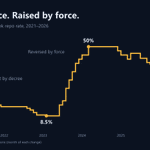
The central bank's answer is known too: Selic held at 13.75%, with no signal on when cuts resume.
Focus 2027: 12.5% Selic − 4.9% inflation ≈ 7.6% real
Itaú 2027: 13.75% − 6.1% ≈ 7.65% real
Different paths, same destination.
The caveat is the Real. The Copom lists depreciation as one of its four shocks, and for a USD allocator FX can eat the spread.
BRD / sBRD → Brazil's rate in BRL
sBRDusd → Brazil's sovereign rate in USD
brd.digital
187