

MBA (Finance)/Ex-IT professional/Equity researcher/Investor/Swing trader/Value Investing/Sharing insights,not advice #stockmarket #investing #swingtrading
Maharashtra, India
Joined October 2014
- Tweets11.6K
- Following937
- Followers1.7K
- Likes11.7K






Pinned Tweet


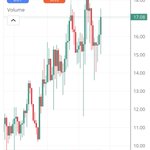
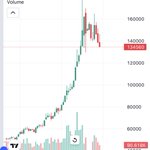
#AVALON hanging man formation at the top on monthly TF!!
Time to be careful. Accha khasa movement diya hai
#stockstowatch

India’s PCB Industry: A ₹36,400 Crore Opportunity by FY31 — But Import Dependence Will Remain High
India’s electronics manufacturing ecosystem is expanding rapidly. From smartphones and EVs to data centres, defence electronics and semiconductors, one critical component sits at the heart of almost every electronic product: the Printed Circuit Board (PCB).
Yet India currently imports nearly 85% of its bare PCB requirements.
The opportunity is significant. But the real story lies in the numbers.
📊 India’s Bare PCB Market: The Growth Outlook
• FY26 Market Size: ₹17,300 crore
• FY31 Projected Market: ₹36,400 crore
• Expected CAGR: ~16%
The market is projected to more than double over five years.
The Localisation Opportunity
• Domestic supply in FY26: ₹2,595 crore
• Domestic supply projected for FY31: ₹9,464 crore
• Domestic manufacturing CAGR: ~29.5%
Domestic production is expected to grow nearly twice as fast as the overall market.
This creates a compelling import-substitution opportunity for Indian manufacturers.
But Here’s the Important Insight:
Import dependence may decline from approximately 85% to 74% by FY31.
However, the absolute value of imports could increase:
• FY26 estimated imports: ₹14,705 crore
• FY31 projected imports: ₹26,936 crore
• Increase in import value: ~83%
In simple terms, localisation is improving, but market expansion is happening faster than domestic capacity can replace imports.
This is not a contradiction. It is the mathematics of a rapidly growing market.
Why Will Imports Continue?
The challenge is not simply manufacturing more boards.
India needs to develop capabilities in:
→ High-layer-count and advanced multilayer PCBs
→ HDI and flexible PCB technologies
→ Domestic raw-material supply chains
→ Customer qualification and manufacturing consistency
→ High-volume production with competitive economics
Basic PCB manufacturing can be localised relatively faster. Advanced boards require technology, capital, customer approvals and years of execution.
Companies to Watch in the PCB Ecosystem
🔹 Amber Enterprises
Expanding its PCB presence through Ascent Circuits and Shogini Technoarts, with a focus on multilayer, HDI and flexible PCBs.
🔹 Kaynes Technology
Developing advanced PCB manufacturing capabilities, including complex multilayer boards, with a reported target of up to 74 layers.
🔹 Syrma SGS Technology
Planning a major multilayer PCB investment of approximately ₹800–900 crore, with commercial-scale production targeted during FY28.
These companies represent different stages of the localisation journey. The key is to track actual commissioning, customer qualification and capacity utilisation—not just announced capex.
What Investors Should Track
1. Capex announced versus capex executed
2. Plant commissioning and commercial production timelines
3. Customer approvals and order-book visibility
4. Capacity utilisation and operating margins
5. Debt, funding requirements and return on capital
6. Domestic value addition and raw-material dependence
A new facility creates potential. Profitable production creates shareholder value.
The Bigger Picture
India’s PCB industry is entering a structural growth phase, supported by electronics manufacturing, EVs, data centres, defence and the broader semiconductor ecosystem.
But the investment opportunity is not simply about rising demand.
It is about identifying companies that can convert capital expenditure into technological capability, customer acceptance, operating scale and sustainable profitability.
The market may reach ₹36,400 crore by FY31.
The real question for investors is:
Which companies will capture the value of India’s electronics localisation—and which will struggle with execution?
Figures and projections are based on the source data cited in this analysis. Estimates are not guarantees. This post is for educational purposes and not investment advice
#PCB #ElectronicsManufacturing #KaynesTechnology
USD/INR vs DXY: Understanding the Dollar-Rupee Relationship and Its Impact on Indian Markets
The relationship between the US Dollar Index (DXY) and USD/INR is a critical macroeconomic signal for understanding India's currency outlook, FII flows, inflation, and equity-market direction.
DXY measures the US dollar's strength against a basket of major currencies, while USD/INR reflects the rupee's value against the dollar.
Although they often move in the same direction, their relationship is not always linear.
4 Important Market Scenarios
1. DXY ↓ + USD/INR ↓
A weaker global dollar and a stronger rupee.
• Supports foreign investor returns
• Reduces imported inflation pressure
• Benefits import-dependent sectors
• Can improve sentiment toward Indian equities
2. DXY ↑ + USD/INR ↑
A stronger dollar and a weaker rupee.
• Increases currency risk for foreign investors
• Raises the rupee cost of crude oil and imports
• Can pressure corporate margins
• May trigger FII outflows and equity-market volatility
3. DXY ↑ + USD/INR ↓
Global dollar strength, but rupee appreciation.
This divergence may indicate strong domestic capital inflows, lower crude prices, or RBI intervention. It highlights India's relative currency resilience.
4. DXY ↓ + USD/INR ↑
Global dollar weakness, but rupee depreciation.
This may signal India-specific pressure from higher crude prices, capital outflows, or rising domestic dollar demand.
How Currency Movements Impact Indian Equities
The transmission mechanism works through five major channels:
• FII/FPI Flows: Currency depreciation can reduce dollar-denominated investment returns.
• Crude Oil & Inflation: A weaker rupee increases the cost of dollar-priced imports, particularly crude oil.
• Corporate Earnings: Exporters may benefit from rupee depreciation, while import-dependent businesses can face margin pressure.
• Interest Rates: Currency and inflation pressure can influence RBI policy expectations.
• Valuations: Rising US Treasury yields and a stronger dollar can increase pressure on emerging-market equity valuations.
Sectoral Implications
Sector| Currency Impact
IT & Export Pharma| Often benefit from rupee depreciation
Aviation| Negative due to dollar-linked costs
Paints & Auto| Import-cost sensitivity
Banks| Indirect impact through liquidity, inflation and flows
FMCG| Input-cost and margin impact
Metals| Depends on global prices and trade exposure
The Macro Dashboard Every Investor Should Track
DXY + USD/INR + Brent Crude + US 10-Year Yield + FII Flows + India VIX + Market Breadth
When the dollar weakens, the rupee stabilises, crude declines, US yields ease, and foreign flows improve, the macro environment generally becomes more supportive for Indian equities.
Key Insight:
DXY is a global dollar indicator, not a direct measure of rupee strength.
A falling DXY does not automatically mean a stronger INR. Domestic factors such as crude oil prices, RBI intervention, trade balance, and capital flows can override the global dollar trend.
For investors, the objective is not simply to predict currency direction, but to understand how currency movements influence earnings, capital flows, sector rotation, and market valuations.
Macro trends provide the context. Fundamentals identify quality. Technicals help determine timing.
#USDINR #DXY #IndianMarkets #Forex #Macroeconomics
1
200

#APOLLOHOSP consistently upwards from the levels shared earlier at the end of 2024
#stockmarketIndia #BREAKOUTSTOCKS

#APOLLOHOSP perfect chart for upside
👉 Breaking above ATH
👉 RSI fair with strong momentum on 3 TF’s
👉 MACD bullish crossover
#BREAKOUTSTOCKS #stockmarketsindia #Nifty50 #OptionsTrading


Knowledge Marine & Engineering Works (KMEW): From Dredging to Shipbuilding — A Bigger Growth Story.
KMEW has raised its FY27 revenue growth guidance three times: from 30–40% to 60%, and now 80%.
The H1 FY27 performance is impressive:
- Revenue: ₹186.2 Cr (+89%)
- EBITDA: ₹101.7 Cr (+155%)
- EBITDA Margin: ~55%
- PAT: ₹84.3 Cr (+257%)
Three growth engines:
1. Dredging: Record ₹256.9 Cr contract from New Mangalore Port, with a new high-capacity vessel.
2. Chartering: Three green tug contracts worth approximately ₹928 Cr over their contract periods.
3. Shipbuilding: ₹62 Cr order for 10 electric-hybrid passenger ferries, backed by the upcoming Safale shipyard.
Order book & growth visibility:
- Confirmed order book: ₹1,733 Cr
- Shipbuilding backlog: ₹164 Cr
- Bid pipeline: ₹2,500–3,000 Cr
Management is targeting shipbuilding to contribute 40% of revenue in FY28–FY29.
What investors should watch:
→ ₹1,000 Cr planned capex over two years.
→ Safale shipyard commissioning and execution.
→ Sustainability of 45%+ EBITDA margins as the business mix changes.
→ Timely deployment of new vessels and order conversion.
→ Whether rising shipbuilding revenue can deliver attractive returns on capital.
The bigger picture:
KMEW is transitioning from a dredging and marine services company into a broader marine infrastructure and shipbuilding business.
The opportunity is significant, but the real test will be execution.
High growth guidance and a strong order book create visibility. Sustainable margins, cash flows and returns on capital will determine the quality of that growth.
#KMEW #Shipbuilding #StockMarket
TD Power Systems: A Growing Opportunity Beyond the AI Theme
TD Power Systems has raised its FY27 revenue guidance again, from ₹2,600 crore to ₹2,900–3,000 crore.
The bigger takeaway from management’s commentary is that demand across its key end markets remains strong, with no visible slowdown in data centres.
What does TD Power do?
The company manufactures AC generators that convert the mechanical energy of turbines and engines into electricity. Its products serve multiple segments:
→ Data centre power
→ Grid stabilisation
→ Conventional power generation
→ Hydro, geothermal and waste-to-energy
Key business highlights:
- FY27 revenue guidance: ₹2,900–3,000 crore
- Q1 FY27 revenue: ₹640 crore (+72%)
- Q1 EBITDA margin: 19%
- Q1 order inflow: ₹734 crore (+87%)
- Q1 order book: ₹2,207 crore
- 93% of Q1 order inflow came from exports.
Management also highlighted visibility on real projects up to around 2030, based on feedback from its turbine and engine OEM customers.
The investment thesis:
TD Power is not just an AI or data centre play. Its products are essential across the broader power generation ecosystem.
Rising electricity demand, grid investments and renewable energy integration could support long-term demand for its generators.
Key risks to monitor:
- Valuation remains elevated at approximately 57.8x P/E.
- Dependence on overseas OEM customers.
- Execution and capacity expansion.
- Sustainability of order inflows and margins.
My takeaway: The opportunity lies in the broader electrification and power infrastructure cycle, not just AI data centre capex.
Going forward, order inflows, export demand, margins and execution will be the key indicators to track.
For informational and educational purposes only. Not investment advice.
#TDPOWERSYS
he Dollar Is Strengthening. The Canadian Dollar Is Weakening. Crude Oil Is Under Pressure.
A significant macroeconomic signal is emerging from the relationship between three important global market indicators:
DXY ↑ | USD/CAD ↑ | WTI Crude ↓
Here's what the combination tells us.
1. US Dollar Index (DXY) – Strengthening
Stronger US economic data and hawkish Federal Reserve expectations are supporting the US Dollar. Higher interest-rate expectations can attract capital towards dollar-denominated assets.
2. USD/CAD – Moving Higher
The Canadian Dollar is facing pressure from two directions:
- Stronger US Dollar.
- Softer Canadian inflation and changing Bank of Canada rate expectations.
Canada is a major crude oil exporter, making its currency sensitive to energy-market developments.
3. WTI Crude – Facing Downward Pressure
Rising US crude and refined-product inventories, combined with concerns about global supply-demand imbalances, are weighing on oil prices.
This suggests that oil-market fundamentals are currently playing a more significant role than the traditional inverse relationship with the US Dollar alone.
What does this mean for global markets?
→ Stronger USD can create pressure on emerging-market currencies.
→ Falling crude can provide relief to oil-importing economies such as India.
→ A weaker CAD can reflect pressure on Canada's energy-linked export outlook.
→ Higher US yields can create headwinds for global liquidity and equity valuations.
The bigger picture
The current combination reflects three interconnected macro forces:
1. US monetary policy and dollar strength.
2. Canadian economic and currency sensitivity.
3. Global crude oil supply-demand dynamics.
However, the key risk remains geopolitical disruption. Any major supply shock could reverse crude's downward momentum, even if the dollar remains strong.
My takeaway: Don't analyse DXY, USD/CAD and WTI in isolation. Their combined movement provides a deeper understanding of global liquidity, commodity pricing and cross-border capital flows.
In macro markets, understanding why an asset is moving is often more important than simply knowing where it is moving.
#USDollar
🇮🇳 India’s market resilience is impressive—but the rally remains selective.
Nifty +2.6% | Banks +5.9% | Small-caps -1.1%
FIIs are buying, with capital concentrated in large-cap banks.
The real question: Will this strength broaden to mid- and small-caps, or is it just sector rotation?
Watch the money flow, not just the index.
#StockMarketIndia

🚨SEBI is reviewing the Margin Trading Facility (MTF) framework
May put potential caps on fresh margin-funded stock purchases linked to a company's free float
SEBI is considering blocking new MTF positions in an individual stock once total margin-funded exposure reaches 5% to 10% of its free-float shares.
Things are under discussion,though no final decision has been taken yet.
#StockMarketIndia #SEBI
When correction comes after such a big strong green candle, how do you feel??
Especially after you have gone long
#StockMarketIndia #Nifty50

#MAHABANK tracking since 2023,
when it was trading around 32Rs.
200% up move in 3 yrs!
Do you think it’s bad?
#StockMarketIndia #breakoutstocks
#MAHABANK worth keeping on watchlist
1. Making cup & handle on monthly TF
2. Good RSI & volumes
3.Good upside potential once breaks above 33-34
#StocksToBuy #StocksToTrade #trading #Breakoutstocks #Finance #nifty50

1
254
#MAHABANK spotted in January this year , which was around 64 at that time
CMP 96
50% gain and still going strong 💪
#stockmarketIndia #BreakoutStocks

#MAHABANK looks ready for up move 👇
1. Breakout of long term consolidation with good volumes on daily TF
2. RSI fair n, picking up momentum on 3 TF’s
3. MACD indicating bullishness on 3 TF’s
4. Technically bullish
5. Fundamentals look good, fairly valued, financials 👍
#StockMarketIndia #BREAKOUTSTOCKS #OptionsTrading #SwingTrading


3
254
#LAURUSLABS
The biggest takeaway : A good stock, the right conviction and the right timing don't always come together.
1. A good stock doesn't always deliver immediate returns. Even fundamentally strong companies can go through long periods of underperformance.
2. Conviction is tested during periods of inactivity. It is easy to believe in a stock when it is rising, but difficult to hold on when it goes nowhere for years.
3. Timing matters, but patience matters equally. Even if your entry timing isn't perfect, a strong investment thesis may take time to play out.
4. Volatility is part of the journey. A 50% correction can shake investor confidence, but sometimes the biggest opportunities emerge after periods of deep correction.
5. Don't confuse lack of price movement with lack of business progress. Stock prices and business fundamentals don't always move in sync.
6. Revisit your investment thesis, not just the stock price. If the fundamentals and original reasons for investing remain intact, temporary underperformance alone may not justify exiting.
#StockMarketIndia #breakoutstocks
#LAURUSLAB I had bought this stock in2021 with high conviction but stock was hardly making any movement during that time ,so I sold it!
Later on decent correction was followed around 50%
But after that correction stock has picked up the momentum and look at the move & returns is gave!
#StockMarketIndia #BREAKOUTSTOCKS

1
251
#LAURUSLAB I had bought this stock in2021 with high conviction but stock was hardly making any movement during that time ,so I sold it!
Later on decent correction was followed around 50%
But after that correction stock has picked up the momentum and look at the move & returns is gave!
#StockMarketIndia #BREAKOUTSTOCKS
#GOLD as I was able to see earlier, looks like going to hit my target of 1L?!
#StockMarketIndia #CommodityTrading


My father was giving me money to buy Gold, I told him I will take it when the Gold prices come down to ₹1L/10gms
He said , it’s not going to happen, I said then I won’t take the money!
Let’s see who wins,
I win- I get the cash
Papa wins- He keeps the cash
What do you guys think🤔 ?
Who should win?
Gold will come till ₹1L?
#indianstockmarket #Commodities #Gold

1
75
#PCJEWELLER thodasa risk liya jaaye???
Volumes toh kaafi acche lag rahe hai last 4-5 months
#StockMarketIndia #BreakoutStocks


#ENGINERSIN slow but going good 👍
Once again towards breakout after retest
#BREAKOUTSTOCKS #StocksInFocus
#ENGINERSIN at decisive mode 👇
Few observations
1. RSI strong momentum on daily, weekly TF
2. Momentum has been strong
3. Delivered good results
4. High volumes
5. Valuation reasonable
#stockstowatch #breakoutstocks #optionstrading #nifty #stockmarketIndia #Israël


50