

🌾 Crop Consultant | SE North Dakota. Digging into agronomy, data, and field insights. Sharing boots-on-the-ground info for better decisions
Oakes, North Dakota
Joined February 2012
- Tweets300
- Following673
- Followers501
- Likes1.7K

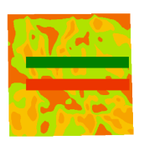


Bare soil temps still climbing even on a cloudy, cool, windy day. Soil moisture remains the dominant control on warming rate — the wetter the soil, the more energy required to move the thermometer.


3
60
Total Fe on the label tells you what's in the jug. The ortho-ortho percentage tells you what's actually going to reach your beans.
Two products both saying "6% Fe EDDHA" can be night and day different. NDSU work showed yield response tracks right with the o,o number.
If you can't get that number from your supplier, that's worth thinking about.
1
1
37
People underestimate how much pH can vary within a single field.
Glacial till next to old lakebed sediments. Eroded hilltops next to deep depositional soils. Capillary rise concentrating carbonates in one zone while 400 feet away the topsoil is buffering pH down two full units.
That variability changes everything — P availability, micronutrient access, even which products will actually perform. But most fertility plans don't even acknowledge it exists.
42
The ag input model depends on selling something for every acre. When technology threatens to reduce acres treated, the playbook is predictable: create a new "essential" input that covers every acre anyway. Watch what gets marketed hardest in the next 5 years and ask yourself why.
1
55
On SE ND glacial till soils, the capillary zone is a moving nutrient reservoir. Nitrate and sulfate delivered upward during dry periods. Flushed back down through tile or runoff in wet years. A 0-24" nitrate sample pulled in a dry fall tells you where nutrients were — not where they'll be come planting. Where you are on the landscape matters just as much as the number on the report.
80
Economic optimum N rate can deviate from the regional average by 40-80 lbs/acre depending on soil texture, drainage, OM, and weather. The rate you follow is the mean of a distribution — not a prescription for your field. When was the last time you tested whether it's actually right for your ground?

3
9
1,182
We spend a lot of time talking about fertilizer rates. Not nearly enough time talking about what the soil actually does with it after it's down. On high-pH calcareous ground, broadcast P gets tied up fast. That's where placement — banding, starter, in-furrow — earns its keep.
1
2
177
Compaction doesn't just restrict roots — it suppresses mycorrhizal colonization. Mycorrhizae are aerobic organisms that extend P foraging reach by orders of magnitude beyond the root surface. Compacted, poorly aerated soil shuts them down. You lose your most efficient P uptake mechanism exactly when diffusion limitations make it most critical.
40
About 25-30% of 10-34-0 is already orthophosphate — immediately plant available. The rest converts in 1-2 weeks via microbial hydrolysis. Before you pay extra for "100% ortho" products, ask yourself if that 1-2 week difference is really worth the premium.
136
7/
As a consultant, I try to match adjuvants to herbicides and environments. But that only works when the product in the jug actually matches the name on the label.
Adjuvant variability is real. And too often overlooked.
Found corn rootworm larvae feeding in a field that’s mostly rotated, but has had some recent corn-on-corn history. Rotation isn’t bulletproof anymore. Time to start digging roots and checking trait effectiveness.


Early-season weed pressure doesn’t just steal water and nutrients.
It can permanently change how a corn plant grows—altering architecture, reducing stability, and hurting yield.
Here’s what happens when weed pressure is too high early on:


Even if weeds are removed later, early stress on the roots limits the plant’s ability to recover. You can’t undo poor early root architecture.
1
70