

Biblische Exegese und Theologie | Literatur und Kultur Professor für Altes Testament Youtube: https://nitter.gq/t.co/kPL2Eav2gT Amazon: https://nitter.gq/t.co/VBrmkMvoZA
Joined October 2023
- Tweets499
- Following262
- Followers145
- Likes3.4K
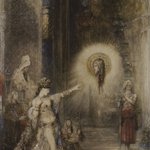






The longer I engage with art, the more I come to believe that in all fields—literature, visual arts, architecture, music—great art is characterized by its use of effective symbolism. This creates a deeper level of meaning that invites us to return to the artwork again and again and discover new aspects.
As a theologian and exegete, I would say: Where a spiritual meaning is hidden within the literal sense, waiting to be discovered—or where the eternal Logos can be seen in the temporal and material, if one has eyes to see and ears to hear—there lies great art.
Deviations are possible primarily in two directions: the complete rejection of symbolism or the misuse of symbolism.
Behind the rejection of symbolism lies a materialistic, nihilistic worldview. For materialism denies the spirit within matter—the Logos—and therefore reduces everything to its literal meaning or to its functional aspect. This is why, for example, modern architecture is often so ugly: the building is reduced to its function, and any interest in design and ornamentation—through which the building points beyond itself to something greater—is absent.
The misuse of symbolism, on the other hand, usually leads to cheap kitsch. The "artists" are aware of the beauty of ornamentation, but they cannot interpret it. They use symbolic elements merely to create the appearance of meaning, without, however, capturing the essence. Those who allow themselves to be drawn in by the symbolic elements and delve deeper into the work discover that these elements are merely an optical illusion and, in reality, do not point beyond themselves.

2
91
I came across the book "Piranesi" by Susanna Clarke (whom I hadn't heard of before) through the quoted post, and the description piqued my interest, especially since i really enjoy C.S. Lewis's novels.
The book is exciting and entertaining, and the concept is great. As for C.S. Lewis, the book evokes several of the Narnia stories, as well as the Perelandra trilogy and, finally, The Great Divorce.
Still, the book somehow leaves me feeling unsatisfied, and I feel it lacks depth. I’ve been thinking about why that is, and I’ve come up with two main reasons:
1. The book is full of highly symbolic elements (e.g., the albatross, the three floors of the house, the statues, the ocean, the idea of the world’s disenchantment), yet virtually nothing is made of these elements. They have only the outward appearance of symbolism, but almost all of it is merely a relatively arbitrary embellishment of the narrative, which makes it seem a little kitschy. At first glance, this gives the appearance of depth, but if you try to delve deeper, you realize that everything remains superficial.
2. There are always elements in it that don’t quite fit—elements that, as Tolkien writes in his essay "On Fairy Stories," prevent the story’s created world from seeming real or true. Every time something like this comes up, you’re pulled out of the story and, ultimately, out of the world. There are several such elements, but the most jarring of all, in my opinion, is that Piranesi repeatedly uses phrasing that makes the house where he lives seem like a more or less personified deity (e.g., “the house takes care of me”). However, there is absolutely no plausible reason within the narrative itself for Piranesi to develop such a relationship with the house. Rather, it seems that the author is attempting to introduce a religious concept into the story to convey a message that does not, however, follow plausibly from the story itself.
All in all, it's a nice and entertaining book, but it lacks depth, so I don't think I'll be picking it up a second time.

Piranesi is the best book of the 2020s. The story (about a man trapped in an endless house with an ocean on its lower floor) freely mingles Borges, The Magician’s Nephew and Doctor Who. Simultaneously nightmarish and imbued with a sense of the astonishing glory of things.

1
6
362
My timeline is currently full of posts about a Canadian theologian—whom I don’t know—who is being accused of plagiarism. My two cents on plagiarism: When an ideological opponent does it, it’s very serious; when an ideological ally does it, it’s a minor offense.


The 6th International Symposium of Biblical Exegesis (ISBE) will take place online from November 12–14 on the topic of Shechem in Scripture, History and Tradition Across the Ages.
I will be speaking on November 13 on the topic of “Was There a Writing Culture in Shechem and Shiloh during the Iron Age I?”
Online participation in the entire symposium is free; click this link to access it: meet.google.com/meet/odx-xyv…
The detailed schedule can be found in the next tweet.


2
4
431
Tomorrow marks the start of the new European Hebrew Journal’s five-day online conference, featuring a diverse lineup of presentations. For more information and to register, click here:
conference.hebrew.edu.rs/


My online lecture is one week from today:
"Was there a writing culture in the heartland of Israel during the Iron Age I?"
For more information and to register, click here:
conference.hebrew.edu.rs/pre…

2
204
Benjamin Kilchör retweeted

This on repeat until a fair few scholars step outside of their paradigm.
Above all, Genesis 1 should not be read in isolation in this regard. Genesis 1 is essentially just the account of the temple’s construction. However, in the Old Testament and also in the Ancient Near East, texts describing temple construction are typically followed by descriptions of the worship services held there. Genesis 2 serves this function and should be read together with Genesis 1.
See my article in the Scandinavian Journal of the Old Testament (2022) on this topic (full text available at this link): academia.edu/86514511/The_Ei…

Benjamin Kilchör retweeted

Hoffnung leuchtet rot! Vom 15. bis 22. November setzen über 250 Kirchen, Klöster und öffentliche Gebäude in Österreich ein Zeichen für verfolgte Christen. Machen Sie bei der #RedWeek mit – durch Gebet und rote Beleuchtung! orlo.uk/redweek_YnD9q #RedWednesday #kircheinnot

These findings show that writing in the 10th century was not confined to Jerusalem, but was also found in locations in the border region between Judah and the Philistines, which likely were under Jerusalem’s political control in the 10th century (although this is not undisputed).
At least three of the texts (the Khirbet Qeiyafa Ostracon, the Tel Zayit Abecedarium, and the Gezer Calendar) are likely writing exercises (which suggests a teacher-student relationship), with the Gezer Calendar being particularly interesting because it is an exercise similar to those known from the cuneiform curriculum.
Since cuneiform schools had disappeared from the entire Levant by the end of the Bronze Age (12th century), it (along with the depiction of a 10th-century Gilgamesh scene in Jerusalem) can be interpreted as evidence that the writing tradition did not come to an end at the close of the Late Bronze Age, but rather that a curriculum based on the cuneiform model was adapted in alphabetic script.
All of this supports my thesis, published in Vetus Testamentum in 2025, that we find material in the Bible—especially in the Pentateuch—that dates back to the Late Bronze Age and was transmitted through the Early Iron Age into the Monarchical Period.

35
Gezer is one of the three cities (Hazor, Megiddo, and Gezor) mentioned in 1 Kings 9:15 alongside Jerusalem in connection with Solomon’s construction projects.
The fact that archaeological evidence has been found for a city wall with a six-chambered gate in all three cities—and that the consistent dimensions of the gates (including a gate passage of 4.20 m and a wall thickness of 1.60 m) suggest a master plan devised by a central government—led Yigael Yadin (1958; 1976) to the influential thesis that these were Solomonic fortifications, all of which Yadin dated to the 10th century.
Since the 1990s, these datings have been the subject of ongoing debate in the wake of Israel Finkelstein’s Low Chronology, and the six-chamber gates are now often dated to the 9th century and interpreted as structures of the Omri dynasty of the Northern Kingdom.
However, the latest radiocarbon data from Gezer confirm that the monumental architecture there, including the six-chamber gate, dates to the 10th century (Webster et al. 2023: journals.plos.org/plosone/ar…).


1
31
As early as 1908, the Gezer Calendar was excavated at Gezer, approximately 18 km north of Khirbet Qeiyafa and approximately 30 km northwest of Jerusalem. Based on paleographic evidence, it is generally dated to the second half of the 10th century, so it is likely to be about the same age as the Tel Zayit Abecedarium.
Two months of olive harvest
Two months of planting grain
Two months of late planting
One month of cutting flax
One month of barley harvest
One month of wheat harvest and measuring
Two months of pruning vine
One month of summer fruit
(At the bottom corner, the name "Abijah" is inscribed)
According to W. Schniedewind (The Finger of the Scribe, 2019), no farmer would have had any use for this calendar, since reality is more complicated. Rather, it is a lexical list which, as parallels from the cuneiform curriculum show, should be interpreted as a local alphabetical adaptation of the Mesopotamian lexical tradition.
He sees this as evidence of the continuity of Late Bronze Age writing education in the curriculum of early Canaanite and Hebrew scribes in the southern Levant. This would be consistent with the Gilgamesh material being known in Jerusalem in the 10th century, as I pointed out in the last thread.

1
31
Tel Zayit is located about 14 km southwest of Khirbet Qeiyafa; an abecedarium was excavated there in 2005 (published in Tappy et al. 2006). The excavators date it to the mid-10th century, some (e.g. C. Rollston) date it slightly later (late 10th century).
Ron Tappy has described the abecedarium in its regional context as a text situated on the border between Judah and Philistine territory, interpreting it—particularly in light of Bet-Shemesh, which was fortified around the same time and features monumental architecture—as part of Judah’s southwestern border.
The alphabet is a writing exercise and attests to the presence of a student—and thus also a teacher—of the alphabetical script at Tel Zayit. Even though it is “only” an abecedarium, it is important to consider that learning all the letters of the alphabet serves a purpose beyond simply writing one’s own name (for marking ownership of jugs or arrowheads).

1
28
The Ischbaal inscription (“Ischbaal, son of Beda”), which reveals a more skilled hand than the ostracon, was excavated in 2012 and published in 2015 (Garfinkel et al. 2015).
It likely dates from the first half of the 10th century or the late 11th century. In the Bible, the name Ischbaal is borne by one of Saul’s sons (1 Chronicles 8:33; 9:39; cf. 2 Samuel 2:8).

1
27
The Khirbet Qeiyafa ostracon was excavated in 2008 and published a year later (Misgav/Garfinkel/Ganor 2009). It is generally dated to the early 10th century or late 11th century and contains five lines of text, for which there are various proposed interpretations (including a list of names or a prophetic text).
The fact that the handwriting suggests an untrained scribe and that guide lines were drawn for the five lines on the ostracon indicates that it is a writing exercise.


1
2
47
The first two inscriptions come from Khirbet Qeiyafa (see image).
The excavator, Yosef Garfinkel, interprets Khirbet Qeiyafa as a heavily fortified border stronghold of the early Kingdom of Judah from the time of King David. Based on its unique pair of city gates, he identifies the ruins with the biblical city of Shaaraim ("Two Gates"), which is mentioned in the context of the battle between David and Goliath (1 Samuel 17:52).
For Garfinkel, the city provides archaeological evidence that a centralized and urbanized Judean state already existed in the 10th century B.C., which contradicts the theories of "minimalist" historians (who consequently dispute that Khirbet Qeiyafa belonged to the Kingdom of Judah).

1
4
143
In the last thread, I compiled some evidence of a writing culture in Jerusalem in the 10th century BC. How does this fit into the broader regional context?
The Ophel Pithos inscription from Jerusalem mentioned earlier (see image) is one of a good dozen known alphabetic inscriptions from Israel dating to the 10th century.
In this thread, I’ll present some of the most important 10th-century inscriptions from the border region between Israel and the Philistines (Khirbet Qeiyafa, Tel Zayit and Gezer) and discuss their significance for the debate on a culture of writing.🧵


My online lecture is one week from today:
"Was there a writing culture in the heartland of Israel during the Iron Age I?"
For more information and to register, click here:
conference.hebrew.edu.rs/pre…
From Ronny Reich, Eli Shukron, Omri Lernau, "Recent Discoveries in the City of David, Jerusalem", Israel Exploration Journal 57 (2007) 153-169.

19
These are some indications that an alphabetic writing culture existed in Jerusalem in the 10th century B.C. They contradict the widely held claim that such a culture did not emerge in Judah until the late 9th or even the 8th century B.C.
Perhaps in a future thread I’ll also write a little bit about how this writing culture in Jerusalem in the 10th century fits into the broader context of alphabetic writing culture in Israel during the 10th century. We don’t know much about it, but we do know something.
14
163