

Bioarchaeologist interested in stable isotopes, aDNA, and paleopathology; 🏳️🌈 ; views are mine
Kahului, HI
Joined July 2011
- Tweets13.2K
- Following3K
- Followers999
- Likes14.5K








Mark Clemente retweeted

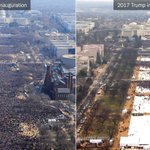
Trump: When I was president, we weren’t laughed at
(He was literally laughed at in front of the entire world at the United Nations)
Mark Clemente retweeted

The IsoArch platform brings you a valuable and user-friendly research tool to access and use isotopic data ⚛️!
#BioArch #BioAnth #HumanEvolution


Mark Clemente retweeted

Carina Leirião, participou no evento 51st Meeting of the Paleopathology Association (18-20/3/2024) - “Traumas of Life - Exploring the traumatic lesions in individuals from collective burials from the Military Hospital of São Jorge Castle, Lisbon (16th - 18th centuries)”

Mark Clemente retweeted

New publication from Harry Robson's work with @ArcDurham.
The study applies carbon, nitrogen & sulphur stable isotope analysis to animal and human remains from Syltholm II, 🇩🇰
🐄 🦌 🦊 🐑 🐐 🐕 💀 🦴 🧪 🧫 🧬 ⚗️🥼
#Openaccess and free to read at: sciencedirect.com/science/ar…
Mark Clemente retweeted
New publication featuring Harry Robson:
"Sex Determination and Isotopic Analysis of the Nivåfjord Mesolithic Burials, Zealand, Denmark" tidsskrift.dk/dja/article/vi…
Mark Clemente retweeted

📣 New paper! 📣 'Pathways to the medieval hospital: collective osteobiographies of poverty and charity' in Antiquity today!
Read it here👉 doi.org/10.15184/aqy.2023.16…
Find out more about the Osteobiographies here 👉cam.ac.uk/stories/after-the-…

ALT An illustration of the market place in medieval Cambridge by the artist Mark Gridley. Credit: Mark Gridley/After the Plague
Mark Clemente retweeted
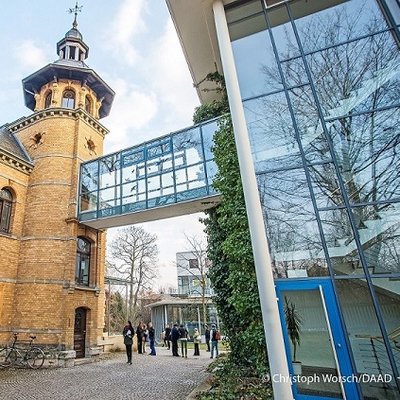
The Scent of the Afterlife Unbottled in New Study of Ancient Egyptian Mummification Balms - A team of researchers led by @Bara_Huber has recreated one of the scents used in the mummification of an important Egyptian woman more than 3500 years ago. buff.ly/3Pi9kPM

Mark Clemente retweeted

So happy to share our new paper out today in @SciReports
"Biomolecular characterization of 3500-year-old ancient Egyptian mummification balms from the Valley of the Kings"
nature.com/articles/s41598-0…

Mark Clemente retweeted

New findings, a result of excavations at the Rising Star cave system in South Africa, could alter experts’ understanding of human evolution, placing greater importance on the emotional lives of human relatives @UoYArchaeology bit.ly/46tLZ40

Mark Clemente retweeted

The third published article based on my PhD research 🧐 It’s fully open access so have a look if you’re interested in learning about physical impairment and disability in the past! Co-authored with @osteo_jo and @KarinaKTC 😀
tandfonline.com/doi/full/10.…

Mark Clemente retweeted

Name drop for @samleggs22's awesome #isotope work in this recent article. Also check out how all those working on the people buried 1300 years ago in Cambridgeshire are bringing personalised narratives back & highlighting past lives:
bbc.com/news/uk-england-camb…
#archaeology

Mark Clemente retweeted
RESEARCH ALERT: Michelle Alexander and Malin Holst are part of a team of scientists & community researchers that have unearthed a story of forgotten children of the past: york.ac.uk/news-and-events/n…

Mark Clemente retweeted

Harrowing lives of children sent to work in English mills revealed in first study of kind theguardian.com/society/2023…

Mark Clemente retweeted

Compound-specific animo acid #nitrogen and #carbon isotopes preserve in archaeological #mollusk shells as a proxy for past ecology and climate. Nice to see this new type of proxy getting more and more attention!
sciencedirect.com/science/ar…
Mark Clemente retweeted

📣🚨🔔UKAS 2024📣🚨🔔Save the date! The UKAS conference will be in York 3-5 April 2024. More details soon! @York_BioArCh @UoYArchaeology @UniOfYork
Mark Clemente retweeted
Congratulations to Sophy Charlton and Michelle Alexander on another new research grant: york.ac.uk/archaeology/news-…
Mark Clemente retweeted

As Title 42 comes to an end, if your argument against undocumented immigration is "crime" then you aren't looking at the stats.
While we hear the media often talk about how illegal immigration is leading to crime in America, if you look at the real statistics, this isn't the case.
While the argument could be made that the increase in population ultimately leads to more overcrowded cities, a harder time finding jobs, etc., which ultimately leads to more crime, there is little evidence of that either.
Let's look at a study conducted in Texas between 2012 and 2018, using data by the Texas Criminal Justice System. Looking at the results of this study, one could more likely conclude that immigration (undocumented and legal) could actually lead to a reduction in the crime rate in America, as opposed to an increase.
The total violent crime rate between 2012 and 2018 among US-born citizens was 213.0, while the violent crime rate for legal immigrants was 185.3, and just 96.2 for undocumented immigrants. That means that these stats show US-born citizens are more than twice as likely to commit a violent crime and get caught than undocumented immigrants are.
The rates for drug and property crimes are even more staggering — in favor of undocumented immigrants committing less crimes.
I understand the concern with immigration, and I agree that more needs to be done, but the false narrative that immigrants are criminals or that they are leading to increased crime rates in America appears to be a false one. Fact is, you should fear a US-Citizen more than an undocumented immigrant when it comes to the odds that they will commit a crime on US soil.
Does this mean there are no criminals who immigrate here? Absolutely not. I'd love to know your thoughts on this.

Mark Clemente retweeted
"Studying ancient DNA and using isotope analysis, as well as pottery residue analysis, will help us to understand how humans worked with plants and animals in adapted agricultural regimes", says Prof Michelle Alexander @UoYArchaeology bit.ly/3p316jN
Mark Clemente retweeted

Delighted to see our article in collaboration with @UoYArchaeology out in @TheFSBI
onlinelibrary.wiley.com/doi/…
We looked at the variation in stable isotopes across vertebrae 🦴 centra in Atlantic bluefin tuna 🐟 and found multiple years of foraging behavior are likely archived!

Mark Clemente retweeted
Our #ancientDNA team is at it again! Great new publication from Nathan Wales on some very early wine...york.ac.uk/news-and-events/n…
#archsci #dna #foodhistory #wine