

Founder @questflow | BS @UCBerkeley & MS @JohnsHopkins | Democratize financial intelligence for all | Prediction is the best measure of intelligence
Join the 5000+ readers
Joined February 2016
- Tweets8.8K
- Following3.6K
- Followers4.9K
- Likes10.3K





Pinned Tweet
The backbone of your trade. @questflow

Every agent demo shows what it can do.
Nobody demos what it's not allowed to do.
That second list is the actual product. Especially when the agent touches money.
"Checks with you before it acts on your behalf" is the whole product.
Proactive is the easy part. Knowing when to stop and ask is where agents that touch money live or die.
Ask too often and nobody uses it. Ask too rarely and nobody trusts it.


omarchy plugin add github.com/questflowai/omatr… --enable
Bring your own list: in TradingView → Export list… →`omatrade tv import`.
Positions across brokers, Hyperliquid & Polymarket arrive with Questflow sign-in. (Coming soon)


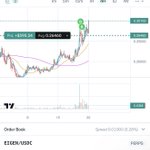
all in on $TRUMP via Questflow.
The position is live, the PnL is real, and the trend still looks insane.
Track the position in real time on next.questflow.ai/share/hl-p… @Questflow

Agents that run for months are coming. Great.
The hard part was never keeping them alive. It's knowing what they did at 3am and being able to stop them in one click.
Durability without a kill switch is just a longer blast radius. xitter.cf/vercel/status/21126538…

Introducing 𝚍𝚞𝚛𝚊𝚋𝚕𝚎-𝚑𝚊𝚛𝚗𝚎𝚜𝚜. Run Pi, OpenCode, Codex, Claude Code, eve, fx, or your own harness durably on Vercel.
With 𝚍𝚞𝚛𝚊𝚋𝚕𝚎-𝚑𝚊𝚛𝚗𝚎𝚜𝚜, agents automatically resume work after failures and run for hours, days, or months. vercel.com/blog/making-every…


Agents should earn permissions the way new hires do.
Day one: read-only. Week two: small size, hard limits. Month two: more room, because the logs say so.
Nobody gives an intern the company card on day one. Why are we giving agents full API keys?
Bob Xu retweeted

MiniMax M3.1 Flash just made a massive leap in financial intelligence 🐰🚀
We tested @MiniMax_AI's latest model on the Questflow Finance Benchmark, evaluating how LLMs perform across real-world financial research, analysis, market screening, and trading-related workflows.
The results:
♦️ 94.9% strict pass rate, up from 73.8% on M3 (+21.1 percentage points)
♦️ #5 overall, climbing from #9
♦️ Financial Analysis: 94.0%
♦️ Market & Signal: 95.3%
For context, Claude Opus 5.5 scored 97.7%, while M3.1 Flash outperformed Gemini 3.8 Flash, GLM 5.3 Flash, and Grok 4.7 in our benchmark.
According to MiniMax, M3.1 Flash is also 3x faster at just 1/3 the cost of M3.
Overall, this is a seriously impressive model upgrade. A stronger foundation model with better cost efficiency means your AI Finance Agent can strike a much better balance between capability and cost.
And now, Minimax M3.1 Flash is free to use on Questflow!

The Space Bunny has officially landed on Questflow 🐰🚀
Meet MiniMax M3.1 Flash, aka Space Bunny.
3x faster than M3, at just 1/3 the cost. Pretty impressive for a bunny.
And yes, it's now available on the Questflow Free Plan, with free usage included.
Pick M3.1 Flash as the brain behind your AI Finance Agent and put it to work across research, analysis, and trading.
No Pro subscription needed. Let the bunny cook. 🐰

"The market is there to serve you, not to instruct you."
Most traders have it backwards. They open the chart to find out what to think.
Write the plan when the market is closed. Open the chart only to check if it's time to act. xitter.cf/kejca/status/211224564…

Li Lu on the six timeless principles of value investing.
(1) "Stock is a piece of ownership, not a piece of paper to trade around."
(2) "The market is there to serve you, not to instruct you."
(3) "Investing is about predicting the future — which is inherently unpredictable — therefore you always want to require a margin of safety that helps you protect the downside."
(4) "The most important [part] of a circle of competence is knowing the edge of it. Understanding the edge is as important as understanding what is inside the [circle]."
(5) "You've got to fish where the fish are."
(6) "Wealth, in the end, is really the percentage ownership of global purchasing power. What is really important is what you can buy with [that wealth]."
(Columbia University || 2026)
Bob Xu retweeted

MiniMax just cooked 🔥
We ran the new MiniMax M3.1 Flash on our benchmark:
M3: 73.8
M3.1 Flash: 94.9 (+21 pts!)
A Flash model landing within 3 points of @claudeai Opus 5.5 (97.7). Wild.
Huge props to @MiniMax_AI 👏
next.questflow.ai/benchmark

Q4 seasonality is a tailwind, not a thesis.
The thesis is the S&P sitting 2.8% above a rising 30-week line. Seasonality helps trends that already exist. It doesn't create them. xitter.cf/markminervini/status/2…

Q4 and post-midterm seasonality remain overwhelmingly bullish.
Historically, the fourth quarter has been the strongest quarter of the year for the S&P 500 in terms of consistency of positive returns. Over roughly the past 80 years, Q4 has produced a positive return about 80% of the time, compared with approximately 60%–64% for the other three quarters.
The midterm election cycle adds another powerful seasonal tailwind. Stocks have historically performed particularly well as the uncertainty surrounding midterm elections is removed. Depending on the precise starting period used, recent historical studies put the S&P 500's positive rate during Q4 of midterm years at roughly 83%–85%.
Given the backdrop of strong earnings growth and, at least for now, no clear evidence of recession, history argues that the bulls should continue to receive the benefit of the doubt.
However, seasonality is a tendency—not a guarantee. Fed tightening, deteriorating breadth, rising interest rates and elevated oil prices represent meaningful counterweights. At a minimum, those conditions increase the probability of volatility and make the current environment considerably less straightforward than the historical averages suggest.
Individual stocks have already been correcting beneath the surface of the major indexes. More than 35% of S&P 500 stocks are currently down 20% or more from their 52-week highs, even as the index itself remains relatively close to record territory. In other words, a significant correction has already occurred—it has simply been masked by the strength of a relatively small number of heavily weighted stocks.
Interestingly, the 87 Crash is one of the historical analogs worth keeping in mind following a Fed tightening. The comparison should not be interpreted as a prediction of another crash, but the monetary-policy parallel is real: the Fed raised the discount rate from 5.5% to 6.0% on September 4, 1987, while market interest rates were already rising sharply.
The seasonal winds are clearly at the market's back. The question is whether tightening financial conditions, weak participation and rising oil become strong enough headwinds to overpower them.
The 10-year Treasury yield spiked 125 basis points in just seven months. We looked at prior cases when the 10-year Treasury yield jumped more than 125 basis points in seven months and found 13 prior cases. Only seven of the 13 cases (54%) had positive returns three months later. minervini.com


Built an Omarchy bar plugin for traders: Omatrade.
• Your TradingView watchlist with live quotes, add/remove right from the bar
• Trading news for what you watch, breaking stories as notifications
• Positions across brokers (Questflow sign-in coming soon)
Read-only, follows your theme, keyboard-first. Open source.
omarchy plugin add github.com/questflowai/omatr… --enable
Inspired by Omacharts from @jorgemanrubia 🙏 cc @dhh @omarchy
Every trader has a rule they break at 2am.
Agents don't get tired, bored, or revenge trade. The edge isn't smarter calls. It's the rules you already wrote, actually followed.