

PA-S | Ortho bro here to explain how injuries actually work and to share other health knowledge | Mechanisms, anatomy, timelines, never an official diagnosis
United States
Joined January 2024
- Tweets7.8K
- Following118
- Followers5.4K
- Likes5.5K




The Body Explained | Hockey Injuries retweeted
Likely some sort of grade 1 MCL sprain for Marchenko given the mechanism and timeline
Given at the time of injury his skate was not stuck in the ice could have prevented an ACL injury with it
Grade 1 injuries have returned to play in as little as 10 days but Kirill will probably wait till he is pain free and feels stable

🚨 A group of Leafs fans bumped into Kirill Marchenko at the Calgary airport today, where he told them he was “flying back home today” and will be back in “two weeks.”
As of now, no official confirmation has been made by the Leafs (should know more tomorrow)
📸: @Alwaysbardown1
#leafs


The Body Explained | Hockey Injuries retweeted
Jack Hughes⬇️

Chipped teeth are practically a hockey rite of passage as Jack Hughes here would say 🏒🦷
But here’s the anatomy + physiology behind how they get fixed.
🦷 What Happens When a Tooth Chips?
Teeth have layers:
1.Enamel – Hard, mineralized outer shell (no nerves, no blood supply)
2.Dentin – Softer layer underneath, contains microscopic tubules connected to nerves
3.Pulp – Central core with blood vessels and nerves
If the chip is:
•Enamel only → cosmetic issue, usually painless
•Into dentin → sensitivity to air/cold (fluid shifts in dentinal tubules stimulate pulp nerves)
•Into pulp → bleeding, significant pain, infection risk
🏒 How Does It Get Fixed?
1️⃣ Evaluation
Team dentist checks depth of fracture and maybe an X-ray to assess pulp involvement.
2️⃣ Enamel/Dentin Chip
Most common in hockey.
•Smoothed or rebuilt with composite resin bonding
•Resin chemically bonds to enamel via acid etching
•Light-cured to harden
Function restored immediately.
3️⃣ If Pulp Is Exposed
•Root canal: Remove inflamed pulp, disinfect canal, fill with gutta-percha
•Crown may be placed later for structural strength
🧠 Physiology Pearl
Dentin hypersensitivity happens because exposed dentinal tubules allow fluid movement which triggers mechanoreceptors in the pulp (hydrodynamic theory).


The Body Explained | Hockey Injuries retweeted
Sam Steel of the Stars received an “injection as part of his treatment”
What does that mean?
It could mean several things
Most often, this means a corticosteroid injection. Corticosteroid injections switches off inflammatory genes which reduces pain and swelling. The steroid takes effect over a few days, and a "steroid flare" (more pain for 24–48 hours) can happen first. I have been giving a ton of these on my current school rotation
The trade-off is that inflammation is part of normal healing, so suppressing it may in theory slow repair.
🚨The steroid also does not reverse structural damage! An injection does not repair tissue.
Other possibilities are platelet-rich plasma (PRP) or an anesthetic-only diagnostic injection.
Diagnostic anesthetic injection involves numbing a specific spot, such as the hip joint, helps identify the pain source. If pain goes away, the joint is the likely source.
PRP is when the player's own concentrated platelets are injected to try to stimulate healing. It has been tried for adductor injuries that don't respond to rehab, but evidence is limited (@DrJesseMorse is a good follow for this stuff)
What does this tell us in Steel’s case?
Steroid injection directly into a fresh muscle tear is controversial, so this injection 2 days after an injury points to something to more than a simple tear
Bursitis or tendon irritation respond well to injections, and can lead to a return of play in as little as a week
Reviews note that a midseason corticosteroid injection may be considered specifically to speed return to play for players with recurrent pain. Steele had a hip/groin issue this March, so this is very much in play
Overall, a quick return (days to about 2 weeks) suggests the injection was used to manage pain or inflammation in a minor or chronic problem so he can keep playing.
A longer absence suggests the injection was diagnostic or supportive alongside a real structural injury.


The Body Explained | Hockey Injuries retweeted

Could oxygen availability be an overlooked factor in concussion recovery?
Interesting connection here to the emerging research on hyperbaric oxygen therapy (HBOT) for TBI.
Commercial flying reduces oxygen pressure, while HBOT increases oxygen delivery to tissues.
Given the mitochondrial dysfunction and altered energy metabolism that can follow brain injury, it’s worth asking how changes in oxygen availability influence recovery.
The research remains inconclusive, but I think this is an area deserving much greater attention.
This article was not peer reviewed so take it with a couple grains of salt, but I was able to find a 2012 conference abstract on NFL and NHL players found that those who flew commercially soon after brain injury missed more games.
The authors suggested postponing flights by 48–72 hours until early symptoms ease.
Kirich took a big blow to the head, so likely just a precaution and is what it says
Interesting find I thought I’d share!
The Body Explained | Hockey Injuries retweeted
Logan Thompson's injury history raises some interesting questions about his latest setback.
In 2018 with Brandon (WHL), he suffered a leg injury, missed the final five regular-season games, returned for the playoffs and reinjured it in Game 2, ending his season.
In February 2023 with Vegas, he suffered an apparent left-leg injury, missing 18 games. He returned in March, only to suffer another lower-body injury in his first game back. His rehabilitation subsequently stalled, with Bruce Cassidy acknowledging he wasn't responding well to the workload. He never played again that season.
In April 2025, a collision forced him into the splits, leaving him unable to bear weight on his left leg.
Now, another lower-body injury with apparent left-leg discomfort.
We don't know whether these injuries involve the same structures, but the repeated setbacks following return to play are concerning.
Is there an underlying issue with force production, load tolerance or unresolved deficits from previous injuries?
Sometimes the injury isn't the entire problem. It's what remains after the athlete returns to play.
Logan Thompson left practice after 45 minutes today, which could mean nothing and just be load management
It does not really confirm any diagnosis, but given the speculation of an adductor strain it could’ve been under recovered and loaded too early
Pain usually goes away with these strains in a couple days but can be felt with higher level activities for a couple weeks
The worst fear is a higher grade strain or insertional injury
I wrote an article on adductor strains that will help below!

The Body Explained | Hockey Injuries retweeted
Assuming this is where McCann was injured, the knee-on-knee contact raises concern for an MCL injury.
His history is particularly relevant. In April 2025, he underwent bilateral knee surgery to remove bone spurs after prolonged quadriceps discomfort. He later described significant muscle loss, difficulty jumping, and numbness and stinging when struck in the thigh. Persistent symptoms required another procedure in April 2026.
Even if this is a new traumatic injury, his previous knee problems could complicate rehabilitation and may help explain the 10-week timeline.


The Body Explained | Hockey Injuries retweeted
Vincent Desharnais of the Capitals underwent an appendectomy
An appendectomy is surgery to remove the appendix, usually because it has become inflamed or infected causing a condition called appendicitis.
It is very important to not people can live a normal, healthy life without their appendix.
❓ The appendix is a small, finger-shaped pouch attached to the beginning of the large intestine, usually in the lower-right part of the belly
😷 Appendicitis means the appendix is inflamed. Sometimes its opening becomes blocked, allowing bacteria to grow and pressure to build inside. As swelling increases, the appendix can lose its blood supply and develop a hole or burst. This can spread infection into the belly.
Not everyone has these symptoms but here are some you should watch out for!
🔹Belly pain that starts near the belly button and moves toward the lower-right side
🔹Pain that gets worse with walking, coughing, or movement
🔹Loss of appetite
🔹Nausea or vomiting
🔹Fever
🔹Sometimes constipation, diarrhea, or bloating
🚨Do NOT wait for every symptom to appear
Appendicitis is diagnosed through clinical signs, ultrasound, and/or CT scan
There are two main surgical types to mention here as Desharnais went through it
1️⃣Laparoscopic - the surgery is done with a camera through several small cuts in the belly
2️⃣Open - the appendix is removed through one large cut
Sometimes the surgery may begin laparoscopic and then become open
Most patients recover very well! In an uncomplicated procedure, the patient may be able to go home the same day or the next day.
All surgeries have bleeding and infection risk, and light physical activity is generally ok after 1-3 weeks, which checks out the 4-6 week timeline for Desharneis to ramp up playing hockey


The Body Explained | Hockey Injuries retweeted
Very similar and scary situation to Jake McCabe that occurred here with Nini Niederreiter
Immediate concern for an eye injury
The overriding immediate concern with plays like this is a open globe injury which is a surgical emergency
This mechanism can also cause eyelid lacerations, orbital fractures, hyphema (pool of blood in the front of the eye), corneal abrasion/laceration, and others
Would be important to protect the eye and assess vision early
The Body Explained | Hockey Injuries retweeted
Igor Chernyshov is “out for a while” after leaving the game due to this play
That timing leads to the belief something is fractured versus just a contusion
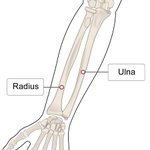
Kind of hard to tell exactly where the puck hit but he seems to grab that arm so a fracture to the radius/ulna are in play
The ulna is on the outside exposed area there so a shaft fracture is possible, aka a “nightstick” fracture
Return to play if that’s the case is about 6-8 weeks
They seemed to know pretty quickly so X-rays pretty likely showed the fracture well which would put Cheryshov in some sort of cast


The Body Explained | Hockey Injuries retweeted
New (official) information about Ben Kindel came out stating he had a vasovagal episode
What is that?
Vasovagal syncope (fainting) is the most common cause of syncope
You body overreacts to a trigger—such as pain, fear, seeing blood, or standing too long—causing your blood pressure to drop and sometimes your heartbeat to slow. This briefly reduces blood flow to your brain, making you pass out.
In a 19 year old athlete like Kindel, it is almost always benign and noncardiac in origin, BUT a VERY important distinction must be made
The episode MUST not occur during exercise and the cardiac evaluation must be normal obviously
🚩Syncope occurring during exercise is a major red flag for a structural or arrhythmic cardiac cause and demands a full cardiac workup
So what happens in healthy athletes?
We can’t say this is what happened to Kindel himself, but this is how it works
Athletes can sometimes faint when they suddenly stop exercising hard. Here’s why:
🫀During exercise, the leg muscles help squeeze blood back toward the heart.
When exercise stops suddenly, those muscles stop squeezing. Meanwhile, the blood vessels in the legs are still widened from the workout, allowing blood to collect there.
With less blood returning to the heart, blood pressure can drop. Sometimes, the body’s automatic reflexes also slow the heartbeat, lowering blood pressure even more.
For a short time, not enough blood reaches the brain, which can cause dizziness or fainting.
Athletes may be more prone to this because training strengthens the body’s natural “braking system,” which slows the heart.
Typical presentation is an episode lasting ~30 seconds or more of warmth, sweating, paleness, nausea, lightheadedness, and visual dimming, followed by brief loss of consciousness (usually <1–2 minutes) and then fatigue
As mentioned, ruling out cardiac causes is of utmost importance and we hope Kindle returns soon!


The Body Explained | Hockey Injuries retweeted
Kindel reportedly will try to begin skating again next week which is an indicator his cardiac work-up was good!
Other distinctions and notes:
10% of vasovagal episodes may exhibit seizure like activity which is where those reports may have stemmed from
The flight itself may have had an impact with pressure, seat position, low oxygen in cabin, etc.
The oxygen may not have been “needed” for him to regain consciousness and was just there and used
New (official) information about Ben Kindel came out stating he had a vasovagal episode
What is that?
Vasovagal syncope (fainting) is the most common cause of syncope
You body overreacts to a trigger—such as pain, fear, seeing blood, or standing too long—causing your blood pressure to drop and sometimes your heartbeat to slow. This briefly reduces blood flow to your brain, making you pass out.
In a 19 year old athlete like Kindel, it is almost always benign and noncardiac in origin, BUT a VERY important distinction must be made
The episode MUST not occur during exercise and the cardiac evaluation must be normal obviously
🚩Syncope occurring during exercise is a major red flag for a structural or arrhythmic cardiac cause and demands a full cardiac workup
So what happens in healthy athletes?
We can’t say this is what happened to Kindel himself, but this is how it works
Athletes can sometimes faint when they suddenly stop exercising hard. Here’s why:
🫀During exercise, the leg muscles help squeeze blood back toward the heart.
When exercise stops suddenly, those muscles stop squeezing. Meanwhile, the blood vessels in the legs are still widened from the workout, allowing blood to collect there.
With less blood returning to the heart, blood pressure can drop. Sometimes, the body’s automatic reflexes also slow the heartbeat, lowering blood pressure even more.
For a short time, not enough blood reaches the brain, which can cause dizziness or fainting.
Athletes may be more prone to this because training strengthens the body’s natural “braking system,” which slows the heart.
Typical presentation is an episode lasting ~30 seconds or more of warmth, sweating, paleness, nausea, lightheadedness, and visual dimming, followed by brief loss of consciousness (usually <1–2 minutes) and then fatigue
As mentioned, ruling out cardiac causes is of utmost importance and we hope Kindle returns soon!
The Body Explained | Hockey Injuries retweeted
Nick Suzuki is out 2-4 weeks and this is the expected play
Given this mechanism and timeline, a strong concern is present for a hand fracture to the metacarpal or phalanges
Puck contact is the dominant mechanism of hand/finger injuries in hockey, and direct blows classically produce transverse metacarpal and phalangeal fractures
Stable fractures treated nonoperatively typically return to sport in 2-8 weeks and a contusion would likely heal faster than this
Likely will be in a cast/split for a short duration and grip strength is an important factor when returning

The Body Explained | Hockey Injuries retweeted
Ullmark is ruled out 2-4 weeks which tells us this is a lower grade strain, likely of the adductor muscle
This helps rules out a full tear of the muscle
Reinjury rates are on the higher side so return to play criteria is critical
I’ll make a big post about these strains and all their caveats soon!
Likely a groin (adductor) strain for Linus Ullmark
We saw a similar injury mechanism with Logan Thompson who did not have to leave the game
Adductor injuries were the single most common injury in a large NHL goaltender cohort (23.4%), the overwhelming majority non-contact
Return to play for an adductor strain is guided by pain-free status: no pain on palpation, resisted contraction, or stretch, and completion of sport-specific agility
The Body Explained | Hockey Injuries retweeted
More and more recent research coming out to strengthen to points on how to combat fatigue
Some takeaways…
🍝Carb intake has been linked to more fatigue and less alertness than placebo
☕️Caffeine in the afternoon still hits at bedtime, and coffee should be stopped about 8 hours before sleep with energy/preworkout drinks 13 hours before to not disrupt sleep
🍳People who skipped breakfast and had irregular meal times in studies reported more fatigue
🏃Excuse had the strongest effects. Training reduced feelings of training and increased energy and vitality, even in people with chronic fatigue syndrome
🍺Alcohol hurts deep sleep, even if it makes you fall asleep faster
TLDR: skip sweets and alcohol, stop caffeine early, eat regular meals and exercise!
The Body Explained | Hockey Injuries retweeted
Likely a groin (adductor) strain for Linus Ullmark
We saw a similar injury mechanism with Logan Thompson who did not have to leave the game
Adductor injuries were the single most common injury in a large NHL goaltender cohort (23.4%), the overwhelming majority non-contact
Return to play for an adductor strain is guided by pain-free status: no pain on palpation, resisted contraction, or stretch, and completion of sport-specific agility


The Body Explained | Hockey Injuries retweeted
🐧Very scary news about Ben Kindel and his reported (key word as hockey media can be scums) seizure
Regardless, here is a brief overview of a very complicated and deep topic for general knowledge!⬇️
❓A seizure is a brief burst of abnormal electrical activity in the brain.
Not all seizures cause shaking; some cause staring, unusual sensations, or brief periods of unresponsiveness.
One seizure does NOT automatically mean epilepsy!!!!!
Causes: Seizures may result from an immediate problem such as low blood sugar, alcohol withdrawal, or a brain infection or occur without an immediate trigger
Main Types of Seizures 🧠
Seizures are classified by where they start in the brain:
Focal: Begin on one side. They may cause unusual sensations, repeated movements, or changes in awareness and responsiveness. Some spread to both sides and cause full-body stiffening and shaking
Generalized: Involve both sides from the start
Examples of generalized include:
🔹Tonic-clonic: Stiffening followed by rhythmic shaking, with loss of consciousness
🔹Absence: Brief staring spells with a lapse in responsiveness
🔹Myoclonic: Sudden, brief muscle jerks.
🔹Atonic: Sudden loss of muscle strength, sometimes causing a fall.
🔹Unknown or unclassified: There isn’t enough information to determine where the seizure began or classify it more specifically
Evaluation: The person’s history, blood tests, an EEG (brain-wave recording), and often an MRI help identify the cause and risk of another seizure.
Outlook: Up to 70% of people with epilepsy could become seizure-free with appropriate diagnosis and treatment. After a first unprovoked seizure, adults have roughly a 21–45% chance of another within two years.
🚨 Seizure first aid!
Stay calm! Time it, clear nearby hazards, cushion the head, and gently turn the person onto their side when possible.
Never restrain them or put anything in their mouth.
Call 911 for a first seizure, one lasting longer than five minutes, repeated seizures without recovery, or trouble breathing.


The Body Explained | Hockey Injuries retweeted
Very scary high stick here on Jake McCabe who left the game
Immediate concern for an eye injury
The overriding immediate concern with plays like this is a open globe injury which is a surgical emergency
This mechanism can also cause eyelid lacerations, orbital fractures, hyphema (pool of blood in the front of the eye), corneal abrasion/laceration, and others
Would be important to protect the eye and assess vision early
Jake McCabe is not on the Leafs bench to begin the second period after exiting the game following this scary stick to the face
#leafs

