

Author, Artist, Speaker & Reiki therapist More at https://nitter.gq/t.co/eOHykt42Gv & https://nitter.gq/t.co/aJKwDWuOFH
Knutsford
Joined February 2011
- Tweets6.6K
- Following3.3K
- Followers3.3K
- Likes1.7K









Brian Robert Larcher retweeted
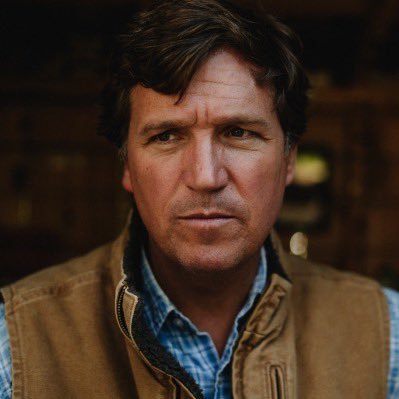
Treasury Secretary Scott Bessent explains the administration’s new tariffs, and why we had to do something to stop the slide.
(0:00) Trump’s Tariff Plan
(5:42) The Current State of the Stock Market
(8:22) Will Americans See Substantial Tax Cuts Because of Tariffs?
(13:16) How Much Money Will America Make Through Tariffs?
(14:33) Bringing Manufacturing Back to the US
(20:14) Tariff Pushback From Foreign Countries
(22:16) Will China Retaliate?
(25:42) How Will Europe Be Impacted?
(33:12) Is the Upper Class Out of Touch With the Lower and Middle Class?
(35:47) Bessent’s Biggest Worries
(42:35) The Long Term Benefits of DOGE
(46:17) The Corruption of the Federal Reserve
(49:22) Why Gold Is So Critical Right Now
(52:13) Zelensky's Self-Sabotaging Negotiation Tactics
(1:00:19) The Trump Administration’s Messaging About the Economy
Includes paid partnerships.
Brian Robert Larcher retweeted

This is a Tesla model Y battery. It takes up all of the space under the passenger compartment of the car. To manufacture it you need:
--12 tons of rock for Lithium (can also be extracted from sea water)
-- 5 tons of cobalt minerals (Most cobalt is made as a byproduct of processing copper and nickel ores. It is the most difficult and expensive material to obtain for a battery.)
-- 3 tons nickel ore
-- 12 tons of copper ore
You must move 250 tons of soil to obtain:
-- 26.5 pounds of Lithium
-- 30 pounds of nickel
-- 48.5 pounds of manganese
-- 15 pounds of cobalt
To manufacture the battery also requires:
-- 441 pounds of aluminum, steel and/or plastic
-- 112 pounds of graphite
The Caterpillar 994A is used to move the earth to obtain the minerals needed for this battery. The Caterpillar consumes 264 gallons of diesel in 12 hours.
The bulk of necessary minerals for manufacturing the batteries come from China or Africa. Much of the labor in Africa is done by children. When you buy an electric car, China profits most.
The 2021 Tesla Model Y OEM battery (the cheapest Tesla battery) is currently for sale on the Internet for $4,999 not including shipping or installation. The battery weighs 1,000 pounds (you can imagine the shipping cost). The cost of Tesla batteries are:
Model 3 -- $14,000+ (Car MSRP $38,990)
Model Y -- $5,000–$5,500 (Car MSRP $47,740)
Model S -- $13,000–$20,000 (Car MSRP $74,990)
Model X -- $13,000+ (Car MSRP $79,990)
It takes 7 years for an electric car to reach net-zero CO2. The life expectancy of the battery is 10 years (average). Only in the last 3 years do you start to reduce your carbon footprint, but then the batteries must be replaced and you lose all gains made.
And finally, my new friend, Michael, made some excellent points: I forgot to mention the amount of energy required to process the raw materials and the amount of energy used to haul these batteries to the U.S. sometimes back and forth a couple of times.
But by all means, get an electric car. Just don't sell me on how awesome you are for the environment. Or for human rights.
Dr. Sharnael Wolverton Sehon
𝐉𝐨𝐢𝐧 👇 my newletter
Drsharnael.com

Brian Robert Larcher retweeted

The Fibonacci sequence appears in nature more frequently than one might expect; the branching of trees, arrangement of leaves on a stem, the fruitlets of a pineapple, even the spiral galaxies all exhibit Fibonacci patterns.

Brian Robert Larcher retweeted

A statement from Buckingham Palace:
royal.uk/a-statement-from-bu…
📷 Samir Hussein


A face of FRREDOM?

18 days ago, President Javier Milei was inaugurated in Argentina. Since then:
-Eliminated 12 out of 21 cabinet posts
-Firing 5,000 government employees
-Ending 380k government regulations
-Banned woke language in the military
-Bill to affirm the right to self-defense
-Bill to legalize homeschooling of kids
-Proposal to punish all riot organizers
-Future welfare cuts for road-blocking
-Legalized paying contracts in bitcoin
-Privatization of state-run companies
-Opened up the Argentina oil industry

1
38
Brian Robert Larcher retweeted

Argentina's President Javier Milei has ANOTHER major victory today.
He has proposed a law that affirms a right to self-defense in Argentina, which they do not currently have.
This will be applies in cases where someone tries to cause bodily harm to you or where they try to invade your property.
It also affirms that if the person trying to attack you dies, their relatives cannot sue you after the fact for defending yourself.
This is another MAJOR Milei victory in the same week where he has banned woke pronoun usage from government text, enacted reforms that will remove welfare benefits from anyone protesting in the streets blocking traffic and ban the usage of the word "free" to promote taxpayer-funded government programs.


Brian Robert Larcher retweeted

The choir sings Mass at 5pm tomorrow on the Solemnity of #AllSaints. The choral music is by Victoria; his Missa O quam gloriosum and the motet on which it is based. The Gregorian introit is Gaudeamus: 'Let us rejoice in the Lord and keep a festival in honour of all the saints'.

Brian Robert Larcher retweeted

"Please, don't worry so much. Because in the end, none of us have very long on this Earth. Life is fleeting. And if you're ever distressed, cast your eyes to the summer sky when the stars are strung across the velvety night. And when a shooting star streaks through the blackness, turning night into day... make a wish and think of me. Make your life spectacular.” - Robin Williams (as Jack in the movie 'Jack')

Brian Robert Larcher retweeted

Matt, thank you for not letting this important story pass you by. Thomas Jefferson knew this day would come and provided us with guidance on how this situation should be handled.
For the patriot movement, clarity of mission is absolutely essential.


Great article, well worth the read...

In the scorching summer of 1928, amidst the bustling streets of Houston, Texas, the Ice Man embarked on his daily mission to deliver a 25-pound block of ice to his loyal customers. The ice trade, once a flourishing industry, was now facing its inevitable decline, as the emergence of refrigeration cooling systems threatened to melt away its profits.
The foundations of the ice trade were established in the 19th century, when ice was harvested from frozen ponds and streams, packed tightly in sawdust, and transported across the globe via railroad or ship. This frozen commodity was a precious resource, essential for preserving food, cooling beverages, and providing relief from the sweltering heat of summer.
Frederic Tudor, aptly nicknamed the Ice King, pioneered this frozen empire in New England in 1806. Initially catering to the wealthy elite in the Caribbean, Tudor's business soon expanded to include Cuba and the southern United States. As demand grew, he set his sights on even more distant lands, shipping ice to far-flung destinations such as India, Australia, China, and South America. Tudor's entrepreneurial spirit ignited the ice trade, transforming it into a lucrative industry.
During its peak, the ice trade provided employment to a staggering 90,000 people and relied on a fleet of 25,000 horses to haul the precious cargo. World War I further fueled the demand for ice as it was crucial for preserving food supplies for soldiers on the front lines. However, with the conclusion of the war, the ice trade encountered its own chilling battle against the advent of modern refrigeration systems.
Refrigerators, equipped with the wonders of mechanical cooling, began to appear in homes during the 1930s. Their convenience and reliability rapidly transformed the domestic landscape, heralding the decline of the ice trade. By the 1950s, refrigerators were nearly ubiquitous in both the United States and Europe, solidifying their reign as the new kings of cooling.
And yet, in the summer of 1928, the Ice Man braved the unforgiving Texan heat to ensure that his customers' iceboxes remained chilled. Clad in a heavy coat, he skillfully maneuvered his horse-drawn ice wagon through the bustling city streets, navigating through the cacophony of traffic and pedestrians.
With his trusted horse leading the way, the Ice Man's wagon was loaded with blocks of ice, carefully wrapped in burlap sacks and insulated with sawdust. Beads of sweat formed on his brow as he toiled under the scorching sun, his muscles straining against the weight of the ice. Determination etched on his face, he knew that his livelihood depended on delivering this precious cargo to his loyal clientele.
As the wagon rumbled through the neighborhoods, children would eagerly gather, their eyes wide with anticipation. The Ice Man, with a friendly smile, would chip off a small piece of ice and present it to the children, who would revel in the instant relief from the oppressive heat. It was these small moments of joy that made his arduous labor worthwhile.
The ice trade may have been nearing its end, but for the Ice Man, the sense of pride and purpose he derived from his work was immeasurable. He was a symbol of a bygone era, a testament to the human ingenuity that once tamed nature's frozen bounty and brought it to the masses. Though the industry would soon fade into history, the memories of the Ice Man's deliveries and the taste of cool relief in the sweltering Texas heat would forever linger in the collective consciousness of those who had experienced his frozen gifts.

16
These are indigenous peoples of the continent - never Indian or American! Both of these new terms do an injustice to the wonderful history and deep creative and caring culture of these ancient nations and peoples.


1
9
Brian Robert Larcher retweeted

In 1998, Citibank and The Travelers Insurance Company merged.
They hired legendary designer Paula Scher to create a new logo.
In their first meeting, on a napkin, Scher drew what became the iconic Citi logo.
As Scher got up to leave the room, someone from the Citi team asked,
How can it be that it’s done in a second?
“It’s done in a second and 34 years," Scher replied. “It’s done in a second [and] every experience and everything that’s in my head.”
Takeaway 1:
As Scher has become a master of her craft, she's experienced an interesting problem.
"A lot of clients like to buy process," she explains. "they think they're not getting their money's worth [if] you solve the problem too fast."
This is known as the "Labor Perception Bias."
It's an interesting phenomenon: we are generally impatient, yet, we are skeptical if, for instance, we're at a fancy restaurant and the food comes out only minutes after we ordered.
One of famous examples of the Labor Perception Bias is the parable of the engineer and the hammer:
A factory owner hired an engineer to fix a broken-down engine. The engineer inspected the engine for one minute, took out his hammer, hammered the engine once, and then started the engine with no problem.
The engineer charged the factory owner $5000. The factory owner was shocked, protested that the engineer had worked for only one minute, and asked for an itemized bill. The engineer sent the factory owner an itemized bill:
Hammering the engine: $5
Knowing where to hammer the engine: $4,995
Takeaway 2:
On my desk, there is a notecard that says, “All success is a lagging indicator.”
The line comes from one of my favorite Ryan Holiday articles. “When a day’s writing goes well,” he writes, “it’s a lagging indicator of hours and hours spent researching and thinking… Receiving a promotion is a lagging indicator of a lot of quality work. Delivering a keynote with confidence is a lagging indicator of a lot of preparation.”
Knowing where to hammer the engine is a lagging indicator of the years and years working with hammers and on engines.
And Paula Scher’s ability to create an iconic logo in a second is a lagging indicator of 34 years spent honing her craft.
- - -
“When you sit down to create something...what you create is a culmination of everything you’ve seen and done previous to that point.” — Tinker Hatfield
Follow @bpoppenheimer for more content like this!
