

Proudly Zimbabwean. Capital Markets. Retail Investor Advocate. Tennis Enthusiast. Mercedes Benz lover.
Zimbabwe
Joined January 2018
- Tweets745
- Following1.8K
- Followers1.7K
- Likes1.8K






It is with great pride that we celebrate the nomination of Mr. Alfonce Maketo @MakerCent , CEO of the Zimbabwe Capital Markets Academy (ZCMA), for the prestigious Capital Markets Advocacy Award – People's Choice.
Mr. Maketo @MakerCent has been a passionate advocate for investor education, financial literacy, and the development of Zimbabwe's capital markets.
His dedication has empowered countless current and aspiring investors through the work of ZCMA and its sister organization, the Retail Investors Association of Zimbabwe (RICOZ).
We kindly ask for your support by casting your vote for *Alfonce Maketo*:
• 🔗 Click the voting link below: indabaafrica.com/capital-m-a…
• 👉🏾 Scroll to Number 12 – Capital Markets Advocacy Award - People’s Choice
• 📝 Complete your details.
• ✅ Select Alfonce Maketo @MakerCent .
• 🗳️ Submit your vote.
This award is presented by the Financial Markets Indaba in partnership with the Capital Markets Association of Zimbabwe (CMAZ).
Your vote is not only a vote for Alfonce but also a vote for financial education, investor empowerment, and the growth of our capital markets.
Thank you for your continued support. Let's bring this award home! 🏆🙏🏽📈🇿🇼_
📖 Philip Fisher – Pioneer of Growth Investing
“The stock market is filled with individuals who know the price of everything, but the value of nothing.”_
Early Life and Education
Philip Arthur Fisher was born on September 8, 1907, in San Francisco, California. He graduated from Stanford University with a bachelor’s degree in economics and began his career at the Anglo-London Bank in San Francisco as a securities analyst. Despite his immense success, Fisher always maintained a relatively low profile despite his immense success.
Founding Fisher & Co.
In 1931, at the height of the Great Depression, Fisher founded Fisher & Company, an investment firm that allowed him to refine and implement his unique philosophy.
His career was briefly interrupted by World War II, during which he served as a captain in the U.S. Army Air Corps.
After the war, he returned to his firm, where he consistently delivered strong returns for his clients. His innovative strategies not only shaped the future of his firm but also influenced some of the greatest minds in investing, including Warren Buffett.
This chapter of his career allowed him to refine and implement a distinctive investment philosophy, one that would later serve as the foundation for the strategies adopted by countless successful investors.
Notable Works and Publications
Fisher pioneered growth investing, introducing the buy-and-hold method that focused on a stock’s long-term potential rather than short-term price movements.
He believed that “it is only occasionally that there is any reason for selling at all.”
His famous purchase of Motorola stock in 1955, which he held until his death in 2004, epitomized his conviction in long-term investing.
In 1958, Philip Fisher wrote "Common Stocks and Uncommon Profits", which became required reading at the Stanford Graduate School of Business. Published during a time of great prosperity and a post-World War II bull market, the book embraces the prospect of continued long-term growth.
In his landmark book, Fisher introduced the “15 Points to Look for in a Common Stock” , a timeless framework that guides investors to evaluate leadership strength, innovative capacity, and management integrity.
He also popularized the *Scuttlebutt* technique, encouraging investors to actively network and gather firsthand insights about the companies in which they invest, in order to uncover a company’s true potential.
The *Scuttlebutt* approach influenced some of the greatest investing minds, including Warren Buffett, who once described himself as being 85% Benjamin Graham and 15% Philip Fisher.
According to Philip Fisher’s strategy, valid reasons to sell a stock arise when the initial assessment of the company proves to have been in error, when the business no longer meets the fundamental tests it satisfied at the time of purchase, or when a superior investment opportunity presents itself to the investor.
Other Works
Fisher expanded his philosophy in "Paths to Wealth Through Common Stocks (1960)", where he emphasized concentration over excessive diversification, and in "Conservative Investors Sleep Well", which explored the balance between risk and intrinsic value.
His writings offer a treasure trove of wisdom on evaluating businesses and making sensible decisions.
Legacy and Influence
Philip Fisher spent his career encouraging investors to research their investments and plan for a long-term portfolio. As an advisor and the author of works on investing principles and strategies, his philosophy stands out for its endurance and its heavy emphasis on qualitative insights.
His son, Ken Fisher, carried forward the family legacy by founding Fisher Investments, one of the world’s largest independent money management firms.
Even in our modern, data-driven age, his focus on deep qualitative analysis and the scuttlebutt approach remains relevant.

Moreover, his writings underscore that true investment wisdom is not found in chasing immediate gains, but in recognizing a business’s intrinsic value and long‑term growth potential.
Fisher’s principles had a profound influence on Warren Buffett as well as countless other renowned investors worldwide.
Personal Life and Passing
Philip Fisher was married to Dorothy, and together they had three children, including Kenneth L. Fisher. He lived a long and fulfilling life, passing away on March 11, 2004, at the age of 96.
1
88
Sir John Templeton
I have always enjoyed reading biographies of successful people, living and learning through their lens and drawing wisdom from their journeys.
Few stories inspire me more than that of Sir John Templeton, described by Money Magazine as ‘arguably the greatest global stock picker of the century.’
Just imagine this, $10,000 invested in his Templeton Growth Fund in 1954 grew to over $2 million by the time he retired in 1992, a compounded annual return of 15% sustained over 38 years.
This is not just a story of numbers, but of vision, discipline, and belief in global opportunities. Here is his story, one that continues to light the path for retail investors seeking to build wealth with patience and conviction.

1
278
Early Life
John Marks Templeton was born on 9 November 1912 in Winchester, Tennessee.
His parents were Vella and Harvey, who was a lawyer, entrepreneur, and real estate investor. He displayed a sharp business mind from a young age, selling firecrackers at age 8 and wine at age 17.
John attended Yale University until one day he discovered that his father could no longer afford to pay his tuition. His father had bet heavily on the Chicago Futures Exchange and lost everything.
John was forced to work three jobs and even play poker to cover his college expenses. Playing poker taught him the importance of taking measured, educated risks.
Charlie Munger would later learn similar lessons playing poker in the Air Corps.
After graduating from Yale, John earned a Rhodes Scholarship to attend Oxford University, where he studied Law. He would then go on to travel the world visiting places such as Japan, the Middle East and China.
A frugal man he travelled using “Deck Passes” which didn’t even include a bed because it was cheaper. His travels would aid him later in life as he would become one of the first American Investors to invest in these emerging markets.
Shortly after, he returned to America and married Judith Folk. They moved to New York and furnished their home with furniture off the street and from Goodwill.
1
1
138
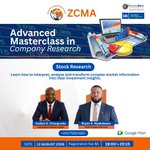
From Stock Picking to Smart Investing, the Zimbabwe Capital Markets Academy (ZCMA) in collaboration with *Daily Brand* invites you to an Advanced Masterclass in Company Research.
This masterclass will guide you through the essentials of company research, helping you confidently interpret, analyze and transform complex market information into clear, actionable investment insights:
• 📊Financials
• 📢Announcements
• 📰News
• 📑Analyst Reports
Event Details:
¤ Topic: Company Research
🗓️ Date: Wednesday, 12 Aug 2026
⏰ Time:19:00 - 20:15
💰 Admission: $5.00
📍 Platform: Google Meet
To Process Payment you can use this link (Ecocash, Innbucks, Omari, ZimSwitch): shorturl.at/EXa7J
@MakerCent @MaSi_Tandz @mongezigegsa
#ZCMA #InvestorEducation #StockResearch #FinancialLiteracy #VFEX #ZSE

Sometimes we don't do things long enough to grow. Too often we give up before the seeds we’ve planted have time to take root.
🌱 Growth takes time and it doesn't happen overnight.
Success demands patience, consistency, and the discipline to keep showing up even when results aren’t immediate.
Stay the course, trust the process, and watch your efforts bloom into something extraordinary.
#growthmindset
#investing
@RetailnvestorZw
@CTRADEmobile @VFEX_ZW
The Zimbabwe Capital Markets Academy (ZCMA)
Invites you to an enlightening State of the Capital Markets Engagement
Event Details:
• Theme: Catalysing Economic Transformation through Deepened Financial Markets
🗓 Date: 24 April 2026
🕒 Time: 9:30 AM
📍 Venue: Celebration Centre, Borrowdale
💰 Investment: $10.00 (Ecocash & Innbucks Accepted : *ROY KARIRI 0776821665* )
🎟 Limited Seats Available
🏷 RSVP: +263772213573, +263776821665
Banking Details:
Ecobank
Account Name: Zimbabwe Capital Markets Academy
Branch: Mutare Branch
USD Acc: 5750800012121
🌟 Why Attend
• Gain exclusive insights into the current state and future outlook of Zimbabwe’s capital markets.
• Learn how deepened financial markets can drive sustainable economic transformation.
• Network with industry leaders, policymakers, and fellow investors.
• Discover new opportunities for investment, innovation, and growth.
• Be part of a strategic dialogue shaping the future of Zimbabwe’s economy.
👥 Who Should Attend
• Retail & Institutional Investors seeking knowledge and opportunities.
• Financial Professionals (bankers, brokers, analysts, advisors).
• Entrepreneurs & Business Leaders exploring capital market solutions.
• Policy Makers & Regulators interested in strengthening financial systems.
• Students & Academics passionate about economics, finance, and investment.
• Community Leaders & Innovators driving transformation through financial literacy.

"Your strategy is only as good as the assets that power it."
Join the Zimbabwe Capital Markets Academy (ZCMA) for an electric Masterclass as we Define, Distinguish, and Demystify the four pillars of the market:
ETFs 🧺 | Equities 📈 | ZDRs 📜 | REITs 🏢.
What You'll Learn:
• Understand what they are and how each instrument works.
• Learn what sets them apart.
• Discover how they can power your investment strategy.
Event Details:
● Topic: ETFs vs Equities vs ZDRs vs REITs
🗓 Date: Tuesday, 31 March 2026
🕒 Time: 19:00 - 20:00
💻 Platform: Google Meet
🔗 Join Here: calendar.app.google/9eqQgiNE…
Why Attend?
In the Zimbabwe Capital Markets, information is your greatest asset. Equip yourself with the knowledge to make smarter, stronger investment decisions.
@MakerCent @RetailnvestorZw
#InvestingForBeginners #etf #reit #stocks

Numbers don’t lie, they tell a story, only if you understand their language._
In this session, the *Zimbabwe Capital Markets Academy (ZCMA)* will decode Financial Statements into meaningful insights beyond the numbers.
What You Will Master:
📊 The Income Statement
⚖️ The Balance Sheet
💸 The Cash Flow Statement
📝 The Notes to the Financial Statements
📋 The Audit Opinion
calendar.app.google/9Z7FrNZ1…

Peter Lynch: The Legendary Investor
Peter Lynch, now 82, is celebrated as one of the greatest investors in history. During his 13-year tenure at Fidelity’s Magellan Fund, he transformed it from a modest $18 million in assets into a staggering $14 billion, achieving an average annual return of 29.3%.
His remarkable track record and accessible investing philosophy have made him a timeless figure in the world of finance.
Early Life and Education
• Born in 1944 in Massachusetts, Lynch got interested in stocks early.
• As a teenager, he worked as a caddie at a golf club and heard investors talk about investing all day. That’s where it all started for him, sparking his lifelong interest.
• Peter Lynch studied at Boston College and earned his MBA from Wharton.
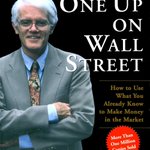
• He authored “One Up on Wall Street” in 1989. One of the best investing books ever written. He later followed it with "Beating the Street" and "Learn To Earn".
Career at Fidelity
• Lynch joined Fidelity in 1969, and by 1977, he was managing the Magellan Fund and turned it into the biggest mutual fund in the world.
• Over the next 13 years, Peter Lynch’s performance became legendary.
• From 1977 to 1990, the Magellan Fund returned an average of 29.3% per year (nearly double the S&P 500).
• An investment of $10,000 in Magellan at the start of Lynch’s tenure would have grown to over $280,000 by the time he retired 13 years later.
• The fund grew from $18 million in Assets Under Management to over $14 billion.
• Lynch retired in 1990, but his ideas still strongly influence investors today.
Investing Philosophy
• Lynch earned the nickname “the chameleon of investing” because he never followed just one strategy.
• Stay within your circle of competence. It’s information you can use to your advantage as an investor. It allows you to spot trends way earlier than Wall Street can.
• Do your homework. Lynch also emphasized the importance of “doing your own research.” He advised investors to study a company’s financials, management, and competitive position before buying shares.
• Be patient and think long-term. Peter Lynch was a long-term investor. He believed your returns improve when you hold great stocks for years and don’t panic over short-term swings.
• Most of the time, he held his winning positions for 3-5 years, and that patience paid off.
Key aspects of his style include:
• He is famous for popularizing the PEG ratio.
_The PEG ratio compares a stock’s price-to-earnings (P/E) ratio to its expected earnings growth rate, a tool for evaluating whether a stock is fairly valued relative to its growth prospects._
• Instead of owning just a few stocks, Peter held hundreds at the same time.
• He emphasized that ordinary investors can succeed by investing in what they know, an idea he championed in his classic book One Up on Wall Street.
Famous quote:
“The stock market is filled with individuals who know the price of everything, but the value of nothing.”
— Peter Lynch
#Investing
#stocks
#capitalmarkets
@MakerCent @MaSi_Tandz

Unlock the secrets of smarter investing with the Zimbabwe Capital Markets Academy (ZCMA)
This masterclass will guide you through the essentials of stock research, helping you confidently interpret, analyze and transform complex market information into clear, actionable insights:🔎 📃
• Financials
• Announcements
• News
• Analysts Reports
Event Details:
¤ Topic: Stock Research
🗓 Date: 24 Feb 2026
⏰ Time: 19:00 - 20:00
💰 Admission: Free of Charge
📍 Platform: Google Meet
🔗 Join Here: calendar.app.google/1NEbHhGK…


The Zimbabwe Capital Markets Academy invites you to a specialized session: An introduction to Stock Market Investing 📚
Stop watching from the sidelines. Learn the fundamentals and start your journey with confidence.
Event Details:
🗓 Date: 05 Feb 2026
💰 Admission: Free of Charge
📍 Platform: Google Meet
🔗 Join Here: calendar.app.google/nA12SMwp…

Stock Market and Finance Movies.
1. The Big Short
2. The Boiler Room
3. Inside job
4. Enron: The Smartest Guys in the Room
5. Margin Call
6. The Wolf of Wall Street
7. Rogue Trader
8. Wall Street: Money Never Sleeps
9. Too Big to Fail
10. Glengarry Glen Ross
11. The Founder
12. The Laundromat
13. Barbarians at the Gate
14. Money Ball
15. Trading Places
16. Steve Jobs
17. Equity (2016)
18. American Psycho (2000)
19. Arbitrage (2012)
20. Owning Mahowny (2003)
21. Molly’s Game (2017)
22. The Gambler (2014)
23. Crypto (2019)
24. Sour Grapes (2016) – wine fraud doc
25. Other People's Money (1991)
26. Capitalism: A Love Story (2009)
TV shows: Series
1. Billions
2. Dumb Money: The Gamestop Story
3. Industry
4. Madoff (2016)
5. Succession
6. The Men Who Built America
7. Silicon Valley
8. Scam 1992: The Harshad Mehta Story (2020)
9. Undercover Billionaire (2019)
10. Eat the Rich: The GameStop Saga
11. Shark Tank.
@MakerCent @mongezigegsa
There were times when I would listen to this song and just think, "How does one buy companies?"
The simple answer is through investing on the Stock Market, and this has never been made simpler through digital platforms and dynamic brokers that we have today.
The sad truth is that most people don't ever invest any money that they get personally. They don't feel the need, and some are reluctant to take responsibility of their financial future.
The general populace tends to rely on forced savings like mandatory pension contributions and social security schemes. They then hope and pray to live off these "safety nets" when they are no longer activity working.
To escape poverty and disgruntlement creeping up later in life, it is essential to have a personally managed investment portfolio. This portfolio will cushion you during rocky times, and provide a foundation for achieving financial freedom.
Your personal portfolio can include different asset classes (Stocks, Properties,Businesses Ventures etc) with the goal of generating a positive return on investment and sustainable passive income.
It's the best thing you can do for your future self.
@MakerCent @MaSi_Tandz @mongezigegsa @RetailnvestorZw @CTRADEmobile @ZSE_ZW @VFEX_ZW @FINSECZim
#ZimCapitalMarket

My journey into the captivating world of investing began not with a grand financial strategy, but with a simple, unexpected gift.
In 2010, a stock market handbook landed in my hands, transforming what had only been a distant dream of financial independence into a tangible possibility.
This unassuming book wasn't just pages and print, it was the spark that ignited a deep curiosity that set me on an unpredictable, challenging, but ultimately transformative and rewarding journey to understanding capital markets.
Thank you for the book @MugagaTakunda
@MaSi_Tandz @MakerCent @mongezigegsa @RetailnvestorZw @CTRADEmobile

This Warren Buffett investing principle is one I particularly admire and try to apply ⤵️
If you plan to eat hamburgers 🍔 throughout your life and are not a cattle producer 🐂, should you wish for higher or lower prices for beef?
Likewise, if you are going to buy a car 🚗 from time to time but are not an auto manufacturer, should you prefer higher or lower car prices? These questions, of course, answer themselves.
“But now for the final exam: If you expect to be a net saver during the next five years, should you hope for a higher or lower stock market during that period?
“Many investors get this one wrong. Even though they are going to be net buyers of stocks for many years to come, they are elated when stock prices rise and depressed when they fall. In effect, they rejoice because prices have risen for the ‘hamburgers’ they will soon be buying.
“This reaction makes no sense. Only those who will be sellers of equities in the near future should be happy at seeing stocks rise. Prospective purchasers should much prefer sinking prices.”
@RetailnvestorZw @ZSE_ZW @CTRADEmobile @MakerCent @MaSi_Tandz @mongezigegsa
Final preparations are underway!
Join us for an upcoming Book Launch, ZSE Masterclasss, and an insightful Q&A session with @BgoniJustin, featuring exclusive coverage by ZBC.
Grab your last-minute tickets and join us this coming Saturday, 5th of April 2025. @MakerCent @ZSE_ZW @happ_zenge @gift_mugano @TMuguti @Charitymoyo01 @TafaraMtutu @kudzie_sharara

Should one be called a farmer just because they have planted seeds in a field? Similarly, should someone be called an investor simply because they have bought some shares?
The act alone is not what defines you, but it is the transformation, development of skills, understanding, and commitment that ultimately defines whether someone truly embodies the role of farmer or investor.
The process of continuous growth and development of "BECOMING" is more valuable than simply existing in a current state of "being".
This mindset encourages individuals to actively work on self-improvement, embracing new experiences and challenges to become better versions of themselves.
#investingconfidence #Stocks #selfimprovement
@CTRADEmobile @RetailnvestorZw
Many aspiring investors have frequently asked, "How much should I start with?"...."Ndotanga nemarii?" 💁🏽♂️🚶🏾♂️💵
Unfortunately, there's no single, universally satisfying answer.
To determine the right starting point for you, you need to consider your financial landscape and ask yourself some critical questions.
● Spending Habits: Understanding your spending patterns is the first step. Where does your money go? How much do you spend on non-essential items and important things, and is investing part of the list? For example, Chicken Inn 2 piecer is equivalent to 15 Simbisa Shares
● Savings Rate: Are you happy with how much you're currently saving i.e. 10%, 20% or do you let the well run dry?? If not, what changes can you make? A healthy savings rate is fundamental to investing, and putting money to work.
● Investment Capacity: Of your savings, how much can you realistically allocate to investments?
● How badly do you want it? Are you prepared to delay your gratification, make sacrifices, cultivate patience, continuously learn, and strategically invest in your future?
● Financial Goals: What are you hoping to achieve with your investments? Retirement? Short-term gains or long-term cashflows? Your goals will influence your investment strategy and the amount you need to invest.
The golden rule remains, always spend less than you earn. This creates the surplus necessary for saving and, ultimately, investing.
By carefully examining your finances and setting clear goals, you can determine a suitable starting investment amount that aligns with your goals.
@RetailnvestorZw @CTRADEmobile @ZSE_ZW

Zimbabwe Monetary Policy Statement 2025 threadreaderapp.com/thread/1…

1
137
Are you a procrastinator?
This chronic tendency to put things off until later can really hold you back, not just in investing but in life in general. It affects your productivity, your life goals, your relationships, and even your health.
A lot of people don't realize how fast time flies and how powerful compounding is. As an investor, time is your most valuable asset. Utilize it wisely. @RetailnvestorZw @CTRADEmobile @MaSi_Tandz @MakerCent
