
PhD student @ Department of Sports Science and Clinical Biomechanics, University of Southern Denmark
Joined January 2012
- Tweets223
- Following150
- Followers270
- Likes690




Camilla Schytz retweeted

New paper from Anders A. Hansen and our outstanding collaboration with @Skattebo_Oyvind, Hallén, Calbet et al.
We found that females showed a smaller decline in power output under hypoxia than males and derived more of their energy from blood glucose.
physoc.onlinelibrary.wiley.c…

Camilla Schytz retweeted
Now published in Plos One. Thank you to the editor and reviewers for a constructive peer-review process
dx.plos.org/10.1371/journal.…


Camilla Schytz retweeted
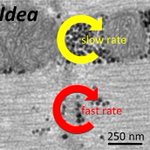
We are ready to scale up glycogen analysis using electron microscopy.
By applying a new AI-based image analysis pipeline, workload for 50 samples was reduced from ~600 hours to ~20 hours. This moves us beyond small-scale TEM studies.
Details below 👇

Camilla Schytz retweeted

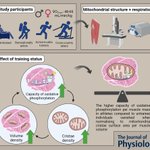
Research Article by @CSchytz et al. (@nortenblad @JoachimNielsen6 @DrRajacobs) Effect of #highaltitudeexposure on #skeletalmuscle #mitochondrial #subcellulardistribution, #ultrastructure, and #respiration in sea-level residents
ow.ly/U62N50WzF12

Camilla Schytz retweeted
Join our PhD course in metabolism and EC coupling. November 10-15. University of Southern Denmark.
Enrol here: sdu.dk/en/forskning/phd/phds…

Camilla Schytz retweeted
Our sea-level friends at @SyddanskUni provide today's #ArticleinPress, Effect of high-altitude exposure on #skeletal #muscle mitochondrial subcellular distribution, ultrastructure and respiration in sea-level residents (Camilla Tvede Schytz et al.):
ow.ly/QSc550Wq3hH

Camilla Schytz retweeted

Unhappy muscle mitochondria can look like this
nature.com/articles/srep3061…

Camilla Schytz retweeted

I am thrilled to share one of the first major works from my postdoc in Amsterdam, "Skeletal muscle mitochondrial fragmentation predicts age-associated decline in physical capacity", published online yesterday in @AgingCell onlinelibrary.wiley.com/doi/…. A thread:

Camilla Schytz retweeted

How do mitochondria, the cell’s energy-producing organelles, perform competing metabolic processes?
Segregation into distinct populations — one that makes energy-storing ATP molecules and one that does not — could explain it
nature.com/articles/d41586-0…
Camilla Schytz retweeted

Membrane potential stimulates ADP import and ATP export by the mitochondrial ADP/ATP carrier due to its positively charged binding site | Science Advances science.org/doi/10.1126/scia…

Camilla Schytz retweeted

Our latest paper on aging is finally out in @ExpPhysiol. This is a real IHC tour de force on muscle morphology, satellite cells, capillaries and innervation status so if you are into that, check it out!
@SebastianEdman @MobergPhD @andyphilp_lab @WiApro
physoc.onlinelibrary.wiley.c…

Camilla Schytz retweeted
Is mitochondrial morphology important for cellular physiology?: Trends in Endocrinology & Metabolism cell.com/trends/endocrinolog…
Camilla Schytz retweeted

Happy to see that our comprehensive meta-regression, "Effects of Exercise Training on Mitochondrial and Capillary Growth in Human Skeletal Muscle," by @Skattebo_Oyvind, @AlmquistNicki, and myself, is now published in @SportsMedicineJ! 🎉more details soon! link.springer.com/article/10…

Camilla Schytz retweeted

A study reveals that the distance between the endoplasmic reticulum and mitochondria is crucial for optimal mitochondrial Ca2+ uptake and oxidative metabolism. This is an important finding in terms of muscular energy efficiency.🔬
nature.com/articles/s42003-0…

Camilla Schytz retweeted

@AtHinton just dropped a beautiful new paper with amazing serial blockface SEM imaging of aging muscle tissues 🙌🙌🙌
biorxiv.org/content/10.1101/…


Camilla Schytz retweeted

Does one biopsy cut it? Short answer: no. Find out the longer answer below 🧵👇
This thread is based on our new @japplphysiol paper, where we investigated human muscle fiber type composition variability by analyzing repeated biopsies. Lots of them.
journals.physiology.org/doi/…

Camilla Schytz retweeted

One-step nanoscale expansion microscopy reveals individual protein shapes
Ali H. Shaib et al.
doi.org/10.1038/s41587-024-0…

Camilla Schytz retweeted

Recently, JEB broadened its scope to include research that is non-hypothesis driven. In his new Perspective, @tubuleguy discusses why he thinks this is wonderful news as novel insights can sometimes come from idea-led experiments
journals.biologists.com/jeb/…

ALT A screenshot of the article titled 'Big data and experimental biology: the complementary roles of hypothesis-led and blue skies research' by Julian A. T. Dow
Camilla Schytz retweeted

Invited speaker Joachim Nielsen showcasing some amazing EM work looking at Glycogen. #bmh2024 #AuPS2024 @bmh2024Melb

Camilla Schytz retweeted
Our first invited presentation, Brian Glancy, on sustaining power: building energy networks in strained muscle @brianglancylab #bmh2024 #AuPS2024 @bmh2024Melb
