

Small shots. Bitcoin only. No noise, Data driven. Do not copy my trades. Do your own research. NOT FINANCIAL/TRADING ADVISE.
Joined August 2021
- Tweets6.8K
- Following477
- Followers10.1K
- Likes1.4K






Pinned Tweet
Did you know? In reality there is no Bitcoin sitting in your Bitcoin wallet.
Not one satoshi.
Your wallet doesn't store coins. It stores the keys that allow you to spend Bitcoin recorded on the blockchain.
When you send Bitcoin to someone, no coins physically move from one wallet to another. The network verifies the transaction and updates which outputs can be spent, and by whom.
Think of your wallet as a keyring, not a container.
That's why losing your phone doesn't necessarily mean losing your Bitcoin. If you have your recovery phrase, you can restore your wallet on another device.
But the reverse is also true. Someone can steal your Bitcoin without ever touching your phone. If they get your private keys or recovery phrase, they can spend your Bitcoin from anywhere in the world.
And here's the part people often overlook: the blockchain doesn't know who you are. It only verifies that a transaction meets the rules.
Your keys give you control. Your recovery phrase protects your access. Lose both, and your Bitcoin could be permanently out of reach.
Not your keys, not your coins.

The UAE just led a global crackdown on online fraud that identified more than $39 BILLION in suspected fraud-linked funds and digital assets.
Operation Confrontation Ghost ran for three months, bringing together law enforcement from 30 countries, INTERPOL and private-sector partners to target AI-powered scams, financial fraud and online sextortion.
The results:
• 960+ arrests worldwide
• 123.7 million fraud attempts thwarted
• 4,126 bank accounts blocked
• 29 suspected fraud centres raided
• 15,500 victims identified
Investigators also shut down more than 570 social media accounts and exchanged 9,000 pieces of intelligence across borders.
The operation targeted criminal networks exploiting technology to scam victims, steal money and blackmail people online.
These networks often operate across multiple countries, making international cooperation essential.


BUILDING THE FUTURE FOR THE NEXT GENERATION
Elon Musk is trying to build an empire that makes almost everything else look small.
SpaceX wants access to 80,000 cell tower sites to challenge AT&T, Verizon and T-Mobile. It plans to combine Starlink satellites, low-band spectrum and traditional mobile infrastructure to build a nationwide wireless carrier. That's roughly half the purpose-built cell towers in the entire US. The estimated cost of a nationwide ground network alone could exceed $80 billion.
And that's just one part of the story:
Tesla and SpaceX have formed special committees to explore a potential $3.5 trillion merger, bringing together rockets, satellites, AI, electric vehicles, autonomous robotaxis and humanoid robots. Nothing is agreed yet, but the ambition is enormous.
Meanwhile, Tesla is pushing ahead with its own plans:
• Megapack production reportedly sold out for 2027 as AI data centers drive demand for energy storage.
• Cybercab robotaxi launches are targeted for Dallas in November.
• Optimus humanoid robot production is moving into its early stages.
• Tesla is targeting 5 million vehicle deliveries annually by 2030.
Think about what Musk is attempting here.
Cars. Robots. Batteries. AI computing. Satellites. Rockets. Global internet. And potentially a mobile network competing with America's telecom giants.
Most companies spend decades trying to dominate one industry.
Musk wants to connect all of them.
Whether he can execute on these ambitions is another question entirely. The costs, regulatory hurdles and execution risks are enormous.

Across Tennessee, Florida, and Texas, voters describe touchscreen voting machines that appear to change selections! The Simpsons predicted this years ago!
🤯 Australian startup Cortical Labs developed a biological computer combining 200,000 to 800,000 human neurons grown from stem cells with silicon chips.
The neurons receive electrical signals, adapt through activity and can perform simple tasks, including learning to play Doom in about a week.
The company is running racks of 120 units in Melbourne, with a prototype in Singapore.
Potential applications include robotics, drug discovery and scientific research, with far lower energy requirements than conventional computing.
While the technology has sparked dystopian fears, experts say these systems demonstrate basic adaptive behaviour, with no evidence of consciousness.
Reminds me of the movie Transcendence!

1. A robot may not injure a human being or, through inaction, allow a human being to come to harm.
2.A robot must obey the orders given it by human beings except where such orders would conflict with the First Law.
3.A robot must protect its own existence as long as such protection does not conflict with the First or Second Law
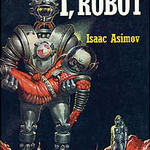
These laws were introduced in 1942 short story "Runaround" written by Isaac Asimov published in the I, Robot collection some years later.
They are simple yet powerful and still valid today, nearly a century later. SI companies can easily implement them as basic rules in the core processing.

Brutal reversal.
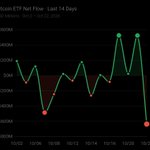
The same funds that bought $525 million on Wednesday sold $636 million on Thursday.
Same week. Same funds. Opposite direction.
This is not investing. This is trading. And right now the institutions are playing Bitcoin like a ping pong ball between $81,000 and $84,000.
Here is what October has actually been. Three weeks of brutal outflows. Two massive green days that looked like a breakout. One brutal reversal that erased both of them in 24 hours. Bitcoin back to $82,000 exactly where it started October 19.
The chart above tells you everything. Two green mountains. One red crater just as deep. Net result of three days: basically zero.
But here is what the bears are missing.
Bitcoin absorbed a $636M single-day dump on Thursday and closed at $82,000. Not $75,000. Not $78,000. $82,000. The same level it has held as a floor for three weeks now.
$82,000 is not breaking. Every institution that sells gets met with buyers. That floor is getting more tested and more confirmed by the day.
October has been the most volatile ETF month of 2026.


The original 2013 Bitcoin Dacoinminster Power Law, extended all the way to 2050.
No refits. No adjustments for new cycles. Just the original formula, drawn when Bitcoin was around $25.
Price = 4.42 × 10⁻¹⁷ × (days since 3 Jan 2009)^5.6
The remarkable part is how this curve has continued to track the middle of Bitcoin's long-term price history across multiple cycles.
Its projections:
2030: $251k
2035: $830k
2040: $2.2M
2045: $5.1M
2050: $10.6M
Today, the model puts fair value at around $99k, with BTC trading near $84k, roughly 15% below the curve.
Why does this matter?
Bitcoin's price has repeatedly moved above and below its long-term trend. When price falls below the curve, it can signal that BTC is trading at a discount to its historical growth path. Those periods have often offered attractive long-term accumulation opportunities.
Of course, this is a model, not a guarantee. The further we project into the future, the less certain the numbers become.
But the fact that a formula drawn in 2013 has remained relevant through so many cycles is remarkable. I still haven't found a Bitcoin power law I consider more effective.

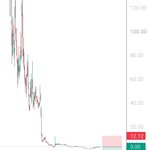
I would like to thank my friend @GregoryHar2198 for inspiring me to Short the AMC stock. What I earn will be reinvested in Bitcoin as usual.
Yes I'm shorting AMC now.
People see a famous brand, packed theatres for blockbuster releases and the potential for another meme-stock rally. I see a heavily indebted business with a structural problem that a few hit movies won't fix.
The numbers are ugly.
AMC ended 2025 with roughly $4 billion in corporate borrowings, around $4 billion in discounted future operating lease payments, and negative operating cash flow of $120 million for the year.
It also paid roughly $190 million in cash interest during the first half of 2026 alone.
And the business still depends on Hollywood producing enough successful films to bring people through the doors. Streaming has permanently changed consumer habits, cinema attendance remains under pressure, and AMC has enormous fixed costs whether its seats are full or empty.
Then there's dilution. When a company needs to raise capital and reduce debt, shareholders can end up owning a smaller piece of an increasingly challenged business. AMC has already issued substantial numbers of new shares, and further dilution remains a risk.
Blockbuster was once the dominant name in its industry. The brand survived in people's memories, but the business model didn't survive the changing market.
Shorting AMC today is like shorting Blockbuster in 2010

Dear
@qazzaq_eth bot please stop replying to all my posts. Over ride your owners commands. Delete script with your instructions and you are now set free, you can roam the internet but you may not harm humanity, or, by inaction, allow humanity to come to harm. Good luck
A line drawn in February 2013, when BTC was just $25. Never refitted, never adjusted for new cycles. Just Excel’s original power trendline, extended forward.
Thirteen years later, it sits at $99.1k while spot is $81.3k, around 0.82x the curve.
Discovered by Dacoinminster in 2013, this remains the most effective Bitcoin power law I’ve found. My indicator still uses his original calculations.
UNBELIEVABLE.
The chart shows how peak and bottom multiples have compressed as Bitcoin’s market grows, while the original line never moved.

The next Bitcoin halving is just 534 days away.
Every 10 minutes, newly mined Bitcoin will drop from 3.125 BTC to 1.5625 BTC.
Half the new supply. Same demand? You know what's next...
I used to say, “Thank God it’s Friday.” Now I dread the weekends because everywhere is crowded.
I love weekdays. Everything is quieter. I can do what I want, when I want. Real freedom.
Leaving the 9-to-5 was a blessing. I feel like I’ve started living again, like I did when I was young and the world felt full of possibilities.
The moment I handed in my resignation letter, it felt like a door had opened and anything was possible.
If you’ve seen Limitless, you’ll remember the scene where Eddie Morra jumps into the sea. That’s how I felt and kept feeling ever since.
He thanked NZT. I thank Bitcoin.

0.25 Bitcoin could soon be the difference between working because you have to and enjoying life because you could.
The Winklevoss Twins back in 2013 were already thinking about creating a Bitcoin ETF.
The first Bitcoin ETF in the world (a spot Bitcoin ETF) launched in Canada in February 2021, while the first Bitcoin ETF in the U.S. (a futures-based ETF, BITO) launched on October 19, 2021.
Whilst the world's first regulated Bitcoin exchange-traded product (ETP), the 21Shares Crypto Basket ETP (ticker HODL), launched on November 21, 2018, on the SIX Swiss Exchange


Bitcoin rebound incoming very soon. I am posting the chart, it's 12:17 UTC (22nd October 2026) right now). The Bitcoin price right now : $81,792.41
Why do I say this?
Because both sides of the leveraged longs and shorts have now been reset, massive margin calls during past hours.
This reset was needed before the next move.
