

Researcher | DeFi TG https://xitter.cf/t.co/t2UolCbKFj
Joined July 2022
- Tweets49.9K
- Following1.3K
- Followers5.4K
- Likes62K




Pinned Tweet
Stablecoins are a $305.6B market. Four projects offer very different ways to capture that growth.
Here is how I would map Sky, Ethena, Aave and Pendle as of September 7, 2026.
1. @SkyEcosystem: earn the spread
Sky earns interest and income from the assets and credit supporting its dollar system. The economic opportunity is to grow USDS while keeping asset income ahead of savings payouts and other costs.
DefiLlama tracks $13.51M in protocol revenue and $2.91M in holder revenue over 30 days. Protocol surplus already supports SKY buybacks and staking rewards.
Watch USDS growth alongside the surplus retained per dollar. Expensive deposits can grow a stablecoin without improving its economics.
2. @ethena : scale the yield engine
Ethena generates income through USDe's backing assets and hedging strategy. That income also funds sUSDe returns and distribution, so the amount available for ENA depends on how revenue is allocated.
USDe currently has roughly $4.37B in circulation. The August 27 fee-switch proposal places the first buyback threshold at $7.5B, with 95% of net revenue paid to the Foundation from its core business lines earmarked for buybacks once activated.
The opportunity is conditional: grow USDe, preserve competitive yields and turn the fee framework into executed token purchases.
3. @Aave: monetize borrowing demand
Aave earns a share of the interest borrowers pay. More stablecoins become economically useful when borrowers actually draw on that liquidity.
It recorded $4.57M in 30-day protocol revenue. AAVE buybacks were paused in April, and DefiLlama records zero holder revenue for the current 30-day window.
The business can keep earning while token purchases pause. Watch stablecoin borrowing, utilization and confirmed buyback resumption.
4. @pendle_fi : build markets around yield
Pendle lets holders separate principal from future yield, creating markets for fixed returns and changing yield expectations across different issuers.
Pendle V2 allocates 80% of protocol fees after the LP allocation to PENDLE buybacks, with repurchased tokens supporting eligible sPENDLE holders. DefiLlama tracks approximately $521K in holder revenue over 30 days.
Its opportunity grows when more yield-bearing assets find active markets on Pendle. The relevant signals are yield fees, trading activity and recurring demand across maturities.
The financial figures above cover whole protocols under DefiLlama's definitions. They are not a measure of stablecoin-only profit.
My research priority would be SKY and PENDLE for cash flow already reaching tokens, AAVE for borrowing demand, and ENA for conditional fee activation.
A growing market creates opportunity. The token thesis depends on how much of that opportunity it can actually retain.

Crypto is already inside apps people use every day.
Seven examples, and what users can actually do:
1. Shopify → Base + Stripe
Pay with USDC at eligible checkouts. Merchants can receive settlement in their local currency.
2. MoneyGram → Stellar + Crossmint
Receive money into a USDC-backed balance, hold digital dollars and cash out locally. Available in Colombia and El Salvador.
3. Revolut → Polygon
Send and receive supported stablecoins through the Revolut app using Polygon.
4. Venmo → Paxos
Buy, hold and send PYUSD, including transfers between Venmo and PayPal and to supported external wallets.
5. Nubank → Circle
Buy, sell and transfer USDC through Nubank Cripto in Brazil.
6. Mercado Pago → Meli Dólar
Buy, hold and sell a dollar-linked stablecoin inside the Brazilian app. External wallet transfers are currently unavailable.
7. Telegram → TON
Send onchain payments to Telegram users through its native Telegram Money wallet.
The distribution is already there: shopping, remittances, banking and messaging.
The interesting part is what each integration enables. A checkout payment, an in-app dollar balance and an external wallet transfer serve different needs.

Capy Research retweeted

alpha: these DeFi protocols help you make more trades and more LP profit from the same $1,000
a DEX can grow volume while its LPs lose money
then i found better measures of DeFi efficiency than TVL
» @1inch aqua is trying to increase the utilization of liquidity
» @Uniswap v4 hooks are increasingly trying to improve the economics of liquidity
those are different optimization problems, and several other projects add useful approaches
→ @0xfluid: combine lending and trading
smart collateral + smart debt let collateral & debt positions serve as DEX liquidity
trading fees can add income or offset borrowing costs
→ @CurveFinance: optimize for the assets being traded
stableswap concentrates depth around the expected relationship between correlated assets
→ @BreederDodo: adjust pricing around inventory
its PMM model concentrates liquidity around a reference price & changes quotes as inventory moves away from its target
this makes inventory management another part of the efficiency question
→ @CoWSwap AMM: address arbitrage losses through batch trading
its design uses solver competition to capture surplus for the pool
the relevant test is whether that improves LP returns after accounting for execution and costs
execution quality means the price users receive, gas costs and whether trades successfully fill
adverse selection means the losses LPs take when better-informed traders trade against outdated prices
i’d start with Aqua, Uniswap v3/v4, Curve and Fluid, comparing matched assets over the same period
these DeFi convince me better execution for traders and better returns for LPs from the same underlying capital
» $UNI $1INCH $FLUID $CRV $DODO $COW

Capy Research retweeted

Linn's Leverage #1139 is out: (Link in tweet below)
@boros_fi
@pendle_fi
@Chainflip
@mezzanine_fi
@Mantle_Official
@StaticsProtocol
@GammaSwapLabs
Like/Repost to support:

How much does a private wallet actually hide?
@0xMiden opened its partner mainnet on October 26, bringing real assets to invited users through @joinbread.
The useful part is keeping a payment from exposing the rest of your finances.
For private accounts, Miden keeps balances and activity off the public ledger. Your device executes transactions and generates proofs; the network verifies them without publishing the underlying account state.
But visibility depends on who is looking:
• Public observers cannot inspect your private account’s full balance and history. A counterparty still knows its own transaction.
• A Guardian operator can currently see the account state it backs up for recovery, but cannot move funds alone.
• Validators receive encrypted transaction data during partner mainnet. Decryption requires a threshold of validators.
• Swaps are currently public. Bridges and external providers receive information needed to process transfers.
This remains an invite-only, temporary phase. Users must withdraw funds before the reset for public mainnet.
The practical value is making payments without exposing an entire treasury or personal balance. The trade-off is understanding which services still see data while helping the account work.

Capy Research retweeted

TxFlow is Hyperliquid from Temu
They forked Hyperliquid's Arbitrum bridge and changed the name. They copied HyperUnit too and forgot to change the name: txrelay[.]com literally says "Unit is the asset tokenization layer on TxRelay". The frontend, the API and the fees are Hyperliquid's. Even the slogan. The L1 is closed source, with Hyperliquid's naming on everything: TxCore, Tx-BFT, TIPs
Hyperliquid is closed source too, but it has 27 validators that each post prices, and anyone can run a node to check them. TxFlow has 5 validators, all its own, nothing you can run, and one key that acts as the entire oracle. The same key sits on the bridge multisig
So it's a centralized exchange secured by a 3/4 multisig. Their own audit says those keys "can propose arbitrary withdrawals"
And the growth plan is KOLs shilling ref codes


Grvt’s next chapter is getting more concrete 👀
@grvt_io has subscribed to tokenised funding notes arranged by Mirae Asset Securities (HK), with plans to use the exposure in Grvt Earn, subject to applicable requirements.
The two are also exploring tokenised Treasuries, corporate bonds and ETFs. Mirae’s wider financial group oversees US$1T+ in worldwide client assets.
What interests me is where this could lead: institutional investment products alongside crypto trading and Earn in one account.
ETFs are still exploratory, but the first subscription gives the collaboration a concrete starting point.
🤝 Paid partnership


Capy Research retweeted
Why does @infinifi offer higher yield to users willing to wait?
The mechanism combines income from underlying strategies with a larger share of returns for committed capital.
The basic flow:
• Deposit USDC to mint iUSD, the non-interest-bearing receipt.
• Stake iUSD into siUSD for liquid yield.
• Choose a locked position for higher-weighted returns and a slower exit.
infiniFi allocates capital across liquid and longer-duration strategies. Depositors’ withdrawal commitments help it match those investments to expected outflows. Some capital backing liquid positions can also enter longer-duration strategies.
An important detail: the unbonding period starts when you request to unwind, rather than counting down automatically from your deposit.
But the locked position also carries first-loss exposure.
According to its slashing docs, realized portfolio losses hit Locked-iUSD before senior positions. Starting to unwind does not remove that exposure.
If the junior capital is exhausted, losses can reach senior depositors too. And liquid positions still depend on available reserves; direct redemptions can queue during liquidity stress.
The extra yield therefore compensates for both reduced exit flexibility and a different place in the loss hierarchy.
When crypto projects merge, what do existing token holders actually receive?
Aerodrome and Velodrome’s merger into @aeroxyz is a useful case study. Three things matter beyond the new brand.
1. Your share of the combined supply
The published conversion terms are:
• 1 AERO → 1 new AERO
• 1 VELO → 0.044 new AERO
• Locked balances convert into sAERO at the corresponding rates.
The initial upgraded supply is allocated 94.5% to the Aerodrome community and 5.5% to Velodrome.
A 1:1 conversion preserves your token count. It does not necessarily preserve your percentage ownership.
2. Your ability to exit
Existing locks carry their remaining duration into sAERO, rounded up to the next full week. Permanent locks become maximum-duration stakes.
The merger does not unlock your principal.
3. How you earn revenue
sAERO holders direct AERO rewards toward pools and receive a proportional share of those pools’ revenue while their allocation is active.
Simply holding liquid AERO does not provide that direct distribution. Pool revenue also includes liquidity incentive payments, so it should not all be treated as trading fees.
For holders, the useful comparison is ownership share, exit terms and revenue per token before and after the deal.
A bigger platform still has to earn enough to justify the dilution required to fund its liquidity.

Capy Research retweeted
Aptos, Sui, Sei: what have @Solana’s challengers actually built?
The speed comparison only tells part of the story. Each has taken a different route toward attracting users and capital.
1. @Aptos: stablecoins and payments
Aptos supports native USDT and USDC, with payment integrations including Bitso and Yellow Card. These give users routes between local currencies and onchain dollars.
Distribution matters here: cheap transfers become useful when people can actually access them.
2. @SuiNetwork : shared trading infrastructure
DeepBook provides an onchain order book that applications can integrate, rather than each building liquidity infrastructure from scratch.
That gives Sui a concrete product beyond faster execution. Its usefulness still depends on market depth and trading activity.
3. @SeiNetwork : access for Ethereum developers
Sei’s parallelized EVM lets developers reuse familiar contracts and tools. Its first Eidos storage upgrades reached mainnet in August 2026, while further components remain planned.
Easier deployment lowers the barrier to building. It doesn’t automatically bring users or liquidity.
The capital gap remains substantial.
DefiLlama’s tracked stablecoin supply, October 26:
• Solana: $15.6B
• Aptos: $867M
• Sui: $431M
• Sei: $43M
These balances measure capital present, not payment volume or user retention.
All three have built beyond the speed pitch. The harder task is making their applications useful enough for capital to stay.
Capy Research retweeted
Nillion’s move to Ethereum L1 brings encrypted instructions closer to the applications that can use them. The trade-off is operating cost.
Following my earlier @nillion breakdown, this is a second migration: Nillion moved from Cosmos to an Ethereum L2 earlier this year. Blacklight is now moving from that L2 directly onto Ethereum mainnet.
The practical benefit is composability. Once a Covenant’s instruction is reconstructed, an Ethereum contract can act on it in the same transaction. Registration, staking, fee accounting and reconstruction also sit on L1.
What has actually been delivered?
Dusk was announced live on October 6. Mainnet contracts are published, and onchain activity includes trigger posting, share publication and successful result posting.
At my October 26 check, the docs-listed TriggerMarket showed 74 transactions. That establishes activity at this deployment, but does not identify independent customers or prove substantial commercial demand.
The costs remain meaningful. Operators need NIL stake, ETH for gas and supporting infrastructure. Small, frequent triggers may be harder to justify economically.
Ethereum also doesn’t replace the privacy assumptions: enough colluding committee nodes can reveal a payload early, and its contents become public after release.
The economic distinction matters: NIL emissions support availability; customer-funded ETH fees pay for work. The business case depends on paid workloads covering operating costs, beyond the incentives used to keep nodes available.


.@Nillion is extending its privacy stack into onchain markets.
Its products cover several different jobs:
- nilDB stores encrypted data shares across nodes, so one storage node cannot reconstruct the original data alone.
- nilCC runs application workloads inside trusted execution environments, with attestation to check the execution environment.
- nilAI offers private model inference through OpenAI-compatible APIs built on nilCC.
On October 6, Nillion announced Dusk live on Ethereum mainnet. It introduces Covenants: instructions kept encrypted until an attached condition is met.
Blacklight node committees help resolve those Covenants. Enough shares must be published before an instruction can be reconstructed and verified on Ethereum.
NIL also has roles across the stack: nilDB and nilCC use NIL-based credits, while Blacklight operators stake NIL. Their reward model includes trigger fees.
Together, these products address private storage, confidential processing and condition-based disclosure of market instructions.
For builders, the value is being able to choose which parts of an application need privacy. The layers have different security assumptions, and multichain Covenants remain roadmap work.

Nillion’s move to Ethereum L1 brings encrypted instructions closer to the applications that can use them. The trade-off is operating cost.
Following my earlier @nillion breakdown, this is a second migration: Nillion moved from Cosmos to an Ethereum L2 earlier this year. Blacklight is now moving from that L2 directly onto Ethereum mainnet.
The practical benefit is composability. Once a Covenant’s instruction is reconstructed, an Ethereum contract can act on it in the same transaction. Registration, staking, fee accounting and reconstruction also sit on L1.
What has actually been delivered?
Dusk was announced live on October 6. Mainnet contracts are published, and onchain activity includes trigger posting, share publication and successful result posting.
At my October 26 check, the docs-listed TriggerMarket showed 74 transactions. That establishes activity at this deployment, but does not identify independent customers or prove substantial commercial demand.
The costs remain meaningful. Operators need NIL stake, ETH for gas and supporting infrastructure. Small, frequent triggers may be harder to justify economically.
Ethereum also doesn’t replace the privacy assumptions: enough colluding committee nodes can reveal a payload early, and its contents become public after release.
The economic distinction matters: NIL emissions support availability; customer-funded ETH fees pay for work. The business case depends on paid workloads covering operating costs, beyond the incentives used to keep nodes available.
.@Nillion is extending its privacy stack into onchain markets.
Its products cover several different jobs:
- nilDB stores encrypted data shares across nodes, so one storage node cannot reconstruct the original data alone.
- nilCC runs application workloads inside trusted execution environments, with attestation to check the execution environment.
- nilAI offers private model inference through OpenAI-compatible APIs built on nilCC.
On October 6, Nillion announced Dusk live on Ethereum mainnet. It introduces Covenants: instructions kept encrypted until an attached condition is met.
Blacklight node committees help resolve those Covenants. Enough shares must be published before an instruction can be reconstructed and verified on Ethereum.
NIL also has roles across the stack: nilDB and nilCC use NIL-based credits, while Blacklight operators stake NIL. Their reward model includes trigger fees.
Together, these products address private storage, confidential processing and condition-based disclosure of market instructions.
For builders, the value is being able to choose which parts of an application need privacy. The layers have different security assumptions, and multichain Covenants remain roadmap work.
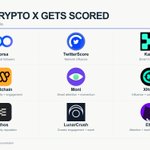
The recent debate highlights a useful distinction: being followed by influential accounts doesn’t necessarily mean your content is reaching an active audience today.
Crypto X has several tools for assessing accounts. Here’s what each measures:
• Sorsa (@SorsaApp): scores accounts based on influential KOLs, projects and funds following them.
• TwitterScore (@Twiter_score): measures network influence based on notable accounts following you.
• Kaito Smart Followers (@KaitoAI): counts followers identified as well connected within Kaito’s social graph. It’s a follower count, not a universal quality score.
• Wallchain X Score (@wallchain): combines follower quality and engagement signals, according to its published description.
• Moni (@getmoni_io): tracks smart-account attention, mentions and social momentum.
• XHunt (@xhunt_ai): combines influence rankings with content and engagement analysis.
• Ethos (@ethos_network): adds community reputation through reviews and vouches.
• LunarCrush CreatorRank (@LunarCrush): ranks creators using engagement and other audience signals.
• Elfa (@elfa_ai): separates attention metrics from the historical performance of tracked trading calls.
These tools answer different questions: who follows you, who engages with you, or what reputation you’ve built.
Use them to shortlist creators. Then check recent posts, relevant engagement and whether their audience fits the campaign.


Capy Research retweeted

I think we need to go a little deeper on why Sorsa score still matters
it was designed to score X accounts. social media accounts. not onchain reputation, not the team behind the project, not where they’re based
Sorsa score only shows the “value” of a specific account within its niche
more smart followers, projects and funds = higher score
that’s it. Sorsa score can’t tell you whether a project will rug you onchain
TROVE’s score is high because a lot of “credible” accounts follow it
but zoom out and look at who actually follows it. can you really trust them? there's also a question to accounts still following scammers..
tldr: social score ≠ onchain reputation


as per @SorsaApp i can trust ‘TROVE’
which scammed/ran away with $9.4m from people this year from its ico, (we all remember this)
that tells you this sorsa score is all shitty AI slop score and should not be taken seriously
i checked for many scams and rugs and it told me they are credible enough

Capy Research retweeted
Staking BTC on @Starknet earns you STRK. That distinction matters more than the headline APR.
The mechanism is straightforward:
> Stake supported BTC wrappers on Starknet.
> Earn newly minted STRK.
> BTC stakers receive 25% of total staking rewards under the documented model.
For BTC holders, this adds a staking use case alongside Starknet’s DeFi integrations.
For STRK holders, attracting that BTC capital comes with additional token issuance.
Because rewards are paid in STRK, their value relative to BTC changes with the STRK/BTC exchange rate. A higher quoted APR can reflect a stronger reward token, even without more underlying activity.
An October 15 community proposal suggests making the BTC reward allocation variable to reduce those swings. That remains a proposal, not an implemented change.
The useful question is how much lasting BTC liquidity Starknet can attract for the STRK incentives it distributes.

Capy Research retweeted

Early crypto cards 💳
Recently launched / already working:
- @vPay_Global - OmniBank / AI app, virtual and physical Visa, 0% FX, cashback up to 1.5%.
- @Karta_Personal - self-custody + Visa Signature + USD/EUR accounts. Virtual card 5 USDT, 1.5% payment fee.
- @cashi - virtual Visa for stables, public beta since August, recently added XRP.
Waitlist / coming soon:
@DptPay Physical - physical Visa, waitlist open, shipping mid-November, 20% discount.
Always DYOR


New Crypto Cards are already here...
New crypto cards are on the way, I'm sure there's something you'll be interested in.
@fizenapp:
• Crypto neobank for travelers and global users. Spend USDT like cash worldwide.
• Backed by Tether. Full super-app: card + QR Pay (strong in SEA: Vietnam, Philippines + LATAM) + eSIM + tokenized US stocks + remittances.
• Card: Instant virtual Visa, Apple/Google Pay. Very high limits (~$1M daily). Low fees (0.5% conversion, often 0 top-up within plan limits).
• Region: Global (SEA/LATAM focus), accepts users from some restricted countries.
• Price: Adventure card from $9.99 (higher tiers available).
@OnboardGlobal:
• Global money app for receiving USD/EUR/GBP, spending, and handling stablecoins. Aimed at freelancers, remote workers, and cross-border users.
• Real named USD/EUR/GBP accounts + virtual card. Fund with local currency or USDT/USDC. Apple/Google Pay support.
• Card: Virtual Flex Card (first one free, up to 3 cards). Limits $5k daily / $20k monthly (higher available on request).
• Fees: Funding 1.25%, FX/cross-border $0.30 + 1.5%. No monthly fee.
• Region: 140+ countries (strong presence in Africa/Nigeria, Asia, and global professionals). Not available in the US.
@STEALFxyz:
• Privacy layer for everyday finance, built on Solana.
What stands out: Two layers compliant spending account (card/bank) + private wallet (powered by Umbra + Arcium). No on-chain link between them. You control the keys.
• Card: Visa card is coming (public beta already live with private transfers and gift cards). Cashback in solana:G5W6LwkLeoj6rZqBP1y3KT8k6Cz6rXGJmMNU3TArXtXw.
• Region: Global (Solana-native, privacy-first approach).
• Card not fully live yet, but you can already shield funds and spend privately on gift cards.
@purefiapp:
• Focus: High-yield savings + low-cost remittances (not a classic crypto spending card).
• What stands out: Up to 6% APY on real estate (shares in actual rental homes) held in a self-custodial wallet. Low fees on international transfers.
• Card: Available via licensed partners (on/off-ramp + cards). Main emphasis is on yield and remittances rather than everyday card spending.
• Region: 100+ countries (Asia, Africa, Europe, Americas).
• Best for: Users looking for yield on real assets + cheap cross-border transfers without traditional banking interest.
Always DYOR.


Staking BTC on @Starknet earns you STRK. That distinction matters more than the headline APR.
The mechanism is straightforward:
> Stake supported BTC wrappers on Starknet.
> Earn newly minted STRK.
> BTC stakers receive 25% of total staking rewards under the documented model.
For BTC holders, this adds a staking use case alongside Starknet’s DeFi integrations.
For STRK holders, attracting that BTC capital comes with additional token issuance.
Because rewards are paid in STRK, their value relative to BTC changes with the STRK/BTC exchange rate. A higher quoted APR can reflect a stronger reward token, even without more underlying activity.
An October 15 community proposal suggests making the BTC reward allocation variable to reduce those swings. That remains a proposal, not an implemented change.
The useful question is how much lasting BTC liquidity Starknet can attract for the STRK incentives it distributes.
