Market Strategist at AG Capital. Translator of global macro trends into actionable investment insights. Always asking "what if" to manage risk and cut noise.
Johannesburg, South Africa
Joined December 2025
- Tweets348
- Following229
- Followers443
- Likes292








Pinned Tweet
Data is everywhere, but clarity is rare.
I keep a close eye on what’s happening in the global economy and financial markets, and focus on explaining what it means in practical terms for portfolios and our clients.
Everyone has an opinion on the market, but very few understand what’s actually driving it.
I track the signals, not the noise - rates, liquidity, global flows, turning complex market developments into clear, useful insights that support better investment decisions and client conversations.
🤖 Made with AI

Local elections have always played second fiddle to national ones in South Africa. Only 45.86% of registered voters turned out in 2021, against 58.6% at the 2024 general election. That decline reveals a great deal about where most South Africans believe power resides. That instinct was easier to defend when one party ran most of the country's councils by default. In 2026, this is no longer the case.
Local municipalities are responsible for water, electricity, roads and rates, which covers most of what decides whether a business can operate and whether a household gets to month-end.
Interest rates and inflation prints my dominate the headlines, but at the end of the day, it is the municipality that decides whether water comes out of the tap.
Right now, a large part of that system is largely broke. Municipalities owed creditors R185.2 billion by June, up 19% in a year, with R122.5 billion of overdue debt owed to Eskom by August alone. Treasury classes 162 municipalities, more than half, as financially distressed, and in July it went as far as withholding R13.5 billion in transfers from 69 councils.
Read the full article on below


Subscribe to The Market Take and receive every new edition of my articles directly in your inbox. Stay connected to current insights, trends, and conversations.
Make staying informed part of your routine.
👉 Subscribe here to get the latest updates: media.agcapital.co.za/market…

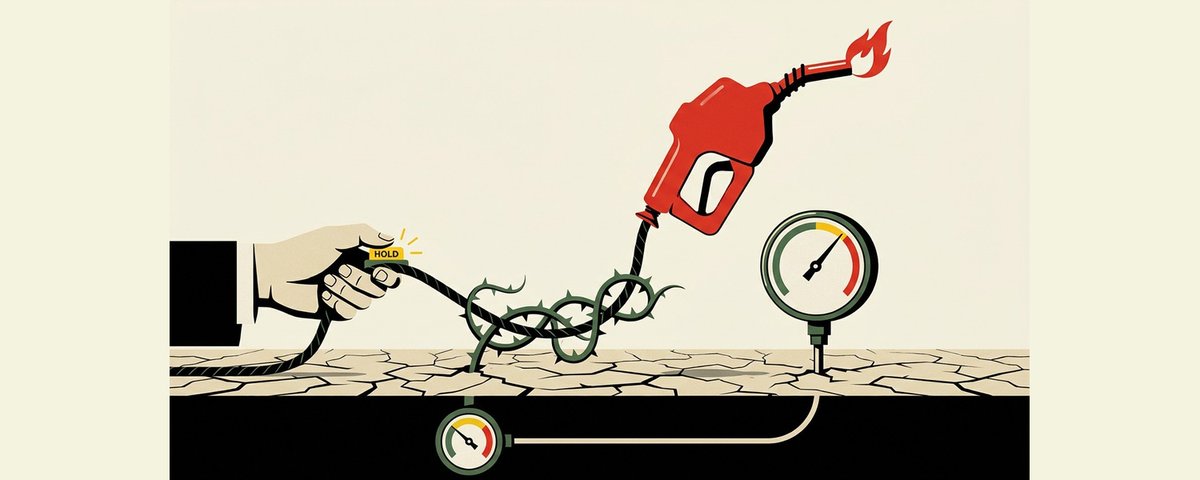
South African inflation is rising more slowly and more narrowly than initially feared. Headline CPI rose to 4.5% in September, almost entirely because of fuel, while core inflation eased for a second month to 4.0%. The oil shock has yet to spread into wages, rentals or services, which is the outcome the SARB is looking for. Households are still under pressure however. Diesel is 46% more expensive than a year ago, taxi fares are up 13%, and essential costs are climbing faster than incomes. Cheap food has been the main offset so far, and that will fade as El Niño takes hold in 2027.
In our view, September's hike was enough, and a hold at the 19 November MPC meeting is the more likely outcome. In the below piece, we set out what this means for short-term rates, the bond curve, inflation-linked bonds, the rand, consumer-facing equities, banks and insurers, and the case for alternative strategies.
Read the full article below
Could a single Gauteng megatropolis really deliver better governance, or would bigger mean more complexity?
The proposed merger of Johannesburg, Tshwane, and Ekurhuleni into one metropolitan entity has opened an important conversation about the future of local government, business, and the economy.
In this Hot Business radio interview with Jeremy Maggs, we unpacked why changing municipal boundaries alone may not address Gauteng's underlying challenges.
The discussion looks at what businesses and investors need from local government: predictable tariffs, reliable utilities, transparent procurement, effective revenue collection and coordinated infrastructure planning.
With local governance, service delivery, and municipal financial sustainability in the spotlight, we looked at what needs to change and where to focus to support long-term economic growth.
Listen to the full interview here: www2.iono.fm/e/1715128
Property investment in Africa is evolving, and I believe the real opportunity lies in moving beyond scarcity towards certainty, productivity and long-term value creation.
Successful property development means creating sustainable opportunities, building market confidence, and developing spaces that contribute to economic growth.
I recently had the opportunity to share my perspective on this with Simon Brown on Moneyweb, discussing how the property investment landscape is changing and what this means for the future of real estate in Africa.
Watch the full interview here:
moneyweb.co.za/moneyweb-podc…
I recently had the opportunity to speak on Bloomberg about the current high-yield environment, the outlook for central bank policy and what these developments could mean for markets and investors.
It was a great opportunity to share my perspective on the factors surrounding the fixed-income landscape and the opportunities and challenges we are seeing in the market.
Thank you to Bloomberg for facilitating the conversation.
Watch the full interview here: bloomberg.com/news/videos/20…

While social media is a great way to stay up to date, we know not everyone is active across every platform. That’s why you can now subscribe to The Market Take and have my articles delivered directly to your inbox.
Stay informed and get The Market Take straight to your email as soon as each new edition is published.
Subscribe here: media.agcapital.co.za/market…

It was a privilege to take the stage at the API Summit 2026 and address more than 500 delegates from across the continent. I delivered the opening address and shared valuable perspectives on the forces shaping Africa’s property and investment landscape.
From changing economic conditions and infrastructure challenges to institutional investment and the evolving role of REITs, the conversation led me to question the future of African real estate:
Where will growth occur, and where will it be investable?
As Africa’s property markets continue to evolve, reliable infrastructure, regulatory certainty, competitive environments, and sustainable capital will increasingly shape long-term value.
Thank you for having me at API Summit 2026.

Africa’s property market presents significant growth opportunities, but turning that potential into sustainable investment returns depends on more than demographics and available land.
In my recent article on MoneyWeb, I discussed how infrastructure, energy reliability, regulatory certainty, strong occupier demand, and access to capital are increasingly important factors in determining which property markets are truly investable.
As capital becomes more selective, the focus is shifting towards cities, corridors and developments that can provide the certainty needed for long-term investment.
Read the full article on MoneyWeb: moneyweb.co.za/investing/pro…

Casey Sprake retweeted

[OPINION] Casey Sprake argues that Africa’s property opportunity will depend less on land or demand and more on reliable infrastructure, regulation, occupiers and access to patient capital.
#Moneyweb #RealEstate
ow.ly/MoRv50ZRjnt

Thank you for having me🙌

🎧 Market chaos? The rand hasn’t noticed
° Where can investors find returns as a rocky year enters its final quarter? Independent analyst @jmoyaha_ weighs in.
° AG Capital’s @CaseySprake explores Africa’s property opportunities and why certainty matters
° Adishan Naidoo unpacks a structured note linked to the local platinum sector.
moneyweb.co.za/moneyweb-podc…

"But one plant is a drop in the ocean next to thousands of lost jobs and a localisation target we are still twenty percentage points short of. If lower tax, reliable power, working logistics and rules that hold still for a decade are what it takes to justify a R1.2-billion bet, why is that treatment reserved for a few hundred hectares instead of being the baseline everywhere?"
Excellent piece by @Askash . Hitting the nail right on the head there


The Diagonal newsletter asks better questions, challenges assumptions, and explores the ideas that sit between the headlines.
Since our first edition, we’ve refined the publication, developed the format, and listened to what resonates. We’ve also been working behind the scenes to make the experience better for every new reader who joins us.
If you haven’t subscribed yet, you can sign up to receive The Diagonal directly in your inbox. New subscribers will receive the first edition to start the journey, followed by each new edition as it is released.
If you’ve already been reading, thank you. If you haven’t, consider this your invitation.
Sign up here: media.agcapital.co.za/the-di…

Somewhere on the edge of the African continent, a logistics warehouse is being fitted with a solar array, battery storage and its own water infrastructure. Sustainability is part of the equation, but there is also a more immediate commercial consideration: the tenant wants certainty before signing the lease.
In many ways, that building captures the African property market in 2026. Growth is not necessarily the scarce commodity; increasingly, certainty is.
I recently had the pleasure of opening up the 2026 API Summit at the CTICC in Cape Town, where over 500 delegates from around Africa attended, and I got to present about exactly this. For years, African property investment has been approached through a familiar set of questions. Which country is next? Where are populations growing fastest? Which cities offer the strongest economic growth and, by extension, the greatest property opportunity? These remain relevant, but they tell us relatively little about whether attractive economic fundamentals can ultimately be translated into durable investment returns.
Understanding where growth will occur is only the first step; the next is determining how it can be captured through investment.
Read the full article below.

August inflation data and the SARB’s latest rate decision are due on Wednesday, with another fuel price shock brewing for October. Higher Brent crude prices and refining margins are putting fresh pressure on household budgets and business costs.
CEF data as of 17 September point to petrol rising R2.85/l and diesel R3.38/l, which would push pump prices to record highs. Further fuel levy relief remains uncertain: Treasury says any support must be fiscally neutral, leaving little room to cushion the blow.
Had the fantastic opportunity today to provide the opening address for the #APISummit2026 this morning.

From seismic political shifts to oil-shock volatility, groundbreaking #REITs to major institutional investments, @CaseySprake from @AG_Capital_ reviewing the past 12 months that shaped African property & asking the questions that will define the next 12 at #APISummit2026 #APISummit

AfD’s recent sweeping result in Saxony-Anhalt has unsettled Germany’s political establishment, even if it does not put the party on the brink of national power. Instead, it brings Germany’s double reckoning into focus: a political backlash against weak growth, high living costs and a strained policy status quo, alongside a market-led reassessment of the country’s fiscal and monetary outlook. As higher oil prices revive inflation concerns and Bund yields climb through the post-QE adjustment, Berlin faces growing pressure to deliver a more forceful fiscal and pro-growth response.
AfD won about 44% of the vote and 39 of 83 seats- three short of an outright majority. With other parties still refusing to cooperate, it cannot govern alone. The result is a landmark, but Saxony-Anhalt is a small, poorer eastern state where anti-establishment sentiment runs stronger than in Germany as a whole; the political fallout from the 2024 Magdeburg attack also amplified local concerns around immigration, security and law and order
Politics is part of the German equation, but for markets the more immediate focus is the rise in Bund yields.
German 10-year borrowing costs have climbed to their highest level since 2009, reflecting a global bond sell-off and the market’s reassessment of a country that is simultaneously facing more fiscal issuance, higher energy costs and the residual effects of a decade of European Central Bank asset purchases.
Read the full Article below.