

The official account of the Baroness Casey Review into the standards of behaviour and internal culture of the Metropolitan Police Service.
- Tweets48
- Following0
- Followers3.2K
- Likes3







ALT Our analysis found that between 2020 and 2022, people in London who appear to officers as Black (aged 11-61) were: - Over 3 times more likely to be handcuffed than White appearing people of the same age. - Nearly 4 times as likely to have a Taser fired on them by a Met officer. -4.5 times more likely to have a baton used against them.

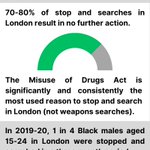
ALT In every year since 2016, people in London who appear to officers as Black (aged 11-61) have been at least 3.5 times more likely to be stopped and searched by the Met than their White counterparts. 70-80% of stop and searches in London result in no further action. The Misuse of Drugs Act is significantly and consistently the most used reason to stop and search in London (not weapons searches). In the previous year, 1 in 4 Black males aged 15-24 in London were stopped and searched in a three-month period. This is broadly the same level of disproportionality described in the Macpherson Inquiry in 1999.


ALT Our survey of Met staff and officers found that nearly one quarter (22%) of Met employees have experienced bullying at work. This is substantially higher for Asian (36%), Black (35%), LGBTQ+ (30%), and Female (25%) employees. Of these Met employees who have experienced bullying, 43% of Asian respondents report being bullied at least once a week, as well as 35% of LGBT+ respondents and 32% of Black respondents. 41% of Met officers and staff we surveyed said they had felt pressured or expected to do something at work that contradicted their own better judgement, 37% that contradicted their own personal or professional values, 20% that contradicted the Met’s values, and 22% that contradicted the Met’s rules. In all of these situations, BAME officers and staff were more likely to say they felt such pressure or expectations compared to White officers and staff.


