

Daily reflections on the Gospel, Divine Mercy, saints, feasts, prayers, and more. Presenting the beauty of the Catholic faith in a practical, down-to-earth way!
Joined February 2017
- Tweets9K
- Following141
- Followers23.4K
- Likes6.7K





That Christ May Be Known
October 28, 2026
Feast of Saints Simon and Jude, Apostles
[Jesus] called his disciples to himself, and from them he chose Twelve, whom he also named Apostles: Simon, whom he named Peter, and his brother Andrew, James, John, Philip, Bartholomew, Matthew, Thomas, James the son of Alphaeus, Simon who was called a Zealot, and Judas the son of James, and Judas Iscariot, who became a traitor. Luke 6:13–16
Today we honor two of the Twelve Apostles: Saints Simon and Jude. In Luke’s Gospel, Simon is referred to as a Zealot. Zealots were members of a Jewish sect that sought to overthrow Roman occupation in Palestine through revolutionary means, often promoting armed resistance in hopes of restoring Israel’s independence and religious purity. Jude is identified as the son of James, a distinction made to differentiate him from Judas Iscariot, the betrayer. He is also traditionally understood to be the author of the Epistle of Jude, a brief but powerful letter exhorting the faithful to maintain the pure faith and warning against false teachings.
Little is known about these two Apostles. After receiving the Holy Spirit at Pentecost, Saints Simon and Jude were among the earliest bishops of the Church, entrusted with strengthening new Christian communities and handing on the Sacraments and apostolic teaching. Though historical details are limited, many ancient accounts agree they traveled together as missionaries—traditionally to Persia (modern-day Iran)—where they boldly preached the Gospel. Around the year AD 65, tradition holds that Simon was martyred by being sawn in half, while Jude was beaten to death with a club. Though these accounts are shrouded in legend, their martyrdoms testify to their unwavering witness to Christ and their role in spreading the faith beyond the borders of Israel.
In the Gospel of John, we gain a glimpse into the heart of Saint Jude. Jude asks Jesus, “Master, then what happened that you will reveal yourself to us and not to the world?” (John 14:22). This question reflects his gratitude for being privileged to receive a deeper understanding of Christ’s revelation and reveals his desire that the whole world might come to know and believe. That desire became the driving force behind the mission of every Apostle, including Simon and Jude.
We honor the faithful Apostles because they are models for us. Despite their vastly different backgrounds, they shared one common trait. Except for Judas Iscariot, each underwent a radical conversion after being called by Jesus. During His three-year public ministry, they listened, often misunderstood, but persevered. When Jesus was arrested and crucified, all but one scattered, and Judas Iscariot took his own life. Yet after the Ascension, they gathered in prayer in the Upper Room and received the full outpouring of the Holy Spirit at Pentecost. From that moment on, their lives were transformed. Their faith deepened, their understanding grew, and each embraced the call to become a bold witness to the Gospel, sharing it far and wide.
Today, the Twelve are in Heaven, but their mission continues in every Christian. Through the sacramental transmission of Holy Orders, each bishop is a direct successor of the Apostles. As members of the Church, we are also heirs to this apostolic mission. Having received the fullness of the Holy Spirit in the Sacrament of Confirmation, we share in the same gifts and grace bestowed on the Apostles, empowering us to continue their sacred work, a work desperately needed in the world today. Like Saint Jude, we must foster within our hearts the same desire he had to share the mysteries of the Kingdom of Heaven to the ends of the earth.
Reflect today on the lives and missions of Saints Simon and Jude. Their faithful response to Christ’s call, their perseverance in the face of adversity, and their martyrdom for the sake of the Gospel speak volumes. Ponder how you, too, are called to carry forward the apostolic mission within your own state in life. Ask these holy Apostles to intercede for you, that you may be filled with apostolic zeal, remain faithful to the truth handed down to us, and proclaim Christ boldly to a world in need of His saving love.
Saints Simon and Jude, God called you, and you responded. Though you struggled at first, once you received the Holy Spirit and embraced the mission entrusted to you at the Great Commission, you tirelessly brought Christ to the world, even to the point of laying down your lives. Pray for me, that I may faithfully continue your mission, fueled by the same desire: that all may come to know and embrace the saving message of the Gospel. Saints Simon and Jude, pray for us. Jesus, I trust in You.
Image: Image via Adobe Stock
Read entire reflection: catholic-daily-reflections.c…
#GospelOfTheDay

Reflection 301: The Communion of Saints
One motivation we should have for working diligently at spreading the Mercy of God is the reality of the Communion of Saints. Understanding this eternal communion will enable us to realize that what we do now we will rejoice in forever in Heaven. For example, if you go out of your way to share the Mercy of God with another and this Mercy is received and affects that soul for the good, this fact will be known and proclaimed for all eternity as you share Heaven with this person. Imagine spending your whole life on Earth spreading the Mercy of God as your greatest passion. And then imagine spending eternity glorying in the effects of this Mercy in the lives of countless other saints who are in perfect communion with you in Heaven, some on account of your holy efforts. Pondering eternity in this way will motivate you to fervently make it your most central mission in life to spread God’s Mercy to all whom you meet and in the way our Lord inspires you (See Diary #1471).
Do you ever think of Heaven? Spend some time today thinking about this glorious reality that awaits us. What will you delight in once in Heaven? Certainly you will delight in God, but reflect today upon the delight you will have when you see clearly the effects of the love you have shared with others. These merits of grace will live on forever. Think about these treasures that await and try to allow them to become an inspiration to you and a motive for your work of Mercy.
Lord, I pray that You will inspire me continually to work diligently at spreading Your works of Mercy. Use me, dear Lord, and touch many lives through my efforts. Keep my eyes on Heaven and help me to make this goal the guiding force and motivation of my love for others. I give myself to You, dear Lord. Use me to save souls. Jesus, I trust in You.
Image: © José Luiz Bernardes Ribeiro
Read entire reflection: divinemercy.life/2026/10/27/…
#DivineMercy

From Smallness to Glory
October 27, 2026
Tuesday of the Thirtieth Week in Ordinary Time
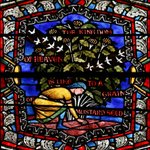
Jesus said, “What is the Kingdom of God like? To what can I compare it? It is like a mustard seed that a man took and planted in the garden. When it was fully grown, it became a large bush and the birds of the sky dwelt in its branches.” Luke 13:18–19
The mustard seed symbolizes the humble and hidden beginnings of the Gospel. Christ Himself was born in a manger and crucified as a criminal. Spiritually speaking, He is the mustard seed par excellence. Likewise, the Church began with a handful of ordinary, mostly unlearned men, who were planted by the hand of the Divine Sower.
Today, the Gospel is preached in many ways. Sometimes it comes through dynamic preaching, flashy formats, and enticing promises. However, the authentic Gospel does not need sound effects or visual spectacle. The Gospel that truly transforms us is, in fact, like that tiny mustard seed, planted quietly in the fertile soil of our hearts. When that happens, God’s Kingdom begins to grow within us.
With the rise of technology and social media, it’s tempting to think we must adopt Hollywood-style approaches to share the Gospel. While technology, art, music, video, and eye-catching formats can, at times, serve the work of evangelization—especially when reaching those immersed in a world of constant stimulation—it’s essential to understand that the pure, simple, and humble Gospel always suffices in building God’s Kingdom.
Consider the most important aspect of Jesus’ Gospel message: His Passion, Death, and Resurrection. The Gospel did not culminate with a grand or glorious display by human standards. Jesus did not deliver His final sermon from a golden throne amid trumpet blasts. He delivered it from His instrument of death—the cross on which He hung—naked for the world to see, humiliated, beaten, and crucified. By worldly standards, His life ended in shame and disgrace. By God’s standards, the seeds of grace poured forth from His Sacred Heart as He breathed His last.
Even the Resurrection was hidden from the eyes of many, especially His detractors. He did not appear in the Temple after rising from the dead, radiating glory and majesty to silence the chief priests, scribes, Pharisees, and elders. Instead, he appeared quietly, lovingly, and in subtle, personal ways to those with faith. He did not seek to prove Himself to the hard of heart; rather, He nurtured faith in those who loved Him and believed.
The Church also began in humiliation. Persecution and martyrdom followed swiftly after Pentecost. The earliest Christians worshiped in secret, often in homes or hidden places, knowing their lives were at risk. The greatest evangelist of all, Saint Paul, suffered immensely throughout his ministry, enduring floggings, imprisonments, shipwrecks, hunger, rejection, and relentless persecution. He was ridiculed, beaten, stoned, and left for dead, all for the sake of planting that miniscule mustard seed of truth in the hearts of others. Yet through his faithful endurance, the Church spread from city to city and took root in the Gentile world.
The humble carpenter who was born in a cave in Bethlehem, sent into exile, raised in the obscure town of Nazareth, and became a poor, itinerant preacher, dependent on the generosity of others, has been known and loved by countless souls throughout the centuries. He has transformed lives, uprooted sin, and is building His Kingdom from among sinners—all because the humble seed of His life has been planted again and again in hearts that are open.
Reflect today on the hidden ways that God’s grace is at work in your life. Do not be discouraged if your faith feels small or if your efforts to evangelize seem unnoticed. Trust that the true Gospel, humbly received and quietly lived, has the power to grow and bear abundant fruit. Allow the seed of God’s Word to take root deeply in the soil of your soul, and patiently nurture it with prayer, fidelity, and love. In God’s perfect time, that seed will grow into something far greater than you can imagine, offering spiritual shelter and nourishment to many.
My glorious King, Your Kingdom is not of this world. It is humble and simple, like a mustard seed; yet when planted in fertile hearts, it grows vast and wide, expanding our souls and making us members of Your eternal Kingdom. May I always open my heart to Your saving Gospel and nourish that humble seed with prayer, so that my life may be transformed by Your grace. Jesus, I trust in You.
Image: Parable of the Mustard Seed, by Lawrence OP, CC BY-NC-ND 2.0.
Read entire reflection: catholic-daily-reflections.c…
#GospelOfTheDay

Reflection 300: Revealing the Secrets of Your Soul
It is actually quite consoling to have someone with whom you can reveal the depths of your soul. This sort of confidant is a great blessing when absolute confidentiality, mercy and understanding are offered. Speaking even of your sins without hesitation can bring much healing when the person with whom we share these things responds with perfect love and is able to offer you the Mercy of God. We all need such a confidant. But in truth we do! We have the priest, waiting for us in the glorious Sacrament of Reconciliation. His confidentiality is certain, his compassion and mercy is offered and the forgiveness and Mercy of God is poured forth upon the deepest and darkest secrets in your heart. Do not hesitate and do not delay in going to Confession. You need this gift from our Lord and He will bless you with an abundance of His Mercy through it (See Diary #1464).
Reflect honestly upon the deepest and “darkest” sin in your heart. What is it that you fear revealing the most? The Lord desperately desires to enter into that darkness and bring the healing balm of His light and Mercy. Do let Him in through the Sacrament of Reconciliation. The power of this Sacrament is unmatched and is exactly what you need to begin your healing and to be set free from your burdens. Do not fear it and do not put it off. Make an act of faith today in this glorious Sacrament and you will be amazed at the effect that it has on your life.
Lord, please give me courage to confess my sins in the Sacrament of Reconciliation. Please also give me the wisdom to know that this is among Your greatest gifts. In this Sacrament I encounter Your Mercy to the greatest degree. Thank You, dear Lord, for this priceless gift. Jesus, I trust in You.
Image: Visitation, by Domenico Ghirlandaio
Read entire reflection: divinemercy.life/2026/10/26/…
#DivineMercy

Long-Suffering and Silent Endurance
October 26, 2026
Monday of the Thirtieth Week in Ordinary Time
Jesus was teaching in a synagogue on the sabbath. And a woman was there who for eighteen years had been crippled by a spirit; she was bent over, completely incapable of standing erect. When Jesus saw her, he called to her and said, “Woman, you are set free of your infirmity.” He laid his hands on her, and she at once stood up straight and glorified God. Luke 13:11–13
Eighteen years is a long time to have suffered under the bondage of satan. This healing took place on the Sabbath day in a synagogue while Jesus was teaching. Unlike many of Jesus’ miracles, this woman did not approach Him or ask for healing. Instead, He saw her in the crowd, listening to Him teach. Given that He possessed the fullness of knowledge, He was immediately aware of her long-suffering and silent endurance.
How satan had bound her with this ailment is not mentioned, but we can be certain that our Lord knew. Most likely, God permitted her oppression in preparation for this very moment when His power would be made manifest through her healing. This is an important point that goes to the heart of the mystery of evil: Every evil God permits is allowed because He knows a greater good can come from it. He does not arbitrarily permit satan to oppress without His knowledge and consent.
In your life, are there circumstances that feel oppressive? Perhaps you have suffered from an ailment, a hostile relationship, a difficult work environment, or some more direct form of diabolical oppression. When that happens, we are often tempted toward discouragement, wondering why God allows it to continue, whether He even cares, and why He seems silent to our pleas.
By reflecting on this woman’s eighteen years of diabolical oppression followed by her healing and deliverance, we learn that everything God permits is ultimately for our good. In the midst of suffering, that can be hard to believe, but it is true. God never ignores our prayer and is never unaware of our afflictions. If we begin with that foundational matter of faith, it will help us patiently and silently endure sufferings with hope. This is not necessarily hope that God will one day relieve us, but a deeper hope and certainty that if He allows us to endure something, it is for a reason. And that reason is always for our good, the good of others, and His glory.
A second important lesson we learn from this story is the fierceness with which Jesus defends this woman against the hostile leader of the synagogue. When the leader sees her healed on the Sabbath, he rebukes her and the crowd, saying, “There are six days when work should be done. Come on those days to be cured, not on the sabbath day” (Luke 13:14). Jesus responds by calling him a hypocrite and then speaks tenderly about the woman and her suffering: “This daughter of Abraham, whom Satan has bound for eighteen years now, ought she not to have been set free on the sabbath day from this bondage?” (Luke 13:16). His defense of her causes the whole crowd to rejoice.
Culturally, during those eighteen years of affliction, many would have looked at the woman with disdain, presuming her suffering was due to sin. Jesus did not look at any sin she may have had. Instead, He saw the strength with which she silently endured all those years. Even if she had not been cured, her soul was likely far closer to God for having borne her long-suffering than if she had not suffered at all. Jesus’ defense of her highlights His love and His awareness of her fidelity amid affliction. When He looks at our souls, He perceives the same.
Reflect today on those you know who have endured great suffering. It’s easy to pity them or even judge them, assuming their hardship stems from their own fault. Try instead to see them as Jesus does. Look with admiration. See their strength. See the humility that has grown through suffering. Do the same for your own life. Rather than looking for a way out of your difficulties, accept them, believing God is permitting them for a greater good. Look for that good, give thanks to God, and pray for the strength to remain faithful until the end.
All-powerful Lord, the mystery of evil can confound us, yet in Your perfect wisdom and love, You permit only that which has the potential to work for my sanctification. Grant me Your eyes to see and understand both the suffering I endure and the sufferings of others. May I rejoice in Your providential grace and trust in Your nearness to me and to all who patiently carry their crosses. Jesus, I trust in You.
Read entire reflection: catholic-daily-reflections.c…
#GospelOfTheDay

Reflection 299: The Weariness of Human Wisdom
The words of truth, spoken from the Heart of our Lord, bring joy to our lives and rejuvenate our spirits. When you hear these words of truth, take them in and act on them, you are set free from the burden of error and may experience a certain lightness of spirit and refreshment. However, the opposite is true also. When you listen to an error, take it in and believe it, the fruit of this error is one of sadness and burden. The truth sets you free and an error weighs you down. This is good to be attentive to when you offer advice to another. If your words appear to lift them up and strengthen them, then you have an indication that you are speaking from the Heart of Christ. The same is true when you take the counsel of another. If their words immediately connect with you, filling you with a sense of inspiration and clarity, then listen and receive this word because they are most likely speaking the words our Lord has inspired them to speak to you (See Diary #1461).
Reflect today upon the conversations you have had this past week. How did you feel afterwards? Did you feel inspired and renewed? Or did you feel dry and down. And how have your words affected others over this past week? Did you notice a healthy difference in them and a lightening of their spirits? Do a practical and concrete examination of your conversations and recommit yourself to listening to and speaking that which comes from the merciful Heart of Jesus.
Lord, I desire to be an instrument of Your Mercy in every way. I pray, today, that I may especially do so through the words I offer to others. May my words be Your Word, dear Lord. And may I seek refreshment from Your Heart as I open myself to Your Word spoken through others. I love You, dear Lord, help me to love You more and to be an instrument of that love to all with whom I converse. Jesus, I trust in You.
Image: The Preaching of St Paul at Ephesus, by Eustache Le Sueur
Read entire reflection: divinemercy.life/2026/10/25/…
#DivineMercy

The Eternal Law of Love
October 25, 2026
Thirtieth Sunday in Ordinary Time (Year A)
When the Pharisees heard that Jesus had silenced the Sadducees, they gathered together, and one of them, a scholar of the law tested him by asking, “Teacher, which commandment in the law is the greatest?” Matthew 22:34–36
The Law of Moses, found in the Torah—the first five books of our Old Testament—is traditionally said to contain 613 commandments: 248 positive (“dos”) and 365 negative (“don’ts”). Among these laws, there was a longstanding debate among the rabbis about which commandment was the greatest. Therefore, though the Pharisee who posed this question to Jesus was testing Him, it was also likely a sincere inquiry.
Jesus certainly perceived the testing nature of the question, but He also recognized the genuine desire for truth. In response, He gently and directly offered a comprehensive answer, presenting a twofold summary that encompasses the entire Law and the prophets: “You shall love the Lord, your God, with all your heart, with all your soul, and with all your mind” and “You shall love your neighbor as yourself.”
These two commandments do more than summarize the Law and the prophets, they also encapsulate the essence of the petitions of the Lord’s Prayer. Once we acknowledge God as our Father, we pray, “Hallowed be Thy name” and “Thy Kingdom come.” These are the highest petitions we can make.
To hallow God’s name is to give Him His due. God is thrice holy—holy, holy, holy. Our greatest duty is to hallow His name and His very being by magnifying and glorifying Him. This is the highest way to love Him with all our heart, soul, and mind.
In this life, we also turn to God in other ways. We ask for the grace to do His will, for His providential care, and for mercy and forgiveness. We pray to overcome trials and to be kept safe from the evil one. Each of these petitions, found in the Lord’s Prayer, is essential and finds expression throughout the Torah and the New Testament. Yet in the end, every petition we make must ultimately lead to the highest commandment: to hallow God’s name—to love Him with all we are—not merely because of what He does for us, but because of who He is. He is worthy of our love for His own sake, and it is our highest duty to offer Him that love.
In Heaven, many of the commandments and petitions we now make will cease. We will not ask for forgiveness, since we will be purified and sin no more. We will not pray for daily bread—pointing to the Sacraments and God’s temporal care—because we will enter the eternal Banquet. Nor will we ask for strength to endure or receive protection from the evil one, because all trials will have been conquered in Christ. But we will eternally fulfill the greatest commandment and the first petition of the Lord’s Prayer by forever hallowing God’s name, crying out “holy, holy, holy,” and loving Him with a purified and perfected love.
Likewise, the second greatest commandment will also be fulfilled in Heaven, just as the second petition of the Lord’s Prayer—“Thy Kingdom come”—is fulfilled. The coming of God’s Kingdom is our eternal participation in His glory and holiness, united with all our “neighbors”—the angels and saints. Our love of God will overflow into love of neighbor, and our love for one another will reflect and participate in our perfected love for God.
Reflect today on the inseparable bond between love of God and love of neighbor, and the eternal nature of these commandments. Does your life bear witness to these two great commands? Does your daily prayer arise from and lead to this twofold love? Hallow God’s name not only with your lips, but also with your heart, soul, and mind. Allow that love to overflow to all people—especially those hardest to love—so that you show them the dignity and charity due to your neighbor, in anticipation of expressing that love forever in Heaven.
Lord of Heaven and earth, I thank You for Your holy commandments. I pray that I may live each one with full fidelity. Help me to hallow Your name in all things, to seek Your Kingdom above all, and to love all people with the love You have for them. May I see these commands, not as a burden, but as the joy and direction of my life. Jesus, I trust in You.
Image via Adobe Stock
Read entire reflection: catholic-daily-reflections.c…
#GospelOfTheDay

Reflection 298: The Virus of Senseless Murmuring
One unfortunate tendency within our fallen human nature is to “murmur” about another. It’s like a virus in that once someone starts, it passes to others quickly. Before you know it, many can be spreading rumors and gossip not based in truth, or truths not spoken in charity. This can be very painful to the person who the murmuring is about. We see this commonly among teens, but it is not exclusively a teenage phenomena. The two questions to ponder in this regard are: 1) Do I murmur about others? 2) How do I react when others murmur about me? First of all, the virus of murmuring will only be cured if people of integrity cease to speak unnecessary words or calumny or detraction. We have no right to spread errors about another, and we have no right to spread truths that do not need to be shared. Second, if you find yourself to be the object of the murmuring of others, it’s understandable that this will hurt. Allow yourself to feel the hurt, unite it to the Heart of our Lord, and then move on without returning the mistreatment. A peaceful resolve to pay no attention to these actions helps to dispel their effects and it keeps us from being drawn into the foolishness (See Diary 1453).
Ponder today both of these experiences. If you are the cause of senseless murmuring then see the seriousness of this sin. It is a sin and a serious violation of charity as a result of the hurt it can cause. Confess it and resolve to silence your tongue. If you are the object of such murmuring, know that Jesus was first. Turn to Him and allow Him to console you, and try to rejoice that you have been treated like our Lord.
Lord, please guard my tongue and help me to speak only the words You wish me to speak and to only listen to those words inspired by You. If I am the object of hurt from another, give me the grace to receive healing and strength and to rejoice that I am treated like You. Jesus, I trust in You.
Image: Conspiracy of the Jews, by James Tissot
Read entire reflection: divinemercy.life/2026/10/24/…
#DivineMercy

October 24: Saint Anthony Mary Claret, Bishop—Optional Memorial
1807–1870
Patron Saint of the Catholic press, textile merchants, and weavers
Canonized by Pope Pius XII on May 7, 1950
Quote:
Love in a man who preaches the Word of God is like fire in a musket. If a man were to throw a bullet with his hands, he would hardly make a dent in anything; but if he takes this same bullet and ignites some gunpowder behind it, it can kill. It is much the same with the Word of God. If God’s Word is spoken only naturally, it does very little; but if it is spoken by a priest who is filled with the fire of charity—the fire of love of God and neighbor—it will wound vices, kill sins, convert sinners, and work wonders. We can see this in the case of St. Peter, who walked out of the upper room afire with the love he had received from the Holy Spirit, with the result that through just two sermons he converted 8,000 people, three in the first sermon and five in the second. ~from the Autobiography of Saint Anthony Mary Claret (#439)
Prayer: Saint Anthony Mary Claret, God set your heart on fire with a love for Him so deep that it overflowed into the hearts of every sinner you encountered. Please pray for me, that I will grow deeper in my love of God, and from that love will love others whom I encounter every day. Saint Anthony, pray for me. Jesus, I trust in You.
Image: H. Zell, CC BY-SA 4.0, via Wikimedia Commons
Read entire reflection: mycatholic.life/saints/saint…
#SaintoftheDay

The Goodness of Repentance
October 24, 2026
Saturday of the Twenty-ninth Week in Ordinary Time
Some people told Jesus about the Galileans whose blood Pilate had mingled with the blood of their sacrifices. He said to them in reply, “Do you think that because these Galileans suffered in this way they were greater sinners than all other Galileans? By no means! But I tell you, if you do not repent, you will all perish as they did!” Luke 13:1–3
In Jesus’ time, it was commonly believed that suffering and tragedy were signs of divine punishment. The incident mentioned above is one such example. Although neither the Scriptures nor other historical records provide details of this event, it can be reasonably inferred from the passage that Pilate had ordered the massacre of certain Jews, perhaps even in the Temple in Jerusalem during worship. To the people, this horrific event appeared to signify that God was displeased with those victims and had allowed their deaths as a form of divine justice.
Jesus then refers to another recent tragedy in which eighteen people were killed when the tower at Siloam collapsed on them. This, too, was interpreted by many as a sign of God’s judgment and disfavor.
Jesus, however, corrects this misconception and turns it into a personal call to repentance. He makes it clear that those who suffered were not greater sinners than anyone else. This would have been a sobering statement. No one wanted to share the fate of those killed by Pilate or crushed by the falling tower. By clarifying that they were no more sinful than the rest, Jesus would have caught His listeners’ attention and provoked serious introspection.
Instead of allowing His audience to focus on the faults of others, Jesus calls them to examine their own lives. “But I tell you, if you do not repent, you will all perish as they did!” In other words, the real tragedy is not physical death but spiritual death—the eternal loss that comes from an unrepentant heart. Jesus redirects the conversation from judging others to a sober recognition of our own need for conversion. He teaches that suffering in this life is not always the result of sin, but unrepented sin will ultimately lead to the far more serious and permanent suffering of separation from God.
Prayerfully sit with both of these tragedies and see yourself in them. Though unpleasant, imagine being one of those murdered by Pilate while offering worship to God in the Temple. Or imagine being next to the tower at Siloam when it fell on you. Such a thought is jarring. In modern times, we might imagine a sudden death in a car crash or being killed in a robbery. Why would we want to ponder such possibilities? Because Jesus contrasts these visible and imaginable sufferings with an evil that is far greater: the refusal to repent.
The point is straightforward: If we rightly shudder at the thought of experiencing one of these tragedies, how much more should we shudder at the idea of not repenting. By saying, “If you do not repent, you will all perish,” Jesus wants us to feel the urgency of repentance. He wants us to become so acutely aware of our sins that we flee from sin as one would flee from a collapsing tower. In fact, our urgency should be even greater and more decisive when it comes to turning away from sin.
Sometimes the term “repent” carries a negative connotation. It can feel harsh, judgmental, or condemning. Our fallen tendency toward pride tempts us to resist, rationalizing that we are not “serious sinners” and should focus only on the good. But that attitude is a grave mistake because one of the greatest goods we can do is, in fact, to repent and reunite ourselves with God’s love through His mercy?.
Reflect today on how easily we can fall into the trap of self-assurance, focusing on the sins of others or dismissing our need for daily conversion. Ponder the urgency with which Jesus speaks. Let His words pierce your conscience and stir within you a holy fear—not of physical death, but of a hardened, unrepentant heart. Then run to the Lord with trust, humility, and sorrow for sin, confident that His mercy is always greater than our failures.
Lord of mercy, You desire not the death of the sinner, but that we turn back to You and live. Help me to see my sins clearly, to grieve them with a contrite heart, and to turn to You without delay. Make repentance my daily path, help me to see the goodness in it, and draw me ever more deeply into the joy of Your saving love. Jesus, I trust in You.
Image: Christ the Rewarder, by Ary Scheffer
Read entire reflection: catholic-daily-reflections.c…
#GospelOfTheDay

Reflection 297: Lessons from Nature
All of creation is capable of reflecting the glory and workings of God. God is the wisdom behind the Universe, setting all its laws in order and guiding all things perfectly. We only need to spend time meditating upon the laws of nature to perceive the laws of grace which they reflect. For example, take the morning dew. It arrives silently and without notice of its coming. It sinks in and soaks the earth leaving all things covered by its presence. So it is with the countless graces of God’s Mercy. It’s as if every grace God gives us is like one drop of the morning dew. He bestows it in abundance, and we often do not see it coming. It is given to soak in and to nourish our souls. Let the message of the morning dew speak to you this day and allow it to reveal the outpouring of the Mercy of God (See Diary #1449).
Do you ever spend time reflecting upon creation? There are so many lessons to learn about God through that which He created. Ponder the morning dew this day. Spend time on it and seek the countless messages that God can reveal through it. Consider, also, the many other messages that reveal the wisdom and Mercy of God within creation. We can grow in our faith and knowledge of God by pondering the birds, the grass, the fish, or any other creature God made. Reflect upon creation this day and you will find that you are reflecting upon the Mercy of God.
Lord, I thank You for the gift of creation and the countless ways that You speak through that which You created. May my life be like the soil that soaks in the morning dew each day, being covered with Your grace. I love You, dear Lord. Help me to be more open to Your love each new day, and to see Your hand at work in all things You have Made. Jesus, I trust in You.
Image via Needpix.com
Read entire reflection: divinemercy.life/2026/10/23/…
#DivineMercy

October 23: Saint John of Capistrano, Priest—Optional Memorial
1386–1456
Patron Saint of military chaplains, judges, jurists, and lawyers
Canonized by Pope Alexander VIII on October 16, 1690
Quote:
Those who are called to the table of the Lord must glow with the brightness that comes from the good example of a praiseworthy and blameless life. They must completely remove from their lives the filth and uncleanness of vice. Their upright lives must make them like the salt of the earth for themselves and for the rest of mankind. The brightness of their wisdom must make them like the light of the world that brings light to others. They must learn from their eminent teacher, Jesus Christ, what he declared not only to his apostles and disciples, but also to all the priests and clerics who were to succeed them, when he said, “You are the salt of the earth…You are the light of the world.” …By the brightness of their holiness they must bring light and serenity to all who gaze upon them. They have been placed here to care for others. Their own lives should be an example to others, showing how they must live in the house of the Lord. ~From the treatise “Mirror of the Clergy,” by Saint John of Capistrano
Prayer: Saint John of Capistrano, your taste of worldly power and wealth was unsatisfying, leading you to search for more. The suffering of your imprisonment helped open your eyes to God, and you turned to Him and never turned back. Please pray for me, that I will come to the same deep conviction in my life that God alone is what matters. May I become completely devoted to Him, serving His will alone. Saint John of Capistrano, pray for me. Jesus, I trust in You.
Images via Wikimedia
Read entire reflection: mycatholic.life/saints/saint…
#saintjohnofcapistrano

Awakened to His Presence
October 23, 2026
Friday of the Twenty-ninth Week in Ordinary Time
Jesus said to the crowds, “When you see a cloud rising in the west you say immediately that it is going to rain—and so it does; and when you notice that the wind is blowing from the south you say that it is going to be hot—and so it is. You hypocrites! You know how to interpret the appearance of the earth and the sky; why do you not know how to interpret the present time?” Luke 12:54–56
Today, when we want to know the weather forecast, we turn to an app, a website, or the evening news. As a result, most of us have lost the skill of reading the sky, the wind, and the shifting temperatures with our senses. In Jesus’ time, however, people depended on direct observation. That practical wisdom served as a point of comparison for Jesus, who used it to rebuke the people for failing to recognize something far more important: the spiritual signs of the times in which they lived.
Those years when Jesus walked the earth were the most consequential in all of human history. They marked the moment when God took on flesh, proclaimed the coming of His Kingdom, offered His life as a sacrificial gift for the salvation of souls, and conquered death through His Resurrection.
Imagine being alive at that time. Would we have recognized Jesus as the Messiah? Or would we, like so many, have simply found Him intriguing, perhaps believed He was a prophet, admired His miracles, but ultimately failed to grasp the fullness of who He was and is?
Some did recognize Him. Ordinary men and women; repentant sinners like Mary Magdalene; tax collectors like Matthew; fishermen such as Peter, Andrew, James, and John; and even Gentiles like the Syrophoenician woman and the Roman centurion all responded with faith. Yet many others, especially among the scribes, Pharisees, chief priests, and residents of cities like Capernaum and Nazareth, did not perceive the reality before them. They failed to see the divine presence and the eternal significance of that moment in history.
While we may hope that we would have responded with faith had we lived then, Jesus’ sharp rebuke—“You hypocrites!”—invites us to pause in humility. Rather than take offense, we should receive these words as if spoken to us, not to discourage, but to awaken deeper faith. By admitting that we, too, sometimes fail to recognize Christ’s presence and His mission in our lives, we open ourselves to a greater awareness of His action and an increased attentiveness to His divine mission, in which we are now called to participate.
In truth, Jesus’ words apply to us all in some measure. Even His closest disciples, with the exception of His Blessed Mother, struggled to comprehend the mystery unfolding before them. Likewise, even those who today manifest profound faith fail in subtle ways to perceive God’s presence among us. Therefore, Jesus’ loving rebuke invites us to approach the present moment with vigilance and faith, striving each day to interpret rightly the signs of God’s grace active in our lives and in the world.
Do you recognize God’s presence in your daily life and the presence of His Kingdom of grace? It takes a discerning eye and an open heart. Everywhere we look, God is present. He is present in silence and activity, in nature and in others, in the saint and even the sinner. When we look at sinners with judgment and disdain, for example, we close our eyes to the inherent dignity they possess by being created in God’s holy image. God is constantly present and at work among us if we only have the spiritual eyes of faith.
Reflect today on how well you perceive God’s presence in the ordinary moments of your day. Do you interpret those moments as opportunities to grow in holiness by loving God and serving His will, even in the smallest ways? Strive to be among the faithful few who seek out graced moments of great significance for your life and the lives of others. Discern those moments with care and love, and you will discover the Messiah’s ongoing mission of love.
My Lord and Messiah, You entered the ordinariness of daily life in Nazareth, Capernaum, and throughout the region, yet so many failed to recognize You. Please open my eyes to see You and my heart to love You. Help me to perceive the profound significance hidden in each ordinary moment of my day. May I find You there, present and at work, building Your Kingdom of grace. Jesus, I trust in You.
Image: The Sermon on the Mount, by Guillaume Fouace
Read entire reflection: catholic-daily-reflections.c…
#GospelOfTheDay

Reflection 296: A Parent’s Love
Imagine the parent who loves a child with burning love. They are committed in every way to the care and well-being of their child. Their love is steady and irrevocable from the time of birth on into adulthood. Now imagine the pain in this parent’s heart if at some point their child walks out on them and fully rejects their love. This loving parent will not give up but will think about their child day and night, aching inside with love, hoping to be able to receive their child back. This is but a faint image of the love of the Heart of Jesus. As a “faint image,” we must realize that when we reject the love of our Lord, the wound of love in His Heart produces the deepest suffering. But this is a suffering of love. And instead of this wound of love causing Him to reject us, it does the opposite. The more we turn from God, the deeper His wound of love, and the deeper His wound of love, the more He pours out His Mercy upon us. Never doubt for a single moment the irrevocable love God has for you. Believing in this love will give you courage to always return to our Lord (See Diary #1447).
Reflect upon the love that your parent has for you. No, it may not be perfect, and some may have experienced great hurt from a parent, but try to imagine what it would be like to have a parent who loves you with an unconditional love. The knowledge of this love would become a constant invitation to let them into your life. Reflect also on this being a faint image of the love of God for you. Do not doubt this love. Turn to it and trust in this irrevocable love of our merciful Lord.
Lord, help me to understand Your irrevocable love. And as I understand this love, give me courage to never turn from You, but when I do, give me courage to always return to You. Your love is perfect and constant. It never fails and never gives up. Thank You, dear Lord, for loving me to this perfect degree. Help me to love You in return. Jesus, I trust in You.
Image: San Polo, CC BY-SA 4.0, via Wikimedia Commons
Read entire reflection: divinemercy.life/2026/10/22/…
#DivineMercy

A Soul on Fire!
October 22, 2026
Thursday of the Twenty-ninth Week in Ordinary Time
Jesus said to his disciples: “I have come to set the earth on fire, and how I wish it were already blazing! There is a baptism with which I must be baptized, and how great is my anguish until it is accomplished!” Luke 12:49–50
What a powerful image! Jesus declares His desire to set the earth on fire—not just a small fire, but a fire that is already blazing. A small fire gives warmth and light, but a blazing fire consumes everything in its path. Jesus is speaking of the purifying and transforming fire of divine love. This image is a metaphor for the interior union of the soul with God and reveals how divine love, when ignited within us, burns away all that is not of God and sets the soul aflame with holy charity. Through souls ablaze with divine fire, the whole earth can be set spiritually aflame.
When Jesus says, “I have come to set the earth on fire,” He is speaking about hearts and souls. He desires that His love so penetrate our being that it radiates outward, illuminating and transforming the world. Saint John of the Cross, one of the greatest mystical doctors of the Church, develops this metaphor beautifully. He teaches that the soul is like a log of wood. At first, the log is cold, hard, and damp. But once it is placed into the fire of God’s love, it begins to change.
At first, the fire may cause pain. It crackles and smokes as it purges moisture and impurities. This stage corresponds to the purification of the senses and spirit. The soul must be stripped of worldly attachments and disordered affections. The fire burns away sin, imperfections, and even the soul’s self-will. This purification is necessary for deeper union.
As the burning continues, the log becomes more and more like the fire itself. Eventually, the log glows, radiates heat, and becomes one with the flame. So too, the soul that has been purified by grace is gradually transformed into God by love. It no longer only receives God’s love, it becomes love, fully united with the divine will, shining with the radiance of the Holy Spirit.
This is what Jesus longs for: not lukewarm souls, but souls so fully inflamed with divine charity that they become living flames, blazing across the earth, igniting other souls, and glorifying the Father.
Saint John calls the perfection of this deepening conversion the Living Flame of Love, which not only transforms the soul but delights and glorifies it as it becomes an instrument of God’s own life and action in the world. In this state, the soul no longer lives for itself but for the divine will alone. It is in this fire that the saints are forged.
When you look into your own soul, what do you see? Is there a spark of faith, struggling to remain lit? Do the winds of the world, the temptations of the flesh, and the pressures of daily life overpower that flame within you? If so, fan the flame of faith so that it grows and becomes more intense. This is done by entering into the “baptism” into which Jesus was baptized—His sacrificial Passion and Death. By dying with Him, we turn from the selfishness of sin that waters down the fire God sets in our souls. By turning from sin, especially those sins that are hard to overcome, our souls become primed to burn brightly with God’s grace.
Reflect today on the fire that Christ came to cast upon the earth. Is your soul burning, smoking, or still untouched by that flame? Are you willing to be set on fire and to undergo the purifications necessary to become one with the divine flame? Allow the Word of God, the Sacraments, and deep prayer to be the sparks that enkindle your soul. Say “Yes” to this baptism of fire, and let your soul become a light to the world.
My Lord of blazing Love, You desire to consume me with Your purifying fire, burning away all impurities from my soul, so that I may become one with You and radiate Your warmth and light. Please set me ablaze, dear Lord, not only for my own good, but for the good of others, so that through me, this world may be set aflame with Your glory. Jesus, I trust in You.
Image: Miguel Hermoso Cuesta, CC BY-SA 4.0, via Wikimedia Commons
Read entire reflection: catholic-daily-reflections.c…
#GospelOfTheDay

Reflection 295: The Embrace of the Infant Jesus
It is most appropriate to prayerfully reflect upon being held in the holy arms of our God. Understanding the Merciful love of the Father in Heaven through the holy embrace of love reveals to us His fatherly care. Running to the arms of Jesus opens our hearts to His merciful love. But one image that will also be helpful and holy to reflect upon is that of the infant Jesus. Imagine if you were privileged to be present when Jesus was an infant. And imagine if this infant looked at you, reached out His arms and sought to be held by you. And imagine if this infant held you tightly as He rested on your heart. This holy exchange of love will most certainly be understood by parents as they hold their children. Contemplate the profound love and infinite Mercy of God coming to you through this warm and unconditional embrace of a little child. Jesus is reaching out to you, embrace Him and hold Him tightly (See Diary #1442).
Ponder today this beautiful and holy image. But do so by imagining that this infant burns with a holy and pure love for you and longs to be held close to your heart. Resting in your arms you feel the love of this sweet embrace. This is an image of the Love of God and a holy image. Allow your own experiences of holding a child to teach you about the Mercy of God. And express your own love for God through this holy image of a child’s embrace.
My dear Lord, so small and innocent, may I hold You in my heart with an embrace of pure love. May I feel Your Heart beat with mine and Your love poured forth in this sweet embrace. I thank You, Lord, for coming into our world as an infant. May I always treasure this image and be drawn more deeply into love of You every time I hold one of Your precious children. Jesus, I trust in You.
Image:The Madonna and Child, by Bernardino da Asola
Read entire reflection: divinemercy.life/2026/10/21/…
#DivineMercy

October 20: Saint Paul of the Cross, Priest—USA: Optional Memorial
(October 19 outside of the USA)
1694–1775
Patron Saint of Hungary and Ovada, Italy
Canonized by Pope Pius IX on June 29, 1867
Quote:
You must correspond faithfully to His merciful action by humbling yourself ever more in your nothingness before His Sovereign Majesty, renouncing all these gifts and remaining in utter nakedness and nothingness. At the same time offer a holocaustal sacrifice of all these gifts and put them in the thurible of your heart so that, enkindled by God’s charity, they may ascend as a fragrant incense before the Most High Majesty of the Supreme Good ~From a letter to Mother Mary Crucified, by Saint Paul of the Cross
Prayer: Saint Paul of the Cross, God drew you to the heights of contemplation and taught you the deepest truths within the depths of your soul. You then shared the good fruits of your contemplation with the world. Please pray for me, that I will continuously seek to deepen my faith by deepening my prayer and penance, never shying away from the most glorious Gift of the Passion of Jesus Christ. Saint Paul of the Cross, pray for me. Jesus, I trust in You.
Image: Plet philippe, Public domain, via Wikimedia Commons
Read entire reflection: mycatholic.life/saints/saint…

Reflection 294: Never Tire of Contemplating the Trinity
Do you understand what you will be doing for all eternity? Heaven, if we are blessed to obtain it, will be an existence of eternal contemplation of the Most Holy Trinity. Though there is no time in Heaven, imagine if there were. And then imagine contemplating the Trinity for a million years in a row. Would you eventually become tired of this life and find boredom in it? Never in a million years and beyond! It’s essential that you regularly remind yourself of the life you will live in Heaven in this perpetual contemplation of God. Though there is no way you can understand what this life will be like, you must try to comprehend it nonetheless. At very least, understanding that you can never understand and comprehending that you will never comprehend is at least a good start. The Trinity is a mystery that we will never solve; rather, it’s a mystery that we must enter into. Begin your eternal contemplation of the Trinity today and allow this contemplation to draw you into the infinite Mercy of God (See Diary #1439).
Ponder today this great mystery. It may seem beyond you, and it most certainly is. But try anyway to spend some time trying to comprehend the unfathomable mystery of God. In truth, this is not something you can do on your own. Only God can draw you into this holy contemplation, but you must accept His invitation. Say “Yes” today and allow the merciful hand of our Lord to begin drawing you into the immense depths of His love.
Oh Most Holy Trinity, I adore You with profound adoration and love. Please take hold of my soul and draw me into the mystery of Your very life. Reveal to me the secrets of Your inner heart and help me to begin my journey into eternity with You today. I love You, my God. Help me to love You with all my heart. Father, Son and Holy Spirit, I trust in You.
Image: Adoration of the Holy Trinity, by Johann Heinrich Schönfeld
Read entire reflection: divinemercy.life/2026/10/20/…
#DivineMercy

Christ is Coming Today!
October 20, 2026
Tuesday of the Twenty-ninth Week in Ordinary Time
Jesus said to his disciples: “Gird your loins and light your lamps and be like servants who await their master’s return from a wedding, ready to open immediately when he comes and knocks.” Luke 12:35–36
In biblical times, men wore long tunics that extended below the knees, often to the ankles. Though suitable for daily life, these garments could hinder strenuous activity. To “gird one’s loins,” a man would pull the back hem of his tunic forward between his legs, gather the fabric in front, and tuck it into his belt—creating a kind of makeshift pair of shorts. This freed the legs for running, fighting, or working.
Jesus uses this image to express the vigilance we must maintain in anticipating His coming. “Light your lamps” further implies that we live in a world of spiritual darkness, requiring the illumination of grace to recognize His arrival.
The Church Fathers often interpreted the “wedding” as the Heavenly Wedding—the union of Christ with the angels and saints. The master’s return symbolizes three things: Christ’s final coming at the end of time, His particular judgment at our death, and His continual coming by grace into our souls.
Christ’s return in glory is a certainty. What a glorious day that will be. Sin and evil will be vanquished, the condemned separated, and the righteous—fully purified—will enter His Eternal Kingdom. Yet it’s easy to lose sight of this reality and become absorbed in daily life, as though this world were all that matters. If that were true, then a long and prosperous life here would be the goal. But since eternal life is our true destiny, this life must be lived in preparation for what is to come.
Though the Second Coming may seem distant, our own death is ever before us, especially as we age. This Gospel invites us to prepare not only for the end of the world but for the end of our lives. That preparation isn’t just a matter of prayer at death’s door, it begins now. We gird our loins and light our lamps daily by seeking God’s grace and responding to His promptings.
As you go about each day, where is your focus? Of course, we have an obligation to fulfill our daily responsibilities, but woven into that routine must be a consistent attentiveness to God, who is always coming to us. “Blessed are those servants whom the master finds vigilant on his arrival.” Jesus adds, “Should he come in the second or third watch and find them prepared in this way, blessed are those servants.” In biblical times, the second watch (9 p.m.–midnight) and the third watch (midnight–3 a.m.) were the hardest times to remain alert, symbolizing the more difficult moments of life.
Our Lord is telling us that vigilance matters most when it’s hardest to maintain. The early morning watch may represent the easier seasons of life, such as times of peace, joy, and spiritual clarity. The second and third watches reflect moments of suffering, discouragement, illness, or confusion, especially when we’re tempted to turn inward and forget to look to God. Even our prayers in those times can become self-focused: “Lord, help me with this” or “Please take that away.”
True spiritual vigilance means our prayer remains consistent. In both joy and sorrow, we keep our gaze on God and cry out, “Hallowed be Thy name! Thy Kingdom come!” Our deepest desire is not comfort, help in trials, or an easier life, but God’s glory and our share in it, together with others.
Reflect today on the consistency of your own prayer. Are you vigilant in every season, especially in the second and third watches of the night? Are you especially faithful to God when life is challenging? Seek to make every moment an offering to God, watching and waiting for Him with love and trust.
My Lord and Bridegroom of my soul, I believe and profess that You will return in glory to renew the heavens and the earth at the end of time. Grant that I, and all Your children, may be fully prepared for that moment by remaining vigilant and attentive at all times. Help me to see and hear You each time You come to me by grace, especially in the most difficult moments of my life. Jesus, I trust in You.
Image: Andreas F. Borchert, CC BY-SA 3.0 DE, via Wikimedia Commons
Read entire reflection: catholic-daily-reflections.c…
#GospelOfTheDay

Reflection 293: Reduced to Nothingness
Do you see value in being reduced to nothingness in your own eyes? Perhaps not. The reason this language is difficult to accept is that humility is only fully understood by a special gift of God’s grace. Some ancient philosophers even hold up pride as a great virtue, discounting humility as weakness. Sadly, there are few souls that obtain the actual virtue of humility. Some may obtain a certain semblance of this virtue, but few actually become humble to a great degree. Again, humility can only be understood and embraced by a special grace of God. Naturally speaking, we are drawn to those things we deem to be beneficial to us. Therefore, the first step in growing in humility is to see it for what it is and to discover its true value. When we understand humility, we will desire it. And when we desire it, we will be drawn to it. And when drawn to it, we will more easily embrace it (See Diary #1436).
Do you understand humility? Do you understand the value of being reduced to nothingness in your own eyes? If not, ponder this idea for some time. Don’t give up on it thinking it is out of date, weak or misguided. You must become reduced to nothingness in your eyes if you are to discover grace in the Heart of Christ. Only by the discovery of your nothingness will you understand that God is everything and provides everything you need. You will find, in this discovery, that you begin to choose God over yourself and, thus, you become transformed into God’s grace rather than living by your own strength. God must possess you completely, live within you and live through you. In this way, your humble soul becomes Christ to the world.
Lord, make me humble. Help me to see my nothingness and to see Your greatness. I choose You, dear Lord, over myself and invite You to possess me completely, transforming me into Your grace. Jesus, I trust in You.
Image: St Paul, by Matthias Grünewald
Read entire reflection: divinemercy.life/2026/10/19/…
#DivineMercy
