
Cde Trabablas, Diplomat; Pro E.D & ZANU-PF.
Zimbabwe
Joined October 2013
- Tweets9.8K
- Following3.6K
- Followers6.1K
- Likes20.5K



President urges students in Russia to bring skills home
PRESIDENT Dr @edmnangagwa has urged Zimbabwean students studying in the Russian Federation to return home after completing their studies and use their knowledge and expertise to advance the country’s transformation and modernisation.
Addressing Zimbabwean students in Russia, President Mnangagwa described them as ambassadors and a national investment, stressing that studying abroad was not only about personal advancement.
“Your decision to pursue your studies in the Russian Federation is therefore not only a personal investment, but a national investment. It is an investment in the motherland. You are our investment,” President Mnangagwa said.
He said the skills, knowledge, experience and international exposure being acquired by the students could stimulate innovation and enterprise when brought back to Zimbabwe.
President Mnangagwa acknowledged challenges associated with studying abroad, including unfamiliar systems and cultures, financial pressures and administrative and consular issues raised through the Zimbabwean Embassy.
He said Government would continue addressing those concerns within available resources and mechanisms, while improving support to ensure financial difficulties did not unnecessarily distract students from their education.
The President noted that students were in Russia through Government scholarships, individual arrangements and support from various organisations, but shared a common national purpose.
“You are all here to acquire skills for the benefit of our motherland,” he said.
President Mnangagwa linked their studies to Zimbabwe’s human capital development agenda and the heritage based education approach pursued by the Ministry of Higher and Tertiary Education, Innovation, Science and Technology Development.
Government, he said, was working to create pathways for Zimbabweans acquiring specialised expertise abroad to contribute meaningfully to national development upon returning home.
He challenged students to measure success beyond examinations and consider how their knowledge could solve problems, develop technologies, establish enterprises and strengthen institutions back home.
“Ask yourselves what problem your knowledge can solve back home, what technology you can develop, what enterprise you can establish, what institution you can strengthen, and what contribution you can make to the development of your motherland,” President Mnangagwa said.
The President also urged students to embrace international exposure without losing their Zimbabwean identity and heritage.
“You can learn Russian, but you can never become Russian. You may be studying in one of the world’s great centres of knowledge and culture, but you remain Zimbabwean for life,” he said.
He further cautioned them against distractions, saying their education should ultimately benefit themselves, their families and the nation.
During the interaction, Angel of Hope Foundation beneficiary Purpose Ignatius Wadawareva, who is studying for a Bachelor’s Degree in Jurisprudence and Politics, thanked @ZimFirstLady Dr Auxillia Mnangagwa for giving him an opportunity to improve his life through education.
Zimbabwean Students Association in Russia president Tanaka Chiraramire said the students were committed to contributing to Zimbabwe’s development.
“We have chosen these fields on the basis of speaking directly to our Vision 2030,” he said.
#SkillsDevelopment


President demands action on Zimbabwe-Russia agreements
PRESIDENT Dr @edmnangagwa has challenged Zimbabwean and Russian institutions to move swiftly from signed agreements to practical projects that deliver tangible benefits to ordinary citizens and both economies.
Speaking on the sidelines of the Third Russia-Africa Summit, President Mnangagwa said the friendship between Harare and Moscow, forged through common struggles and mutual respect, had received political direction from both Governments and now required institutions to drive implementation.
“Our collective efforts must benefit the economies of both our countries and have a tangible impact on the daily lives of our citizens,” President Mnangagwa said.
Zimbabwe and Russia signed a Cooperation Agreement with the Autonomous Non Profit Organisation for the Development of International Cooperation, Eurasia, during the engagements.
Foreign Affairs and International Trade Minister Professor Amon Murwira signed with Petr Milkhallovich Fradko, Chairman of the Board of Trustees of the organisation, in the presence of President Mnangagwa.
Several Russian organisations also made presentations, including PSB Bank, a financial institution offering alternative international banking services similar to those provided by Western international payment platforms.
President Mnangagwa said the cooperation instruments would support Government programmes to consolidate economic growth and transformation, but insisted the agreements must produce results.
“I challenge all of us to ensure that these agreements move quickly from paper to practical projects and areas of impactful collaboration,” he said.
To accelerate implementation, President Mnangagwa proposed a joint technical working group comprising PSB Bank, the Ministry of Finance, the Ministry of Economic Development and Investment Promotion and the Reserve Bank of Zimbabwe.
The team would identify priority projects, financing mechanisms and implementation timelines, with PSB Bank expected to explore opportunities in trade finance, lines of credit and investment in bankable projects across priority sectors.
Zimbabwe will also assess proposals for payment and settlement solutions through the Reserve Bank of Zimbabwe and within the national regulatory framework. Harare is also following BRICS discussions on interlinking national payment systems and stands ready to participate as the arrangements mature.
President Mnangagwa said Zimbabwe’s economy had grown by 8.3 percent, with agriculture expanding by 27.9 percent in 2025. Inflation has remained in single digits since January 2026, while trade and exchange rate stability point to a positive macroeconomic outlook.
“Zimbabwe is open for business. Our economy has recorded growth of 8.3 percent, with agriculture growing at 27.9 percent,” President Mnangagwa said.
Cooperation with Russia also extends to human capital development, with more than 1 000 Zimbabweans studying at Russian universities and a notable number of graduates having returned home to serve in various sectors.
Training covers natural sciences, technology, medicine, nuclear science and space related fields, helping broaden Zimbabwe’s skills base and strengthen innovation, enterprise and inclusive development.
President Mnangagwa also endorsed proposed cooperation between the Zimbabwean and Russian Human Rights Commissions and invited the Russian commission to Zimbabwe to finalise and directly sign the cooperation instrument.
He reaffirmed Zimbabwe’s strategic partnership with Russia and said he expected regular progress reports on the implementation of commitments reached during the engagements. #RussiaAfricaSummit


This is nation building in motion. Brick by brick, Zimbabwe is laying the foundations of a stronger economy, modern infrastructure and a future built by Zimbabweans for Zimbabweans.
#BrickByBrick

Under President Dr @edmnangagwa , @ZANUPF_Official champions collective responsibility in shaping Zimbabwe’s future, anchored on inclusive development that leaves no one and no place behind.
#LeavingNoOneAndNoPlaceBehind

2027 Pre-Budget Seminar sets focus on Vision 2030
ZIMBABWE’S 2027 Pre Budget Seminar provides Government, Parliament, economic policymakers and other stakeholders an opportunity to consolidate priorities established under the 2026 National Budget and sharpen interventions required to accelerate progress towards Vision 2030.
Under President Dr @edmnangagwa , the National Development Strategy 2, covering 2026 to 2030, provides the medium term framework for expanding productive capacity, transforming the economy and improving livelihoods.
The Ministry of Finance’s 2026 Mid Term Budget and Economic Review projected economic growth of 5 percent for 2026 following reported growth of 8.3 percent in 2025, while average annual inflation during the first half of 2026 stood at 4.2 percent.
The 2027 Budget will therefore be expected to translate macroeconomic stability into increased production, employment, infrastructure development and improved public services while maintaining momentum towards Upper Middle Income status by 2030.
Prudent cash budgeting, stronger domestic revenue mobilisation and sustainable expenditure will remain critical, alongside a predictable business environment that encourages investment, manufacturing, formal employment and domestic savings.
Agriculture remains another priority, with the Mid Term Review projecting sector growth of 6.9 percent and an estimated grain harvest of 2.4 million tonnes. With the impending El Niño presenting climate risks, continued investment in irrigation, water harvesting, mechanisation, quality seed and fertiliser, agricultural research, extension services and climate smart farming will be essential.
Strengthening agricultural value chains will also help convert higher production into agro processing, rural employment, exports and greater commercial participation by smallholder farmers while advancing food sovereignty.
Infrastructure, energy and water investment are equally critical to unlocking productive capacity. Government has continued investing in roads, ICT, housing, water and sanitation, electricity generation and boreholes under the Presidential Rural Development Programme.
During the first half of 2026, ZiG27.2 billion was allocated to health, education and social protection programmes.
The 2027 Budget is expected to prioritise projects according to economic returns, social impact and readiness for implementation, with greater emphasis on completing existing projects and ensuring major expenditure produces measurable results.
Industrialisation and value addition will remain central as Zimbabwe seeks to reduce reliance on primary commodity exports. The Mid Term Review projected gold production of 55.6 tonnes and reported increased lithium exports, highlighting opportunities for mineral beneficiation, manufacturing and stronger domestic supply chains.
Tax measures and investment incentives will need to support production, skills transfer, exports and sustainable employment, while young people benefit from vocational and technical training, entrepreneurship support and improved access to finance.
President Mnangagwa’s industrialisation agenda and the Zimbabwe is Open for Business policy provide a platform for mobilising private capital and strengthening economic partnerships.
The 2027 Budget will be judged by its ability to convert economic stability into increased local production, employment, stronger exports, improved household incomes and better public services as Zimbabwe advances towards Vision 2030.
#Vision20230

Chamisa under scrutiny over election claims, opposition leadership
FORMER Citizens Coalition for Change leader @nelsonchamisa is facing renewed scrutiny over his continued rejection of previous presidential election outcomes, amid wider questions about his leadership record, political strategy and divisions within Zimbabwe’s opposition.
The debate comes as @ZANUPF_Official intensifies its mobilisation and consolidation efforts, while Chamisa continues to dispute past electoral outcomes. His critics argue that repeatedly returning to contested elections without presenting new verifiable evidence risks being viewed as an attempt to maintain political visibility rather than advance a fresh national agenda.
Official results published by the Zimbabwe Electoral Commission show that President Emmerson Mnangagwa was declared winner of the 2018 presidential election with 50.8 percent of the vote. Chamisa disputed the outcome and challenged it in the Constitutional Court, which dismissed his petition.
In 2023, President Mnangagwa was again declared winner with 2 350 711 votes, representing 52.6 percent, against Chamisa’s 1 967 343 votes, or 44 percent.
Critics contend that Chamisa’s persistent rejection of officially declared results risks misleading supporters and raises questions over the political strategy behind repeatedly revisiting past elections. They argue that without new verifiable evidence, the rhetoric could increasingly be interpreted as an attempt to retain relevance rather than offer a constructive alternative.
The controversy has also reopened questions about accountability for the opposition’s internal problems and whether Chamisa has sufficiently confronted shortcomings that emerged under his leadership.
Former political associates including Tendai Biti, Douglas Mwonzora, Jameson Timba and Job Sikhala have been drawn into the wider debate around opposition leadership, political strategy and divisions.
Journalist Hopewell Chin’ono has been particularly critical, accusing Chamisa of concentrating authority around himself and failing to establish sufficiently accountable and democratic CCC structures. He has argued that such organisational weaknesses left the movement vulnerable and contributed to its eventual collapse.
Chin’ono has also challenged Chamisa to produce the CCC constitution and leadership organogram, arguing that responsibility for the movement’s problems could not simply be shifted to alleged infiltrators without examining the leadership model under which the party operated. [citation]
bulawayo24
Chamisa has strongly rejected those accusations, insisting the CCC was never a one man organisation. He maintains that the movement had constitutive documents and decision making structures and has denied personally selecting electoral candidates.
The argument therefore extends beyond disputed election results. It now encompasses leadership accountability, internal cohesion, political organisation and whether Zimbabwe’s opposition can build durable institutions capable of confronting ZANU-PF.
For Chamisa, the challenge is not only to continue questioning previous electoral outcomes, but to demonstrate that he can overcome opposition divisions, answer criticism of his leadership and present a credible political programme capable of sustaining public support.
#PoliticalReality

Zimbabwe strengthens food security ahead of El Niño
Zimbabwe is stepping up preparations for the summer cropping season, with Government securing critical inputs early and expanding climate resilient agriculture to safeguard national food security against possible El Niño induced weather challenges.
Under President Dr @edmnangagwa , food self sufficiency remains a key pillar of national sovereignty, guided by the philosophy “Nyika inovakwa nevene vayo” and supported by agricultural interventions aligned with NDS2 and Vision 2030.
Government has secured maize seed and top dressing fertiliser ahead of the season, while about 45 percent of the required basal fertiliser has already been distributed. Millions of plots have also been prepared countrywide, putting farmers in a stronger position to plant on time when the rains arrive.
The early distribution of inputs is intended to eliminate delays that could undermine production, particularly among smallholder farmers facing increasingly unpredictable climatic conditions.
At the centre of the food security strategy is the climate proofed Presidential Input Scheme, targeting three million rural households, while a dedicated peri urban component will benefit another 500 000 people.
Traditional grains are being included in standard input packages to reduce exposure to drought related crop losses and strengthen household resilience.
Government is mobilising inputs for up to five plots per household where capacity permits, backed by seed, fertiliser and technical guidance. The strategy seeks to move smallholder farmers beyond subsistence agriculture towards surplus production.
Higher productivity is also expected to strengthen household incomes, employment, rural industrialisation and local agro processing value chains.
Through Pfumvudza/Intwasa, Government is combining early input distribution with conservation and climate smart agricultural practices to strengthen production in the face of possible El Niño conditions.
The interventions feed into the rural development objectives of NDS2 and the broader ambition of attaining Vision 2030, with agricultural productivity considered critical to economic resilience and poverty reduction.
Under President Mnangagwa, the ultimate objective is to turn early preparedness into stronger harvests, improved rural livelihoods and sustained national food security.
#PfumvudzaIntwasa #ElNinoPreparedness

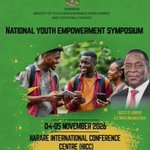
Youth Empowerment Symposium targets jobs and enterprise
Thousands of young people are expected to converge in Harare from November 4 to 5 for the 2026 Youth Empowerment Symposium, where the spotlight will fall on turning skills, innovation and entrepreneurship into jobs, viable businesses and sustainable livelihoods.
Organised by the Ministry of Youth Empowerment, Development and Vocational Training, the symposium comes as Zimbabwe pursues the National Development Strategy 2 and Vision 2030, with youth participation and human capital development central to the drive towards an empowered, prosperous and Upper Middle Income Society.
The gathering will emphasise youth empowerment as an economic strategy that goes beyond motivational programmes. Young people require marketable skills, access to finance, mentorship, vocational training and opportunities to participate in productive sectors of the economy.
Greater emphasis will be placed on connecting vocational training with employment and enterprise opportunities in agriculture, mining, manufacturing, construction, technology and other productive industries.
The thrust is to strengthen linkages between training institutions, employers, financial institutions and markets so that young people leave training programmes with more than certificates. Practical experience, business development support and accessible funding are critical to turning acquired skills into sustainable livelihoods and employment creation.
The symposium also advances President Mnangagwa’s development philosophy of leaving no one and no place behind, with empowerment programmes expected to reach youths in rural communities, urban settlements and marginalised areas, including persons with disabilities.
Infrastructure development, vocational skills, investment mobilisation and economic modernisation under the Second Republic provide a broader platform for young people to become active participants in building the economy rather than passive recipients of assistance.
The principle that “anything for the youths without the youths is not for the youths” will also underpin the gathering, providing young people with space to raise concerns, propose solutions and engage institutions responsible for their development.
Such participation is expected to strengthen leadership, critical thinking, public speaking and decision making while encouraging youth driven innovation in agriculture, healthcare, education, environmental management and digital services.
The symposium will also confront social challenges affecting young people, including unemployment, drug and substance abuse, mental health pressures, gender based violence and risks associated with the digital environment.
Mentorship, career guidance, business incubation and access to technology will form part of efforts to build a generation equipped to navigate these challenges while pursuing productive economic opportunities.
The Harare gathering comes ahead of the 2026 YouthConnekt Africa Summit scheduled for November 25 to 27 in Rwanda, where entrepreneurship, skills development, innovation, financial inclusion and policy dialogue will take centre stage.
Zimbabwe is competing with Zambia to host the 2027 edition. Securing the summit would provide an opportunity to showcase Zimbabwean innovators, entrepreneurs and vocational skills initiatives while strengthening links with investors, development partners, policymakers and other African countries.
The ultimate objective is to ensure such continental connections translate into investment, market access, knowledge exchange and practical economic opportunities for Zimbabwean youths.
#YouthEmpowermentZW #YouthConnektAfrica

Angel of Hope beneficiary pays tribute to First Lady
PURPOSE Ignatius Wadawareva, a beneficiary of the Angel of Hope Foundation who is pursuing a Bachelor’s Degree in Jurisprudence and Politics, has expressed gratitude to @ZimFirstLady Dr Auxillia Mnangagwa for giving him an opportunity to transform his life through education.
Wadawareva conveyed his appreciation during an interaction between President Dr @edmnangagwa and Zimbabwean students in Moscow, acknowledging the support he received through the foundation.
@angelofhope_zim

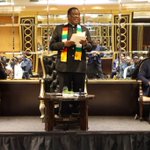
President engages Zimbabwean students in Russia
HE President Dr @edmnangagwa has interacted with Zimbabwean students studying in Russia, providing an opportunity for direct engagement during his visit to the country.


Parirenyatwa graduates new cohort of specialised nurses
PARIRENYATWA Group of Hospitals has graduated a new cohort of specialised healthcare professionals, strengthening Zimbabwe’s nursing workforce as the country confronts emerging diseases and a growing burden of non communicable conditions.
Health and Child Care Secretary Dr Aspect Maunganidze presided over the 2026 Nurses’ Graduation and Prize Giving Ceremony, which saw 75 General Nurses, 29 Community Nurses, 25 Midwives, 24 Nursing Administrators and 20 Ophthalmic Nurses graduate.
The cohort also included 13 Oncology Nurses, 12 Intensive Care Nurses, 11 Nurse Anaesthetists, nine Operating Theatre Technique Specialists and nine Renal Nurses.
Dr Maunganidze said the health sector was facing increasingly complex demands from cancer, diabetes and cardiovascular diseases alongside persistent threats such as cholera, typhoid and mpox.
He said these challenges, coupled with rapid technological advancement and rising public expectations, required skilled, adaptable and compassionate nurses.
While technology was increasingly important in patient monitoring and clinical decision making, Dr Maunganidze stressed that it could not substitute the human touch nurses provide through reassurance, recognising patients’ fears and safeguarding their dignity.
Government, he said, regards nursing as a critical pillar of the national health system, with a strong healthcare delivery system essential to achieving President Mnangagwa’s Vision 2030 target of an Upper Middle Income Society.


Zimbabwe, Russia seal new cooperation agreement
Zimbabwe and Russia have signed a new cooperation agreement aimed at strengthening institutional ties and advancing practical collaboration between the two countries.
The agreement was signed by Mr Petr Mikhailovich Fradkov, Board of Trustees Chairman of the Autonomous Non Profit Organisation for the Development of International Cooperation, and Foreign Affairs and International Trade Minister Professor Amon Murwira.
President Dr @edmnangagwa witnessed the signing, which took place on the margins of the Third Russia Africa Summit.
The agreement adds fresh impetus to bilateral cooperation between Harare and Moscow, with emphasis on stronger institutional engagement and practical collaboration.
#RussiaAfricaSummit


Zimbabwean delegation draws resilience lessons from China’s Great Wall
The Great Wall of China offered powerful lessons in resilience and nation building to media leaders from 13 countries attending the two week Seminar for Heads of Journalists Organizations and Gen Z Media Youth Leaders from Belt and Road Countries.
Among the delegates is Varakashi4ED National Vice Chairman Cde Mairosi Watungwa, who joined fellow participants on a visit to the historic landmark.
Stretching 21 196 kilometres and built over more than two millennia, the Great Wall stands as an enduring symbol of sacrifice, engineering ingenuity and perseverance. It is also a major tourism attraction, drawing tens of millions of visitors annually.
Cde Watungwa said the monument carried profound lessons for Zimbabwe, whose liberation struggle was similarly anchored in sacrifice and determination.
“The Great Wall tells you something profound about China. A nation that could summon the discipline and collective will to build such an extraordinary monument over generations was never going to surrender its destiny to adversity. As Zimbabweans, that story speaks directly to us because our freedom was also born out of sacrifice, endurance and an unbreakable determination to triumph against overwhelming odds,” said Cde Watungwa.
Zimbabwe’s liberation ties with China run deep. President Dr @edmnangagwa led the first group of five ZANU recruits to China on September 22, 1963, for six months of military science training at the Nanjing Army Command College in Jiangsu and remains the sole survivor of that group.
Other liberation figures associated with military training in China included Cde Herbert Chitepo, Cde Robert Gabriel Mugabe, General Josiah Magama Tongogara and General Solomon Mujuru.
The same spirit of resilience continues to underpin Zimbabwe’s development trajectory under the Second Republic led by President Mnangagwa. The economy has expanded from US$16 billion in 2017 to US$66 billion in 2026, with the country pursuing Upper Middle Income status by 2030.
#LongLiveChinaZimRelations


Zimbabwe-UK relations register historic milestone
Relations between Zimbabwe and the United Kingdom have registered a major milestone after Speaker of Parliament Advocate Jacob Mudenda made a historic visit to London at the invitation of his British counterpart, Rt Hon Sir Lindsay Hoyle.
During the visit, Advocate Mudenda became the first Zimbabwean Speaker to be formally acknowledged in the House of Commons during a live Prime Minister’s Questions session.
The visit also gave fresh impetus to Zimbabwe’s bid to rejoin the Commonwealth, with Speaker Hoyle expressing legislative support for the country’s readmission and undertaking to engage the UK Executive to help expedite the process.
The Commonwealth Parliamentary Association has proposed observer status for Zimbabwe’s Parliament as a possible short term pathway towards full membership, with a phased approach now under consideration.
Advocate Mudenda and Speaker Hoyle also discussed strengthening trade and investment between the two countries, agreeing that current levels remain below their potential.
The parliamentary engagement is set to continue, with Speaker Hoyle accepting an invitation to make a reciprocal visit to Zimbabwe.
#Engagement_Reengagement


China pushes wider AI access for developing countries
CHINA has called for wider access to artificial intelligence (AI) technology in developing countries, arguing that open source models can lower costs and technological barriers while helping nations build their own digital capabilities.
In a post on its X account, the Chinese Embassy in Zimbabwe said China was pursuing a people centred approach to AI development, with practical applications and open source technology positioned as tools for shared economic growth.
China has released more than 1 500 AI models, while cumulative downloads of its open source models have exceeded 10 billion, according to the embassy.
Chinese models such as DeepSeek and Kimi have been adopted by developers in more than 140 countries. The embassy said locally deployable open source systems could also help countries safeguard data sovereignty and security.
“AI should be a public tool for shared growth, not a technological barrier,” the embassy said.
China’s AI industry output has surpassed US$160 billion, with more than 30 percent of the country’s large manufacturers using the technology to boost productivity. AI is also being deployed across agriculture and healthcare to improve efficiency and production quality.
Citing the 2026 Stanford AI Index Report, the embassy said leading Chinese models had reached world class performance and narrowed the capability gap with international competitors, while open source alternatives were offering comparable performance at significantly lower costs.
In Africa, attention is also turning to AI as part of efforts to confront climate related risks. The embassy highlighted MAZU, an AI powered early warning system supporting the United Nations’ Early Warnings for All initiative, which can issue tiered warnings for extreme weather events up to 24 hours in advance.
The system is designed to help communities prepare for droughts, floods and other climate shocks.
China also plans to provide 5 000 AI training places for developing countries over the next five years and establish joint AI cooperation centres to share expertise and strengthen local technical capacity.
For Zimbabwe, greater access to affordable AI technology and training could open opportunities in agriculture, healthcare and manufacturing, although turning that potential into tangible gains will depend on digital infrastructure, technical skills and responsible deployment.
#ArtificialIntelligence
@ChineseZimbabwe @China_Amb_Zim


ZANU-PF recruits over 63 000 new members this year
ZANU-PF has recruited more than 63 000 new members this year, pushing cumulative recruitment under its Kumusha/Home/Ekhaya Recruitment Programme to over 295 000 since the initiative was launched in 2021.
According to the party’s Central Committee Report, the recruitment drive has gained traction in traditional opposition strongholds, with more than 300 volunteer coordinators deployed across 100 urban and peri urban constituencies covering 743 wards.
The volunteer coordinators are mainly former opposition MPs, councillors and senior officials who are spearheading the mobilisation exercise.
“Since the last Conference, the programme registered over 63 000 new members, bringing cumulative recruitment since its 2021 launch to more than 295 000,” reads the report.
The programme has attracted 55 former MPs, 16 former mayors and council chairpersons and more than 100 former councillors.
ZANU-PF Political Commissar Cde Munyaradzi Machacha said ideological training was also being used to integrate new members into existing party structures, with 730 members receiving training alongside local structures during the year. Others underwent brief orientation before assimilation.
Cde Machacha said the approach had strengthened relations between returning members and existing structures while reinforcing party organisation in traditional opposition strongholds.
The Commissariat Department, working with the National Security Department, has also completed the vetting of party affiliates. Of the 252 applications received, 80 were recommended for approval.
Cde Machacha said recommendations were being determined through a new formula based on each affiliate’s contribution towards party growth, as confirmed by the respective provinces.
The Commissariat Department will continue consolidating grassroots structures, completing the membership database and intensifying mobilisation while maintaining unity, discipline and responsiveness within the party.
@ZANUPF_Official

President engages key Russian institutions in Moscow
HE President Dr @edmnangagwa has held high level engagements with the leadership of PSB Bank and Rossotrudnichestvo on the sidelines of the Third Russia Africa Summit in Moscow, as Zimbabwe seeks to deepen its cooperation with the Russian Federation.
The President is accompanied by Minister of Economic Development and Investment Promotion Dr Kudakwashe Tagwirei and Foreign Affairs Minister Professor Amon Murwira, among other senior Government officials.
The engagements focused on strengthening practical partnerships in trade, investment and strategic financing, while expanding cooperation into human capital development and other social sectors.
Discussions with PSB Bank centred on opportunities in trade finance, credit lines and banking projects aimed at supporting growing economic cooperation between Zimbabwe and Russia.
“Zimbabwe remains open for business. We are deepening practical partnerships in trade, investment and strategic financing, while translating our political goodwill into tangible projects that will benefit the people and economies of both our nations,” said President Mnangagwa.
To accelerate implementation of the proposed areas of cooperation, President Mnangagwa proposed a joint technical working group involving PSB Bank, the Ministry of Finance, Economic Development and Investment Promotion and the Reserve Bank of Zimbabwe.
The engagements come as Zimbabwe records economic growth of 8.3 percent, driven significantly by the strong performance of the agricultural sector.
Zimbabwe is also following BRICS discussions on the interlinking of national payment systems as the frameworks continue to develop.
Cooperation with Russia extends beyond economics, with more than 1,000 Zimbabwean students benefiting from scholarships at Russian universities in fields including natural sciences, technology, medicine and nuclear science.
President Mnangagwa also welcomed institutional dialogue between the respective Human Rights Commissions as part of efforts to broaden bilateral cooperation between Zimbabwe and Russia.
The engagements highlight efforts by the two countries to translate political goodwill into practical cooperation capable of delivering economic opportunities, skills development and tangible benefits for their people.
#ZimbabweIsOpenForBusiness #RussiaAfricaSummit


Govt warns of thunderstorms, hail and flash floods across 7 Provinces
GOVERNMENT has warned of thunderstorms, possible hail, lightning and localised flash floods across seven provinces from this afternoon, with communities urged to take precautions to protect lives and property.
The Meteorological Services Department (MSD) and Department of Civil Protection said the unsettled weather will initially affect Matabeleland North, Matabeleland South, Bulawayo Metropolitan, Midlands, Masvingo and southern Manicaland.
The storms are expected to move northwards tomorrow, bringing thunderstorms and possible heavy downpours to Harare Metropolitan, northern Manicaland and all Mashonaland provinces through Thursday, October 29.
Although the advisory is classified as Warning Level Zero, authorities warned that lightning, strong winds and flash flooding remain possible, particularly in low lying areas, rivers and urban centres.
Residents have been advised to remain indoors during thunderstorms, avoid crossing flooded roads, rivers and streams, and move to higher ground where flooding threatens homes.
Parents should also keep children away from rivers and drainage channels, while unnecessary travel during heavy rainfall should be avoided.
Government said weather updates will continue to be issued as the system develops.
