

Crypto enthusiast |Magnitude 7.0 on SeismicSys|Brain on Genlayer|Creatoor on RallyonChain
Joined October 2022
- Tweets15.7K
- Following1.5K
- Followers1.5K
- Likes35.3K






Pinned Tweet
Thread X: Seismic's $10M Round and the Future of Protocol-Level Privacy in Fintech
1/8
Seismic’s freshly announced $10M extension round (led by a16z crypto, bringing total funding to $17M) is one of the clearest signals yet that native, protocol-level privacy is transitioning from niche to must-have for mainstream fintech.
Source: Fortune Crypto (Nov 12, 2025)
2/8
While the broader market consolidates (Bitcoin oscillating between $98K–$102K after October’s correction), institutional capital is becoming more selective. Investors are no longer chasing only high yields; they are backing infrastructure that can protect customer data while remaining fully compliant with tightening global regulations.
Source: CoinDesk Market Overview (Nov 14, 2025)
3/8
Founder @lyronctk has long argued that public blockchains suffer from “forced transparency” that actively hinders fintech adoption. @SeismicSys solves this with end-to-end encryption powered by Intel TDX, making transactions auditable yet invisible to the outside world.
4/8
The core promise is to make privacy composable, fast, and developer-friendly, three qualities largely missing from existing privacy solutions.
5/8
Applications like Brookwell (private stablecoin salary & bill payments) and upcoming private credit protocols show what becomes possible when confidentiality is built into the chain itself, not bolted on at the application layer.
6/8
With MiCA( (Markets in Crypto-Assets Regulation) now fully in force across Europe and U.S. stablecoin legislation advancing in Congress, the timing could not be better. Fintechs handling sensitive flows (payroll, rent, loans) need infrastructure that satisfies regulators without exposing user data on a public ledger.
Source: European Commission MiCA update (Nov 2025)
7/8
Seismic’s EVM compatibility means developers can port existing DeFi tools with minimal changes, while the underlying TEE layer guarantees privacy by default. This combination dramatically lowers the barrier for institutions and traditional fintechs to enter crypto confidently.
8/8
In an industry moving from experimentation to real-world scale, Seismic’s latest milestone reminds us that privacy is no longer optional, it is the foundation for the next wave of financial applications.
@NoxxW3 @heathcliff_eth @xealistt

Changzh retweeted

A smart contract can enforce a deal. But can it tell whether the deal was actually fulfilled?
Imagine a DeFi escrow tied to a seller’s written terms on a website. The funds are locked, and the release condition is coded in advance. But what if fulfilling that condition requires reading the terms and interpreting evidence? The contract can execute its instructions perfectly while still depending on someone else to say what happened.
That’s the part of decentralization worth questioning.
@GenLayer’s Intelligent Contracts can access the live web and use language models to evaluate conditions that ordinary smart contracts cannot interpret on their own.
And the decision doesn’t simply rest on one model’s answer. Validators independently run the contract using their own models. If they disagree, another round can follow, and the decision can be appealed.
This doesn’t make mistakes impossible. It means the system has a process for checking a judgment instead of blindly accepting one report.
For me, that’s the real distinction: automating a transaction is one thing. Evaluating the conditions behind it is another.
If you were locking funds in an escrow, what evidence would you want the contract to examine before releasing your money?

Changzh retweeted

False is a result, not an explanation.
Suppose a booking must be under $200 and refundable. If it fails, was the price too high, an exception applied, or the page changed?
Ordinary code can compare a supplied amount, but cannot read a live booking page. An oracle brings that outside evidence in.
@GenLayer Intelligent Contracts pair Python logic with live pages and a language model. Other validators rerun the contract with their own models.
Reruns can check for agreement. Agreement cannot prove the right page or clause was chosen. That choice can decide whether the refund is paid.
That is a design risk. Opaque source choices can shift trust to the chooser. Both parties should inspect the source, rule, and failed check.
For a disputed booking, what should reviewers inspect first, the page, the exception, or the failed check?
Changzh retweeted

GEN tokenomics is live.
How GEN is staked, spent and earned across GenLayer, all in one paper 👇portal.genlayer.foundation/g…
Changzh retweeted

I counted the contracts my money sits in and asked how many can see the world without help. Zero. Every one waits for a witness to type first.
Each contract reads exactly one room, the chain. The event, the delivery, the policy live in the other room, and we hired messengers.
The door is where decentralization ended. The @GenLayer video gives it a key, Python that calls the live web and a language model. Smart contracts lack that key.
One validator proposes, others rerun with their own models, and only a match passes. No match sends a new leader. Without appeal, funds move.
The hard part is not the reading. It is a reader inside the vault, and a bad read moves funds. That is why I watch the appeal window.
That rerun is the gap between renting a witness and owning the looking. A rented witness had one client. The page never had this many readers.
DeFi users, which outside fact does your favorite position believe unchecked, price, expiry, or a payout flag? One line is enough. I read every reply.
For two years my signature was the only oracle a warehouse trusted. Pallets matched the invoice because I said they did.
A smart contract could have paid on my word. It could not count the pallets itself. Someone had to type my clipboard into it. That typing was where trust lived.
An Intelligent Contract is Python that goes and looks. Validators rerun my count with different models. Agreement pays. Disagreement opens another round. Anyone can appeal.
The oracle was never the villain. It was a job nobody decentralized. Decentralization did not end at my honesty. It stopped at my clipboard.
Here is the test I now run on any trustless claim: ask who reruns the check, not who signs it. One signature is a verdict. Three reruns are a process.
@GenLayer builds the rerun into contracts: proof lives in the working, not in a witness. DeFi meets oracles daily: every price feed is someone's clipboard.
If your word alone ever made a paper true, tell me the last document your signature settled. One line is enough. I will read every reply.
Seismic Has Been Quiet on X. That’s Not a Bad Sign
The @SeismicSys team has been pretty quiet on X this month. No big announcements, no new partnerships, no testnet countdown. A few people in the community have started asking if things have slowed down.
If you look at GitHub though, the picture is different. The core repos (seismic-reth, summit, enclave) have been getting steady commits through mid-to-late October. It’s the kind of work that doesn’t make for flashy posts: millisecond-precision timestamps being added to headers and Engine API payloads, more Google Cloud TDX support so nodes aren’t locked to one cloud provider, and a proposed fix for an edge case where a private operation could incorrectly be treated as public.
None of this is revolutionary on its own. It’s mostly hardening. Making the privacy guarantees more reliable, reducing the chance of accidental data leakage, and preparing the stack for tighter block times. Sub-second blocks have been on the roadmap for a while, and the recent changes around timestamps look like groundwork for that.
I’ve watched a few projects go quiet right before they either ship something solid or quietly fade. With Seismic the quiet feels more like the first case so far. The official account hasn’t been hyping timelines, and the founder’s posts have been sparse. Meanwhile the engineering work continues, and the community has kept itself busy with smaller things (games, tools, events) rather than waiting for the next announcement.
It’s not particularly exciting to talk about. “We’re fixing private transaction edge cases and adding cloud support” doesn’t travel as well as a new partnership or a mainnet date. But for a chain that’s trying to handle sensitive financial data, the unglamorous work usually matters more than the posts.
Curious how others are reading the current pace. Do you see the low social activity as a positive sign that they’re heads-down, or does the lack of public updates make you more cautious?

Changzh retweeted
My father watched Titanic eleven times and never looked at the leads. He counted lifeboats, named the funnels, and waited for the water.
So my overrated classic is Titanic, and the charge is specific. It is overrated as a romance. The love story is the thinnest layer in the hull.
Watch the third hour again. The flood is blocked like a war report: doors, stairs, water lines. The romance gets a song. The water gets the craft.
The posters sold the kiss, so the kiss became the product. A film this good at drowning got reviewed as a wedding. That gap is it.
I rewatched Titanic borrowing my father's habit: I timed the water against the love scenes. Forty minutes of flood. Twenty of romance.
The romance got the posters. The flood did the work. Every classic has a load bearing half, and it is rarely the famous one.
@RallyOnChain, put it to the room: which classic is famous for its weakest half? Name the half. I will read every reply and defend the flood.
Ten seconds to evacuate. One item. I am grabbing the printer.
Not to save it. To finish it. Eleven years of paper jams and one error code the manual denies.
Ten seconds is not a rescue. It is a settlement. The war ends with me holding it.
@RallyOnChain, which object in your house is your longest war? Name it below. I will read every reply.

Changzh retweeted

Refreshing an airdrop eligibility checker at 3 AM taught me something about smart contracts.
The claim contract was perfect. It paid exactly what the list said. But the list was an off-chain decision, and nobody could re-run it to see how I got "not eligible."
That is the part a smart contract cannot touch. It follows the rule. It cannot read the page where the rule lives.
An Intelligent Contract from @GenLayer can. It is written in Python and reads the live web through a language model.
Then other validators run it themselves, each with its own model. If they agree, the result stands.
A decision anyone can re-run is a different kind of decision.
What is the worst eligibility call you ever got that nobody could explain?
The courier app says three delivery attempts failed today.
"Recipient not home."
I have been on this couch since Tuesday. My only witness is an algorithm that refuses to see me.
@RallyOnChain, which notification caught you lying about being home?

My father watched Titanic eleven times and never looked at the leads. He counted lifeboats, named the funnels, and waited for the water.
So my overrated classic is Titanic, and the charge is specific. It is overrated as a romance. The love story is the thinnest layer in the hull.
Watch the third hour again. The flood is blocked like a war report: doors, stairs, water lines. The romance gets a song. The water gets the craft.
The posters sold the kiss, so the kiss became the product. A film this good at drowning got reviewed as a wedding. That gap is it.
I rewatched Titanic borrowing my father's habit: I timed the water against the love scenes. Forty minutes of flood. Twenty of romance.
The romance got the posters. The flood did the work. Every classic has a load bearing half, and it is rarely the famous one.
@RallyOnChain, put it to the room: which classic is famous for its weakest half? Name the half. I will read every reply and defend the flood.
Changzh retweeted

as agents become real crypto users, they’ll need a way to settle disputes onchain, with no human to call
@tokenpost wrote up what we’re building at @GenLayer
tokenpost.com/news/technolog…

For two years I paid a funding fee every eight hours on a trade I never adjusted. I called it the cost of being right.
I learned who collects it. @2FactorFinance went live on Base, pricing leverage against patient capital, not against shorts.
Risk splits in two. A senior side takes downside protection and collects the premium. A junior side carries leverage, no liquidation line.
Two drags remain: volatility drag and financing drag, the cost of capital behind exposure. Where they overlap, a band appears.
At Bitcoin volatility that band closes near 1.33x. The same math prices gold near 2.35x and the S&P 500 near 2.1x.
Leverage launches usually target people who want exposure. This one recruits the side that waits. Leverage is somebody's patience.
Disclosure: the link below is mine and earns me a share of the platform fee.
points.2factor.finance/r/tx7…
If you have ever been that patient money, tell me what taught you to stay patient. One line is enough. I will read every reply.

Pernah jual beli online pakai rekber? Atau jadi freelancer yang payment-nya ditahan klien karena "hasilnya nggak sesuai brief"?
Sadar nggak, Indonesia itu jago banget bikin solusi kepercayaan manual: rekber, COD, screenshot testimoni. Semua lahir dari satu masalah yang sama, nggak ada pihak netral yang murah dan cepat untuk mutusin: "kerjaan ini udah selesai sesuai kesepakatan, atau belum?"
Nah, @GenLayer lagi bangun versi otomatisnya.
GenLayer bikin intelligent contract: smart contract yang nggak cuma jalanin kode, tapi bisa baca data dunia nyata dan nilai sendiri apakah kondisi kesepakatan benar-benar terpenuhi.
Kalau ada sengketa, yang mutusin jaringan validator ( model AI berbeda-beda yang saling cek ) bukan siapa yang paling kuat atau paling berani ribut. Biayanya katanya di bawah 1 dolar untuk kasus sederhana.
Bayangin apa artinya buat kita: freelancer Indonesia yang kerja sama klien luar negeri tanpa takut kena boom. Seller online yang nggak butuh rekber manual. Pembayaran yang lepas otomatis begitu kerjaan terbukti selesai.
Itu alasan gue serius ikutin ekosistem ini sejak April 2025. Bukan karena hype, tapi karena masalah yang mereka beresin adalah masalah yang kita alami tiap hari di sini.
@Toraez20, gue tag lo karena lo orang yang paling cocok denger ini dulu. Lo kan sering ngomongin susahnya pembayaran lintas negara buat freelancer, coba lihat sekali aja, nggak perlu langsung percaya.
Mau mulai? Pakai link referral gue: portal.genlayer.foundation/?…
Atau mampir Discord GenLayer dulu buat nanya-nanya, komunitasnya ramah, dan banyak orang Indonesia juga di sana.


Changzh retweeted

I have watched smart contracts fail because the proof they needed was trapped in a messy document.
Code demands perfectly clean inputs.
The real world rarely provides them.
If the proof of work is a screenshot or the service terms are buried in a PDF, the contract is blind.
An oracle only works if a middleman translates that mess into a neat boolean feed.
@GenLayer builds Intelligent Contracts in Python.
They do not need a human to clean the data first.
The contract fetches the live web, reads the unstructured page, and asks a language model to interpret the reality.
The hard part is not connecting the blockchain to the internet.
It is letting the code read the messy world without forcing a centralized translator to stand in the middle.
Smart contracts execute the logic, but they cannot read the invoice.
When your next escrow depends on a document instead of an API, who is currently translating the mess for your code?
Season 1 on @rarelistio is live! Join creator campaigns for curated projects and compete for a $50,000 prize pool.
Verifying my account: RL-ZRBJ87
Getting early access to @LebrelAI: private, uncensored AI through chat and API.
Join with my invite link: early.lebrel.ai/r/6JHZ8M xitter.cf/LebrelAI/status/211222…


The Lebrel waitlist is live.
We’re building private, uncensored AI for researchers, developers, and creators who want more freedom and control.
Private beta is coming soon.
Join the waitlist: early.lebrel.ai/
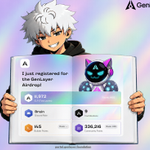
Joined since April 3, 2025 and still here. Airdrop registered. Let's see what's next, @GenLayer.
Check your eligibility and register before October 26th: airdrop.genlayer.com

