
Joined August 2021
- Tweets114
- Following409
- Followers537
- Likes1.4K





Pinned Tweet
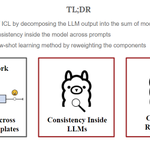
When Parts Are Greater Than Sums: Individual LLM Components Can Outperform Full Models
w/ @_jessethomason_ @robinomial
arxiv.org/abs/2406.13131
A new view of ICL by decomposing the output of an LLM into the sum of "components"
A new method: don't select prompt; select components!

Ting-Yun Chang retweeted

At #COLM2026 now! Come find me at Poster #8 now, where I'm presenting our interpretability work on LLM retraction.
Also would love to swap thoughts on self-improvement, making AI better collaborators, and what academia can still do these days 👋
It was a great pleasure to write a paper together with Harvey! I’ve known him since he was an amazing undergrad. Now he’s a fully-fledged researcher! If you’re looking for Spring/Summer interns, go find him at COLM!

I’ll be at #COLM2026 next week, presenting our work on effective KV-cache eviction at the Efficient Reasoning Workshop on Oct 9, 12:30–13:30.
I work on LLM capabilities, efficient reasoning, and evaluation, and would be happy to chat with anyone working on related problems!
I’m also looking for Spring/Summer 2027 internships. Feel free to DM me if you think I'd be a good fit.
1
18
794
Ting-Yun Chang retweeted

I'll be at COLM next week! I'll present my work on the fragility of self-improving agents at the Lifelong Agents workshop (Friday 10-11am).
If you work on self-improving agents, especially on how to evaluate them, oversee them, and make them safe, I'd love to chat! ☕

ALT https://arxiv.org/abs/2608.18066
Ting-Yun Chang retweeted

VaSE is accepted to #NeurIPS 2026! 🎉


Ting-Yun Chang retweeted
In San Diego for #ACL2026! ☀️
Happy to chat about LLM memory and agents.
Our oral talk: "When LLMs Read Tables Carelessly: Measuring and Reducing Data Referencing Errors". LLMs make careless reading mistakes just like humans do.
Mon 7/6, Oral Session D
arxiv.org/abs/2606.32029

Ting-Yun Chang retweeted

Seeing👀 is not reasoning🤔?
Introducing our new blog post. We tested 8 open VLMs on 9 VQA benchmarks, and found that a lot of "visual" accuracy isn't visual at all. Many benchmarks can be solved without ever looking at the image, and some VLMs reason better from text than from pixels.
[1/n]

This is the final project of my PhD journey 🎓 I've thought a lot about how to make interp actionable in my previous projects. I believe efficiency follows naturally: when we have a deep understanding of the model, we can figure out where to be frugal w/o hurting model accuracy. The Attention Sink and LLM.int8() papers set great examples, and they deeply inspire our paper. Mirroring the findings on value-state drain, we find that large-range value states are equally important in KV cache eviction. Evicting these outliers causes reasoning models to enter an endless self-reflection loop, while keeping them in the cache maintains accuracy. I'm extremely grateful to my amazing coauthors and supportive advisors.

Ting-Yun Chang retweeted
🧵 1/8
What should an LLM assistant remember across conversations?
Existing memory work studies this one task at a time. But real-world assistants see all kinds of conversations, and that changes the problem.
Introducing BEHEMOTH 🦣 + CluE 🌱: a benchmark & self-evolving method for heterogeneous memory extraction.
📄 Paper: arxiv.org/abs/2604.11610

Ting-Yun Chang retweeted

Vibe coding with an LLM, but the final vibe is off? 🤔
We analyze why models fail the "vibe check" and what truly matters to users. Key insight: human preference 🧑💻 ≈ functional correctness ✅ + instruction following 🎯
Check out our paper: arxiv.org/abs/2510.07315

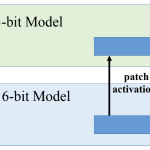
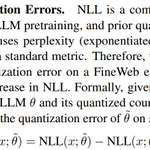
Our paper "Why Do Some Inputs Break Low-Bit LLM Quantization?" w/ @zhang_muru @_jessethomason_ @robinomial is accepted to EMNLP 2025. arxiv.org/abs/2506.12044

Overall, we conduct a few sets of experiments with different tools, trying to figure out why it's so hard to go beyond 4 bits in weight-only quantization. We find that the model keeps changing its activation magnitudes (?!) and RMSNorm suppresses outliers **most** of the time.
1
1
98
Ting-Yun Chang retweeted

Don't forget to join us tomorrow, September 3rd for a session with @qinyuan_ye on "Function Induction and Task Generalization: An Interpretability Study with Off-by-One Addition."
Learn more: cohere.com/events/cohere-lab…

Come learn how AI builds reusable cognitive structures! 🧠
New research reveals "function induction" mechanisms that let LLMs generalize from 1+1=2 to 1+1=3 by decomposing & reusing computational patterns across attention heads. Discover how models learn entirely new tasks from just examples in this talk by @qinyuan_ye on September 3rd.
Thanks to @KanwalMehreen2 and @AhmadMustafaAn1 for organizing this event! 🔥
Learn more: cohere.com/events/Cohere-Lab…

Ting-Yun Chang retweeted
Excited to present our interpretability work on how LMs process "1+1=3" and end up generating "2+2=5". Sign up to learn more! 🔍
Come learn how AI builds reusable cognitive structures! 🧠
New research reveals "function induction" mechanisms that let LLMs generalize from 1+1=2 to 1+1=3 by decomposing & reusing computational patterns across attention heads. Discover how models learn entirely new tasks from just examples in this talk by @qinyuan_ye on September 3rd.
Thanks to @KanwalMehreen2 and @AhmadMustafaAn1 for organizing this event! 🔥
Learn more: cohere.com/events/Cohere-Lab…
