

your toothpaste is harmful, replace it with RHA tooth powder 🌾
Joined January 2023
- Tweets868
- Following7
- Followers49
- Likes159


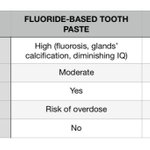


I just hope he get rid of toothpaste too. Not a joke, serious.
It can cause a domino effect towards complete decolonisation.

8
Calcium, phosphate, and fluoride- the three most essential ions involved in crystallization/mineralization.
3
These factors collectively determine the kinetics and extent of mineralization, ensuring the proper formation and maturation of enamel during tooth development.

The diffusion of essential ions into the enamel matrix is complex and regulated by factors like concentration gradients, solubility product, pH, ionic strength, protein-mineral interactions, and ion size & charge.
5
The diffusion of essential ions into the enamel matrix is complex and regulated by factors like concentration gradients, solubility product, pH, ionic strength, protein-mineral interactions, and ion size & charge.
Some of the ions in saliva and surrounding tissues diffuse into the enamel matrix and play a crucial role in the process of enamel mineralization.
5
Saliva and the surrounding tissues contain several ions such as sodium, potassium, calcium, phosphate, chloride, bicarbonate, fluoride, carbonate, hydrogen, magnesium, and trace ions like zinc, copper, iron, and manganese.
15
The proteins undergoing post-translational modifications, such as phosphorylation and glycosylation, regulate the affinity for each other and modulate the kinetics of assembly. Ultimately, a scaffold is ready for enamel mineralization.
12
how is the most obvious correlations between fluoride and pineal gland calcification not considered in the entire hypothesis at all? @SatchinPanda @RosmalenLaura

Last year, I raised a provocative idea: gravity might be an overlooked contributor to aging.
Today, the full paper on "Gravitational Stress, Cerebral Blood Flow, and Aging: A Hypothesis" is published in Ageing Research Reviews, a top-three journal in its field by Journal Citation Reports.
sciencedirect.com/science/ar…
What it proposes: we spend most of our waking lives upright, with the brain above the heart. Over decades, this could contribute to the known decline in brain blood flow with age. The brainstem and hypothalamus may be especially vulnerable, and those regions regulate much of the rest of the body, and might contribute to whole body aging.
What it does not say: that gravity is the sole cause of aging, how big the effect is, or that anyone should try an intervention.
Please note that this is a hypothesis paper. Peer review checked that the argument is strong enough to publish; only experiments can prove whether it is true or false.
Experiments to test it are now underway, and if you work in any of these areas, we would welcome your collaboration, including work aimed at disproving it.
Big thanks @RosmalenLaura and @SatchinPanda for the incredible effort on putting this together.

38
Proteins like amelogenin, enamelin and ameloblastin, self-assemble and organize within the extracellular space. They undergo post-translational modifications, such as phosphorylation and glycosylation, which influence their self-assembly properties.
7
The list of: Amelogenin, Enamelin, Ameloblastin, Amelotin, Tuftelin, ODAM, EMSP1, KLK4, MMP20 is not exhaustive- as there are many other proteins and factors involved in the complex process of amelogenesis. However, these proteins seem to be the most key and critical.
6
Role of the protein MMP20 (Matrix metalloproteinase 20) in Amelogenesis:
Another protease enzyme that is involved in processing enamel matrix proteins and enamel mineralization.
9
Role of the protein KLK4 (Kallikrein-related peptidase 4) in Amelogenesis:
A protease enzyme responsible for processing enamel matrix proteins during enamel maturation.
17
Role of the protein Enamel matrix serine proteinase 1 (EMSP1) in Amelogenesis:
Involved in enamel matrix degradation and
turnover.
17
Role of the protein Odontogenic ameloblast associated protein (ODAM) in Amelogenesis:
Plays a role in enamel maturation and
mineralization.
15
Role of the protein Tuftelin in Amelogenesis:
Contributes to enamel mineralization and formation of enamel tufts.
13
Role of the protein Amelotin in Amelogenesis:
Involved in enamel mineralization and regulation of enamel prism formation.
12
Role of the protein Enamelin in Amelogenesis:
Contributes to the structural organization of enamel matrix and mineralization.
11
Role of the protein Amelogenin in Amelogenesis:
The most abundant protein in developing the enamel; responsible for enamel matrix formation and organization.
15