



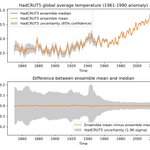
At #EGU24? Interested in climate observations and monitoring? Come visit our session tomorrow morning at PICO spot 5.

Colin Morice retweeted

Pleased to be speaking at the @EuroGeosciences #EGU24 conference on Monday on our @Nature paper on how we will know when we've reached 1.5°C global warming
Session CL2.6 Global and regional climate observation and monitoring, PICO 5 - I'm on at 10:45 🧵
nature.com/articles/d41586-0…


These results are discussed by the @WMO here:
xitter.cf/WMO/status/17458382924…

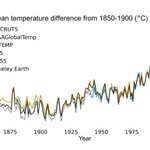
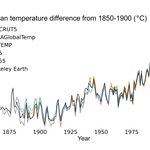
Today, WMO confirms that 2023 smashed the global temperature record by a huge margin. This conclusion is based on the consolidated global temperature figure derived from six international datasets.
Press release 👇🏽
wmo.int/news/media-centre/wm…


2023 smashed the prior record, becoming the hottest year at between 1.34C and 1.54C above preindustrial levels based on reports from five different monitoring groups.
For more details see our massive new State of the Climate report over at @CarbonBrief
carbonbrief.org/state-of-the…

Working in climate monitoring? Consider submitting an abstract to our EGU session. Submission deadline this Wednesday, January 10th, 13:00 CET.
CL2.6 Global and regional climate observation and monitoring
meetingorganizer.copernicus.…

Calling for abstracts the EGU24 session "Global and regional climate observation and monitoring".
Submission deadline 10 January, 13:00 CET.
meetingorganizer.copernicus.…
Calling for abstracts the EGU24 session "Global and regional climate observation and monitoring".
Submission deadline 10 January, 13:00 CET.
meetingorganizer.copernicus.…
Colin Morice retweeted
Approaching 1.5°C: how will we know we’ve reached this crucial warming mark?
The Paris Agreement does not define "temperature rise", so recognition of 1.5°C being reached may be delayed
In @nature we propose the Current Global Warming Level metric
nature.com/articles/d41586-0…
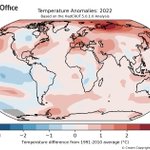
Global near-surface temperature data for 2022 have been released today by the Met Office/University of East Anglia.

2022 data has now been published by 6 monitoring centres. Each place 2022 as the 5th or 6th warmest year in their respective records.

La Niña conditions have been a notable feature of 2022, acting to slightly suppress global average temperatures for the year. The influence of La Niña is small compared to the long-term warming trend, with 2022 among the warmest years on record.
xitter.cf/metoffice/status/16135…
