

Writing about the human operating state, capacity, and why capable people underperform. ex-athlete, ex-sales
Joined February 2026
- Tweets15.3K
- Following280
- Followers707
- Likes13.5K






Conrad retweeted
I’ve never understood why we treat motivation as something we’re supposed to wait for or not.
Create the damn motivation.
Get some sunlight. Move your body. Sleep properly. Stop the overstimulation. Skip the junk food.
Get some momentum going. Create a full positive cycle of solid habits that just repeat itself.
Then notice how much easier it becomes to actually want to do things.
Conrad retweeted
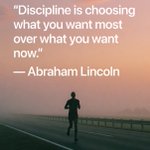
There’s a reason some people seem naturally consistent. They don’t negotiate with unnecessary friction every morning. They take care of the fundamentals and don’t get controlled by cheap dopamine. Consistency looks like discipline when the real advantage is fewer things getting in the way.
Conrad retweeted
How to become more efficient at almost anything:
Two rules
1. Notice when you’re sharp. Exploit it.
2. Notice when your capacity is dropping. Recover.
Don’t waste your sharpest hours on low value activities. Don’t spend your tired hours forcing weaker productivity. Get in the rhythm with your capacity instead of pretending it doesn’t fluctuate.
Dance with it.
Conrad retweeted
Many times we underestimate what simply feeling good can do for how we take on life. It’s easy to feel just alright these days that it creates friction that shouldn’t be there. Notice how little negotiation there is on your best days. It becomes a matter of knowing what creates a good state and what doesn’t.
Conrad retweeted
Ask this when you have a bad day:
Does a bad day stay a bad day?
Or does it become:
bad day → bad sleep → skipped training → poor food → more stimulation → another bad day?
I know from experience it’s easy to drift away. It start looping against you.
The skill is building stability. A strong baseline helps you recover faster, before a bad day turns a bad week.
Conrad retweeted
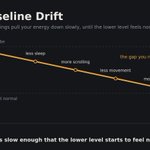
The scary part about living your life at 70% of your capacity is that it works.
Do it long enough and it starts feeling normal. Life still functions. Days get done.
You’re just not the full version of yourself. It feels harmless enough to not question it.
Notice the drift before calling it identity.
Conrad retweeted
I’ve tried a lot of longevity, supplement, health optimization stuff.
Most of it is marginal.
They’re sold as life-changing, but in reality, the changes are tiny. Except two:
- Circadian rhythm (morning sunlight being a heavy lifter)
- Consistent wake times
Other than that, it’s mostly theatre.
The person who fix sleep, exercise, diet, stress and controls stimulation will always be ahead of the average person.
Optimizing the extra 1%-ers easily become its own form of drain.
No hack creates leverage from a weak foundation.
A strong foundation is the leverage.
No need to overcomplicate it.