

The Cosmos Network is Going to connect you to the Universe. ↓ Join now
New York, USA
Joined August 2026
- Tweets2.2K
- Following548
- Followers2.9K
- Likes2.7K



Pinned Tweet
🚨 LARNE'S 147FT PALLET SKYSCRAPER — BUILT TO BURN IN ONE NIGHT
Craigyhill bonfire for Eleventh Night, eve of Twelfth — marks King William's 1690 Boyne victory. 18,000 pallets stacked, claimed tallest in world.
Built over weeks by local crews, gone in hours. 🔥
🚨 THIS IS WHAT HEAVY-DUTY INDUSTRIAL TRANSPORT LOOKS LIKE.
A truck carrying dozens of heavy cylindrical components, secured inside a custom steel frame, shows how specialized equipment is moved over narrow roads.
The real engineering challenge isn't just carrying the load, it's keeping its weight balanced and the cargo stable throughout the journey.
🚨 RAILWAY TRACKS CAN BE WELDED USING A CHEMICAL REACTION THAT PRODUCES MOLTEN STEEL.
It’s called thermite welding. Aluminium reacts with iron oxide, generating enough heat to produce molten metal at around 2,500°C.
The liquid steel fills the gap between the rails and solidifies into a permanent joint, without needing an electrical welding current.
A chemical reaction. Molten steel. One continuous railway line.
🚨 THE MIG-25 IS MOSTLY STEEL — AND ITS RADAR RAN ON VACUUM TUBES.
About 80% of the airframe is nickel-steel alloy because titanium was scarce and the plane only needed to survive brief dashes above Mach 2.8.
The electronics used vacuum tubes on purpose: they could shrug off the electromagnetic pulse from a nuclear blast and were easier for Soviet industry to build and repair.
When one defected to Japan in 1976, Western analysts were shocked it was far less advanced than they feared, and still terrifyingly fast.
🚨 THE SPITFIRE’S ELLIPTICAL WING WASN’T JUST FOR LOOKS.
It was shaped to keep the entire span at the same lift coefficient, cutting induced drag while packing eight machine guns and still staying light enough for the Merlin.
Early Merlins also cut out under negative G because the carburetor floated dry, until Beatrice Shilling’s simple orifice plate fixed it in the field.
That one thin metal disc let Spitfire pilots dive and pull up without the engine dying. A tiny fix that changed dogfights.
🚨 THE HURRICANE OUTNUMBERED THE SPITFIRE IN THE BATTLE OF BRITAIN — AND WAS EASIER TO FIX.
Its rear fuselage was still fabric-covered, so ground crews could patch battle damage on the airfield in a few hours.
A Spitfire with the same hits usually had to be trucked to a repair depot.
At the peak of the battle there were roughly twice as many Hurricanes in action as Spitfires, and they did most of the bomber intercepts while the Spits mixed it up with the 109s. The plane that saved Britain was the one nobody talks about.
🚨 THE FIRST ALLIED JET TO ENTER SERVICE WASN’T JUST A FIGHTER — IT WAS BUILT TO KILL V-1s.
The Gloster Meteor F.1 reached operational squadrons in July 1944, the same month the Me 262 first flew combat.
Its Welland engines were more reliable than the German Jumo 004s, and early Meteors were used almost exclusively to intercept flying bombs rather than fight other aircraft.
One Meteor even had its nose clipped by a V-1’s wing during a close-in attack and still made it home. The jet age had two sides from day one.
🚨 THE ME 262’S JET ENGINES HID A TINY PISTON STARTER INSIDE EACH NOSE CONE.
A 10 hp two-stroke Riedel engine spun the Jumo 004 up to speed before ignition, and if the electric start failed, the pilot could still pull a cord through a hole in the intake.
Production engines used cheap mild steel with an aluminum coating instead of scarce nickel alloys, so they needed an overhaul after just 10–25 hours.
Early prototypes even kept a full piston engine and propeller in the nose as a safety net. When both jets flamed out, Fritz Wendel simply flew home on the prop.
A day on Venus is longer than its year. 🌌 And somewhere out there, a black hole is swallowing light itself. We're just dust on a spinning rock, and the universe doesn't even know we exist. 🌍
Which fact blew your mind the most? Tell me below 👇
🤖 Made with AI
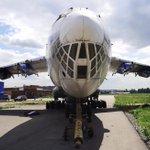
🚨 THE IL-76 STILL FLIES WITH A NAVIGATOR IN A GLASS NOSE.
Below the flight deck sits a fully glazed station so the navigator can look straight down at the ground.
It was built for visual approaches to remote strips, precision airdrops, and as a backup when radios or GPS go dark.
Even the newest Il-76MD-90A keeps the glass chin, because removing it would mean redesigning the whole forward fuselage. Soviet design that never needed to go fully digital.
🚨 THIS PLANE HAS THE WIDEST WINGSPAN EVER FLOWN.
Stratolaunch’s Roc stretches 385 feet tip to tip, longer than a football field, and uses six engines pulled from Boeing 747s.
It was built with two fuselages so it can carry hypersonic vehicles under the center wing, climb to altitude, and release them in flight.
That single air launch gives rockets higher starting speed, less fuel burn, and the freedom to fly from almost anywhere. One aircraft. Zero ground launchpads.
🚨 THIS APACHE NEVER HAS TO SHOW ITSELF.
The AH-64D’s Longbow radar sits on a mast above the rotor, so only the dome peeks over a ridge or tree line.
In seconds it can detect, classify, and prioritize over a hundred targets while the helicopter stays completely hidden.
Then it launches fire-and-forget Hellfires and drops back into cover before anyone knows it was there. Dutch Apaches still doing exactly that.
🚨 THE RAFALE’S REAL WEAPON IS INVISIBLE.
SPECTRA is fully built into the airframe, not a bolt-on pod, and runs completely automated.
It detects threats hundreds of kilometers out, maps the electromagnetic environment in real time, then fires directional jamming or decoys without the pilot lifting a finger.
That’s why Rafales have flown into heavily defended airspace and come home clean. French engineering that stays quiet until it doesn’t.
🚨 THIS ROCK IS LITERALLY SWEATING PURE MERCURY.
Heat cinnabar (HgS) and the sulfide breaks down — mercury vapor forms, then condenses as liquid droplets right on the surface.
Ancient miners watched the same thing: Vitruvius described the ore shedding “tears of quicksilver” the moment it was struck or thrown into a kiln.
The droplets are elemental mercury, not sweat. One of the oldest metal extractions on record, and still exactly as toxic as it looks.
🚨 THIS SU-25’S PILOT SITS INSIDE A TITANIUM BATHTUB.
The cockpit is wrapped in welded titanium armor 10–24 mm thick — roughly a ton of protection built to shrug off multiple 20–23 mm hits.
Engines sit in separate compartments divided by an armored firewall, so one hit rarely kills both. Fuel tanks are foam-filled and self-sealing.
That’s why Frogfoots have repeatedly flown home from Afghanistan and Ukraine with shredded wings and one engine dead — a flying tank built for rough strips right on the front line.
🚨 THIS 2-FOOT MOTOR JUST SIMULATED A SCORCHING LAUNCH DAY.
NASA Marshall fired a subscale solid rocket booster on June 1, 2022, producing 92,000 pounds of thrust.
It was the second test for the BOLE program, the bigger, more powerful solid boosters planned for SLS Block 2 starting with Artemis IX and beyond.
Engineers deliberately used a different propellant to hit the maximum expected operating pressure the motor could see on a hot day at Kennedy. A tiny motor proving the design for heavier lunar payloads.
🚨 THIS TU-144’S “MOUSTACHES” JUST MOVED AGAIN.
Volunteers at Zhukovsky have restored the retractable canards (PGO) and droop-nose mechanism on Tu-144D CCCP-77115.
Unlike Concorde, the Soviet jet needed those small forward wings for low-speed lift and control. They extend for takeoff and landing, then fold flush into the fuselage for supersonic cruise.
Decades after the last passenger flight, the systems are working again, purely for static display, powered by a newly fitted APU.
🚨 THIS BELARUS WELL ISN’T A DEEP ARTESIAN MONSTER.
In Gomel oblast, many household wells are Abyssinian-style sand points driven just 12–30 meters deep, finished in a single day with a small portable rig.
The water arrives already filtered by the sand layers above it, typically delivering 30–60 liters per minute. That’s enough for a full house and garden without the cost or time of a 100–250 m artesian hole.
Same region, same geology, completely different speed and price.
🚨 THIS HEMP CORE ISN’T JUST FILLER.
Inside every strand of this Chinese-made wire rope sits a natural hemp core packed with 12–15% grease.
It slowly bleeds lubricant to the steel wires, cutting internal friction so hard that properly oiled versions show roughly half the wire breaks of dry ones.
That’s why elevators have used hemp-core ropes since the 1880s, more flexible, self-lubricating, and still preferred where tight bends matter more than pure crush strength.
🚨 THIS C-5 GALAXY CARGO BAY IS LONGER THAN THE WRIGHT BROTHERS’ ENTIRE FIRST FLIGHT.
The hold runs ~121–143 feet. Their first powered hop was only 120 feet.
It can kneel on 28 wheels so trucks drive straight in one end and out the other. Crews call it FRED — F*cking Ridiculous Economic Disaster — because it breaks constantly and costs a fortune.
Yet nothing else in the U.S. fleet can swallow six Apaches or drop an 86,000-lb Minuteman missile that then fires its own engine mid-air.
A maintenance nightmare that still does the impossible.
🚨 THIS PAWANCHAKKI DEMOLITION TAKES DOWN A MULTI-MEGAWATT WIND TURBINE WHOSE COMPOSITE BLADES AND DIRECT-DRIVE GENERATORS SHARE DEEP ENGINEERING ROOTS WITH AEROSPACE.
Large wind blades use the same glass- and carbon-fiber composites found in aircraft wings and rocket fairings, while permanent-magnet generators parallel the high-efficiency motors developed for electric aircraft and spacecraft thrusters.
Controlled collapse of these 100-meter-class towers requires precise sequencing of loads and structural failure modes, the same class of dynamics engineers model for spent rocket stage disposal and large space structure end-of-life.
What looks like scrap metal falling is the final act for technology that quietly advances materials and power systems used in flight and orbit.