

Real-time analysis of 6,000+ COVID-19 studies for 227 treatments. https://xitter.cf/t.co/CjDlaDoPim
Joined June 2020
- Tweets1.4K
- Following247
- Followers10.7K
- Likes2.8K




Pinned Tweet
Do you want 2x improved COVID-19 recovery?
Canada: NO!
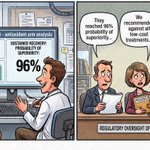
RCT 81 outpatients showing ~2-3x higher odds of favorable recovery outcomes with antioxidant treatment (selenium, zinc, lycopene, vitamin C).
With 81 patients the trial is too small to reach statistical significance, however sustained alleviation was close and showed a 96% Bayesian probability of superiority.
If the point estimates remained the same, significance would be reached after enrolling ~6-50 more patients, depending on the outcome.
Authors indicate the trial was stopped early without providing the reason. The same trial enrolled 716 patients for paxlovid. The platform's sample-size calculation was ~2,413 patients per arm for 80% power. The prespecified stopping criteria are not mentioned in the paper and none appear to have been triggered. There is no indication that authors are currently running a larger trial.
There were no hospitalizations or deaths in the antioxidant arm compared to 2/40 (5%) in usual care.
Treatment was relatively late, ~3-4 days after symptom onset (2.7 days at enrollment plus medication delivery).
No serious adverse events were reported. Authors suggest the improvements may be due to the complementary redox-buffering and immune-supporting roles of the treatments during acute viral infection.
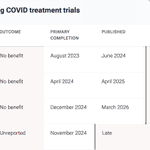
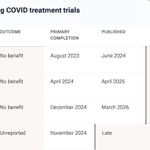
Results were delayed ~16 months after trial completion.
c19early.org/hosseini11.html

Covid Analysis: 200+ COVID-19 treatments retweeted

J’ai une immense admiration pour les créateurs du site c19early.org/
Ils ont créé un site incroyablement professionnel et rigoureux sur l’efficacité des traitements précoces.
Et leur choix de rester anonymes montre leur lucidité sur le monde dans lequel on vit…


I wish I knew who created this website. It is has been a tremendous help in fighting the horse-paste narrative. Whoever you are, please come forward so we can honor you!
c19early.org/imeta.html

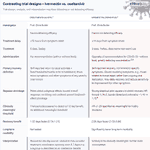
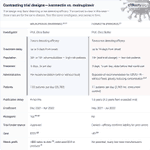
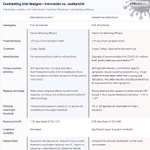
Same investigator, very different design & framing:

🟢 Oseltamivir: earlier treatment, standard dosing, narrower recovery endpoint, no extra meaningful threshold → 1.0 days faster recovery → accelerates recovery, consider treatment.

🔴 Ivermectin: later treatment, fasting administration, broader recovery endpoint, skeptical Bayesian shrinkage, meaningful threshold → 2.1 days faster recovery, significantly lower long COVID → unlikely clinically meaningful, further trials unwarranted.


Hey, I found another interesting comparison between 2 trials conducted by Chris Butler with opposite interpretation:
1/journalofinfection.com/artic… ivermectin as covid treatment, open-label RCT.
2/ thelancet.com/journals/lance… Oseltamivir as flu treatment, open-label RCT.
1/n

Another example. Details: c19early.org/principleivm.ht…

Dr. Nass criticized the censorship of ivermectin and HCQ.
The Maine medical board suspended her license and ordered a psychological evaluation, without any review of the evidence for the treatments.
A federal judge just allowed civil-rights claims to proceed. A state court previously vacated the psychological evaluation order as arbitrary and capricious.
The judge notes that board members have absolute immunity from damages for their later formal hearing - regardless of whether their conduct was biased, malicious, or corrupt. storage.courtlistener.com/re…


Judge Rules For Doctor Who Prescribed Ivermectin For COVID-19 zerohedge.com/covid-19/judge…

A new study shows higher use of effective low-cost COVID-19 treatments with higher education and with higher income.
Multiple studies show higher use for:
- healthcare professionals
- higher education
- higher income
🧵


The new study: c19early.org/bertoldi.html
Authors call the treatments "nonevidence-based", without reviewing the over 800 clinical studies which ~12,000 scientists devoted ~4 million hours of research to.

Details: multiple studies show higher use of effective low-cost treatments for healthcare professionals (1-3) (and specifically those with more experience (4)), more highly educated individuals (2, 5-13), and with higher income (4, 7, 10, 11, 13). Healthcare professionals also had lower risk than expected for COVID-19 (14, 15), consistent with greater use of effective treatments.
1. Elayeh et al., Prevalence and predictors of self‐medication drugs to prevent or treat COVID‐19: Experience from a Middle Eastern country, International Journal of Clinical Practice, onlinelibrary.wiley.com/doi/…
2. Sadio et al., Assessment of self-medication practices in the context of the COVID-19 outbreak in Togo, BMC Public Health, bmcpublichealth.biomedcentra…
3. Dantas et al., Automedicação no contexto de COVID-19, os perigos da prática e fatores associados, Research, Society and Development, rsdjournal.org/index.php/rsd…
4. Okoye et al., Self medication practices and its determinants in health care professionals during the coronavirus disease-2019 pandemic: cross-sectional study, International Journal of Clinical Pharmacy, link.springer.com/10.1007/s1…
5. Arora et al., Global Dietary and Herbal Supplement Use during COVID-19—A Scoping Review, Nutrients, mdpi.com/2072-6643/15/3/771
6. Ahmed et al., Behavioral preventive measures and the use of medicines and herbal products among the public in response to Covid-19 in Bangladesh: A cross-sectional study, PLOS ONE, journals.plos.org/plosone/ar…
7. Lam et al., A public survey of traditional, complementary and integrative medicine use during the COVID-19 outbreak in Hong Kong, PLOS ONE, journals.plos.org/plosone/ar…
8. Chellappan et al., Self-medication for prevention of COVID-19: a cross-sectional online survey among the general public in South India, INDIAN JOURNAL OF APPLIED RESEARCH, worldwidejournals.com/indian…
9. Mulder et al., Prevalence and predictive factors of complementary medicine use during the first wave of the COVID-19 pandemic of 2020 in the Netherlands, BMC Complementary Medicine and Therapies, bmccomplementalternmed.biome…
10. Wegbom et al., Self-Medication Practices and Associated Factors in the Prevention and/or Treatment of COVID-19 Virus: A Population-Based Survey in Nigeria, Frontiers in Public Health, frontiersin.org/articles/10.…
11. Aitafo et al., Self-Medication among Health Workers during the COVID-19 Pandemic in Southern Nigeria: Knowledge, Patterns, Practice and Associated Factors, International Journal of Health Sciences and Research, ijhsr.org/IJHSR_Vol.12_Issue…
12. Grosman-Dziewiszek et al., Patterns of Dietary Supplement Use during the COVID-19 Pandemic in Poland: Focus on Vitamin D and Magnesium, Nutrients, mdpi.com/2072-6643/16/19/322…
13. Bertoldi et al., Pediatric Use of Off‐Label Medicines and Nonevidence‐Based Supplements for COVID‐19: Findings From the 2015 Pelotas Birth Cohort Study (Brazil), Pharmacoepidemiology and Drug Safety, onlinelibrary.wiley.com/doi/…
14. Kaplan, R., Physician deaths from COVID-19 have been lower than expected, Occupational Medicine, academic.oup.com/occmed/arti…
15. Kiang et al., Excess Mortality Among US Physicians During the COVID-19 Pandemic, JAMA Internal Medicine, jamanetwork.com/journals/jam…

🏛️ INSTITUTIONAL CORRECTION OF ERRORS - 359 YEARS? How long will it be for COVID-19?
🌍 The scientific consensus was the Earth did not move - the sun, planets, and stars revolve around it.
🎓 Careers, curricula, and intellectual prestige were built on it.
🔭 Serious challenge arrived from Copernicus in 1543, Kepler's elliptical orbits in 1609, and Galileo's telescope in 1610.
⚖️ The Inquisition declared heliocentrism "foolish and absurd" in 1616, and Galileo was convicted of "vehement suspicion of heresy" in 1633.
✨ While the consensus was likely wrong after Galileo’s evidence, strong confirmation arrived from Bradley’s stellar aberration in 1728.
🐌 Institutional correction was slow.
🕊️ Formal acknowledgment of error arrived in 1992, 359 years after Galileo’s conviction, with a statement from John Paul II, closing a commission he convened thirteen years earlier. Other changes were earlier, but still very slow: Galileo's works were licensed in edited form in 1741, a ban on heliocentric books was lifted in 1758, and teaching Earth's motion was allowed in 1822.

Filipe Rafaeli on the widespread ridicule of politicized COVID-19 drugs in contrast with the evidence of efficacy.
The “brutally honest” person would acknowledge having spoken with unjustified certainty, discouraged use of beneficial treatments, demeaned others, and contributed to harm. Such acknowledgment is rare. Consequential public health errors in history often took decades to fix - after significant institutional turnover.
How can we avoid the suppression of scientific inquiry created by political polarization, social conformity, and unjustified moral certainty? How do we avoid a social environment where dissenters can be censored and marginalized without serious engagement with the evidence?
❤️🩹 Authorities did not proactively analyze clinical data in real-time, which guarantees delayed recognition of efficacy or harm. One key reform, applicable to current and future diseases, is for authorities to implement real-time proactive analysis of clinical evidence. Doing so would provide better guidance, and avoid moral, legal, career, and reputational hazards that disincentivize late corrections to guidance.


Among pre-exposure, when you take it to prevent contagion, or post-exposure, when you take it after having contact with an infected person to try to avoid the disease, there are 18 studies.
~@filipe_rafaeli
What Would a Brutally Honest Man Look Like?
brownstone.org/articles/what…

Covid Analysis: 200+ COVID-19 treatments retweeted

Pessoal, este é meu mais novo artigo.
"Como seria um homem brutalmente honesto?".
medicospelavida.org.br/como-…

Covid Analysis: 200+ COVID-19 treatments retweeted
Frontier models correctly find efficacy for appropriate use of the politicized treatments when given the data and instructed to do detailed analysis.
For high-level questions they just return what authorities say.
In the future, with 100x-1000x compute, they may do detailed analysis before training - for example, clinical studies would have extensive analysis for bias, confounding, retrospective changes, data errors, etc. before training. Comments about a treatment would be in view of detailed understanding of all data.
Shills may have a much harder time in the future!
They can get away with anything today because most people do not have time to analyze the data, but their time may be coming to an end - as long as future models are not specifically trained to enforce agreement with authorities.
Covid Analysis: 200+ COVID-19 treatments retweeted
High-risk patients: RR 0.65 [0.33-1.28], all patients 0.79 [0.48-1.29].
Not reaching an arbitrary statistical significance level is not the same as no benefit.
35%/21% lower, if confirmed with more data, is a very significant benefit with a <$20 treatment (could be <~$2 if widely adopted).
Given the strong biological and clinical rationale for earlier antiviral treatment:
- What does meta-regression by treatment delay show? (you could also compare the <36hr vs. <48hr trials).
- What happens if you remove the trials including late treatment (Butler 2020/Fry/others?)
These would seem to be useful analyses before forming a strong negative position.
Also the paper reports high-risk RR 0.65 [0.33-1.28] in the abstract and RR 0.85 [0.40-1.82] in the text.
academic.oup.com/jac/article…

Covid Analysis: 200+ COVID-19 treatments retweeted
Just like with COVID-19, treatment in critical patients may have limited or no relevance to recommended early antiviral treatment.
In this trial patients were already critically ill - treatment was far later than the usual ≤24-48hrs window.
Even within this critically ill population, the <5-day subgroup had a point estimate favoring oseltamivir (OR 0.91 [0.26–3.16]), while the apparent harm was concentrated at ≥5 days (OR 3.90 [0.95–18.54]). Imprecise, but compatible with benefit for the usual ≤24-48hrs window.
A potential mechanism for harm focused on critical patients - oseltamivir may affect host neuraminidase/sialylation pathways involved in neutrophil function and defense against secondary infections such as Aspergillus.
Note that when compared to SARS-CoV-2, research points to faster progression to peak viral load with influenza - e.g., if a treatment for SARS-CoV-2 is effective within ~24 hrs, a comparable treatment may need to be administered significantly earlier for influenza.
Few notes on a quick review of the paper:
- Severe baseline imbalance, results rely on adjustments - adding confounding and requiring analysis of adjustments as in observational studies, while retaining RCT disadvantages (enrollment delay, mismatch to real-world use, etc.)
- Posterior probability of harm is different in the abstract vs. Table 2.
- For <5 days, Fig. 3 reports aOR 0.91 (0.26-3.16) while the text reports a 56% probability of harm - difficult to reconcile. If both refer to P(OR>1) from the same posterior, they appear internally inconsistent.
- Typo/error for median creatinine in the no-antiviral column.
- SAP written after the trial was stopped.

RCT 923 adults in the USA showing 38% lower COVID-19 risk with 4,000 IU/day vitamin D compared with 400 IU/day, aHR 0.62, p=0.045, logrank p=0.029.
They study tested 400, 4,000, and 10,000 IU. A priori 4,000 is expected to be most effective of the doses tested. 400 IU is below the RDA and only raises levels by ~5 ng/mL. The IOM/National Academies UL for adults is 4,000 IU/day which produces levels in the 40-50 ng/mL range without a hypercalcemia signal. 10,000 IU is 2.5x the UL, and several mechanisms predict worse results with excessive dosage. No benefit was seen for 10,000 IU, and the pooled arms lose significance (aHR 0.73, p=0.1). c19early.org/meltzer3.html
There are now 138 treatment studies, 41 RCTs, and very high confidence in efficacy with meta-analysis, p < 0.000001. Results across studies match the biological mechanisms: efficacy gradient across outcomes (p = 0.03), calcitriol/calcifediol vs. cholecalciferol (p = 0.03), continuous vs. bolus treatment (p = 0.00004), and acute treatment vs. chronic prophylaxis (p = 0.004). This is not possible without a real treatment effect. c19early.org/dmeta.html
NIH claims there is "insufficient evidence" but they reference only 5 of the 138 studies, with no updates since 2023. ncbi.nlm.nih.gov/books/NBK57…
There was no real-time proactive analysis of COVID-19 treatment research, which guarantees delayed recognition of efficacy or harm. By that time, moral, legal, career, and reputational liabilities strongly disincentivize any admission of error.
If authorities ever get around to analyzing the studies, there will be a strong disincentive for reporting efficacy.
❤️🩹 A key reform, applicable to current and future diseases, is for authorities to implement real-time proactive analysis of clinical evidence.

A new RCT of 110 high-risk outpatients shows significantly lower COVID-19 progression with NP-101 (thymoquinone from Nigella sativa with fatty acids), but no significant difference for the primary day-5 sustained-recovery endpoint. Long COVID risk was lower, without reaching statistical significance (RR=0.58, p=0.07).
No major national or international COVID-19 treatment authority appears to have formally reviewed the clinical evidence for Nigella sativa or thymoquinone.
🛡️ Meta-analysis of 15 studies (11 RCTs) shows lower COVID-19 risk. Several additional independent systematic reviews and meta-analyses also show lower risk. Several complementary mechanisms have been proposed including antiviral, anti-inflammatory, antioxidant, immunomodulatory, and pulmonary-protective actions. Due to low bioavailability, advanced formulations may be required to reach therapeutic concentrations.
❤️🩹 Ideally, authorities would implement real-time proactive analysis of clinical evidence in order to provide better guidance, and to avoid moral, legal, career, and reputational hazards that disincentivize late corrections to guidance.
c19early.org/kaseb.html
c19early.org/nsmeta.html


Covid Analysis: 200+ COVID-19 treatments retweeted

🚨 98 % des études POSITIVES sur les traitements précoces à bas coût (HCQ, ivermectine, vitamine D…) ont été CENSURÉES par les médias mainstream.
Pendant ce temps, les résultats favorables des traitements chers étaient amplifiés.Analyse choc de c19early.org (6 000+ études) + enquête @France_Soir.
Les données sont là. Qui osera encore parler de « science » unique ?
Le décryptage vidéo : youtube.com/watch?v=BP4BV1lP…
Article complet en premier commentaire.
#COVID19 #CensureMédias #TraitementsPrécoces #c19early
💤 A new study shows poor sleep associated with higher risk of long COVID.
🛡️ 17 studies show lower COVID-19 risk with higher quality sleep (13 with statistical significance, 5 for long COVID).
No national health authority appears to have analyzed these studies, or included sleep in official COVID-19 prevention guidelines. (For patients with long COVID, some authorities do include recommendations to assess and manage sleep problems, e.g., the UK NHS and WHO).
Improved sleep supports immune function and healthy metabolic regulation. Sleep helps coordinate immune signaling, including circadian changes in cytokines and immune-cell trafficking, and adequate sleep supports T-cell responses, inflammatory regulation, and formation of immune memory. Sleep deprivation is associated with impaired immune responses, greater inflammatory dysregulation, and higher risk of cardiometabolic disease.
Ideally, authorities would implement real-time proactive analysis of clinical evidence in order to provide better guidance, and to avoid moral, legal, career, and reputational hazards that disincentivize late corrections to guidance.
New study: c19early.org/papantoniou2.ht…
All studies: c19early.org/slmeta.html


Widespread adoption of Dr. Kory's COVID-19 protocol would have ended the pandemic quickly.
But there was no proactive real-time analysis of any of these treatments by authorities, which guarantees delayed recognition of efficacy, by which time moral, legal, career, and reputational liabilities strongly disincentivize any admission of error.
When authorities are not even looking at the data, it is guaranteed that physicians following the evidence will depart "from the position of the public health authorities".
We owe an immense debt of gratitude to Dr. Kory for pushing back against a government trying to force doctors to lie, and for his tireless and outstanding research that saved many lives during the pandemic.
c19early.org/kory.html


A government that can tell your doctor what he's allowed to say can tell your doctor to lie to you. Yesterday, a federal judge told California it can't do that anymore. Four years. We sued. We won. Free speech prevailed. Full story below👇 open.substack.com/pub/pierre…

Media covered only 5% of COVID-19 treatment research with very strong bias.
7% of high-profit drug studies were covered with a strong bias towards positive results.
4% of low-cost treatment studies were covered with a strong bias towards negative/inconclusive results. 🧵

One factor is the failure of authorities and experts to perform real-time proactive analysis. This guarantees delayed recognition of efficacy or harm, by which time moral, legal, career, and reputational liabilities strongly disincentivize any admission of error.

❤️🩹 A key reform, applicable to current and future diseases, is for authorities to implement real-time proactive analysis of clinical evidence.
Media coverage analysis: c19early.org/msm.html
Analysis of 6,000+ studies for 226 COVID-19 treatments: c19early.org
