





はち retweeted

Inkling 2 Small’s weights are now available for download on HuggingFace under an Apache 2.0 license.
Make Inkling your own!
huggingface.co/thinkingmachi…

はち retweeted
A way to train Decision Models with RL: GRPO over whole episodes.
Multi-step tasks require predicting what an action does to the environment. Decision Models can't yet. I trained NanoJev (0.6B) on ViZDoom with one reward per episode.
19% → 77%, no expert. SFT stalls at 69%.

はち retweeted

マイコン(ESP32-S3)だけで動く、日本語の超小型 Tool Callingモデル(315万パラメータ・2.0MB)を公開しました
「左を見て」→ look(direction=left) のように依頼を関数呼び出し(JSON)に変換して動かします
デモ: huggingface.co/spaces/ayousa…
GitHub: github.com/ayutaz/JapaneseTi…

はち retweeted

Deploying DiffusionGemma-Jev (djev) just got a lot easier. You can now spin up a Jev API-compatible endpoint on Google Cloud Run using a single command.
Performance is solid: ~35-60 ms for single step latency and batch@32 is ~100-123 requests/sec.
It's a straightforward way to experiment without needing your own GPU. Runs at roughly $3/hr and drops to $0 when idle.
Get the code and instructions here: github.com/taeold/djev-run
はち retweeted

久しぶりに記事書いた!この前紹介した、会社のトークン制限に悩む友人に送ったメモに加筆しました。
・サブエージェント効率悪いことあるよ
・effort切替でキャッシュ壊れることあるよ
・キャッシュの有効期限気をつけて
など、初歩的な内容多めです😇
zenn.dev/ml_bear/articles/e5…


はち retweeted

hey Astra, how fast are you really at using a computer?
Readers added context they thought people might want to know
The video shows Astra executing a pre-planned batched sequence of mouse clicks, keyboard presses and timed waits, not live real-time high-speed control. The poster clarified hybrid inputs and advance planning in replies.
x.com/victornunez/st…
x.com/victornunez/st…
x.com/victornunez/st…
openai.com/index/gpt-6-as…
openai.com/index/computer…
はち retweeted

ローカルLLMを高速化する投機的デコード - MTP / EAGLE-3 / DFlash / DSpark|npaka @npaka123 note.com/npaka/n/n26336b2582…


はち retweeted

ついにNVIDIAが教師モデルも公開し始めたぞ
まじか...
huggingface.co/nvidia/NVIDIA…


はち retweeted
このツイートの「普通は性能が上昇するはずの推論量を上げると逆にコーディング性能が落ちています」と言う部分が明確に間違っていると思うので、少し長くなりますが意見を述べさせていただきます。
注記: 元ツイートを批判する意図はなく、この図1枚を根拠に「とりあえずeffort=med」にする人たちが減れば良いなと思っての投稿です。Opus 5のeffort設定はSNSの推奨ではなくAnthropicの一次情報に従うのが確実です😇
少し長くなりますが以下ひとつづつ書いていきます。
【FrontierCodeのベンチマーク結果の謎について】
実はこの図に示されている現象はシステムカードに原因と対策が書かれています (Section 8.4 / p.150-151 / 1個目の図に抜粋)
システムカードによるとFrontierCodeのスコア低下の原因は「推論で馬鹿になる」ではなく、高effortでタスクの要求以上の変更(リファクタ等)をしてしまう傾向によるものとのことです。
FrontierCodeはマージ可能な差分を採点する設計のため、高品質でもスコープ外の変更は減点されます。(元ツイートの「指示以上に色々変更してしまう」はその通り)
重要なのはその続きで「タスクのスコープ内に留まれ」という短い指示を足しただけで大半のタスクで性能が回復したとあり、システムカードはこれをもとに「モデルの限界ではない」と結論づけています。
ただし、「本ベンチマークにおけるOpus 5のスコアについては、プロンプトの変更や公式評価手順の修正を行わない状態で報告する。」とも明記されており、AnthropicとしてはあくまでFrontierCodeというベンチマークの理念に沿って、小手先の改善を行わずスコアを明示した結果このグラフが出てきたということのようです。(実務上での対策はeffortを下げることではなくスコープ制約をプロンプトに書くことになる / 公式のPrompt Guideの内容と合致します)
【高effortの有効性について】
それでは、高effortではきちんと性能が向上するのでしょうか?これについては同じシステムカードの他のベンチマークの説明の部分を読むとその答えが書いてあります。
他のコーディング評価では高effortが普通に効いている結果が列挙されており、FrontierBenchはxhigh 44.4%が最良(high 39%、low 25%)、DeepSWEはeffortに対し単調増加、SWE-bench Verified 96.0%はmax effortでの数字となっています。(2個目の図がDeepSWEのスコア)
これらの結果から鑑みるに「effortを上げるとコーディングが落ちる」という主張は棄却されるでしょう。
【effortの公式推奨】
ではeffortは何を使えば良いのでしょうか?それについては "effort" と言う名の直球の公式ドキュメントがあるのでそれを読めば分かります。
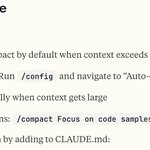
公式推奨は「デフォルトのhighから始めて自分のevalで調整、重いコーディング・エージェント作業はxhighへ、品質が保てる範囲でlow/mediumを積極活用」となっています。(3枚目の図)
SNSでの推奨とそこに載っているグラフ1枚から「とりあえずmed」と判断する前に、まずはAnthropicの一次情報を読むのがClaude活用への近道と言えるでしょう。


はち retweeted

Sakana AIさんの、1兆(1T)パラメータ規模のエージェントネイティブモデルを、さくらインターネットのGPU基盤で開発して頂いています‼️

【ニュースリリース】
さくらインターネットが提供するベアメタル型GPUクラウドサービス「高火力 PHY」は、Sakana AI株式会社が「GENIAC」第4期で取り組むプロジェクトの計算基盤として採用されました。
sakura.ad.jp/corporate/infor…

はち retweeted

AI エージェントだけでなく Claude Code や Codex CLI でも簡単に利用できる LLM Router が登場したので早速。まだアルファ版だけどこれからの進化が楽しみ。
NVIDIA の新しい LLM ルーティング基盤 NeMo Switchyard を試してみた dev.classmethod.jp/articles/… #DevelopersIO

はち retweeted

Introducing Sakana Fugu: A full multi-agent orchestration system accessible via a single model API.
Our ‘Fugu Ultra’ model matches the performance of Fable and Mythos, delivering frontier capability without the risk of export controls.
Try it: sakana.ai/fugu 🐡
はち retweeted

宣伝: こちらの7Bの拡散言語モデル開発に、自分も微力ながら取り組んでました!
Mask→Unmaskを一度だけではなく、何度もUnmaskできるUniformという形式での、世界初のオープンUniform Diffusion Language Modelになってます!
機会があったら、遊んでみてください🙌
🔗 nlp.ecei.tohoku.ac.jp/projec…

This quoted post is unavailable.
はち retweeted

こちら、本日の社内向けに話した資料です。
(この時代だからこそ、あえて厳しい寄りに伝えています。)
機能を作るな。楽して作るな。 (LayerX社内資料) speakerdeck.com/mosa_siru/do…
#speakerdeck

はち retweeted

MLEvolve: Graph Search + Self-Evolving Memory for Code Evolution
💡1: MLEvolve breaks the common tree constraint, introducing reference edges that create a directed graph, enabling cross-branch knowledge flow, combined with a progressive explore-exploit schedule.
💡 2: Unlike archive databases or memoryless search, MLEvolve combines a cold-start domain knowledge base with a dynamic global memory that automatically accumulates and retrieves task-specific experience.
💡 3: MLEvolve decouples strategic planning (what/why to modify) from coding (how) and adaptively selects among three coding modes based on search state.
📝 arxiv.org/abs/2606.06473
🧑💻 github.com/InternScience/MLE…

はち retweeted
We’re excited to introduce KAME: Tandem Architecture for Enhancing Knowledge in Real-Time Speech-to-Speech Conversational AI, accepted at #ICASSP2026! 🐢
Blog pub.sakana.ai/kame/
Paper arxiv.org/abs/2510.02327
Can a speech AI think deeply without pausing to process?
In real conversation, we don’t wait until we’ve fully worked out what we want to say—we start talking, and our thoughts catch up as the sentence unfolds.
Fast speech-to-speech models achieve this, but their reasoning tends to stay shallow. Cascaded pipelines that route through a knowledgeable LLM are smarter, but the added latency breaks the flow—they fall back to "think, then speak."
In our new paper, we propose a way to break this trade-off. We call it KAME (Turtle in Japanese).
A speech-to-speech model handles the fast response loop and starts replying immediately. In parallel, a backend LLM runs asynchronously, generating response candidates that are continuously injected as "oracle" signals in real time.
This shifts the AI paradigm from "think, then speak" to "speak while thinking."
The backend LLM is completely swappable. You can plug in GPT-4.1, Claude Opus, or Gemini 2.5 Flash depending on the task without changing the frontend. In our experiments, Claude tended to score higher on reasoning, while GPT did better on humanities questions.
Try the model yourself here: huggingface.co/SakanaAI/kame
はち retweeted

Introducing OpenMythos
An open-source, first-principles theoretical reconstruction of Claude Mythos, implemented in PyTorch.
The architecture instantiates a looped transformer with a Mixture-of-Experts (MoE) routing mechanism, enabling iterative depth via weight sharing and conditional computation across experts.
My implementation explores the hypothesis that recursive application of a fixed parameterized block, coupled with sparse expert activation, can yield improved efficiency–performance tradeoffs and emergent multi-step reasoning.
Learn more ⬇️🧵
