

I install follow-up systems for coaches, consultants and agency owners, so no lead waits, nobody gets forgotten, and old leads come back | British nomad.
South Goa
Joined January 2021
- Tweets18.8K
- Following837
- Followers1.2K
- Likes43.2K






Which of your passwords are sitting on a website that runs PHP right now?
You can't know.
So here's what happened this week, and a free guide at the end to clean things up.
PHP is the code behind roughly 70% of websites.
On Wednesday, two serious flaws in it went public, and they let an attacker take over a site's server without logging in.
Governments across Europe took their own sites offline while they patched things up.
Your phone and laptop are fine.
The risk is what you've already handed over to the sites that get hit: your name, your email address, and the password you signed up with.
Hopefully it's a password you've only used once.
That last one is the one that got me.
In 2020 I woke up to two emails from Netflix.
Password changed.
New sign-in from Muscat, Oman.
Definitely not me.
More traumatic than that, whoever it was used my account to watch two episodes of Gossip Girl.
I traced it back by doing a deep dive on password security.
In 2017, I'd used one of my throwaway passwords on Peatix, a ticketing app I opened and used only once for a comedy gig.
Peatix was breached in January 2019, and my email and password ended up on a list that gets passed around and tried on every website possible.
Not very funny.
That's what happens to leaked data though.
It doesn't stay on the site it leaked from.
So I spent the next two days fixing everything, and wrote it up in a short guide called Digital Hygiene.
I used to send this PDF to everyone who joined my email list.
It covers:
1. How to check if your email has turned up in a breach
2. Setting up a free password manager, step by step
3. 2FA, and why an app beats SMS codes
Plus a few sections on locking down Instagram, since that's where I was building an audience back then.
This week's a good time to sort your Digital Hygiene out.
Because bad hygiene is disgusting.
Reply "HYGIENE" and I'll send you the PDF. No email sign-up needed.
You can also use a song name as a password, like this one.
youtube.com/watch?v=5SZYz7lZ…
Your pipeline is a lot like a bucket with holes in it.
Ads and content pour water in the top.
Slow replies let it out the bottom.
Most people buy a bigger hose.
Patch the holes first.

I don’t want a viral post.
I want five real conversations a day.
Viral gets you likes from strangers.
A real chat gets you someone who remembers your name.
Every client, every relationship, every friendship—
it all starts with a conversation.
Aarif Meghani retweeted
The marketing funnel is the most misleading model in business.
To be fair to it, it’s useful.
As British statistician George Box said, “all models are wrong, but some are useful.”
I think about this statement a lot.
The funnel is wrong in one specific way, and that one assumption decides how most coaches, consultants and agency owners spend their time.
The standard marketing funnel assumes gravity.
You pour attention in the top, it trickles down, and a few people drop out of the bottom as clients.
If you believe that, the logical move is to pour in more.
More content and more ads.
Challenge that one assumption and you spend your time and resources differently.
Gravity is NOT a factor in hiring you.
Nobody’s money FALLS into your wallet.
It’s more like this:
People climb towards hiring you, one small yes at a time.
And every yes is a choice they could just as easily skip.
1. Content earns the first yes. They read it, watch it, react to it.
2. A reply earns the next. They comment or send a DM.
3. Then they follow you.
4. A lead magnet earns a bigger yes. They swap an email for something worth having.
5. The booking is the biggest yet.
This is where most people stop asking for the yes.
A coach books a discovery call for Thursday and sends nothing until Thursday.
A consultant has a scoping call next week, and the prospect gets no reason to think about it before then.
An agency owner has a pitch in the diary, and the client hears nothing until the deck lands.
In each case, the person who said yes on Monday is a stranger again by the time of the call. Some of them don’t turn up.
After the call it’s the same. “Let me think about it” or “send me a proposal” gets one follow-up, maybe, then silence.
A resource that answers the doubt they raised would earn another yes.
Most people never send one.
So the work ends up relying on gravity again: pour more into the top of the funnel.
The better move is to spend that effort making each next step easy to say yes to.
The climb to yes is a model too, so it’s wrong somewhere.
It’s useful because it points at the gaps where people drop off.
Count the yeses between someone finding you and paying you.
Which one are you leaving to gravity?

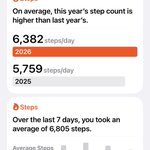
I'll add that I also do an early- morning walk in my neighbourhood three times a week without my phone, so that's another maybe 1,200 steps.
Fun fact: you don’t actually need 10,000 steps a day!
The number comes from the marketing department of the first pedometer from Japan (in 1965) called a:
万歩計 (manpo-kei):
It comes from the kanji (Chinese characters) of:
万 (pronounced man, 10,000) +
歩 (ho/po, step) +
計 (kei, meter)
The character for a unit of 10,000 (万) kind of looks like a person, hence the reason they chose the name.
Health benefits level off at 7 to 8,000 steps a day.
So now you know!
頑張って下さい。
(Good luck with it)

Fun fact: you don’t actually need 10,000 steps a day!
The number comes from the marketing department of the first pedometer from Japan called a:
万歩計 (manpo-kei):
It comes from the kanji (Chinese characters) of:
万 (pronounced man, 10,000) +
歩 (ho/po, step) +
計 (kei, meter)
The character for a unit of 10,000 (万) kind of looks like a person, hence the reason they chose the name.
Health benefits level off at 7 to 8,000 steps a day.
So now you know!
頑張って下さい。
(Good luck with it)
He used Muse for 3 days and then it sent a strange message, destroying all trust.
Personally, I'm always going to keep anything created by an AI agent that might go on my social media, or to a client, or to a prospect to a human review first.
What's your take on this?
=======
"When I first downloaded Muse, I didn't give it any additional permissions on my device besides permission to access my Facebook, Threads, and Instagram accounts. I never connected it to control anything external, like my email or phone number."
"...message was from my Muse agent, saying, "I can't check your email right now — Gmail isn't connected on my end, so I have no way to look for that Anthropic message." I was so confused because I hadn't asked for the agent to check my mailbox or messaged it in two days. I thought my email might've been hacked."

The marketing funnel is the most misleading model in business.
To be fair to it, it’s useful.
As British statistician George Box said, “all models are wrong, but some are useful.”
I think about this statement a lot.
The funnel is wrong in one specific way, and that one assumption decides how most coaches, consultants and agency owners spend their time.
The standard marketing funnel assumes gravity.
You pour attention in the top, it trickles down, and a few people drop out of the bottom as clients.
If you believe that, the logical move is to pour in more.
More content and more ads.
Challenge that one assumption and you spend your time and resources differently.
Gravity is NOT a factor in hiring you.
Nobody’s money FALLS into your wallet.
It’s more like this:
People climb towards hiring you, one small yes at a time.
And every yes is a choice they could just as easily skip.
1. Content earns the first yes. They read it, watch it, react to it.
2. A reply earns the next. They comment or send a DM.
3. Then they follow you.
4. A lead magnet earns a bigger yes. They swap an email for something worth having.
5. The booking is the biggest yet.
This is where most people stop asking for the yes.
A coach books a discovery call for Thursday and sends nothing until Thursday.
A consultant has a scoping call next week, and the prospect gets no reason to think about it before then.
An agency owner has a pitch in the diary, and the client hears nothing until the deck lands.
In each case, the person who said yes on Monday is a stranger again by the time of the call. Some of them don’t turn up.
After the call it’s the same. “Let me think about it” or “send me a proposal” gets one follow-up, maybe, then silence.
A resource that answers the doubt they raised would earn another yes.
Most people never send one.
So the work ends up relying on gravity again: pour more into the top of the funnel.
The better move is to spend that effort making each next step easy to say yes to.
The climb to yes is a model too, so it’s wrong somewhere.
It’s useful because it points at the gaps where people drop off.
Count the yeses between someone finding you and paying you.
Which one are you leaving to gravity?
The call goes well.
Then the proposal sits unanswered, the no-show never gets a second chance, and the reactivation email never gets written.
Plenty of deals get lost in that gap.
You paid for that lead. Then made them wait three days for a reply. Guess who they went with instead.
Only 2.2% of US households pay for an AI subscription.
Twelve months earlier it was about 1%.
It more than doubled in a year.
So if you're paying for it and using it properly, you're early.
The obvious use is creating more.
More posts, more reports, more emails.
The early advantage left is in the boring stuff. The enquiry that came in on Friday and still hasn't had a reply. The prospect who said "come back to me in March."
So build the boring agents:
1. One that answers every new enquiry within a minute, says plainly that it's automated, and tells them when you'll be back.
2. One that sends the details someone asked for, so "can you send me your rates" doesn't wait until Monday.
3. One that remembers "come back to me in March" and gets in touch in March.
4. One that pulls DMs, email and form enquiries into a single list before your first call of the day.
Everyone will use it to create more.
That's the side people can see.
Nobody posts a screenshot of a reply that went out at 9:02 on a Sunday night.
It's invisible, and it does more for your business than another post.
(Chart from a16z report)

Him: “I don’t have time to let you automate.”
Me: “Then you definitely don’t have time to keep doing it all manually.”
We still haven’t started.
He’s still keen.
That was months ago.
He's an owner with a team, several businesses and a few projects on the go, and everything across all of them has to run through him.
Constant calls. Constant messages. Nothing moves until he’s seen it.
He says he wants to be more efficient. He wants to “use AI.”
But he can’t say what he wants it to do, and he can’t find a clear hour to figure it out, let alone build it with me.
So he's stuck in a loop.
Breaking it takes a few focused hours.
But every hour is already booked by a call or a message.
So nothing changes, and next month everything still runs through him.
Here’s the truth: you don’t need a perfect AI plan to get unstuck.
You need to see what’s actually flowing through you.
Start with an audit.
Just three questions:
1) How many of your replies are the same answer, delivered again and again?
2) What does your team keep asking because only you “know”? Capture it once: SOPs, a doc, or voice notes.
3) Which decisions could someone else make if they had your rules? Write the rules. Hand it over.
That frees up the space to work out what processes you can use to be more efficient with AI.
Once you can see what repeats, you’ll know what’s worth automating, and what shouldn’t be on your plate in the first place.
The repeatable work, the recording, the moving data around.
AI implementation comes after that.
If everything in your business has to pass through you, you probably recognised yourself in the first four lines.
If that’s you, reach out. Let’s talk.