Deus Armenicus 🦅 retweeted
Alexander Mantashev (Mantashyan)’s magnificent Baroque/Rococo theatre on Rustaveli Avenue in Tbilisi, built by an Armenian for a city that was then predominantly inhabited by Armenians.
Unlike Armenian religious heritage, its civic heritage is maintained in pristine condition - a trait Georgians inherited from the Soviet Union.
«However, Mount Ararat already plays a role in the oldest religious legends of the jews, inferring an Armenian origin of these legends; and since the Armenian language is proving ever more clearly to be connected to Hebrew, one might well surmise that the family of Abraham, which, moreover, migrated into Canaan from the north, was of Armenian origin.
Furthermore, we know that this one family in particular that held the faith in Yahweh faith as a sacred heritage; it would therefore not be impossible that an Armenian ancestor of Abraham, during his nomadic wanderings in the vicinity of Arat [i.e. Ararat], had grown fond of the Aratian religion and perhaps, having simplified it into a pure monotheism, although the Teraphim persisted until the time of Jacob, had adopted it.
If these conjectures, which at least reconcile all the mutual contradictions of the legends extant on this matter, could be historically confirmed, then one would have to seek the origin of jewish monotheism in the roots of the Aratian religion of light and fire, and with this [descent/lineage] of the Yahweh worship it would also be geographically explicable that in its sacred documents so many [correspondences/parallels] with Indian religious legends are encountered.
Even the soil and climate of Armenia, where the stifling heat of summer drives people into the fresh air of the treeless, 7000-foot-high grassy plain, and the long, storm-filled winter of this wilderness drives them into the mild winter temperature of the valleys, would in itself be [suitable/sufficient] enough to help [draw/foster] the local population towards a northern spirituality and make them receptive to a purer religion, freer of sensuality, as appears to have been the case there in Aratia.»
- Über Ursprung und erste Bedeutung der griechischen und römischen Hauptgottheiten, von Prof. Hans Richter, Quedlinburg, 1838.
Deus Armenicus 🦅 retweeted
«Derbent was also called Alexandria, or Alexandretta, after its founder Alexander, who, whilst waging war against the Persians, had a great and deep trench and embankment dug from there all the way to the city of Tiflis in Armenia, of which some remains can still be seen.»
- Voyages Faits Principalement En Asie, par Pierre Bergeron, 1735.
Deus Armenicus 🦅 retweeted
Key Cities of Greek Cyprus and Armenia:
"In the Kingdom of Cyprus: Nicosia, Famagusta, Kyrenia, Paphos.
In Armenia: Erzurum, Van, Tiflis, Kars, Yerevan, Derbent."
- Epitome Cosmografica, dal Vincenzo Coronelli, Venezia, 1693.
Deus Armenicus 🦅 retweeted
«The name is said to derive from Armeus, or Armenius, a companion of Jason. Of the Armenian people. For a more probable etymology, see Bochart, Phaleg, page 22. By some, it is called Armenia, as if [derived] from Aram, the son of Shem. Aram, however, signifies ‘exalted’ or ‘lofty,’ whence the Armenians [are understood] as ‘the exalted ones.’
Or [the name derives] from the mountains by which this region is surrounded, for Ar means ‘mountain’; whence also [the mountain] is called Ararat, on whose summit Noah’s Ark rested after the Flood.
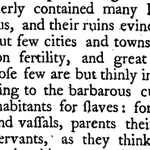
Almost the whole territory is under turkish occupation. The region was once exceedingly celebrated, but is now inhabited by fewer people.
Its cities of some importance are Yerevan, Erzerum on the Euphrates, Van, which some call Arthemita, Tiflis, which was called Artaxata, Kars, and others. The Armenians are the people who inhabit Armenia.»
- Sibylliakoi Chrēsmoi, hoc est Sibyllina Oracula (by Servaes Galle ), 1689.
Deus Armenicus 🦅 retweeted
«This was the Greater Armenia, entirely surrounded by the mountains called the Niphates, the Caspian, the Caucasus, and the Anti-Taurus, amongst which stands Mount Ararat, where the Ark came to rest after the Flood. There are two well-fortified strongholds: Erzerum, which was the ancient Artassata, and Kars. Then Van, Childir, Tiflis, Yerevan, and Derbent.»
- Trattenimenti Scientifici Su La Sfera, Geografia Istorica, Meteore, ed Astronomia, di Francisco-Saverio Brunetti, Roma, 1754.
Deus Armenicus 🦅 retweeted
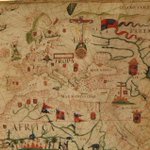
A Portolan Chart of the Atlantic Ocean and Adjacent Continents, by Pascual Ruiz, 1633.
Key Cities of Greek Cyprus and Armenia:
"In the Kingdom of Cyprus: Nicosia, Famagusta, Kyrenia, Paphos.
In Armenia: Erzurum, Van, Tiflis, Kars, Yerevan, Derbent."
- Epitome Cosmografica, dal Vincenzo Coronelli, Venezia, 1693.
«The name is said to derive from Armeus, or Armenius, a companion of Jason. Of the Armenian people. For a more probable etymology, see Bochart, Phaleg, page 22. By some, it is called Armenia, as if [derived] from Aram, the son of Shem. Aram, however, signifies ‘exalted’ or ‘lofty,’ whence the Armenians [are understood] as ‘the exalted ones.’
Or [the name derives] from the mountains by which this region is surrounded, for Ar means ‘mountain’; whence also [the mountain] is called Ararat, on whose summit Noah’s Ark rested after the Flood.
Almost the whole territory is under turkish occupation. The region was once exceedingly celebrated, but is now inhabited by fewer people.
Its cities of some importance are Yerevan, Erzerum on the Euphrates, Van, which some call Arthemita, Tiflis, which was called Artaxata, Kars, and others. The Armenians are the people who inhabit Armenia.»
- Sibylliakoi Chrēsmoi, hoc est Sibyllina Oracula (by Servaes Galle ), 1689.
«This was the Greater Armenia, entirely surrounded by the mountains called the Niphates, the Caspian, the Caucasus, and the Anti-Taurus, amongst which stands Mount Ararat, where the Ark came to rest after the Flood. There are two well-fortified strongholds: Erzerum, which was the ancient Artassata, and Kars. Then Van, Childir, Tiflis, Yerevan, and Derbent.»
- Trattenimenti Scientifici Su La Sfera, Geografia Istorica, Meteore, ed Astronomia, di Francisco-Saverio Brunetti, Roma, 1754.
Deus Armenicus 🦅 retweeted
"It's like poetry, it rhymes."
Deus Armenicus 🦅 retweeted
> Be Roman Emperor Maximinus
> Declare a religious war (pagan crusade) against the first Christian state
> Get defeated astoundly to the point of assumption that gods either abandoned or cursed you
> Your campaign ends in disaster and you die
> Total Christ Victory
This month is the 1714th anniversary of the 1st War in Defense of Christianity.
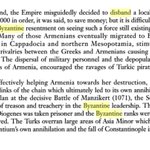
In the November of 312 AD, the Roman Emperor Maximinus Daia instigated a "Pagan Crusade" & invaded Armenia in order to persecute the Christian state, only to be defeated by the forces of King Trdat, near the frontier of Armenia Minor, marking this event as the 1st War in Defence of Christianity.
Deus Armenicus 🦅 retweeted
Short excerpts from Eusebius' Ecclesiastical History on this Roman-Armenian War.
Deus Armenicus 🦅 retweeted
Additional context on this event is provided from Ethiopian Manuscripts (translated from Coptic or Alexandrian Greek originals) dating to the 5th c. AD, which mention that the Armenian forces were led by one of the Trdat's Knights, Sargis, who personally killed the Roman Emperor.
Deus Armenicus 🦅 retweeted
The notion, which served as prelude to war, was the decision of Armenia to interfere in stopping Christian persecutions in neighbouring regions after the martyrdoms of Lucian of Antioch & Peter of Alexandria, thus sparking the war known as the First Crusade or "War of the Cross".
Deus Armenicus 🦅 retweeted
Replying to @DArmenicus
We see this also exemplified in early Crusader period & late Crusader period among both Muslim and Crusader alike.
1. Yāqūt Shihāb al-Dīn (1179–1229).
2. When the Crusader, Johann Schiltberger, visited the region in 1396-1427 AD, he remarked on Tiflis being an Armenian kingdom.
nitter.gq/DArmenicus/status/1769…
Deus Armenicus 🦅 retweeted
Replying to @DArmenicus
However, what's not prevalent or consistent is the concept of "G*orgia'", which as a notion of some separate territory from Armenia is a relatively recent, post-1600s idea.
Black Sea access and the north were generally either titled with Armenia or 'Armenia Minor'.
5. Fernão Vaz Dourado, 1570
6. Abraham Ortelius, 16th C.
7. Jodocus Hondius, 1609
8. Maximilian Dufrène, 1600s
(so on and so forth)