

Celebrating the Life & Legacy of America's Founding Martyr
Joined February 2021
- Tweets1.3K
- Following314
- Followers1.8K
- Likes6.8K


Pinned Tweet
The Dr. Joseph Warren Foundation strives to educate the public about his life & contributions to the American Revolution. We are rebuilding & celebrating his life & legacy along with others who contributed to early American History. Dr. Warren was a Boston physician, patriot & politician whose courage & passion helped shape our country. At age 34, he sacrificed his life for liberty, with his fellow patriots, at the Battle of Bunker Hill. We remember.

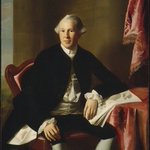
Joseph Warren painted by John Singleton Copley about 1765. Boston Museum of Fine Arts. Credit Line: Gift of Buckminster Brown, M.D. through Carolyn M. Matthews, M.D., Trustee.
Provenance:
About 1765, Joseph Warren (the sitter; b. 1741- d. 1775), Boston; 1775, by inheritance to his brother, John Warren (b. 1753 - d. 1815), Boston; given by John Warren to his niece (Joseph Warren's daughter), Mary Warren Newcomb (b. 1771 - d. 1826) and her second husband, Richard English Newcomb (b. 1770 - d. 1849), Greenfield, MA [see note 1]; by inheritance to their son, Joseph Warren Newcomb (b. 1804 - d. 1874) and his wife, Sarah Wells Alvord Newcomb (d. 1836) and kept in the Alvord home, Greenfield; passed by descent to Buckminster Brown (b. 1819 - d. 1891), Boston; 1891, by inheritance to his wife, Sarah Alvord Brown (b. 1826 - d. 1895), Boston; 1895, gift of Buckminster Brown, through Carolyn M. Matthews, M. D., Trustee, to the MFA. (Accession Date: November 5, 1895)
NOTES:
[1] See Christian Di Spigna, Founding Martyr: The Life and Death of Dr. Joseph Warren, The American Revolution's Lost Hero (New York, 2018), 263-264, on the history of this painting and its companion, the portrait of Elizabeth Hooton Warren (MFA accession no. 95.1367).
[2] Di Spigna 2018 (as above, note 1). On September 15, 1833, Christopher Columbus Baldwin recorded seeing the portraits of Joseph Warren and his wife in "Judge Newcomb's parlor." See Francis M. Thompson, History of Greenfield (Greenfield, MA, 1904), vol. 2, 1036, which states that Newcomb specified in his will that the paintings were the property of Joseph Warren Newcomb. The portraits were moved to the Alvord home between 1833 and 1851, perhaps in 1849 upon Newcomb's death. The portrait of Joseph Warren is specifically mentioned as being saved from a fire in the Alvord home in 1856. See "Fire and Loss of Life," New England Farmer, January 19, 1856. Sarah Alvord's brother, Daniel Wells Alvord, offered the portraits for sale on several occasions between 1851 and 1857.

USS Warren (APA-53) was a Sumter-class attack transport that served with the United States Navy during World War II. She was named for Founding Father and American Revolutionary War hero Joseph Warren. Originally named Jean Lafitte – named for the legendary pirate, she was a merchant ship laid down under a United States Maritime Commission contract on 19 April 1942 at Chickasaw, Alabama. She was launched on 7 September 1942; renamed Warren, classified a transport and redesignated as an attack transport, APA-53, on 1 February 1943; and placed in commission on 19 February 1943.
On 13 January 1944, Warren sailed for the Central Pacific to participate in the American island hopping campaign across the Pacific where her task there was landing Marine battalions. On 16 November 1945, Warren sailed for Manila and participated in the mass movement of men back to the continental United States, Operation Magic Carpet. After lifting a contingent of seabees to Guam at the end of November, Warren streamed a "homeward bound" pennant on 1 December and set her course for the California coast. She was decommission on 14 March 1946. USS Warren received five battle stars for World War II service.


Happy Friday. From the 1957 movie “Johnny Tremain.” Eager to try the new design, Johnny (portrayed by Hal Stalmaster) breaks the Sabbath and accidentally burns his hand. The damage is so severe that he will never have full use of the hand again, and cannot continue as a silversmith apprentice. Dr. Joseph Warren (portrayed by Walter Coy), offers to restore Johnny hand, allowing him to return to his profession.

The statue of General Joseph Warren in Warren, Pennsylvania (General Joseph Warren Park) honors the Revolutionary War hero for whom the town and county are named; dedicated in 1910 by the General Joseph Warren Chapter DAR, it's a significant marker, one of only a few statues of him in the U.S., and stands on a granite pedestal with bronze plates detailing local Revolutionary heroes. Sculpted by Richard Bock and cast by the American Art Foundry, it was refurbished in 2011, including a new sword.

On November 10, 1775, the 2nd Continental Congress meeting in Philadelphia passed a resolution stating that "two Battalions of Marines be raised" for service as landing forces with the fleet. This established the Continental Marines and marked the birth date of the USMC. Happy 251st Birthday United States Marine Corps!


Richard Frothingham, in his 1865 text on the "Life and Times of Joseph Warren," describes Warren whose sandy blonde hair and gentle complexion was considered, especially by the ladies, as being quite handsome.
“He had a graceful figure, was scrupulously neat in his person, of thorough culture, and had an elegant address; and these traits rendered him a welcome visitor in polite circles, while a frank and genial manner made him a general favorite. He had a great love for his fellow man; and being a stranger to the passion of avarice, and even neglectful to a fault in pecuniary matters, he had an ear ever open to the claims of want, and a hand ever extended to afford relief.”

On November 2, 1772, as part of a town meeting, Samuel Adams orchestrated the creation of the Boston Committee of Correspondence to communicate with other towns in the colony of Massachusetts. It was in response to the news that governors, judges and other high officials in Massachusetts Bay Province would be paid their salaries by the Crown, rather than by colonial legislatures. It was also triggered by the burning of the Royal Navy ship Gaspee earlier that year by angry Rhode Islanders protesting British taxes on their ships’ cargo. The colonists feared Britain’s retribution for the Gaspee.
Adams proposed that the committee “consist of twenty-one persons to state the rights of the colonists and of this province in particular and to communicate and publish the same to the several towns in this province and to the world if infringements and violations have been made. I am requesting of each town a free communication of their sentiments on this subject.” He named himself, Joseph Warren, James Otis, Benjamin Church, Josiah Quincy, Thomas Young, William Molineux, and six others as Boston committee members.
With Samuel Adams and Dr. Joseph Warren as the group’s recognized leaders, the committee decided how they would structure their subcommittees and draft their reports. They knew the importance of their work. There had never before existed a network of connected community groups whose members could rally opposition to British policies and devise new plans of resistance when the British silenced provincial legislatures. It was a first step toward nationalism.
On Friday morning, November 20, 1772, the town approved the report “The State of the Rights of the Colonists and of this Province in Particular.” James Otis had volunteered to write it, but Samuel Adams had actually written the narrative. Joseph Warren’s report “A List of Infringements and Violations of those Rights” was accepted after a few amendments. Benjamin Church’s “A Letter of Correspondence with the other Towns was approved as it was.”
Boston adopted the reports and bound them together in a pamphlet, “The Votes and Proceedings of the Town of Boston”. Releasing it was the committee’s calculated effort to stimulate the people with a sense of independence, and the desire to uphold it spread. The pamphlet was rushed out to towns all over Massachusetts: Plymouth, Roxbury, Brookline, Charlestown, and Marblehead, all of which formed committees for the same purpose.

On February 27, 1765, Prime Minister Lord George Grenville’s Stamp Bill passed the House of Commons with a large majority. It was to take effect on November 1, 1765. It was a different type of tax from those imposed by the Sugar Act of 1764 that was also a tax to help raise revenue for Great Britain to pay for the French and Indian War. The Stamp tax was an internal duty. The tax fell widely on all legal transactions and newspapers, but also on printed paper of all kinds—playing cards, pamphlets, wills, bonds, deeds, mortgages, and college diplomas, as well as dice. Moreover, it hit the very people to be the most vocal in complaints like merchants, lawyers and journalists. The tax had to be paid in specie of which there was a shortage in America and it would have to be collected by special revenue officers.
In London, the adjutant general under Major General James Wolfe at Quebec, Colonel Isaac Barre, had made a most excellent speech regarding the Stamp Act wherein he asserted the colonies' rights and that they resented the hardships and indignities that had been put upon them particularly in cramping their trade. He stated that many occasions has caused the blood of those Sons of Liberty to recoil.
This is the act that propelled the creation of the Sons of Liberty in America. The colonists were already angry over the passage of the Sugar Act. In Boston, Massachusetts, Samuel Adams and Dr. Joseph Warren and many others rose against royal colonial government. Although their governor at the time, Francis Bernard, and lieutenant governor, Thomas Hutchinson, were both against the act, they believed that it was their duty to enforce it. The Sons of Liberty formed an opposition on the grounds that Parliament was violating their royal charter and that they had no right to take their property by taxing them with or without representation in Parliament. John Hancock proclaimed, “If the Stamp Act takes place we are a gone people.”


John Adams was born on October 30, 1735 in Braintree, Massachusetts He had two younger brothers, Peter and Elihu. His mother, Susanna Boylston, was from a leading medical family of present-day Brookline, Massachusetts. His father, John Adams, Sr. worked as a farmer and a cordwainer, while also serving as a deacon in the Congregational Church and as a lieutenant in the militia. He grew up with John Hancock, who was also born in Braintree and like Adams, attended Braintree Latin School in preparation for entrance into Harvard.
In 1764, a smallpox epidemic swept through Boston and the surrounding areas. Adams and his brother, Peter, went to Castle William—a fort in Boston Harbor converted into a smallpox hospital—to be inoculated. It was there that he first met Dr. Joseph Warren who was performing inoculations. That year, Adams married Abigail Smith of Weymouth and they moved to a house on his childhood farm.
In 1768, Adams moved his family to Boston. He had been riding the circuit court and decided to open an office in the city where his third much older cousin, Samuel Adams resided. He entered into a close friendship with Dr. Joseph Warren who also became his family’s physician. Adams was not a Son of Liberty and was at first reluctant to join the radical faction with Dr. Warren, Samuel Adams and others to oppose Parliamentary Acts that affected the colonies. Dr. Warren often prodded John Adams to go to the Boston town meetings and harangue there, but Adams always replied, “That way madness lies.”
With Josiah Quincy, Jr., Adams co-defended the soldiers who were accused of murder in the Boston Massacre that occurred on March 5, 1770. Quincy questioned the witnesses in both trials and Adams delivered closing arguments.
When his dear friend, Dr. Joseph Warren was killed at the Battle of Bunker Hill on June 17, 1775, Adams demonstrated his grief and wrote to James Warren, the husband of Mercy Otis Warren:
“Alass poor Warren! Dulce et decorum est pro Patria mori. Yet I regret his Appointment to such a Command. For God Sake my Friend let us be upon our Guard, against too much Admiration of our greatest Friends. President of the Congress Chairman of the Committee of safety, Major General and Chief surgeon of the Army, was too much for Mortal, and This Accumulation of Admiration upon one Gentleman, which among the Hebrews was called Idolatry…”
Adams attended both the first and second Continental Congresses in Philadelphia as a representative from Massachusetts. In 1776, Adams organized a Committee of Five charged with drafting a Declaration of Independence. He chose himself, Jefferson, Benjamin Franklin, Robert R. Livingston and Roger Sherman. Jefferson thought Adams should write the document, but Adams persuaded the committee to choose Jefferson.
As the war progressed, Adams was appointed Commissioner to France, Ambassador to the Dutch Republic and then was commissioned to participate in the Treaty of Paris. In 1789, Adams was elected vice-president of the United States under President George Washington. After Washington served two terms, Adams was elected as President and sworn in in 1797. He served one term. John Adams died on July 4, 1826 the same day as his old friend, Thomas Jefferson, who he was often at odds with but had renewed their friendship.

Dr. Joseph Warren made the lone decision to send Paul Revere and William Dawes to issue the alarm that British regulars were leaving Boston to march through the surrounding countryside. He also wrote instructions for Revere and Dawes to give to Hancock and Adams in Lexington. As chairman of the Committee of Safety and acting president of the Massachusetts Provincial Congress, Warren knew that most of the rebel armaments had been moved out of Concord. His biggest fear was that the British regulars would arrest Samuel Adams and John Hancock and strike at the heart of the rebellion in Massachusetts.

Paul Revere galloped through the night of April 18, 1775, shouting "The British are coming! The British are coming!"
Except he almost certainly didn't.
First, it would have made no sense. In 1775, almost everyone in Massachusetts considered themselves British. The people Revere was warning were British subjects. Yelling "the British are coming" would have been like yelling "the Americans are coming" in Kansas today. Who exactly?
Second, it would have been dangerous. The whole point of the ride was secrecy. British patrols were out on the roads that night specifically to stop riders like him. The countryside was full of people loyal to the king. Shouting at the top of your lungs while riding through towns would have been the fastest way to get caught.
So what did he actually say? According to witnesses, the warnings were spoken quietly and urgently, house by house, to people who needed to know. One account remembers Revere telling a guard at the house where Sam Adams and John Hancock were staying to stop making so much noise, and saying that soon there'd be plenty of noise, because the Regulars were coming out.
That's the word they used. The Regulars. Or the King's troops. Or the redcoats. That's how colonists referred to British army soldiers.
The "British are coming" line mostly comes from later retellings, especially after Henry Wadsworth Longfellow published his poem "Paul Revere's Ride" in 1861. Longfellow got a lot wrong. He made Revere the lone hero of the night, when there were actually dozens of riders. William Dawes rode a different route. Dr. Samuel Prescott was the one who actually made it to Concord after Revere was captured by a British patrol.
Revere's ride was real. It mattered. But the famous line? That was the 19th century talking.

Thank for sharing this! We are very excited about our upcoming documentary about Dr. Joseph Warren! Huzzah!

We were delighted to bring this film crew from the @DJWFoundation up to the top of Old North Church's steeple.
They are working on a documentary based on the book “Founding Martyr” by Christian di Spigna to honor the life and legacy of Dr. Joseph Warren.

ALT The film crew from the Dr. Joseph Warren Foundation in Old North Church's steeple.
On Wednesday, October 26, 1774, the Massachusetts Provincial Congress resolved to form a Committee of Safety for the defense of the inhabitants of the province and their property. The committee had the authority to organize the militia and supply provisions if they were alarmed and mustered to march. Three general officers would command this force—Jedidiah Preble, Artemas Ward, and Seth Pomeroy. Over the course of the next week, nine members were voted onto the committee. Dr. Joseph Warren, John Hancock, and Dr. Benjamin Church were appointed for Boston. Five commissaries and a committee of supplies were formed. William Heath, Joseph Warren, and Benjamin Church were to take care of and lodge the colony’s warlike stores someplace safe in the country. Although there was some dispute between the military aspect of the Committee of Safety and its leadership initially under John Hancock, the Massachusetts Provincial Congress was preparing for the possibility of a war.
However, war was the last thing people wanted, including the members of the Continental Congress. John Adams wrote to a friend: “It would render all hopes of a reconciliation with Great Britain desperate. It would light up the flames of war, perhaps through the whole continent, which might rage for twenty years, and end, in the subduction of America, as likely as in her liberation.”
The painting is “Lexington Green 19th of April 1775” by Don Troiani

Yesterday morning our film crew and members of our Board went to Copps Hill Burying Ground in Boston to shoot footage for our Dr. Warren documentary of the tomb of Joseph Warren's wife Elizabeth Hooton Warren. Her tomb is by the fence that runs along Hull Street. Elizabeth and Joseph married on September 6, 1764 at the Brattle Street Church in Boston. The couple had four surviving children. She passed away on April 27, 1773, age 26, cause unknown. Joseph never remarried. Sadly, they are not buried together. Joseph's remains lay in the Warren family plot in Forest Hills Cemetery in Jamaica Plain, Massachusetts.

Good morning from Boston! Some photos from our Dr. Warren documentary shoot at the Boston Tea Party Ships & Museum yesterday morning. When Parliament passed the Tea Act in May 1773, they gave the East India Company exclusive rights to sell tea to tea agents in the American colonies. While this was supposed to lower the price of tea, the colonists saw this as a monopoly that would crush their trade.
When tea ships began arriving in Boston Harbor in November and December 1773, Joseph Warren with Samuel Adams, John Hancock, Dr. Thomas Young and others Sons of Liberty worked with the Boston townspeople and held meetings at Old South Meeting House in November and December 1773 to keep the tea from landing.


Photos from our documentary shoot yesterday at the Suffolk Resolves House in Milton, Massachusetts.
The Suffolk Resolves, a declaration of colonial grievances, resistance and potential revolution against the British Parliament's Coercive Acts was adopted by the delegates of Suffolk County, Massachusetts. Dr. Joseph Warren wrote the preamble and was the principle author of the resolves. Key aspects included declaring the Acts void, urging a boycott of British goods, establishing a Massachusetts militia, and retaining public funds.
They also declared that Suffolk Country would pay all due respect and submission to such measures as may be recommended by the Continental Congress. Paul Revere carried the resolves to the First Continental Congress then convened in Philadelphia. He arrived on September 16. Congress adopted the resolves on September 17. The resolves marked a significant step toward organized, widespread resistance and served as a blueprint for the Declaration of Independence. When Congress adopted the resolves, Warren's words became the voice of a nation not yet born.


Good afternoon! Our media team and members of the Foundation's board of directors at Warren Tavern in Charlestown, Massachusetts having lunch before they film this afternoon at the Bunker Hill Monument. We'll post some photos of yesterday's shoot at the Suffolk Resolves House in Milton, Massachusetts where the resolves, authored by Dr. Joseph Warren in early September 1774, were approved and set the stage for the revolutionary ideas that would be adopted by the 1st Continental Congress.
