

Health Economist | Research Fellow @CHE_Monash
Melbourne, Australia
Joined July 2019
- Tweets205
- Following615
- Followers489
- Likes530

Pinned Tweet
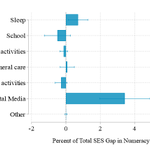
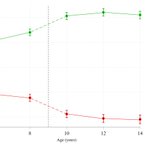
Our paper on ‘Children’s Time Allocation and the Socioeconomic Gap’ is now published in the European Economic Review! 📄✨
We find that shifting children's time from digital media 📺 to enrichment activities 📚 improves numeracy skills for low SES children.
A short 🧵👇
Who actually gets to see a psychologist, even after getting a mental health treatment plan from their GP?
Our new piece shows that it depends on your income and where you live!

Medicare rebates are meant to make psychologist visits cheaper and more accessible. But data shows those on the lowest incomes are missing out. @Danusha_Jay @MonashUni theconversation.com/seeing-a…

Danusha Jayawardana retweeted

Medicare rebates are meant to make psychologist visits cheaper and more accessible. But data shows those on the lowest incomes are missing out. @Danusha_Jay @MonashUni theconversation.com/seeing-a…
Danusha Jayawardana retweeted
Younger siblings also spend less time per day on 'enrichment activities', such as music practise or reading. @NicAuBlack @Danusha_Jay @MonashUni theconversation.com/our-stud…

Is the iPad a younger-sibling thing? 🤔📱
Our new @ConversationEDU article digs into how birth order shapes kids’ daily time use.
theconversation.com/our-stud… via @ConversationEDU
2
62
Danusha Jayawardana retweeted

📣📣Our online seminar series “Economics of Mental Health” starts in March this year with A/Prof Jonas Fooken of @MUCHE_Macquarie
📚Topic: Pharmacist workload, subjective and physiological stress, and the risk of unsafe practice
📅Date: 6th of March
⏰ Time: 12-1 pm AEDT
📷 Sign up here for the Zoom link: AHES Economics of Mental Health SIG - Seminar Series (rb.gy/y4hayz) #MentalHealth #EconTwitter
Danusha Jayawardana retweeted

Learn to think about the health and aged care workforce through an economics lens. Join Profs Tony Scott & Bob Elliott in the heart of Melbourne for a 1-day short-course on Economics of the Health Workforce on 13 Feb.
Register now: bit.ly/3OE4Y48
Danusha Jayawardana retweeted

New WP!
“Getting along or getting ahead? The domestic roots of status-seeking in international relations”
By @ashaniamar @USydneyEcon @KathrynBaragwa @UniMelb
ideas.repec.org/p/syd/wpaper…
Comments welcome!

Danusha Jayawardana retweeted
Just 3 weeks until our Feb 13 short course. Led by Profs Tony Scott & Bob Elliott, Economics of the Health Workforce will give professionals working in #humanservices & #healthpolicy the knowledge they need to build a better health workforce. Register: bit.ly/3OE4Y48

Danusha Jayawardana retweeted
Congratulations to @CHE_Monash alumni Dr Jessica Arnup, Dr Giovanni van Empel & Dr Andrew Ireland! It was great to have you back for your graduation ceremony today to reflect on & celebrate your accomplishments.

Danusha Jayawardana retweeted
Visit & work with us in one of the best cities in the world, #Melbourne. Our international visiting fellowship program is accepting applications from experienced international researchers & ECRs. Apply by 15 Jan: tinyurl.com/y25sfvzs

Danusha Jayawardana retweeted
Our new short-course "Economics of the #HealthWorkforce" (13 Feb) will outline economic solutions to current/future shortages of health/aged care workers. Explore how healthcare labour markets can be better designed for the Australian population. Register: bit.ly/3OE4Y48

Danusha Jayawardana retweeted
📢CALL FOR PAPERS: 14th Australasian Workshop on #Econometrics & #HealthEconomics
📅16-18 July 2025
📍@MonashMalaysia
📜≤14 papers will be accepted
👶Doctoral students/ECRs strongly encouraged to apply
✉️Submit by 20 Jan 2025: tinyurl.com/2ms8bu4n

Danusha Jayawardana retweeted
New #CHEWorkingPaper: PERM (Parameter Estimation by Raw Moments) estimates how policies shape inequality by extending standard empirical tools to averages of polynomial transformations of the outcomes. Neat method for studying distributional effects! 🔎tinyurl.com/yfx7skku

Danusha Jayawardana retweeted
Introducing Adam Akmal Dzulkipli (@itsadamakmal), who is on the #EconJobMarket from @CHE_Monash. Adam's research interests lie at the intersection of #HealthEconomics, #LabourEconomics, & the economics of #education. Learn more about Adam at his website: sites.google.com/view/adzulk…

Danusha Jayawardana retweeted

So excited to share this just published work 📣
Using PISA data from 38 OECD countries over 18 years, we show that student’s aspirations (technically expectations) to attend university *decrease* during hard economic times

Danusha Jayawardana retweeted
Would you return to work after a health crisis? Your education could be the deciding factor. While people’s health post-illness recovers similarly across education levels, their work is quite different tinyurl.com/ye9t2zkb #CHEResearchBites @terenceccheng @DennisJPetrie

Danusha Jayawardana retweeted
This week in our November seminar series, we welcome Prof Jan van Ours (@erasmusuni) with a talk titled "High temperatures and workplace injuries". Join 13 Nov @ noon in-person or online: monash.edu/business/events/c…

Danusha Jayawardana retweeted
Applications are now OPEN for our international visiting fellowship program! Calling experienced international researchers & all ECRs: come visit & work with us for 2-6 months in 2025. Apply here by 15 Jan: tinyurl.com/y25sfvzs

Danusha Jayawardana retweeted
This November, @CHE_Monash are hosting a seminar series featuring our world-renowned staff & adjuncts. Don’t miss this opportunity to engage with cutting-edge research and network with experts in the field. Join on Weds, in-person or online. More info: tinyurl.com/3a42hhjc

Danusha Jayawardana retweeted
How did the #BetterAccess Initiative change mental healthcare in Australia? Our new study finds it increased the psychology workforce, raised psychologists' incomes & led to more practices in regional areas. Read: tinyurl.com/w2dsb436 #MentalHealth #HealthPolicy #Medicare

ALT Column graph titled "% change in number of workers". The y-axis is "% change relative to 2001". On the x-axis, there are the years 2001, 2006, 2011 and 2016. The graph shows two groups, psychologists (0, 17.7, 143, 187.4 for the respective years) and other allied health workers (0, 19.4, 53.9, 96.2 for the respective years).