
Access Technology Evangelist and Director of David Banes Access and Inclusion formerly CEO of Mada Center in Doha, Qatar
europe and middle east
Joined June 2008
- Tweets18.8K
- Following669
- Followers2.8K
- Likes1.1K





Global Symbols is seeking donors and sponsors who share our belief that communication access should be available to everyone, everywhere: goodhub.com/go/globalsymbols
The promise of AI in healthcare is significant, but so are the risks. Bias, poor data, inaccessible systems and automated decision-making can all create barriers for disabled people.
davebanesaccess.medium.com/a…
#AIinHealthcare #DisabilityInclusion #HealthEquity #ResponsibleAI

Independence can sometimes be measured in very small things: closing your own curtains, answering the door or adjusting the heating without asking someone else. Wearable technology could make those everyday actions easier to control.
homebrace.com/en/blog_16.php
#Homebrace
Inclusion depends on more than good intentions. It requires accessible design, effective policy, sustainable funding, inclusive procurement, practical implementation and disabled people at the heart of decision-making. Read the latest News
davebanesaccess.medium.com/a…
#Inclusion #AXS

Too often, AAC is treated as a product. In practice, it is a system of support. The Global Symbols blog explores why successful AAC implementation depends on an ecosystem approach.
globalsymbols.com/news/2026-…
#AAC #GlobalSymbols #CommunicationMatters
For many AAC users, symbols are not extras. They are essential tools for communication, literacy, learning and inclusion. Support our work here: goodhub.com/go/globalsymbols
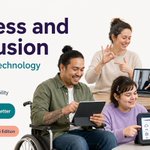
Each month, Access & Inclusion Through Technology brings together developments in disability, assistive technology, AI, accessibility policy and inclusive innovation.
davebanesaccess.medium.com/a…
AI can improve health services, but only if disabled people are included in design, testing, governance, and delivery. Inclusion cannot be added after systems are already built.
davebanesaccess.medium.com/a…
AAC works best when everyone around the person understands their role. Families, teachers, therapists, support staff, peers and communities all help create the conditions for communication to grow. Read more:
globalsymbols.com/news/2026-…
For someone with limited movement, even small actions such as turning on a light, opening a door or changing the TV can require assistance.
Wearable environmental controls could return those everyday choices directly to the user.
homebrace.com/en/blog_16.php
Support free, open and inclusive AAC resources. Donate to Global Symbols and help us ensure that more people have access to the symbols they need: goodhub.com/go/globalsymbols
Wearable navigation systems could provide spoken, visual, or vibration-based directions without requiring someone to hold or constantly operate a phone.
That could make independent mobility simpler and more intuitive.
homebrace.com/en/blog_16.php
#AccessibleMobility #Navigation
AI is already changing how health services are planned, delivered and evaluated. But what does this mean for disabled people? This blog explores the benefits, risks and implications for access, inclusion, governance and rights.
davebanesaccess.medium.com/a…
Accessibility, assistive technology and digital inclusion are no longer separate conversations. They sit at the centre of how we design services, regulate technology, support participation and shape innovation.
davebanesaccess.medium.com/a…
Effective AAC is not just about choosing a device, app or symbol set. It depends on a wider ecosystem of people, tools, training, support, language, culture and opportunity. Read the Global Symbols blog on why an AAC ecosystem matters:
globalsymbols.com/news/2026-…
#AAC
Smart glasses, watches and body-worn sensors could increasingly become accessibility tools.
The important question is not how clever the technology is, but whether it gives people greater choice, participation and independence.
homebrace.com/en/blog_16.php
#Accessibility
Google is bringing real-time sign-language-to-text capability to consumer smartphones. What happens when accessibility capabilities move from specialist AT into mainstream devices?
More in the September roundup:
medium.com/@davebanesaccess/…

AI may predict what an AAC user wants to say, but it should never assume that prediction represents their voice. Inclusive AI should increase communication without taking control away from the person.
medium.com/@davebanesaccess/…
#AAC #AI

Head, wrist, or finger movements could become a way to control a powered wheelchair.
Wearable sensors are opening new possibilities for people who cannot use conventional controls or whose movement changes during the day.
homebrace.com/en/blog_16.php
#WheelchairTechnology