

Personal account for the guy who created the smartest AI on earth. Opinions are my own, not DeepWriter AI's. Try it now 👇
✨
Joined July 2010
- Tweets8.9K
- Following28
- Followers16.1K
- Likes56.2K






Garrett G. retweeted

What a wonderful invention. Where do I get one?

Catching skin cancer early is a home robotics problem.
Melanoma is highly treatable when detected early, yet today’s screening process depends heavily on patients noticing tiny changes across their entire skin surface. This requires patients to solve a near-impossible visual-memory and registration problem.
I built OpenDerm, an open-source 4-DOF robot that captures high-resolution images of the skin and uses them to reconstruct and track the skin surface in 3D over time.
The best way to make skin screening truly routine is to bring it into the home. OpenDerm shows that inexpensive robotic skin imaging is possible, but the path to scale is not a dedicated screening robot in every household—it is to make skin screening one of the many useful things a general-purpose home robot can do.
Read more about why I built OpenDerm and how it works here:
Blog: marionlepert.github.io/blog/…
Project: openderm.github.io/
Garrett G. retweeted
Why do we need a UAP Scientific Advisory Board?
As has been widely reported, the US government has asked Professor Avi Loeb, of the Department of Astronomy at Harvard University (see the main announcement at the end of this posting), to create a UAP Advisory Council. The members of this advisory group span a range of disciplines from astronomy, psychology, physics, biology, data analytics, psychology, entrepreneurs, and more. I am thrilled to have been invited alongside a notable list of scientists, academics, entrepreneurs, and others.
What follows are my personal thoughts and are not any official position of the UAP Advisory Council. Dr. Loeb has already elaborated on the formation of this Council, along with his views through postings on his blog and in public interviews.
Importantly, no one on the Council has been asked to sign any non-disclosure agreements. We are told that we are free to discuss matters that come before the Board, but without attribution of the source (Chatham House rules). By the same token, I am not obligated to answer any questions either. I plan to treat this effort like I do my day job in cancer immunology—not talking publicly about results until I am sure the answer is as close to correct as I can determine.
So, how did this Advisory Council come to be? Well, one answer is simple—through the dedicated action of thousands of individuals across decades, the coming forward of credible military and government officials in public testimony (sometimes under oath), the work of members of Congress and the Senate, along with testimonials of public witnesses, and much more.
Collectively, those actions have led to the extraordinary and courageous decision by President Donald J. Trump and his administration to release to the public US government-owned UAP-related files and information as vetted by a UAP Governance Board and other government agencies. As publicly announced, our group will report to the UAP Governing Board, which is under the direction of the Executive Branch.
Many people have openly wondered, “Why create a new Board when elements of the government or even commercial institutions already (allegedly) know the answer?” The UAP Advisory Council doesn't have any funding, and we don’t have subpoena power. We are all volunteers. We advise. Given that, there are some straightforward answers to the criticisms and commentary I have seen.
First, appreciate that the complexity of what UAP might represent is not definable in a single technological or cultural framework. It is so complex that even I, who have been steeped in the matter for over 15 years, have a hard time encompassing the breadth of explanations from “it’s real, and it’s here” to “it’s all misidentification”. My mind spins trying to make sense of it all.
What is clear is that the data released so far is not enough. The anecdotes are not enough. Sure, interesting videos, but where’s the metadata? What are the parameters of how the data was collected? Why are there extreme redactions of files and data? Why the incredible pushback? Where are the alleged retrieved technologies? There’s simply not enough to convince me when I put on my serious scientist’s hat.
Yet what I do know is that the question of what it might be will not go away while the data remains locked up. The answers to what any data might mean will require a comprehensive effort across disciplines that expand well beyond “nuts and bolts” science. Hence, the broad makeup of the team that comprises the UAP Advisory Council. Every person on the Board is, I believe, devoted to taking a logical and deeply skeptical approach to this matter. We will let the data guide us and cross-check each other.
For me, despite my widely known bias that I think there’s something deeper to the matter than misidentification, I remain like any scientist a trained sceptic at heart. I am terrified of making a mistake, but I’ve yet to reach a formal conclusion despite my public musings. I can believe a thing might be true, but as a scientist, I must believe enough in the possibility of an idea being true to justify my time and effort to prove it to myself— and more so to prove it to colleagues or the lay public.
There is data that, when contextualized as a hypothesis, becomes evidence that invites us to wonder whether the answer to “Are We Alone?” might be sitting right in front of us, but we choose to ignore it or let others tell us it should be ignored. Remember, data is only evidence towards supporting a conclusion when you pose a question (hypothesis) around what the data means. But evidence is not a conclusion. Evidence is what you put in front of a jury, where the data has been sufficiently scrubbed of doubt to allow one to decide what it means.
So, back to “Why do we need a UAP Scientific Advisory Board?” Well, we all want objective, and even subjective, expertise to interpret whatever data comes our way. Even if tomorrow a saucer landed in Times Square, we would still need a swath of expertise to interpret what opens the door, how it got here, and what might be the intent. Better to be prepared, in my opinion.
We obviously risk that this is a misdirection from some essential truth or that we might be being used in some elaborate disinformation campaign. We are also aware that we might be in for the possibility that there is simply nothing there but elaborate stories and misidentifications.
But I can tell you this—the risk is worth it. We have come further than ever before to open the door (or Pandora’s Box) to a potentially incredible opportunity. “Are we alone?” might be answered as “We are one of many.” Coming to know what others might have already learned about the nature of reality is, for me, well worth the effort to ask the question.
One way or the other, I believe humanity can handle the answer.
avi-loeb.medium.com/more-det…

Garrett G. retweeted
If the LLM plus a tool can do the job, then that fights the narrative that "LLMs are a dead end" which was the original thesis. The tool in these cases is also computationally cheap compared to the LLM (not always).
Garrett G. retweeted
Solid tumors are often considered "cold"-- meaning there is no inherent inflammation that attracts the "good" immune cells, or such tumors modify their environment to make it inhospitable to our immune cells (that would otherwise eradicate the cancer). We want our tumors "hot" if you please-- as that is correlated with positive outcomes for patients.
Natural killer (NK) cells are considered part of the innate immune system... originally thought of as being singularly targeted to certain foreign antigens from pathogens or cells running amok -- like cancer cells.
In this paper (Horowitz et al of the Sunwoo lab and many others here at Stanford) we show that NK cells can be re-educated in a manner that allows them to enter tumors, make them "hot" and thereby opening an entirely new avenue for cell therapies (as with CAR-T therapy). Let the race begin...
science.org/doi/10.1126/scit…

Garrett G. retweeted

I mentioned Deepwriter AI before, but I feel compelled to recommend it again. It’s incredibly good for writing long research articles & papers! I still haven’t seen anything better! I am always impressed with it! Highly recommend it for anyone interested. app.deepwriter.com/

This quoted post is unavailable.
Garrett G. retweeted
Cancer doesn't know who you are when it strikes. It is indiscriminate. It can take the best of us at any moment.
The American Association for Cancer Research (AACR), many other related charitable organizations, patient advocacy groups, biotechnology and pharmaceutical companies, and, most importantly, individual researchers... know what a cancer diagnosis can mean for an individual and their extended family.
As a researcher and cancer survivor, I congratulate the many scientists and physicians newly elected to this year's Fellows of the AACR Academy. I thank the AACR for selecting me to be part of this incredible group.
Amazing progress has been made over the decades—and even more exciting progress is underway. Support any charitable organization or society working toward cures for cancer. Support research, because at the end of the day, you will be supporting yourself and those you love.

We are pleased to announce the Fellows of the AACR Academy Class of 2026. We look forward to celebrating their pioneering scientific achievements at the AACR Annual Meeting in April. brnw.ch/21wZqOo #AACR26 #AACRFellows

Garrett G. retweeted
These guys (team of three) are pretty good. I’ve been impressed with DeepWriter.
This quoted post is unavailable.
Garrett G. retweeted
To my immunologist and biomedicine colleagues —at the very least, for making scientific illustrations that are spot on... from your own PDFs or summaries of the literature, I've yet to see anything better.
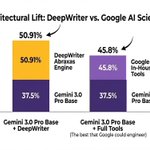
DeepWriter is not an LLM itself- it sits on top of other LLMs and does the agentic work (right now it uses Gemini 2.5, but can use Gemini 3 or other LLMs at some point, I understand).
For reports and work I do, it's better than any of the "AI Scientists" I've seen so far. And the great thing is... as other LLMs improve, the DeepWriter overlay improves.
And this is just for science. I've used it for many other things as well. It's fantastic.
If you are a VC or seed fund, I'd seriously look at these guys.
Public service announcement —I hold no equity or monetary-compensated position with DeepWriter, but I have been advising them on how to nudge it toward better-written reports. The illustration work they did shocked me at how accurate it can be. I want them to succeed because I can already see how essential what they have is to my work. The illustration below is from a prompt I asked them to generate about tertiary lymphoid structures. I've used their illustrations in several of my recent biomedical talks.


Garrett G. retweeted

chat, what's going on right now? is something happening?
Project Goal: Realizing Martian Strawberry Cultivation by 2067 Develop a comprehensive, highly visual game plan outlining the audacious endeavor to establish sustainable strawberry cultivation on Mars by the year 2067
Result: deepwriter-projects.s3.amazo…
Garrett G. retweeted
This is amazing! I'm a big fan of @DeepwriterAI, and the figure mentioned is extraordinary, as Prof. Gary Nolan also pointed out!
In our first example, I asked DeepWriter one of @DeryaTR_'s goto questions: "what is the immune system optimizing-what is its real objective function?"
The answer got props from Stanford's Dr. Garry Nolan! And the results do look gorgeous.
Read it here: deepwriter-projects.s3.amazo…

Garrett G. retweeted

This is genuinely impressive.
DeepWriter feels less like a chatbot and more like a serious research and writing partner. The agentic setup, long-form coherence, and depth are exactly what most tools still struggle with.
You can realistically write full-blown, high-quality books with this. Not outlines. Not fragments. Actual long-form work that stays sharp, structured, and thoughtful from start to finish.
If you care about deep research, real thinking, and sustained writing, this is a big deal.
This quoted post is unavailable.
Garrett G. retweeted

קבלו AI שכותב כמו המומחה הכי גדול שתמצאו. אולי יותר! מה שחשבתי שיגיע עוד שנה לפחות הגיע כבר עכשיו.
מודל שמריץ הרבה agents במקביל ומייצר תוצאות *מטורפות* בכל תחום. עשרות ומאות עמודים עם תובנות עמוקות ורפרנסים מדויקים.
שני חסרונות כרגע: 1. העלות, כ$1 לדף. 2. התוצאות כאלו מדהימות>
This quoted post is unavailable.
Garrett G. retweeted
should i try it?
In our first example, I asked DeepWriter one of @DeryaTR_'s goto questions: "what is the immune system optimizing-what is its real objective function?"
The answer got props from Stanford's Dr. Garry Nolan! And the results do look gorgeous.
Read it here: deepwriter-projects.s3.amazo…
Garrett G. retweeted
I asked DeepWriter to write a whole DnD campaign! It wrote a 55 page one filled with consistent and appropriate images with characters, maps and more! Read it here: deepwriter-projects.s3.amazo…


Garrett G. retweeted
Well, as an immunologist, these are pretty good answers to the question that 5.2 raised…
Garrett G. retweeted
Figure 2 is extraordinary. Did it calculate that in real time or did it predict a look and then draw what it should look like? In either case assuming it did copy it from someone else’s paper… its impressive.


