

Champa Bay, FL
Joined June 2011
- Tweets4.3K
- Following10
- Followers521
- Likes48K




Eric Kords retweeted

In December 1941, Japanese troops captured an American surgical nurse in the Philippines.
Colonel Ruby Bradley, United States Army Nurse Corps.
For the next 37 months, she ran an operating room inside a prison camp while starving alongside her patients.
Her name was Ruby Bradley.
Born in West Virginia in 1907, she taught school before joining the United States Army Nurse Corps in 1934.
In 1943, the Japanese Army locked her inside the Santo Tomas Internment Camp in Manila with thousands of prisoners.
Food was scarce and people were dying in the barracks every week.
Ruby refused to leave the hospital ward.
As starvation stripped the weight from her bones, her uniform hung loose on her frame.
She used the empty space under her clothes to smuggle surgical tools, soap, and medicine past armed guards into the clinic.
Whenever she saw starving children crying in the dirt, she gave them her own small food ration and went to sleep hungry.
Over three years in captivity, she assisted in 230 major surgeries and helped deliver 13 babies behind barbed wire.
The prisoners called her one of the Angels in Fatigues.
On February 3, 1945, American tanks smashed through the camp gates and set them free.
Ruby walked out weighing just 86 pounds.
Everyone expected her to go home and leave the military forever.
She refused to quit.
Then war broke out in Korea in 1950.
At age 42, Ruby volunteered for the front lines as Chief Nurse of the 171st Evacuation Hospital.
In one afternoon in November 1950, her team treated 780 wounded soldiers in the bitter cold.
Days later, 100,000 Chinese troops surrounded her hospital in Pyongyang.
With enemy artillery shelling the city, commanders told Ruby to take an early flight to safety.
She refused to board a plane while wounded men were still lying in the snow.
With shells exploding nearby, she stayed on the freezing runway and loaded every injured soldier onto transport planes first.
She was the last one out.
Seconds after she stepped onto the final plane, an enemy shell blew up the ambulance she had just left behind.
She later led 500 combat nurses across Korea and became the third woman in United States Army history to reach the rank of Colonel.
She retired in 1963 with 34 medals for bravery, died in 2002 at age 94, and was buried at Arlington National Cemetery.
Across two wars, three years in a prison camp, and an enemy siege, she never once left a patient behind.

This post & picture hits me right in the crosshairs… Humans & Animals have been intertwined throughout history. We rely on- but more importantly- NEED each other to fulfill our missions in life. In America 🇺🇸 our military equine hero was #SgtReckless 🙏🐴🐕 🐾 #ArmisticeDay2026 – at Safety Harbor, FL


At the 11th hour of the 11th day of the 11th month, we pause.
We remember every man and woman who left home and never returned—infantry, sailors, aircrew, medics, engineers, and all who served.
We remember the empty chairs, the letters that stopped coming, and the generations shaped by their absence.
We also remember the animals who went with them.
The horses and mules that carried artillery and supplies through mud and shellfire until they could carry no more. The messenger dogs and medical dogs that ran through no-man’s-land.
The pigeons that flew through gas and gunfire with messages that saved lives. The camels, elephants, and other animals pressed into service far from their homes.
Most of them had no choice, no medals, and no graves.
They are part of the same story of sacrifice.
A moment of silence for all of them.
Lest we forget🫡🇬🇧

2
54
Eric Kords retweeted

In June 1752, when Benjamin Franklin flew a kite into a thunderstorm outside Philadelphia, the only person with him was his son William, who helped him run the experiment.
Father and son were inseparable for years. William traveled with Ben to London, helped with his work, and through his father's connections was appointed royal governor of New Jersey in 1763. Ben was proud of him.
Then came the Revolution. Ben became one of its leading voices. William stayed loyal to the King.
In June 1776, the New Jersey Provincial Congress arrested William and shipped him to Connecticut as a prisoner. When he was caught helping loyalists while on parole, he was thrown into solitary confinement in a Litchfield jail. While he was locked up, his wife Elizabeth fell ill and died in British-held New York. He begged to see her and was refused. Ben never lifted a finger to help.
After a prisoner exchange in 1778, William became president of the Associated Loyalists, a group that waged a vicious guerrilla war against Patriots in New Jersey and New York. When the war was lost, he left for England for good.
They met only once more, in 1785, at a port in Southampton. It wasn't a reunion. Ben had William sign over his American property to settle debts, then sailed home.
When Ben wrote his will, he left William almost nothing, explaining that the part he acted against me in the late war "will account for my leaving him no more of an estate he endeavoured to deprive me of."
The man who helped catch lightning with his father ended up on the other side of the war that made his father a legend.


Eric Kords retweeted

Ever seen a turtle run?
Red accidentally kicks a berry, and runs it down as it rolls across the porch!
This is actual speed.
Eric Kords retweeted

Rest in peace to a Chicago legend, Mike Ditka. One of the greatest tight ends and coaches the game has ever seen, and a true part of the heart and soul of Chicago. Thank you for the memories, the passion, and everything you gave to this city💙

Eric Kords retweeted

Two and a half years after his final ride on May 5, 2024, @OaklawnRacing, retired jockey Jon Court is returning to the Hot Springs, Ark., track in a new capacity. Read more: go.bloodhorse.com/4hY5aK6 @BH_Bking

Not so happy #HurricaneHelene 🌀2 year Ann’y that wiped out #TreasureIsland FL 🏝️ and devastated NC with flooding. Prayers to those in today’s nor’easter path 🙏 fox13news.com/news/treasure-… – at St Petersburg, FL


#Breaking @USCG Air Station #Clearwater saved a man & his dog, Thurs., during Hurricane #Helene after his 36-ft sailboat became disabled & started taking on water approximately 25 miles off Sanibel Island. Call the #USCG for help on VHF Ch. 16 or dial 911 for storm distress. #SAR

1
248


Eric Kords retweeted

One of Jimmy Buffett's breakout hits, “Come Monday,” references Labor Day Weekend at the start of the lyrics, and over the decades, Labor Day Weekend became a meaningful time to head to a Jimmy Buffett concert.
How fitting that he took his final bow at the start of Labor Day Weekend, three years ago.
Let’s explore his interesting ties to the amusement park and tourism industry, on this third anniversary of his passing.
Some things may surprise you: buff.ly/Mb2qLs6

Eric Kords retweeted

🏇 HORSEMEN — STALL APPLICATIONS ARE OPEN! 🏇
📋 Stall applications are available now.
📅 Applications are due September 14, 2026.
👉 SUBMIT YOUR STALL APPLICATION TODAY!
tampabaydowns.com/horsemen/s…
🏇🌴🏇🌴🏇
Love every part of this man and these stories #JimmyStewart – at Boston, MA

On #NationalDogDay, we couldn’t think of a better moment to share:
Jimmy Stewart loved dogs. When he returned home from WWII, he found comfort in having them close. He once said of his beloved Beau, “Just the feeling of him laying against me helped me sleep better.”
2
146
Eric Kords retweeted
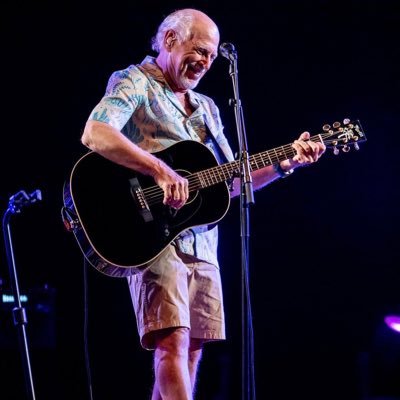
"I'm very proud and honored to be part of anything that is going to make the world a better place"
RIP Dolly Parton. There are artists that are admired and then there is Dolly Parton.


Eric Kords retweeted
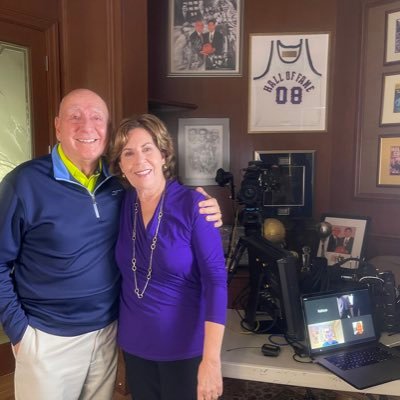
If you have a free moment, check out this interview I did with @CathSportsRadio
Catholic Sports Radio can be found almost anywhere you listen to podcasts. Or here: catholicsportsradio.net/epis…

Eric Kords retweeted

New Indian Charlie posted for Friday, August 7, 2026
indiancharlie.com


#HarryCaray was my 1st of many colorful characters I gravitated to as a teen starting in 1988 part of a F.U.N. 💯 Cubs team 🙌🏼. So much so, I spurned my large #Cardinals family when I saw Harry’s magic via WGN⚾️🎙️👓 . #HolyCow #CubFanBudMan #CubsWin – at Tampa, FL

306
Eric Kords retweeted
You know him as the kite-in-a-thunderstorm guy. The hundred-dollar-bill guy. But 251 years ago today, Benjamin Franklin took a job that officially made him a traitor to the crown, and he took it on purpose.
Here's the part they leave out of the schoolbooks.
Franklin didn't start the mail for the rebels. He started it for the king. Back in 1753 the British crown made him joint deputy postmaster of the American colonies, and he was astonishingly good at it. He treated letters like an engineering problem. He rode the post roads himself. He measured the distances and planted stone mile markers, some of which still stand today. He added riders who moved through the night so mail never stopped, and cut the trip from Philadelphia to New York from days down to about one. Under him, the colonial post turned a profit for London for the first time ever.
The crown had handed him the nervous system of an entire continent. Every letter, every newspaper, every rumor moved on roads he had mapped.
Then he turned it on them.
In 1774 Franklin got his hands on a batch of private letters from the royal governor of Massachusetts, letters urging London to crack down on colonial liberties, and he leaked them. The scandal exploded. He was hauled before the king's council in a room called the Cockpit and berated for nearly an hour while the powerful men of Britain laughed at him. He stood there in silence and took it. Two days later, they stripped him of the postal job and threw him out.
A lot of men would have gone home. He was 68 years old. He had money, fame, and every reason to quit.
Instead he sailed back to America, and the rebels did something audacious. On July 26, 1775, the Continental Congress hired the exact man Britain had just fired, paid him a thousand dollars a year, and gave him one assignment: build a postal system the crown could not read, could not seize, and could not shut down. He became the first Postmaster General of the United States.
He understood something his enemies never did. A revolution is not won only with muskets. It is won with information. Whoever controls how word travels controls who stays in the fight. So he built the roads that carried the letters, the orders, and the newspapers that kept thirteen suspicious, squabbling colonies coordinated long enough to actually win.
He served barely fifteen months before Congress sent him to France to land the alliance that saved the war. But the network held. It held so well that when the founders sat down to write the Constitution, they wrote post offices and post roads directly into it. The mail was considered essential to holding a republic together.
An immigrant printer's apprentice with no formal schooling built the crown's mail, got humiliated and fired for his loyalties, and then rebuilt the whole thing as a weapon aimed straight back at the empire that sacked him.
Benjamin Franklin. They fired him from the mail. So he used the mail to help end their rule.

