

Research on developmental interactions at Faculty of Veterinary Medicine, University of Helsinki, Finland
Helsinki
Joined December 2019
- Tweets55
- Following2
- Followers69
- Likes2




Developmental Interactions Lab website: helsinki.fi/en/researchgroup…

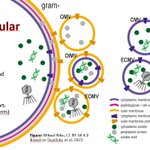
ALT Developmental Interactions Lab website: https://www.helsinki.fi/en/researchgroups/developmental-interactions Cover figure showing a developing fetus, fetal lymphoid tissue, microbial metabolites and extracellular vesicles
6/ We are now studying the bacterial extracellular vesicle proteomes to learn more about their potential functions and to develop novel tools for targeted investigations. Stay tuned - preprint coming soon!
5/ Researchers at @UniOulu reported bacterial extracellular vesicles in the human amniotic fluid. This suggests that they may also stimulate the early development of the immune system.
doi.org/10.1186/s40168-023-0…

4/ Extracellular vesicles from intestinal bacteria were recently shown to pass to the blood and prime systemic defense by stimulating innate immunity. doi.org/10.1016/j.immuni.202…
3/ In the intestine, commensal bacterial EVs are thought to modulate immunity and the intestinal barrier, boost digestion and help to control pathogens. isevjournals.onlinelibrary.w…
2/ Bacteria use EVs to acquire nutrients, dispose of waste, communicate, and defend against other bacteria, viruses and antibiotics. EVs enable quantal secretion: delivery of bioactive compounds in high-concentration packages, protected by the membrane. doi.org/10.1038/s41579-023-0…
1/ Extracellular vesicles (EVs) are membrane particles released from most cell types, typically 50-200 nm in diameter. They contain proteins, nucleic acids and other cargo from the secreting cells. Gram-negative and gram-positive bacteria produce different kinds of EVs.

Talk about bacterial extracellular vesicles by @MikaelNiku at #MOVE2025. They are thought to mediate microbe-host interactions in the intestine and possibly beyond. We investigate the vesicle proteomes of the mammalian intestinal microbiota. 🧵

Presenting our research on the effects of gestational antibiotics on offspring microbiota, immune system and growth, and on bacterial extracellular vesicle proteomes at @iuis_online #IUIS2025!

Rose gave an excellent talk at the @BioCityTurku symposium "Unleashing the power of metabolism" #BCS2024!

Developmental Interactions Lab retweeted

Welcome to the Metabolism seminar next week Friday Dec 8th 9-11am in Viikki. Exciting talks on #lipidomics in human disease by @samrip lab and maternal #microbiome #metabolites in development by @MikaelNiku lab. ☕️🍪at 8:30 @LifeSciHelsinki @FIMM_UH @HiLIFE_helsinki @BIOTECH_UH

Exciting new research on prenatal host-microbe interactions from our colleagues in Oulu! nitter.gq/MicrobiomeJ/status/172…

Maternal microbiota communicates with the fetus through microbiota-derived extracellular vesicles dlvr.it/Synl7C

Presenting our research at the meeting of the Finnish Society of Developmental Biology! Great event, great atmosphere.

This Post is from an account that no longer exists. Learn more
Press release on our latest research: maternal microbiota and microbial metabolites can modulate fetal development helsinki.fi/en/news/healthie…

Thanks for great work @laiske @ville_koistinen @KatiHanhineva @karkkainen_olli @antagomir & co!
Ping @GanalVonarburg @Kathrynated @FinlayLab @ntorow @BrodinPetter @socmucimm
🧵Thus: although the uterus is largely sterile, the maternal microbiota broadly modulates fetal gene activity and is likely important for the developing intestinal immune system and brain, and for pregnancy regulation. Microbial metabolites probably mediate many of these impacts.

🧵We observed a potential sex difference in the fetal sensitivity to the modulation by maternal microbiota: a larger number of genes was differentially expressed in male germ-free versus normal fetuses, compared to female germ-free versus normal fetuses.
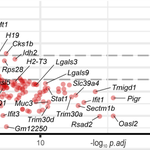
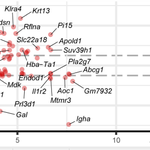
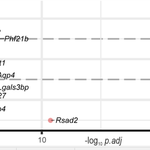
🧵Fetal energy metabolism was also affected by the maternal microbial status (and/or the germ-free dam physiology). The most strongly downregulated gene in all the tissues from germ-free fetuses was Ide, coding for the insulin-degrading enzyme.

🧵Genes for translation and unfolded protein response were upregulated in the fetuses of germ-free dams. They were associated with the microbially modified tRNA nucleobase queuine — a striking example of our intimate coexistence with our microbiota! doi.org/10.15252/embj.201899…
